REVIEW · CHIANG MAI
From Chiang Mai: Chiang Rai’s Temples Exploration Day Trip
Book on GetYourGuide →Operated by Chiang Mai Footsteps Travel · Bookable on GetYourGuide
Three temples, one color show. This Chiang Mai to Chiang Rai day trip hits the mirror-bright Wat Rong Khun and the electric-blue Wat Rong Suea Ten, plus a loud-and-proud Red Temple in one organized route. I love how the guide connects the art to Thai Buddhism, and I like that the group stays small enough to move at a human pace. The only real drawback is the long drive, often close to three hours each way, so it’s a full-day outing, not a quick trip.
Pickup runs from your Chiang Mai hotel between 7:00 and 7:30 (and the standard meeting point is Baan Meesuk in the old town). You get round-trip transfers, an English-speaking guide, entrance fees, lunch, drinking water, and insurance—so you’re not juggling tickets or hunting for cash between stops.
You’ll also start with a short pause at a natural hot spring. It’s a look-and-breathe moment (no swimming), and it helps break up the travel. Just plan your day around temple etiquette: cover knees and shoulders, remove shoes before entering main chapels, and wear comfy shoes because you’ll be walking.
In This Review
- Key things to know before this Chiang Rai temples day trip
- The trade-off: One-day convenience from Chiang Mai
- Hotel pickup and the hot spring steam stop
- Wat Rong Khun White Temple: mirrors, pond reflection, and temple rules
- Wat Rong Suea Ten Blue Temple: deep blue paint and the tiger legend
- The Red Temple: Thai spiritual art with folk-tale energy
- “Long day” logistics: comfort, breaks, and timing
- Lunch and included extras: what $51 buys you
- Bonus stops you might see (depending on schedule)
- Who this tour is best for (and who should skip it)
- Should you book this Chiang Rai temples day trip?
- FAQ
- Where is the meeting point in Chiang Mai?
- What time does pickup usually happen?
- How long is the trip?
- How big is the group?
- Which temples are included?
- Is the hot spring stop for swimming?
- What’s included in the price?
- Is the tour suitable for people with mobility impairments?
- What should I wear or bring for temple visits?
- What languages are the guides speaking?
Key things to know before this Chiang Rai temples day trip
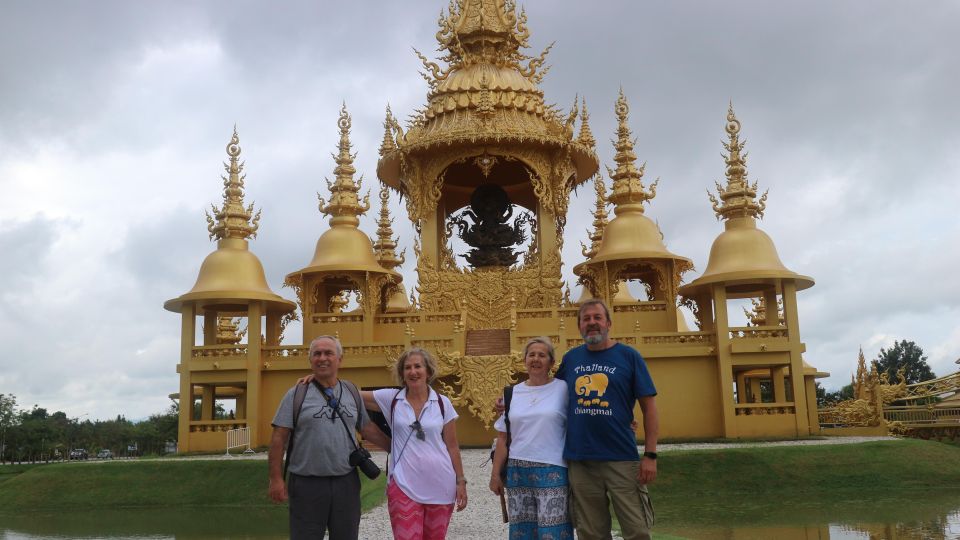
- Wat Rong Khun first: white walls, mirror sparkle, and pond reflections make it a top photo stop
- Blue Temple details: deep blue paint with lots of patterned design, plus a story tied to tigers
- Red Temple storytelling: bright colors with art that links to Thai spiritual tales
- Hot spring steam break: relaxing early stop, but you’re there to observe, not swim
- Small-group pacing: max 12 people means more time on site and less waiting around
The trade-off: One-day convenience from Chiang Mai
Going from Chiang Mai to Chiang Rai is a long sit in a vehicle, but it’s also efficient. In one day, you’re set up to see the three signature temples people usually travel for: the White Temple, the Blue Temple, and the Red Temple. That’s the big value here—time saved, logistics handled, and a guide in your ear the whole way.
The pace is built for sightseeing, not lingering. Expect a day that feels full: hotel pickup early, multiple temple visits, lunch in the middle, and a return to Chiang Mai in the evening. A lot of the positive feedback centers on how the schedule stays organized even with the travel time, and that matters if you don’t want your day turned into a transportation marathon.
You can also read our reviews of more tours and experiences in Chiang Mai.


Hotel pickup and the hot spring steam stop
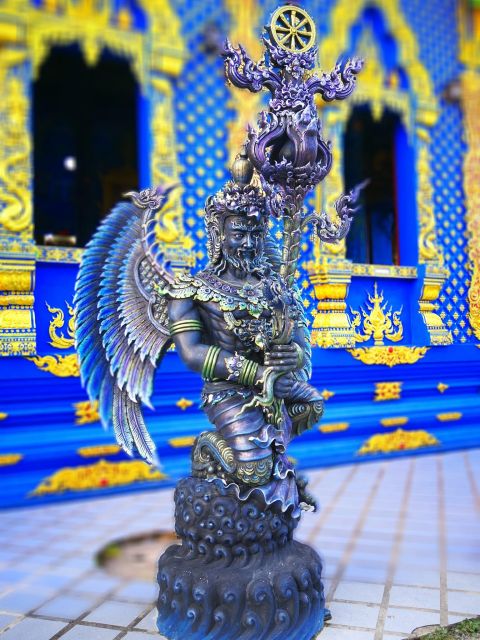
You’ll start with either hotel pickup (if your hotel is eligible) or a meet-up at Baan Meesuk, in Chiang Mai’s old town. Pickup happens between 7:00 and 7:30, so set an early alarm—this is not a “sleep in and stroll out” day.
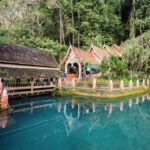
Before the temples, you stop at a natural hot spring. The point isn’t a swim (there isn’t swimming time here). Instead, you see mineral-rich water steaming and you get a short break that’s surprisingly useful. It breaks the drive rhythm, gives your body a chance to reset, and it adds a calm moment before you step into the temple circuits.
Practical tip: bring insect repellent and sunscreen. Even when you’re only stopping briefly, the sun can be intense and the outdoor gaps add up across the day.
Wat Rong Khun White Temple: mirrors, pond reflection, and temple rules
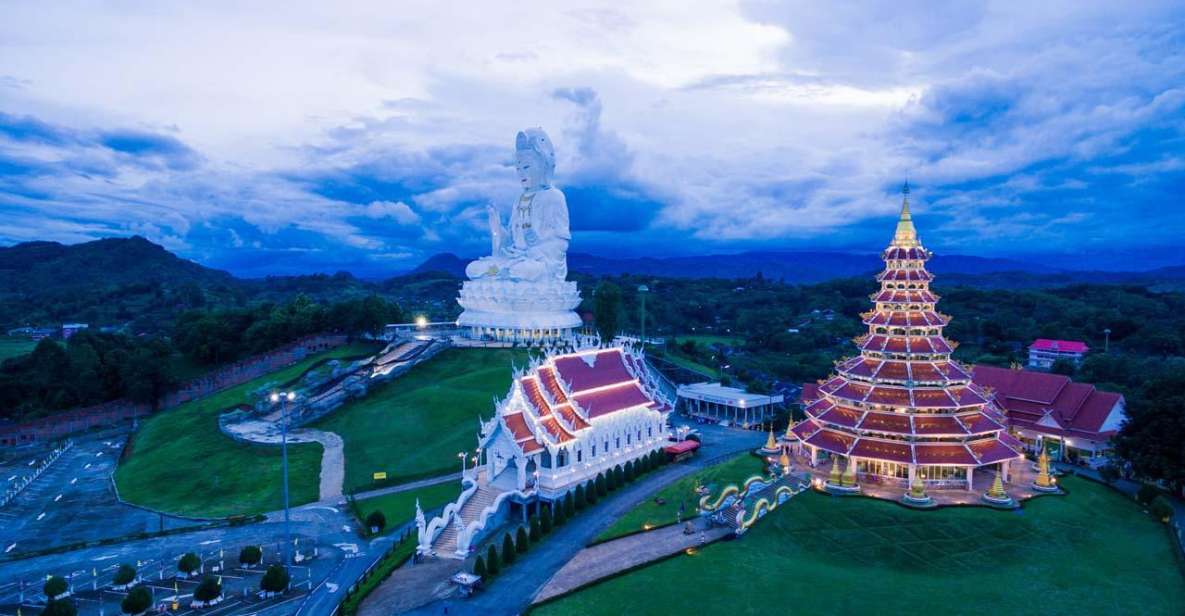
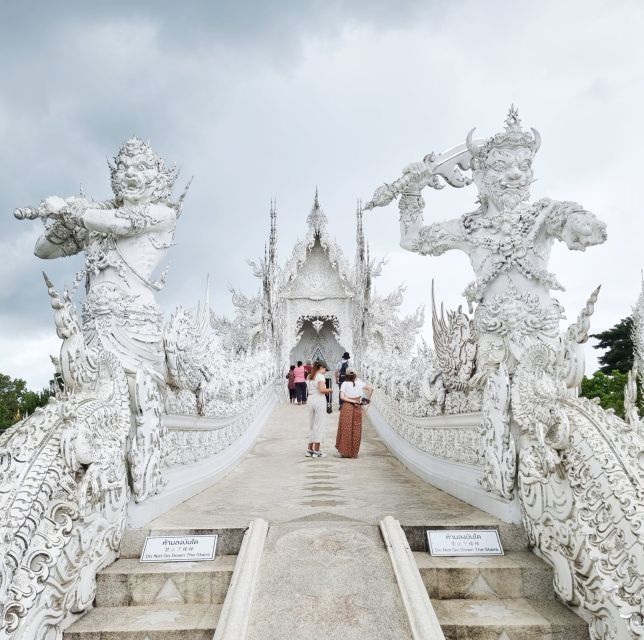
Wat Rong Khun (the White Temple) is the headline stop for a reason. It’s covered in white and loaded with shimmering mirror details that catch daylight and make the whole place feel unreal—dreamlike, almost. If you’ve ever wanted a temple that looks like it’s lit from within, this is the one.
The design also rewards slower looking. There’s a calm pond nearby that can mirror the temple’s brightness, and the reflective surfaces make your photos look like you planned them even if you didn’t. More than the looks, the guide’s explanations help you see how the temple’s symbolism connects to Buddhist ideas. That context turns a pretty sight into something you understand.
What to watch for:
- You’ll want comfortable shoes and decent camera-ready walking time.
- Dress code matters: cover knees and shoulders, and plan to remove shoes before entering the main chapel areas.
- Crowds can be a factor, especially when the light is best—so arrive ready to work quickly and then linger once you’re inside the flow.
From a “how it feels” angle, White Temple is often the stop that sets the tone for the whole day. If you’re doing only one Chiang Rai thing, this is the one.
Wat Rong Suea Ten Blue Temple: deep blue paint and the tiger legend
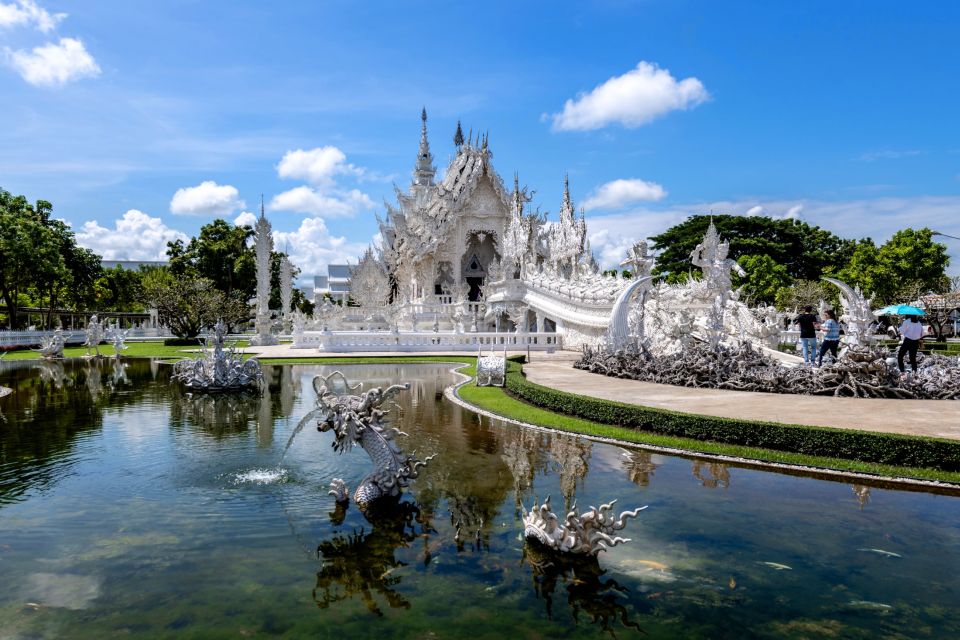
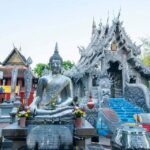
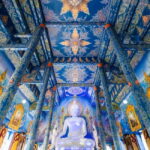
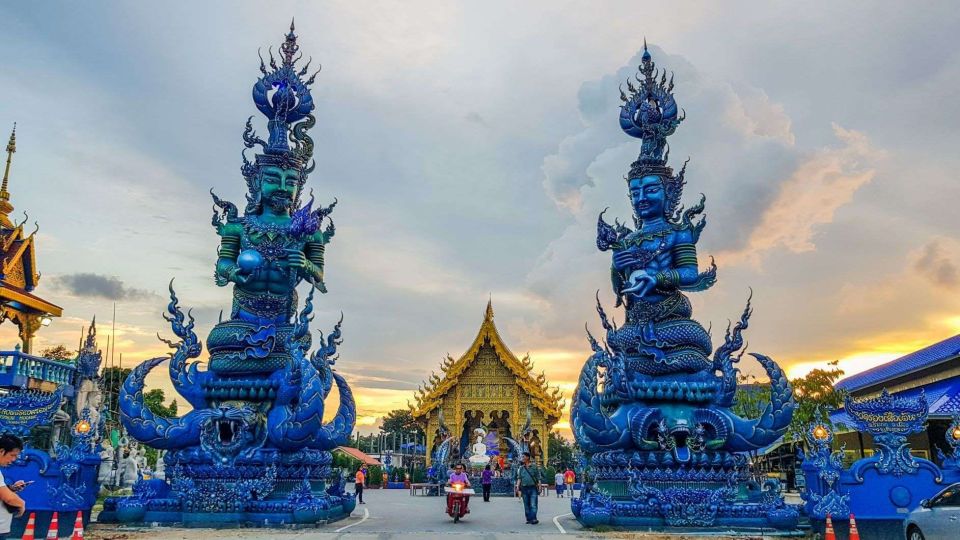
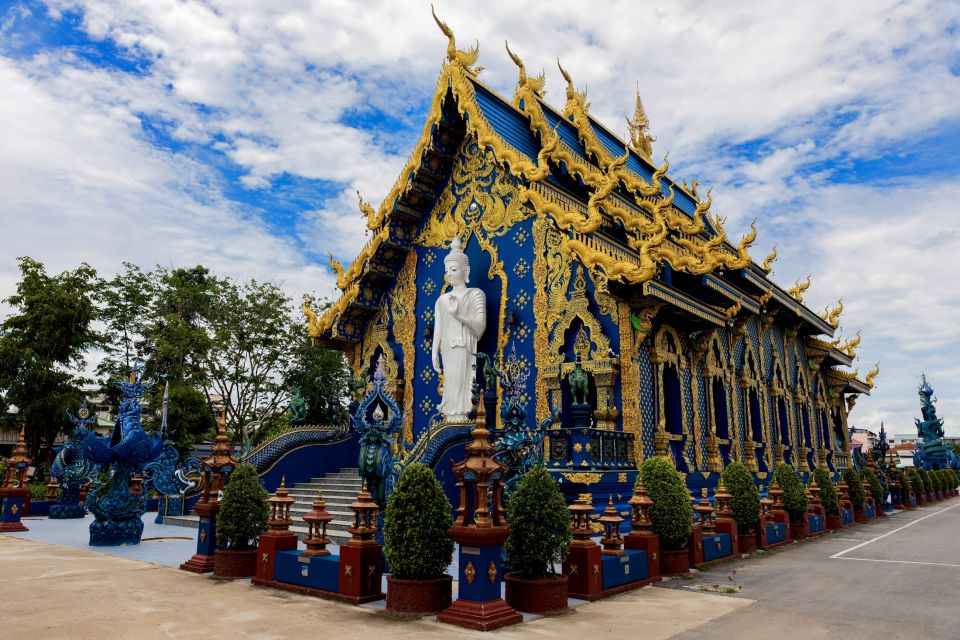
Next comes Wat Rong Suea Ten, often called the Blue Temple. This one is different in mood. Instead of white and mirror sparkle, you get deep blues, plus a lot of fine design work that you notice more as you walk and angle your camera.
The Blue Temple is built on the site where an older temple once stood. The story tied to the location is that it was thought to be home to roaming tigers. Whether you interpret that as legend or symbolism, it adds a layer of meaning to the colors and patterns you’re seeing—your brain stops treating it like a painted backdrop and starts reading it as place and story.
Practical tip: don’t treat this like a “one minute, one photo, done” stop. The designs are detailed, and you’ll get more out of the visit if you slow down, step back for wide shots, then move in for close-up textures.
The Red Temple: Thai spiritual art with folk-tale energy
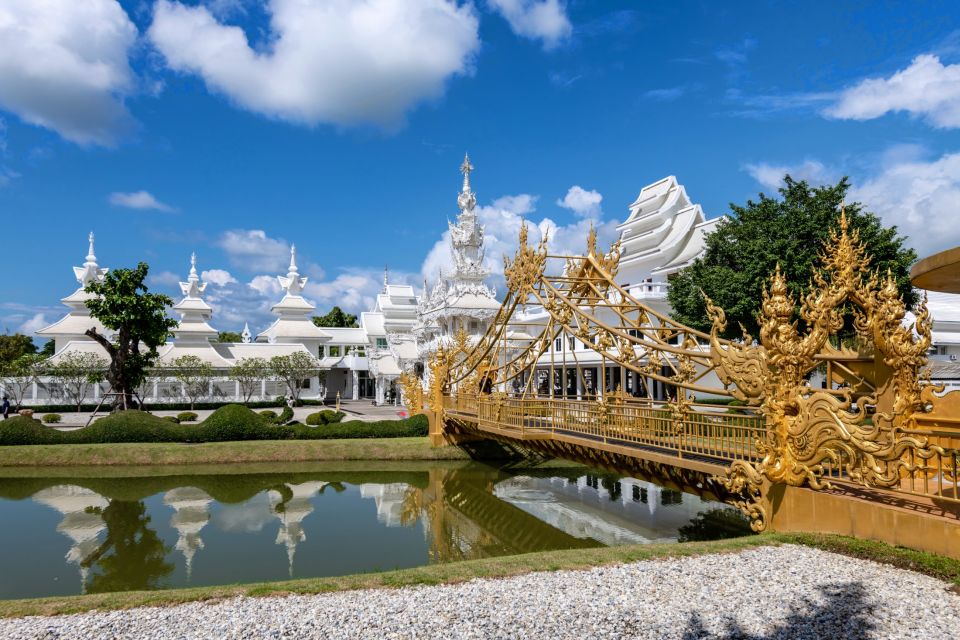
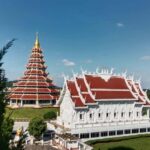
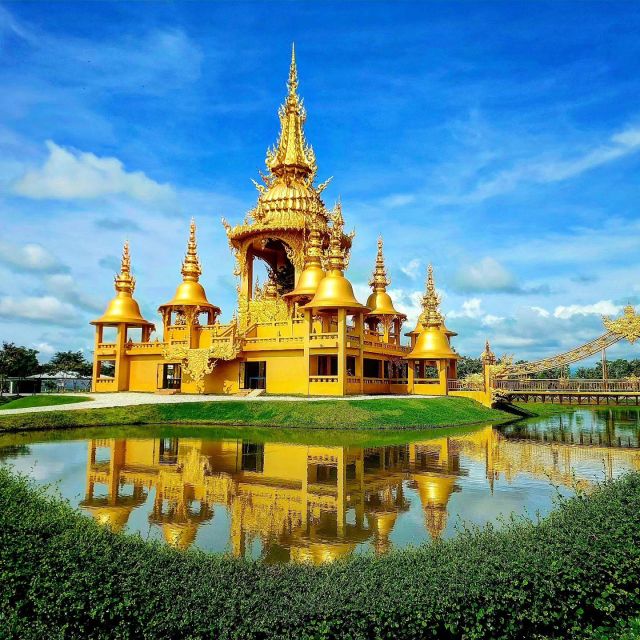
Then you head to the Red Temple. This is where the day leans into color and drama again—bright tones, intricate artwork, and a strong sense that every section is pointing to something.
The art is described as rich in Thai spirituality and folk stories, with each part having a story to tell. That matters because it changes the way you look. Instead of thinking, That’s pretty, you start thinking, Okay, this scene is meant to communicate an idea. The guide’s explanations are a big part of why the Red Temple lands well for many people: you don’t just see the pictures, you get help translating why they’re there.
If you’re the type who likes to understand what you’re photographing (not just post it), this stop is especially rewarding.


“Long day” logistics: comfort, breaks, and timing
Let’s talk reality. The road from Chiang Mai to Chiang Rai is long—about three hours one way based on the experience people described. That means you need to treat this as a full-day outing, built around a sightseeing target, not a casual half-day.
The good news: the transportation is set up to keep you comfortable, and the plan includes frequent breaks along the route so you’re not locked in a seat for hours at a time. People often noted that those stretch stops help a lot. Lunch also breaks up the day.
As for guides: this operator uses English-speaking guides, and the names people shared include Anna, Bee, Goi, Nine, Paul, Toy, Thee, Sara, and Bi. Across those reports, a consistent theme is clear explanations and keeping the group moving without stress.
One more note: the tour isn’t suitable for people with mobility impairments. Temple steps, uneven surfaces, and walking distance make it hard to adjust on the spot.
Lunch and included extras: what $51 buys you
At $51 per person, you’re paying for more than entry tickets. You’re getting round-trip transfers from Chiang Mai, an English-speaking guide, entrance fees for the sites, lunch, drinking water, and insurance.
That’s why the price can feel like good value. If you tried to DIY this route, you’d still pay for transport, probably end up paying separate guides or entrance fees, and you’d be solving the “what do I actually see and where do I go” question alone. Here, the guide’s job is to make the temples make sense and to keep the day organized.
About lunch: it’s included as a Thai buffet style meal. Some people called it tasty with options (including vegetarian options for at least some diners), while others felt it was decent rather than special. The best way to think of it is fuel: solid enough to keep you going, not a food-tour destination.
Bonus stops you might see (depending on schedule)
Most days center on the three temple icons plus the hot spring. But some guests reported extra stops. A couple of names and highlights came up repeatedly:
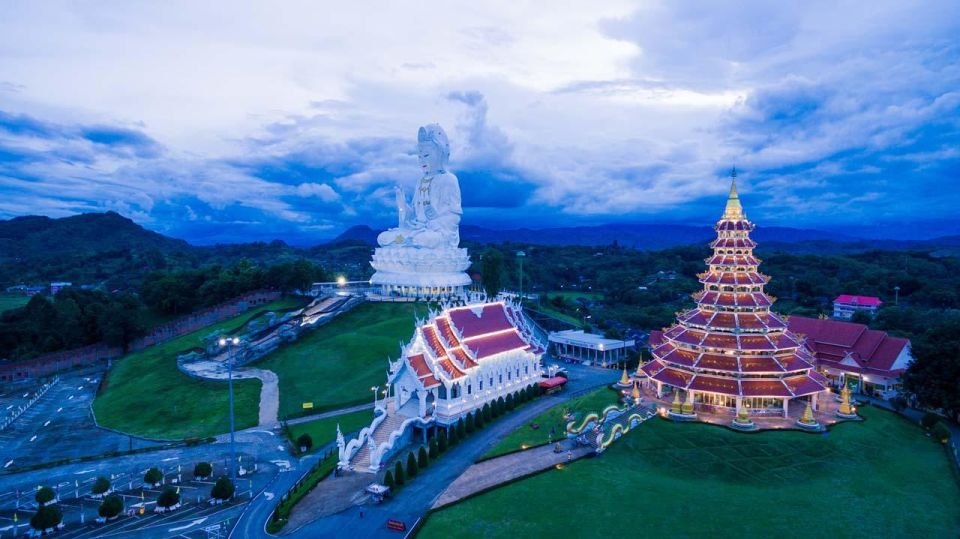
- The Big Guan Yin statue / Big Buddha viewpoints were mentioned as part of the day for some groups.
- A Long Neck village stop was added on at least one outing as a bonus.
- One itinerary included a tea farm when weather affected planned temple access.
Since these are not guaranteed in the core description, treat them as possible extras rather than promises. Still, it’s a useful sign: the operator seems willing to adjust when conditions change.
Who this tour is best for (and who should skip it)
This is a strong choice if you’re:
- Based in Chiang Mai and want Chiang Rai’s best-known temples without arranging a private car
- The kind of traveler who likes a guide explanation, especially for religious art and symbolism
- Traveling with a limited time window and want a structured day plan
It’s less ideal if you:
- Have mobility limitations
- Hate long car rides and prefer slower travel
- Want a super flexible day with long free wandering time at just one site
If you fall into the middle, you’re in the sweet spot: structured, informative, and still photogenic.
Should you book this Chiang Rai temples day trip?
I’d book it if you want maximum return on a single day from Chiang Mai. The combination of three iconic temples with an English-speaking guide, plus included lunch and entrance fees, makes the $51 feel practical. White Temple is the big visual payoff, Blue Temple brings the detailed color contrast, and the Red Temple adds story and meaning so the day doesn’t turn into a checklist.
But book with the right expectations. This is a long day with early pickup and substantial driving time. If your ideal trip is slow and unhurried, you might prefer an overnight in Chiang Rai. If you’re okay trading comfort for speed, this day trip is a clean, well-managed way to see the highlights.
FAQ
Where is the meeting point in Chiang Mai?
The meeting point is Baan Meesuk, an hotel/hostel in the old town of Chiang Mai.
What time does pickup usually happen?
Pickup is between 7:00 and 7:30, if pickup is available for your hotel.
How long is the trip?
It’s a one-day trip.
How big is the group?
The group is limited to 12 participants.
Which temples are included?
The tour visits Wat Rong Khun (White Temple), Wat Rong Suea Ten (Blue Temple), and the Red Temple.
Is the hot spring stop for swimming?
No. You’ll make a short stop to observe the steam rising from mineral-rich water.
What’s included in the price?
Hotel pickup and drop-off, round-trip transfers, all entrance fees, an English-speaking tour guide, lunch, insurance, and drinking water.
Is the tour suitable for people with mobility impairments?
No, it’s not suitable for people with mobility impairments.
What should I wear or bring for temple visits?
Bring comfortable shoes, sunscreen, insect repellent, and a hat. Dress respectfully with knees and shoulders covered, and remove your shoes before entering the main chapel.
What languages are the guides speaking?
The tour guide is English, Thai.