REVIEW · CHIANG MAI
Sunset Thai Cooking with Grandma – Farm & Evening Feast
Book on Viator →Operated by Grandmas Home Cooking School · Bookable on Viator
Golden-hour Thai cooking on an organic farm. It’s a countryside start that turns into hands-on Thai cooking, with a meal you eat right there while the light turns soft.
I also love the open-air kitchen setup with your own cooking station, plus clear step-by-step instruction so you’re not stuck guessing. One possible drawback: this is a well-run program, so if you want a totally informal, truly grandma-only vibe, you may find it feels a bit organized and efficient.
In This Review
- Key Things That Make This Class Worth Your Evening
- A 4:00 pm Sunset Plan That Feels Like Chiang Mai Outside the City
- The Farm Walk: Rice Fields, Chickens, Eggs, and the Mushroom Hut
- Open-Air Kitchen Cooking: Your Station, Your Pace, Golden Light
- Cook Five Thai Dishes: What You’ll Make and Why It Matters
- Mango Sticky Rice and the Other Favorites People Talk About
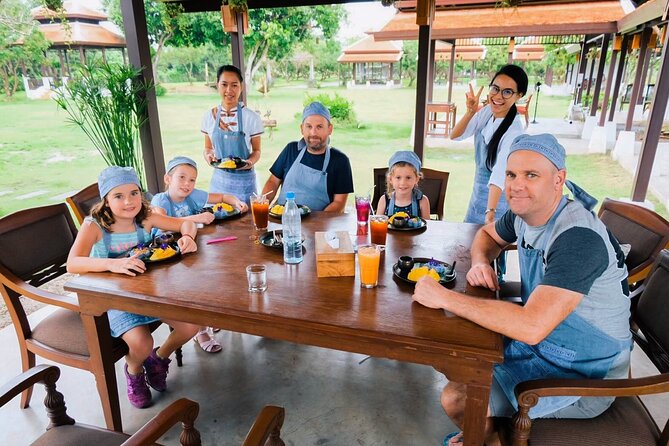
- Eating Together: Homemade Thai Food With Rice Fields in the Background
- Dietary Options and Gluten-Free Handling (What to Expect)
- Price and Value: Why $45.31 Often Feels Like a Bargain in Chiang Mai
- Pickup, Timing, and What to Bring
- Who This Sunset Class Suits Best (and Who Might Skip)
- Should You Book This Sunset Thai Cooking Class?
- FAQ
- What dishes will I cook in this class?
- Is hotel pickup included?
- Can I do this class if I’m vegetarian or Halal?
- Can the class handle gluten-free or allergies?
- Are children allowed?
- What if I need to cancel?
- Should You Book This Sunset Thai Cooking Class?
Key Things That Make This Class Worth Your Evening
- Fresh ingredients on-site: pick what’s ready from the herb and vegetable gardens.
- Farm time before the cooking: rice fields, chickens, eggs, and a mushroom hut visit.
- Your own station: fewer bottlenecks, faster cooking, less stress when the heat is on.
- Five dishes plus dessert: including Mango Sticky Rice, cooked with your own hands.
- Dietary flexibility: vegetarian and Halal options, and gluten-free adjustments are handled during class.
- Golden-hour meal: eat the food you make with a view over rice fields and mountains.
A 4:00 pm Sunset Plan That Feels Like Chiang Mai Outside the City
This is the kind of experience that works because it times itself well. You start in the late afternoon, when the farm feels calm, and you cook as the sun drops. In Chiang Mai, that matters. The evening air makes the outdoor kitchen far more pleasant than a midday class.
The core idea is simple: you go from garden to wok without turning it into a big production. You’ll walk through the farm, see ingredients growing where you’ll be using them, then cook five dishes at your own station.
For couples, this is also a nice change of pace from temples and night markets. It gives you a shared project and a shared meal, which is a better recipe for good conversation than standing in a crowd.
You can also read our reviews of more tours and experiences in Chiang Mai.


The Farm Walk: Rice Fields, Chickens, Eggs, and the Mushroom Hut
The evening starts with a pickup and then a short ride out to the farm area just outside Chiang Mai. Once you arrive, you get time to settle in and take in the place before cooking begins.
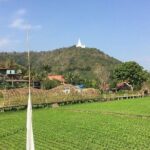
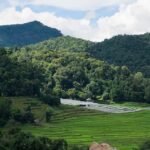
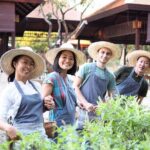
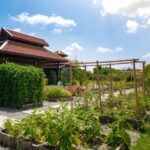
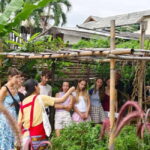
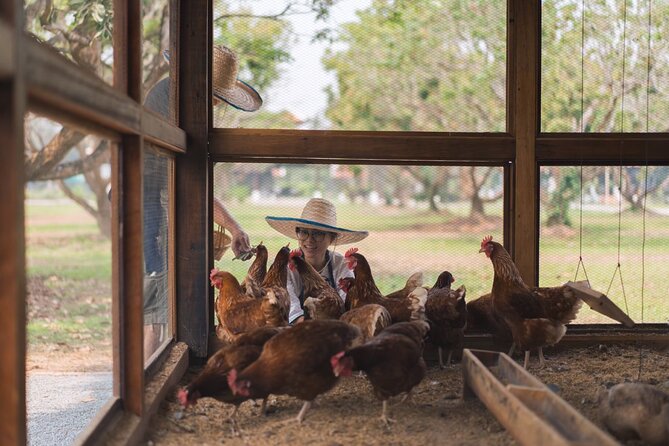
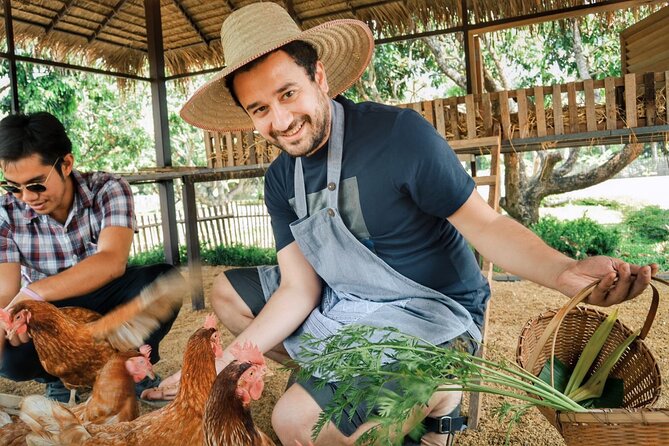
On the farm, you can expect the highlights to be hands-on, not just photo stops. You’ll tour rice fields, herb and vegetable gardens, and the chicken coop. There’s also a mushroom hut, which gives the class a farm-to-table feel beyond herbs in planters.
You can feed and even hug the chickens, and you may also collect fresh eggs. That little bit of “farm work” makes the kitchen portion feel more real, because you’re not cooking with anonymous supermarket items. Vegetable picking is part of it too, though what you pick can depend on what’s ready at the time.
One practical note: this is a farm walk. Wear comfortable shoes. The ground can be uneven, and you’ll want stability when you’re moving around between garden spots.
Open-Air Kitchen Cooking: Your Station, Your Pace, Golden Light
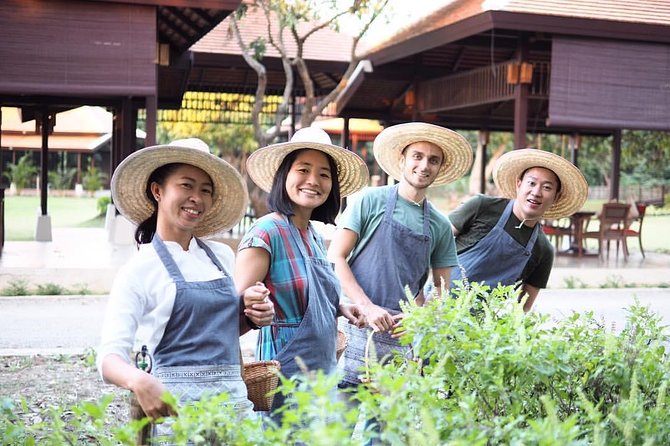
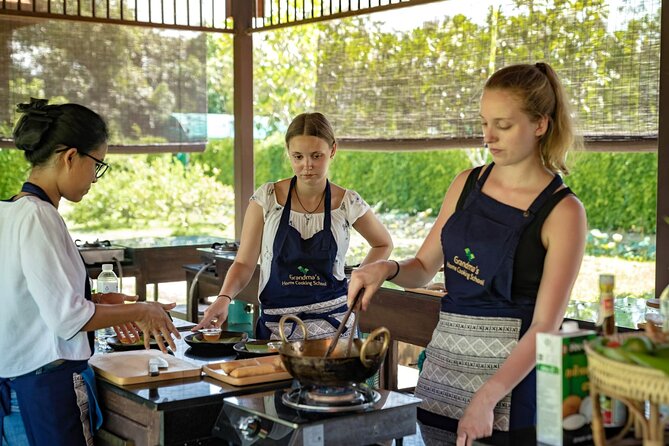
When class shifts into cooking mode, you’ll step into a cozy open-air kitchen with individual cooking stations. That setup is a big deal for comfort and learning. You’re not waiting for someone else’s turn at shared equipment, and you can follow the steps without constantly looking across the room.
The timing also helps. Cooking in the warm glow of sunset makes the whole session feel less like a chore and more like an evening you’ll remember. You get that rare mix: outdoor scenery plus structured instruction.
Most instructors keep things friendly and practical, and you’ll get clear guidance as you cook. Some classes are led by teachers with names like Kiki, Mac, Garnet, Brian, Anne, Joy, Best, Jimmie, or Natasha, and the common thread is step-by-step support at your station.
Cook Five Thai Dishes: What You’ll Make and Why It Matters
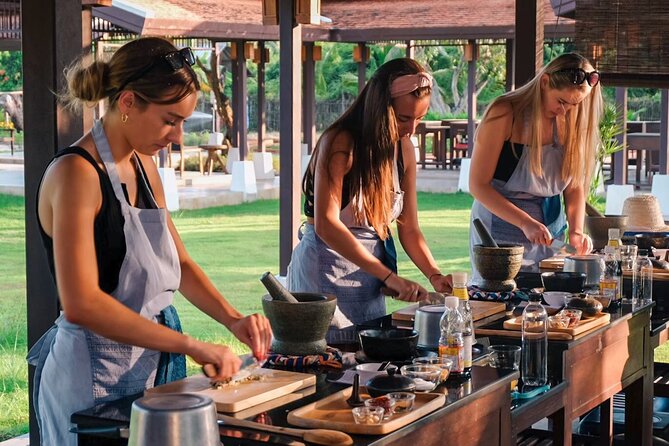
You’ll prepare five authentic Thai dishes, and you’ll make real progress because you’ll learn core techniques instead of only one recipe. The menu includes Thai favorites such as hot and sour soup or Thai green curry, and dessert is a must: Mango Sticky Rice.
At the start of class, each guest chooses their menu, including protein choices where relevant. Many people can pick options like chicken or shrimp, or go vegetarian. That flexibility helps the cooking feel personal, not like you’re stuck with one bland template.
One more reason this is good value: your class isn’t just cooking and then eating. You cook, then you eat soon after, while everything tastes fresh. When food is made right on-site, it usually tastes brighter and less heavy than dishes assembled and waiting.
Mango Sticky Rice and the Other Favorites People Talk About
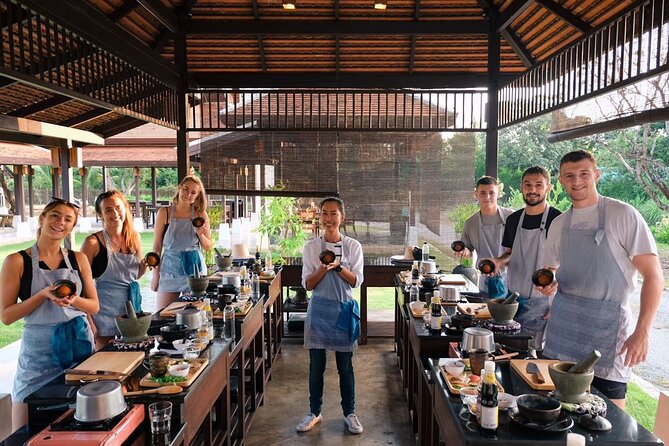
Dessert is built into the class on purpose. Mango Sticky Rice is widely loved in Thailand, and it’s also one of the best dishes for learning how Thai flavor balances sweetness and aroma. Plus, the satisfaction factor is high: you finish with something you can proudly plate in front of everyone.
You may also end up making additional Thai staples depending on your choices. In similar classes, people often mention dishes like Khao Soi, Tom Kha Gai with shrimp, and Pad Thai with shrimp. Even if your exact lineup differs, the teaching style stays the same: build flavor step by step, then execute.
During the ingredient walk, you may get to smell and sample herbs growing on-site. People have specifically called out Thai ingredient examples like lemongrass, holy basil, lemon basil, sawtooth coriander, ginseng, kafir lime trees, galangal, and more. If you’re the type who wants to understand what goes into Thai cooking, this part helps you connect the herb names to real aromas.


Eating Together: Homemade Thai Food With Rice Fields in the Background
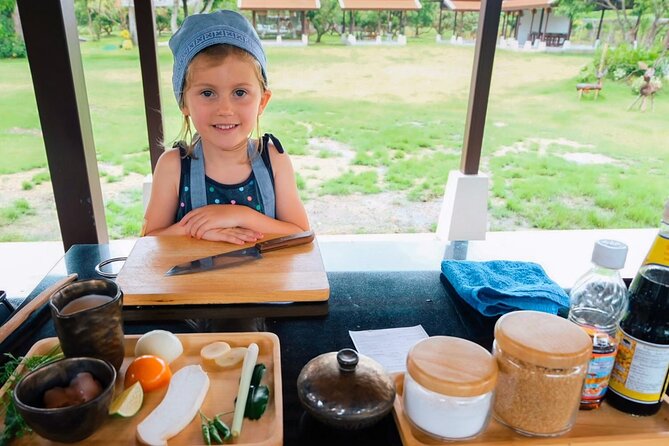
After cooking, you share your homemade dishes together. That “cook and eat” flow is what makes cooking classes in Chiang Mai special. You’re not just taking a lesson for later—you’re enjoying the results while the kitchen and farm are still part of the story.
You’ll also get drinks during class. The welcome drink choices include Thai milk tea, lemon tea, or butterfly pea flower tea. After that, you’ll have unlimited bottled water and a free herbal drink. Alcohol isn’t included, but beer can be purchased if you want it.
If you care about comfort, this group meal format is also good. You won’t be balancing plates while trying to learn technique. The class keeps you moving, and then it gives you a solid meal at the end.
Dietary Options and Gluten-Free Handling (What to Expect)
This is one area where this class tends to be genuinely practical. Vegetarian options are available, and Halal options are available too. If you have allergies or gluten-free needs, you’re asked about restrictions before cooking starts so adjustments can be made.
For gluten-free cooking, the key detail is that ingredients can be swapped where needed. For example, gluten-free soy sauce can be used at your cooking station when gluten is an issue. The class also makes what’s gluten-free and what isn’t clear during preparation.
If you have a strong allergy, still tell them before class starts and double-check your specific ingredients. You’ll be cooking with fresh herbs and sauces, so it’s worth confirming how your dish will be assembled.
Children under 10 work differently here. They’re considered visitors and won’t have their own station, though they can join with a parent. If you want the child to have a station, you’ll need to book at the adult price.
Price and Value: Why $45.31 Often Feels Like a Bargain in Chiang Mai
At about $45.31 per person for roughly 3 hours 30 minutes, this class can feel like good value because so much is included. You’re not just paying for recipes. You’re paying for a full evening experience: pickup and drop-off (within 5 km of Chiang Mai city center), farm activities, ingredient access, hands-on instruction with an individual station, and five dishes including dessert.
Add in the digital recipe e-book, plus welcome drinks and free water. That’s a lot of perks folded into one price. And since you eat what you cook, the class is hard to compare to a basic cooking show where you might leave hungry.
Group size is described as small, and there’s a maximum of 100 travelers overall. In practice, your experience depends on the night’s group. You might find the class runs with around a dozen people some nights, so it’s still social, but you shouldn’t feel lost in a huge crowd.
If you’re trying to maximize time in Chiang Mai, this is also efficient. You get countryside, food education, and a satisfying meal in one evening.
Pickup, Timing, and What to Bring
Start time is 4:00 pm. The activity ends back at the meeting point, and pickup/drop-off is offered for hotels within 5 km of Chiang Mai city center. If your hotel is outside that range, you’ll be directed to a nearby meeting point or charged a small extra fee.
The best preparation is simple:
- Wear comfortable shoes for the farm walk.
- Come hungry. You’ll cook five dishes and eat them.
- If you have dietary restrictions, mention them before the class starts so ingredients can be handled right away.
If you’re hoping to photograph everything, plan for it. The farm setup includes spots that make for easy pictures, and the golden hour timing helps.
Who This Sunset Class Suits Best (and Who Might Skip)
I’d put this on your list if you want:
- A hands-on Thai cooking class, not just watching.
- A farm-to-table setup where you see herbs and vegetables growing.
- An evening activity that teaches technique and ends with a full meal.
It’s also a great fit for people who like structure. You pick your menu, you get your own station, and the process is paced so you can keep up.
If you’re the kind of traveler who hates any organization at all, this might not be your cup of tea. One person even noted that the atmosphere can feel a bit commercial. Still, the trade-off seems to be cleanliness, clear instruction, and smooth flow between dishes.
Should You Book This Sunset Thai Cooking Class?
If you want a Chiang Mai experience that mixes scenery, real food education, and a meal you helped create, book it. This class leans practical. You’ll cook five dishes, including Mango Sticky Rice, and you’ll get recipes you can try later.
Choose it especially if:
- You want to learn Thai flavors from fresh ingredients on-site.
- You want individual cooking time with your own station.
- You care about dietary handling and want a class that addresses gluten-free and vegetarian needs.
Skip it (or at least lower your expectations) if:
- You’re looking for a super informal, “nothing is scheduled” vibe.
- You hate outdoor heat and don’t plan for it. The kitchen is open-air, and the farm walk is part of the deal.
FAQ
What dishes will I cook in this class?
You’ll cook five authentic Thai dishes, and Mango Sticky Rice is included. The menu can include favorites like hot and sour soup and Thai green curry, and your exact dishes depend on the menu choices you make at the start of class.
Is hotel pickup included?
Yes, hotel pickup and drop-off are included for hotels within 5 km of Chiang Mai city center. If your hotel is farther out, you’ll either meet at a nearby point or there may be a small extra charge.
Can I do this class if I’m vegetarian or Halal?
Yes. Vegetarian and Halal options are available. Tell the provider before the class starts so they can adjust your menu and ingredients.
Can the class handle gluten-free or allergies?
Gluten-free needs and allergies can be accommodated if you let them know before the class starts. The class can adjust ingredients at your cooking station when required.
Are children allowed?
Children under 10 are considered visitors and won’t have their own cooking station, but they can join with parents. If you want a child to have their own station, book as an adult price.
What if I need to cancel?
Free cancellation is available up to 24 hours before the experience’s start time for a full refund.
Should You Book This Sunset Thai Cooking Class?
If you’re aiming for one standout evening in Chiang Mai that’s genuinely hands-on, this is a strong choice. You get farm time, an open-air cooking setup with your own station, and five dishes plus dessert for a price that’s usually fair for what’s included. If you have dietary needs, bring them up early and you’ll likely feel well taken care of.