REVIEW · BANGKOK
From Bangkok: Railway & Damnoen Saduak Floating Market Tour
Book on GetYourGuide →Operated by Discova Thailand · Bookable on GetYourGuide
The train market is a circus of timing and snacks. This half-day tour strings together Mae Klong with Damnoen Saduak for a land-and-water contrast you won’t forget.
I especially love how the guide keeps everything moving at a human pace. I also like that you get both guided wandering and real water time, including a long-tail boat ride through the canals before you shop and nibble at the floating markets.
One thing to plan for: the stops can get crowded fast, and it starts early. If you hate heat or being shoulder-to-shoulder, this might feel intense.
In This Review
- Key points to know before you go
- Why this half-day from Bangkok feels like two trips in one
- Morning logistics: the early start that actually helps
- Mae Klong Railway Market: watching stalls pull back for the train
- The van-to-boat transition: why the canal cruise is part of the value
- Damnoen Saduak floating market: shop, snack, and manage the crowds
- Lao Tuk Luck floating market: the older style stop
- Baan Tao Thai Derm sugar palm stop: more than a photo op
- Value check: what you get for around $43
- Who this suits best (and who should skip)
- Should you book this Railway and Damnoen Saduak tour?
- FAQ
- How long is the tour?
- What time is hotel pickup?
- Is the boat ride included?
- Do I need to pay extra for a paddle boat?
- What language is the tour guide?
- What should I bring?
- Who is this tour not suitable for?
Key points to know before you go
- Mae Klong Railway Market timing: the stalls pull back so the train can pass, and your guide helps you position for photos.
- Long-tail boat canals: you don’t just arrive at the floating market, you glide past the canal life first.
- Two floating-market viewpoints: Damnoen Saduak for the classic scramble, plus Lao Tuk Luck for an older, calmer feel.
- Sugar palm learning stop: you see how coconut plantations become sugar products, not just souvenirs.
- English guides that actually guide: many guide names repeat in the feedback, including Alex and Travis, plus others like TK, Mod, Peak, and Mai.
Why this half-day from Bangkok feels like two trips in one
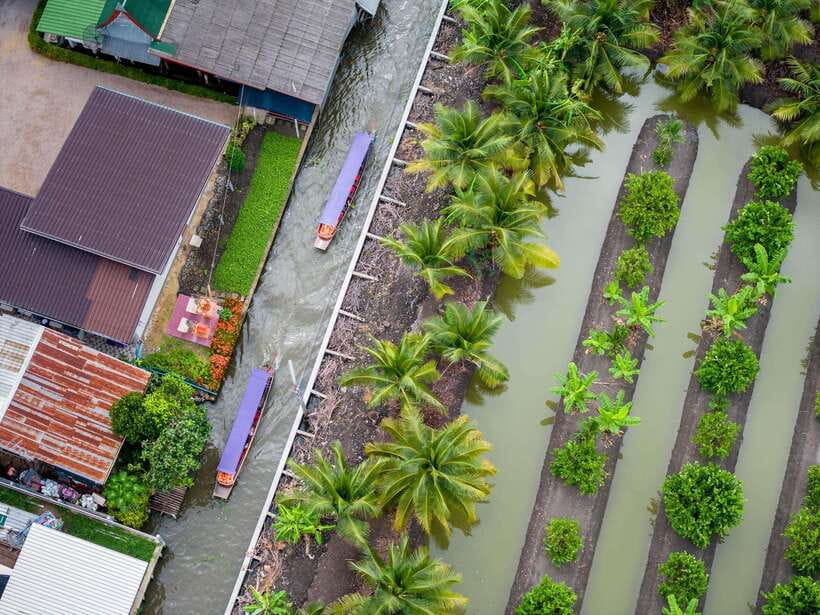
This tour works because it changes the “rules” of seeing Thailand every hour. You start on a railway track where commerce literally pauses for the train. Then you shift to narrow canals where the boat is the main way people move, sell, and snack.
The mix also makes it easier to stay engaged. If you’re shopping fatigue-prone, you’ll still have the boat ride and the railway spectacle to keep your attention. If you love photos, you’ll have two built-in moments where timing matters.
You can also read our reviews of more tours and experiences in Bangkok.
Morning logistics: the early start that actually helps
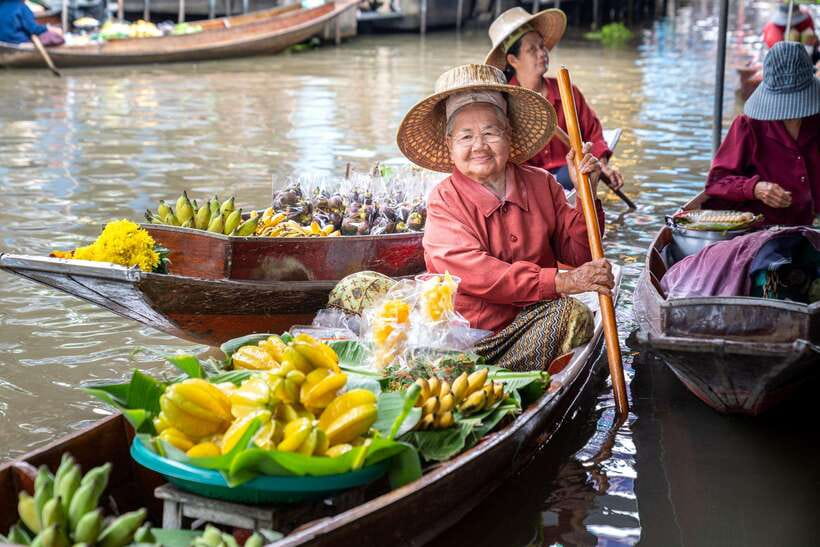
The day begins with hotel pickup from Bangkok city outskirts, usually between 06:00 and 07:00. Your operator confirms the exact time by email, and you should check your phone the night before since that pickup window depends on where you’re staying.
Then you ride out in an air-conditioned van. The total day runs about 6 to 7 hours including drop-off, so even though it feels like a lot, it’s built for getting you back while the rest of Bangkok still has energy.
Mae Klong Railway Market: watching stalls pull back for the train
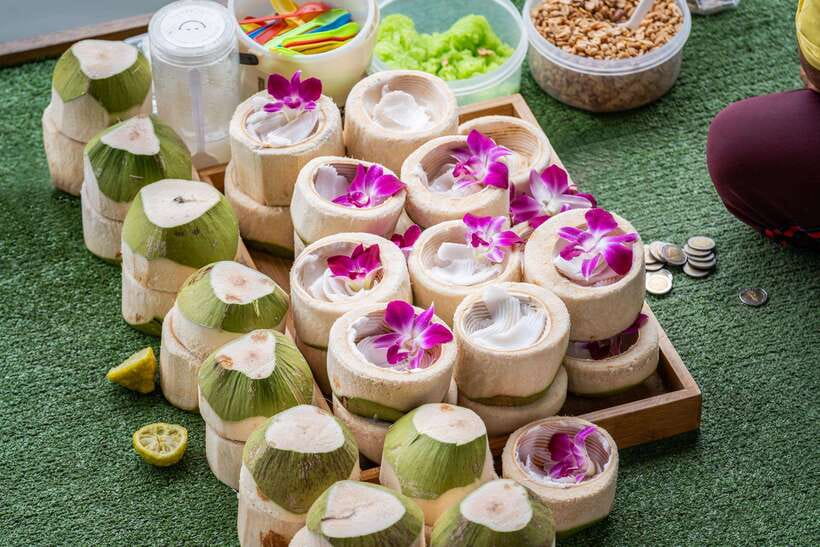
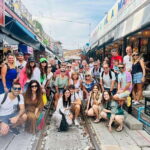
Mae Klong (also called Talad Rom Hup, which you’ll hear explained as something like the umbrella pulldown market) is the headline act for a reason. The whole market is arranged along a functioning railway track, so when the train approaches, shop fronts and awnings move back from the rails.
What I like here is how visual it is. You’re not listening to a history lecture; you’re watching people do something practical right in front of you. It’s fast, loud, and very real-world commerce.
Your guide’s role matters more than you might expect. In the feedback, guides like Alex and Travis are praised for securing a good spot to see the train pass and for helping with photos when everyone else is scrambling. If you want cleaner pictures, arrive with your camera ready and follow the guide’s positioning instructions as the train time comes near.
Practical note: wear comfortable shoes. The ground around the rails is where everyone funnels, and you’ll be standing and walking in a tight, crowded space.
The van-to-boat transition: why the canal cruise is part of the value
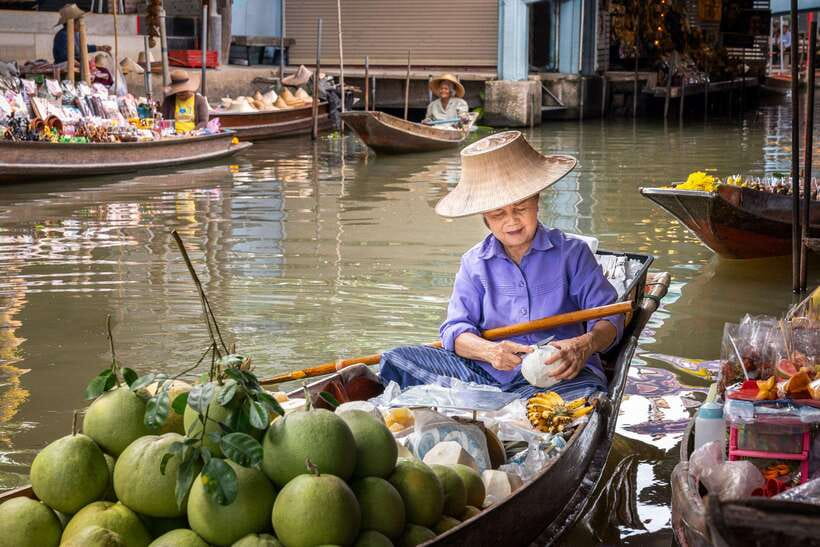
After Mae Klong, you head on to the Damnoen Saduak area by van. Then you switch to a boat experience: a long-tail boat ride is included, and this is where the tour changes texture.
This matters because it turns the floating market from a destination into a journey. You’re not just stepping onto a crowd-filled pier; you’re cruising past vendors and canal activity first, with your guide unpacking what you’re seeing from earlier canal-era life.
Also, this ride gives you a calmer rhythm after Mae Klong’s intensity. Even if you still feel “in the middle of it,” the perspective is different: you’re moving through the environment rather than being trapped in a stationary queue.
Damnoen Saduak floating market: shop, snack, and manage the crowds
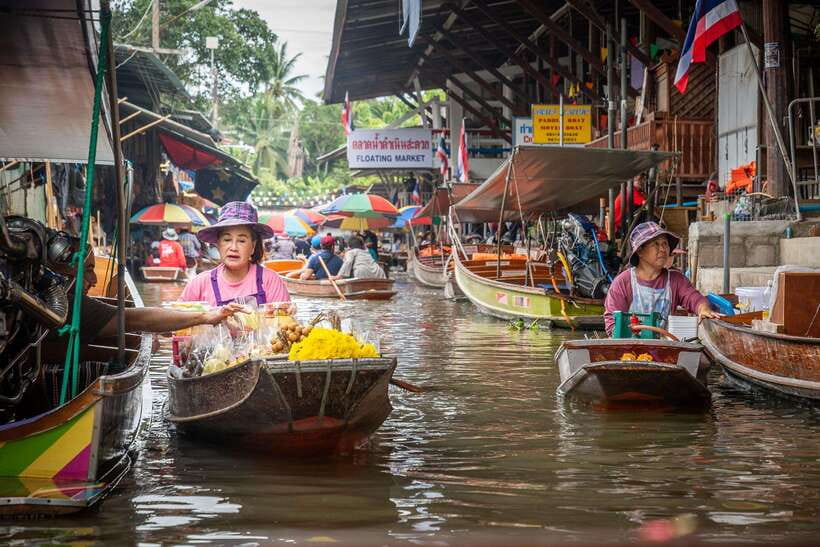
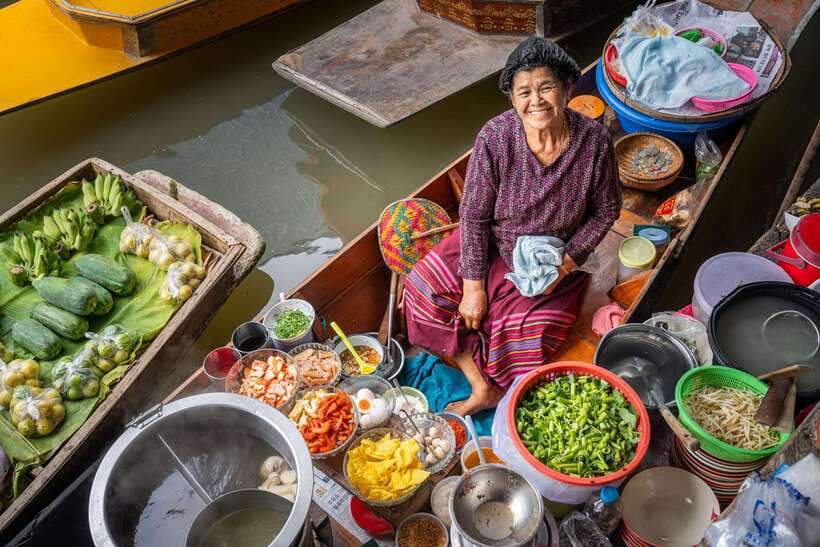
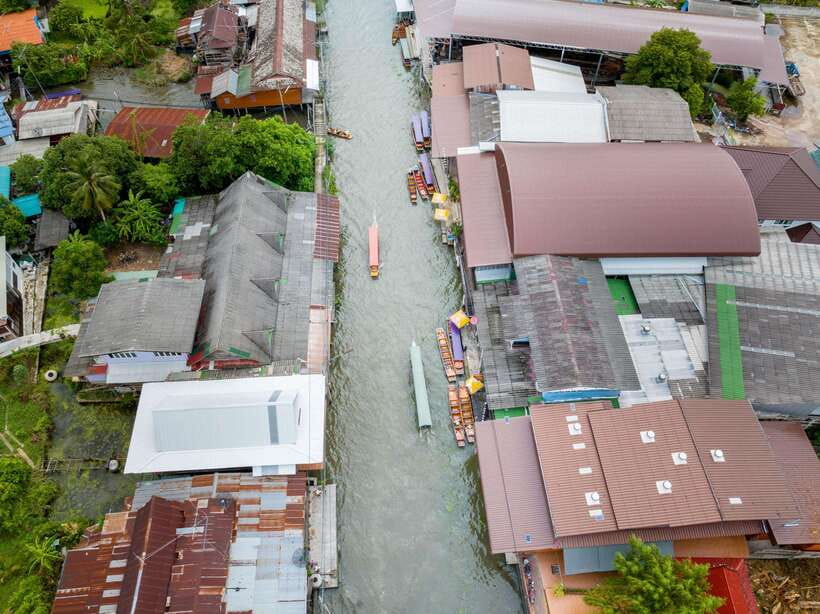
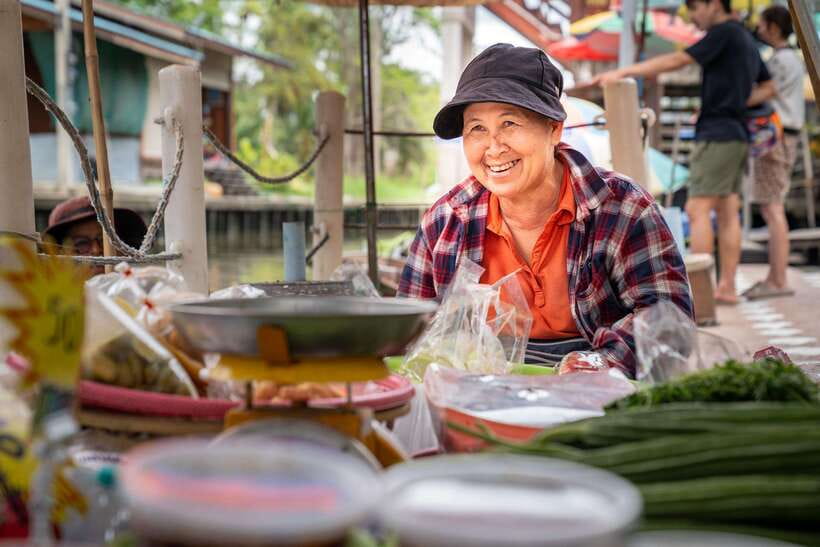
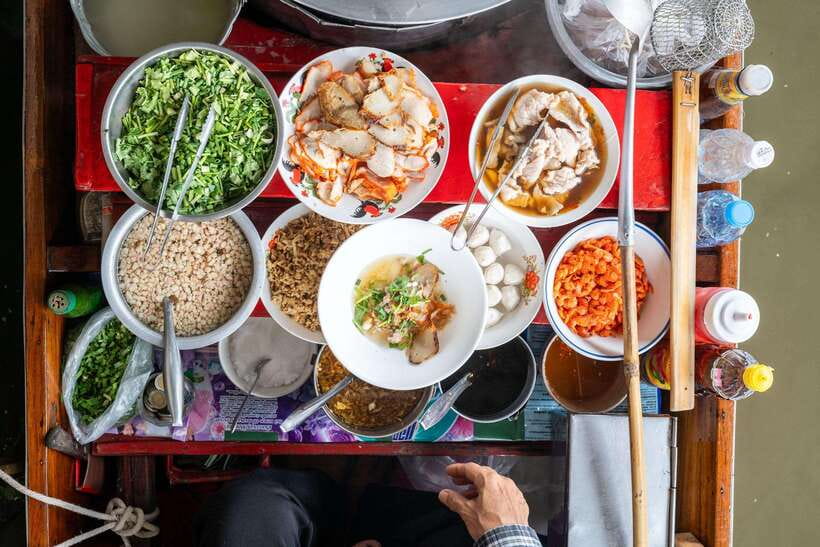
Damnoen Saduak is the classic floating-market name, and it lives up to that reputation. Expect fresh produce, handmade sweets, colorful clothing, and plenty of souvenir stalls, all along canal lines where boats pull alongside to trade.
The included time is not huge, so treat it like a tasting-and-choosing window. I’d focus on one or two “must buys” rather than trying to shop every stall. Grab snacks, look for fruit you can easily identify, and take photos early before the most packed moments.
You also have the option to rent a paddle boat at your own expense. That choice can be fun if you like more hands-on movement, but it’s not required. If you’re not a confident boater or you’re short on energy, the guided stops plus the long-tail ride still give you a strong sense of the market.
Local snacks and drinking water are included, which helps a lot. Heat and crowds can drain you quickly, so having that reset built into the plan is real value.



Lao Tuk Luck floating market: the older style stop
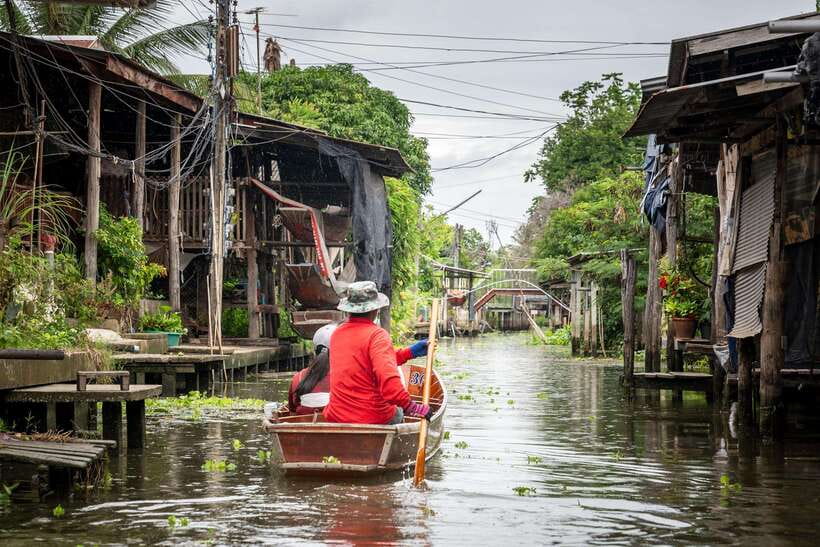
Then you move to ตลาดน้ำเหล่าตั๊กลัก (Lao Tuk Luck floating market), also described as an older-style or traditional Damnoen Saduak market. This stop is shorter, but it’s a nice counterbalance to the bigger Damnoen Saduak surge.
Here, the appeal is watching trade in a more traditional setting, with sellers offering fruits, vegetables, and other everyday items. If you came for authenticity and not just for the famous name, this stop usually makes the day feel more grounded.
Baan Tao Thai Derm sugar palm stop: more than a photo op
One of the most interesting parts of this tour is the stop connected to sugar palm production. You visit a traditional house area called Baan Tao Thai Derm, where you can see how local production turns coconut plantation materials into sugar products.
In plain terms: it connects the dots between what you eat and where it comes from. You’re used to buying sweets, but this gives you a glimpse of how the ingredients get made before they become snacks and souvenirs.
If you enjoy food culture, this is a worthwhile use of time. Some people still wish the floating-market shopping window were longer, but the sugar palm stop adds depth without turning the day into a classroom.
Value check: what you get for around $43
At about $43 per person for a roughly 7-hour day, the value is mostly in the logistics you don’t want to handle yourself. You’re getting:
- Hotel pickup and drop-off
- Air-conditioned van transport
- An English-speaking guide
- Long-tail boat rental for the Damnoen Saduak ride
- Snacks and drinking water
- Accidental insurance
That package is especially good if you’re staying outside the center of Bangkok. The tour is designed for early departures and a tight schedule, so the guided coordination is part of what you’re paying for.
If you’re the type who likes to “wing it,” you could try to DIY the markets by bus and boat. But the train market timing and the canal navigation are where a guide saves you stress. Guides in the feedback—like Alex, Mai, and Mod—are repeatedly praised for keeping the day organized and helping with practical things like photo spots and pacing.
Who this suits best (and who should skip)
This tour fits best if you want a short, high-impact day with strong variety: railway spectacle, canal boat time, floating markets, and a production stop.
It’s also a great match for people who don’t want to spend the whole day in transit. The plan is built around a half-day return to Bangkok, with drop-off depending on your hotel’s position—sometimes as early as around 1:00 PM, sometimes closer to 1:30–2:00 PM.
It’s not suitable for:
- Pregnant women
- Wheelchair users
- People over 70
If you’re traveling with kids, it can work well because the train moment and boat ride naturally hold attention. Just be ready for crowd intensity at the railway and market areas.
Should you book this Railway and Damnoen Saduak tour?
I’d book it if you want the famous highlights without spending a day figuring out transport, timing, and where to stand for the train. The guide-led positioning at Mae Klong and the included long-tail boat ride make it feel like more than a checklist tour.
I would reconsider if you’re sensitive to crowds or heat. This day is active and packed, and you’ll be walking around market areas fairly quickly.
If you do book, go in with a simple plan: comfortable shoes, camera ready, and cash for purchases. Then let your guide run the schedule—especially around Mae Klong train timing—so you can enjoy the show instead of hunting for the best angle.
FAQ
How long is the tour?
It runs about 7 hours in total, including hotel drop-off. The operator notes the tour duration is approximately 6 to 7 hours.
What time is hotel pickup?
Hotel pickup is between 06:00 AM and 07:00 AM. The exact time is confirmed by the operator (typically via email) the night before, and you should check your phone.
Is the boat ride included?
Yes. The tour includes a boat rental for the Damnoen Saduak ride.
Do I need to pay extra for a paddle boat?
Paddle boat rental is not included. You can rent one at your own expense if you want to paddle through the canal area.
What language is the tour guide?
The live tour guide speaks English.
What should I bring?
Bring comfortable shoes, a camera, comfortable clothes, and cash.
Who is this tour not suitable for?
It’s not suitable for pregnant women, wheelchair users, and people over 70.