REVIEW · CHIANG MAI
Chiang Mai: Elephant Sanctuary & Waterfall Group Tour
Book on GetYourGuide →Operated by PON ELEPHANT (THAILAND) CO., LTD. · Bookable on GetYourGuide
Elephants, river baths, and a jungle waterfall. I love the ethical sanctuary set-up at Pon Elephant Thailand, especially the rescued-elephant introductions with guides like Beer or Aamm, and the chance to feed and watch them forage. I also like the Mae Wang Waterfall hike and the river cooling time, but plan for a wet day and bring your own swim setup and towel.
The day moves from city pickup into the Mae Wang district, then back to Chiang Mai with lunch and everything you need to interact responsibly. It’s a well-paced 7-hour outing if you want nature time and real elephant care, not a quick photo stop.
In This Review
- Key highlights that make this tour worth your time
- Why Pon Elephant + Mae Wang is a smart Chiang Mai day
- The drive out of Chiang Mai: scenery, villages, and a comfy rhythm
- Pon Elephant Thailand: what the sanctuary time is really about
- Feeding, touching, and watching elephants forage (the part you’ll remember)
- Bathing in the river: cooling down, safety rules, and getting wet
- Thai lunch, fruit, and the right fuel for the waterfall hike
- Mae Wang Waterfall hike: forest views and a safety-first swim question
- Value check: $50 for a full day, and where your money goes
- Ethics and common-sense questions to ask before you book
- Who this tour fits best (and who should think twice)
- Practical tips: what to pack so the day stays fun
- Final call: should you book the Chiang Mai elephant + Mae Wang waterfall tour?
- FAQ
- How long is the Chiang Mai Elephant Sanctuary & Waterfall tour?
- Where do I meet the guide if I am not picked up?
- Is pickup included?
- What is included in the price?
- Can I ride the elephants?
- What activities happen at Pon Elephant Thailand?
- Should I expect to get wet?
- Is swimming at Mae Wang Waterfall always available?
- Who is this tour not suitable for?
- Do I need to bring anything extra like a passport number?
- Is cancellation free?
Key highlights that make this tour worth your time
- Pon Elephant Thailand rescue-and-care focus with a guide-led briefing on sanctuary history and elephant basics
- No food, no friend style interaction, plus snack prep and rules that keep things natural
- Feeding, walking, and watching real elephant behavior like foraging and family interactions
- River bathing for cooling down with safety-first adjustments depending on conditions
- Mae Wang Waterfall hike through forest with time to enjoy the scenery and refresh
- Lunch that actually fuels you including traditional Thai food, fruit, and Thai desserts (often served in tiffin tins)
Why Pon Elephant + Mae Wang is a smart Chiang Mai day
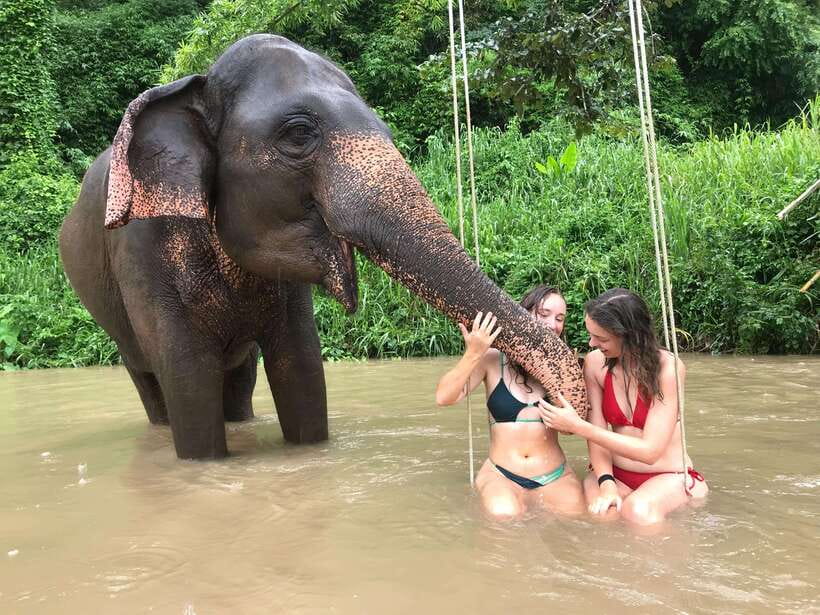
Chiang Mai has no shortage of animal experiences. The trick is finding one that feels like care and not a production line. This one stands out because it pairs an elephant sanctuary visit with a jungle waterfall so the day feels balanced: animal time plus outdoor time.
I like that the tour is structured around what elephants naturally do. You’re not just rushing in for a photo. You get a guided run-through first, then you spend real time in the elephants’ space—feeding, touching if appropriate, and watching how they forage and interact. That’s a big difference from places that revolve around riding or constant performance.
The other half of the value is the Mae Wang Waterfall stop. It gives you a cool-down activity after the heat of the morning and after the river segment. If you came to Chiang Mai for both elephants and nature, this combo saves you from stitching together two separate tours.
You can also read our reviews of more tours and experiences in Chiang Mai.


The drive out of Chiang Mai: scenery, villages, and a comfy rhythm
You start with pickup from Chiang Mai city-center hotels (or you meet at the Pon Elephant office in town). Then it’s roughly an 80-minute van ride southwest toward the Mae Wang area. It’s long enough to settle in, but not so long that you feel dragged.
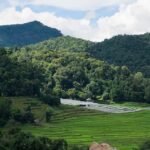
On the way, you pass local villages, farms, Buddhist temples, and rice fields. This matters more than it sounds. It helps the day feel rooted in the region around Chiang Mai, not just the elephant site in isolation. You also get that slow shift from city pace into countryside pace.
A lot of people underestimate how important transport is on a long day. Here, it’s rated highly for comfort, which you’ll notice when the schedule includes multiple stops and some wet activities later.
Pon Elephant Thailand: what the sanctuary time is really about
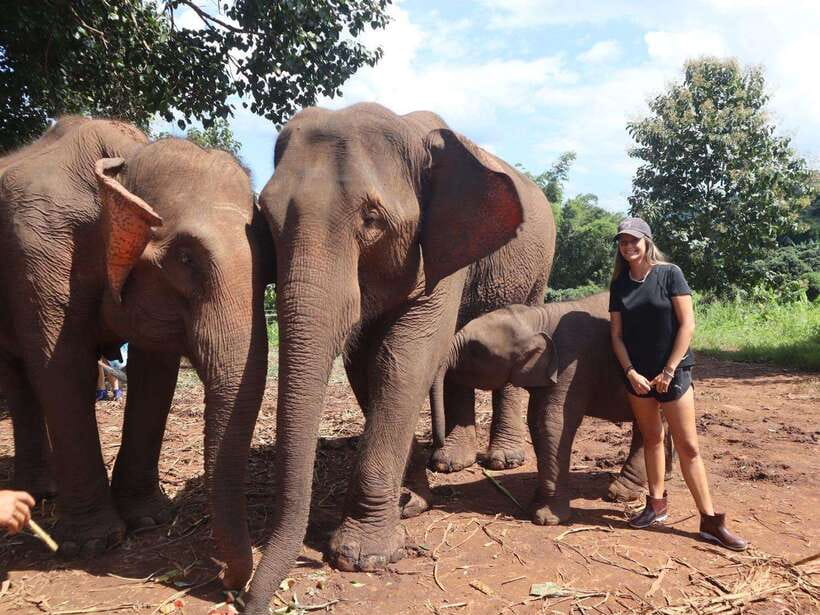
At Pon Elephant Thailand, the day begins with a briefing on Asian elephants and African elephants, plus the sanctuary’s background. Then you meet the rescued elephants. The guide explains what you’re seeing and what respectful interaction looks like.
One of the strongest parts is how the tour frames the rules. You’ll hear the approach of No food, no friend, which basically means you earn interaction by following the staff’s guidance. It keeps things calm for the elephants and prevents the kind of chaos that makes both animals and visitors stressed.
You can also expect hands-on learning. You’ll be taught how to make healthy snacks for elephants before you feed them. Then, during the interaction time, you’re encouraged to walk around and observe. This is not elephant-wrangling. The goal is understanding: how elephants forage, how they move as a group, and how they respond to calm human presence.
Guides can make a big difference in this kind of tour, and the names I’ve seen praised again and again include Beer, Aamm, Sunny, Mimi, and Nop. The common thread is consistency: they explain what to look for, they keep the group moving at an elephant-friendly pace, and they answer questions without rushing you out.
Feeding, touching, and watching elephants forage (the part you’ll remember)
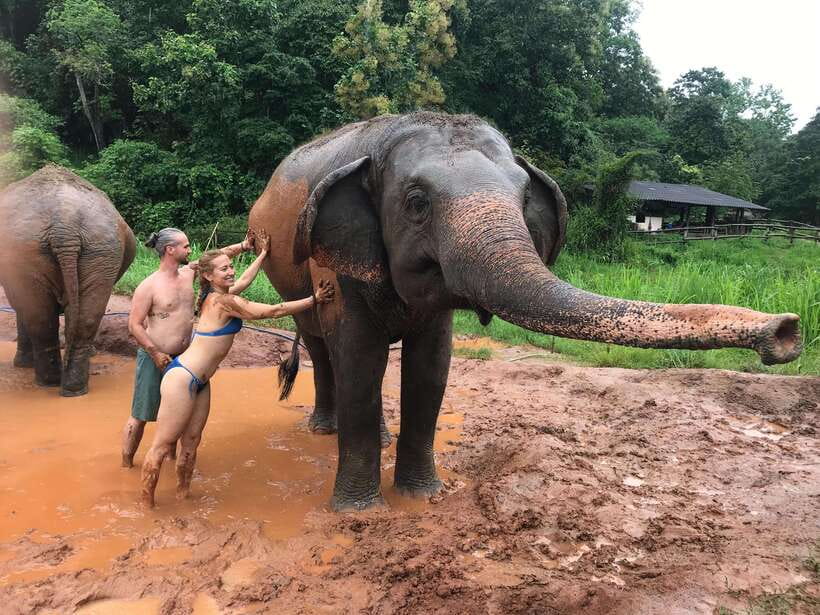
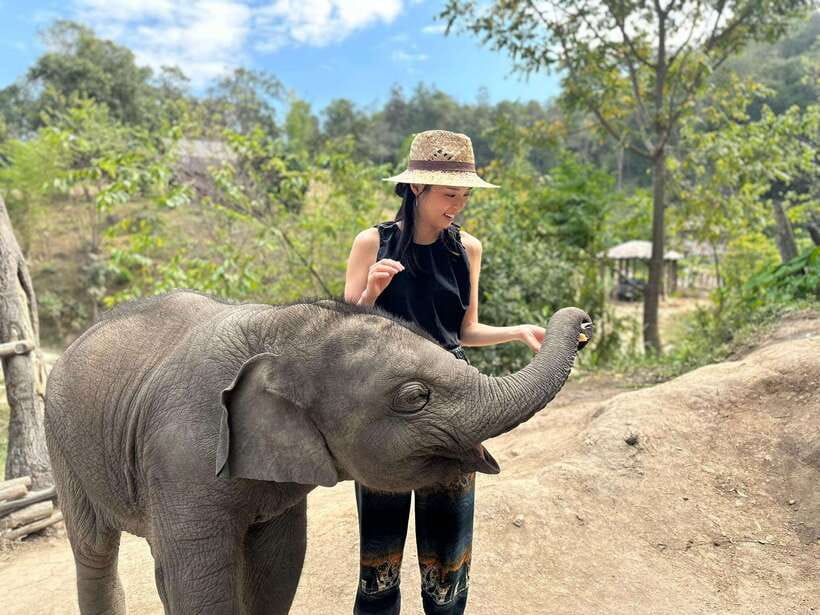
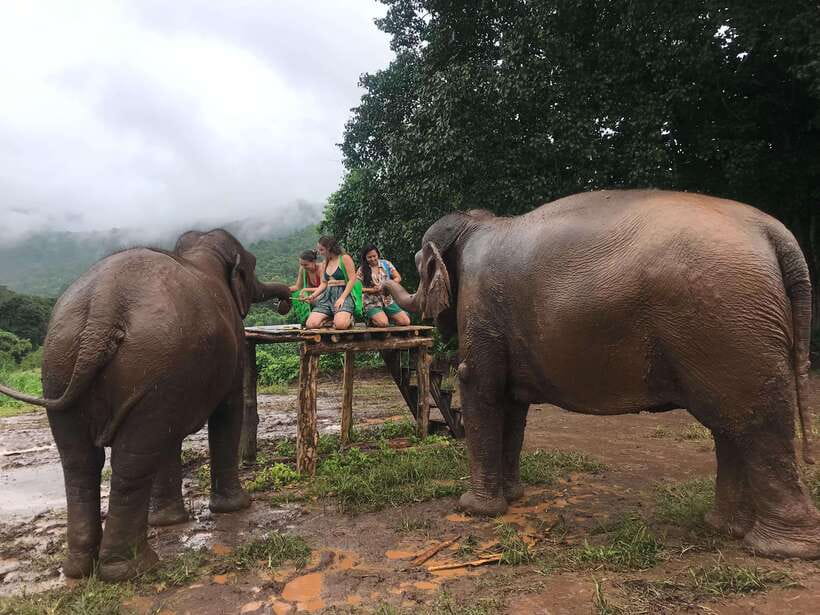
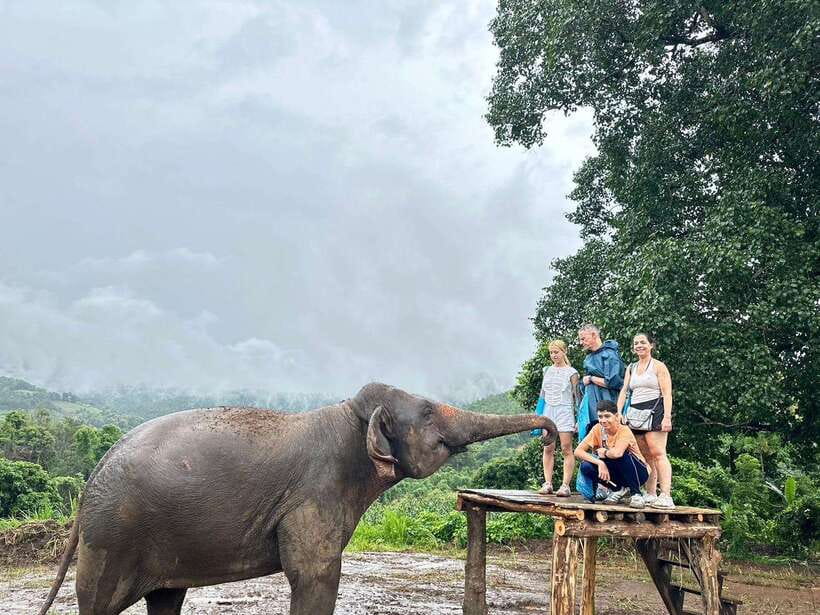
Once you’re at the elephant stations, your interaction time is measured and guided. The emphasis is on letting elephants lead the relationship. Elephants aren’t forced to perform activities, and riding is prohibited—so the day feels more about care and observation than tricks.
You’ll likely spend a few hours with multiple elephant moments:
- Feeding with food provided for visitors
- Touch when it’s safe and appropriate (guided by handlers)
- Walking alongside while elephants forage
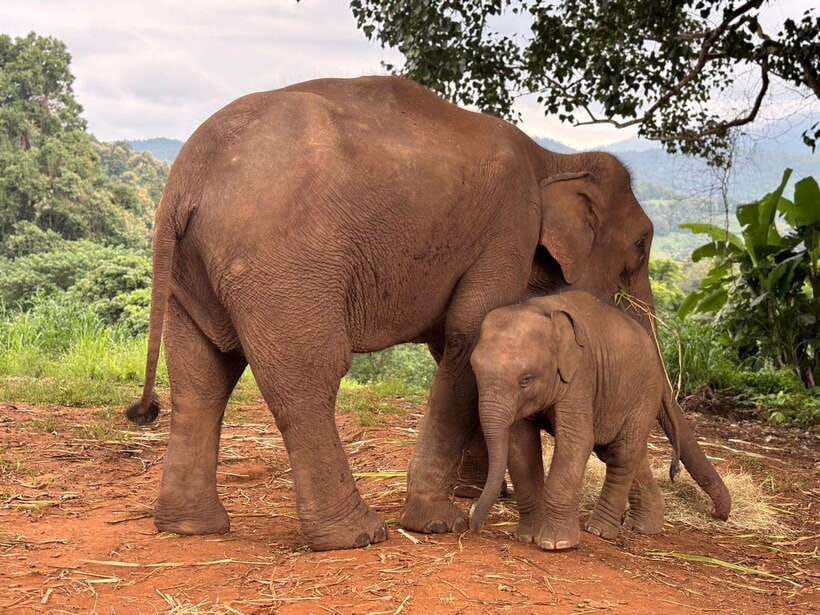
- Watching social behavior—including families interacting
This is where ethical tourism shows up in practical form. If an elephant doesn’t want contact, the staff doesn’t force it. You’ll feel that difference immediately. The elephants generally appear calm, and you’re not chasing them. You’re spending time where they’re comfortable.
Also, you’ll see how the handlers treat them as individuals. In several guide-led stories, the staff talks about personalities and care routines. That doesn’t just make it more interesting—it helps you interpret what you’re seeing, like why an elephant pauses, how they respond to space, and what “natural” behavior looks like when humans aren’t trying to control it.
Bathing in the river: cooling down, safety rules, and getting wet
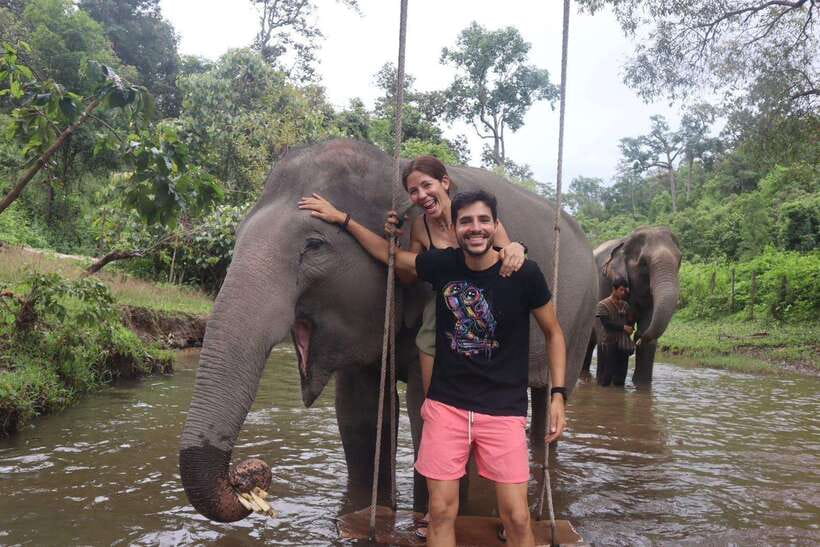
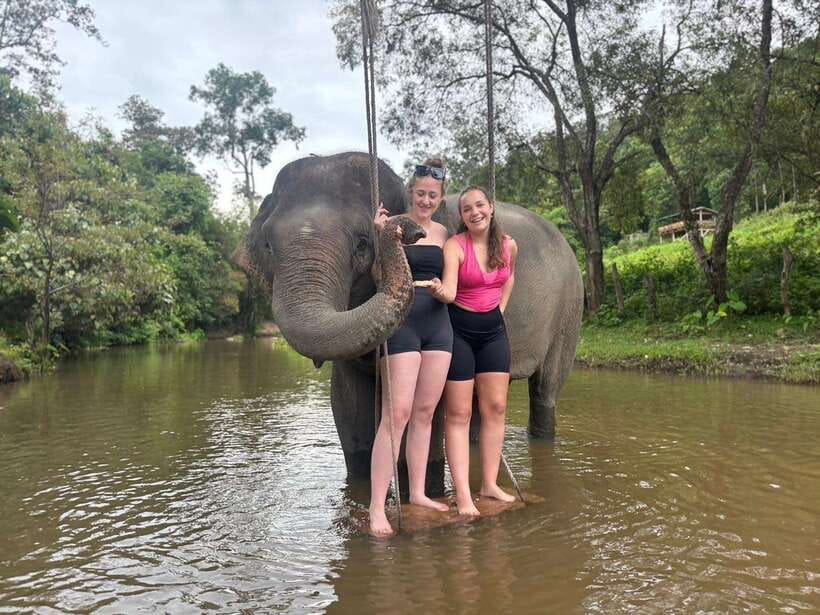
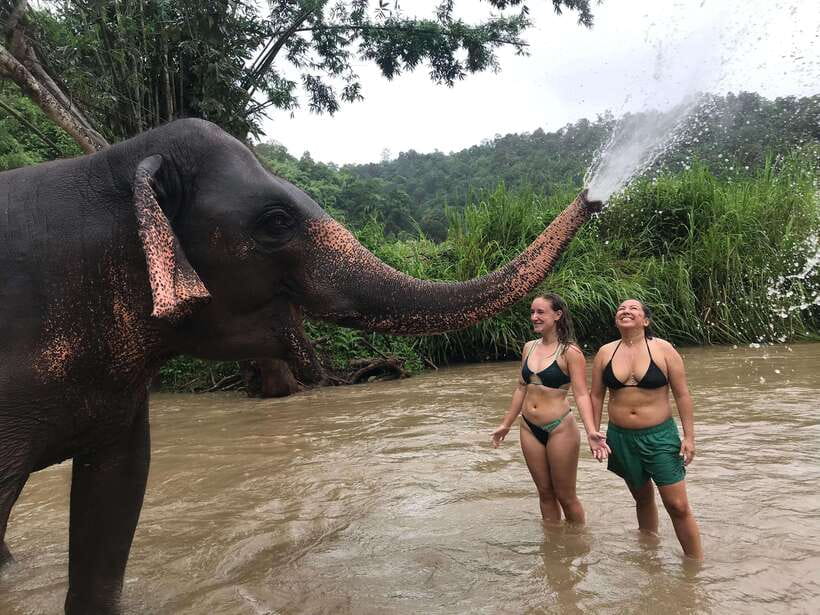
One of the most favorite activities in this tour is the river bath, where elephants cool down in their natural home river. It’s a memorable sensory experience, and it’s also one of the best reasons to pack properly.
A key point: this isn’t a reckless free-for-all. It’s handled with safety-first rules, and swimming at the waterfall can change based on rain conditions. The tour specifically notes that when it’s heavy rain, swimming may not be possible. That tells you the staff’s priority is safety over hype.
Expect you’ll:
- Participate in the river bathing experience alongside elephant handlers
- Go from cool river water back to the feeding area for a final good-bye
- Shower after the river segment
This is also why the packing list matters. The tour does not include towel and a change of clothes. Even if you think you’ll stay dry, you’ll likely get wet. And once you’re in river and forest conditions, you’ll be glad you brought something quick-dry or at least something you don’t mind getting dirty.




Thai lunch, fruit, and the right fuel for the waterfall hike
After the sanctuary portion, you get a traditional lunch. The day is set up so the meal arrives after the more physically and mentally active elephant time. This matters because you still have a waterfall hike later.
The lunch is described as Thai food with seasonal fruits and Thai desserts. In reviews, people also mention hot lunch served in tiffin tins, which is a practical detail you’ll appreciate: warm food that doesn’t feel like a sad afterthought.
I like that this meal isn’t just carbs. You get fruit plus dessert, which helps you recover without turning the rest of the day into a sugar crash. And because you’re out in the sun and humidity, you’ll want the energy.
You also get drinking water during the day. That’s a small inclusion that can be a big deal once you’re walking in hot, wet conditions.
Mae Wang Waterfall hike: forest views and a safety-first swim question
Then it’s off to Mae Wang Waterfall, one of the waterfalls that comes from Doi Inthanon Mountain. The tour includes time for a hike and a refresh stop.
The forest hike is the practical counterbalance to the elephant time. After hours of learning about elephants, it’s a reset for your eyes and your legs. You’ll walk through nature forest toward the waterfall area, with the guide managing timing so you’re not rushing or waiting too long.
Here’s the important catch: swimming may not always be on the menu. The tour notes that during heavy rain, swimming may not be possible and everything follows safety first. So go in expecting a refreshing water experience, but don’t build your whole day around one specific assumption—like guaranteed swimming every time.
In some situations, the guide may also adjust the waterfall plan if conditions are unavailable, since the tour is designed to be flexible depending on the situation. That flexibility can feel like a win if you’re the type who wants the day to succeed even when weather changes.
Value check: $50 for a full day, and where your money goes
At about $50 per person for a 7-hour tour, the value comes from what’s included—not just the headline price.
You’re paying for:
- Hotel transfers within Chiang Mai city center
- An English guide for the full experience
- Drinking water and lunch
- Food provided for elephant feeding
- The structured sanctuary time plus the waterfall visit
What you’re not getting (and should plan for) are towel and a change of clothes, plus your own personal items like sunscreen and insect repellent.
For me, this hits a sweet spot because you’re not paying extra for each activity segment. You also aren’t stuck trying to manage the day solo with transportation between two very different places. The van drive, guide interpretation, and the included meal are doing real work here.
Still, it’s not a cheap “activity only” add-on. It’s a full day. If you’re short on time, you might prefer a shorter sanctuary visit. But if you want a complete Chiang Mai day with animal care and nature payoff, the price feels fair.
Ethics and common-sense questions to ask before you book
Elephant tourism is messy worldwide. This tour includes multiple signals that point in the right direction, and you can use the same logic to sanity-check any sanctuary:
- No elephant riding is clearly prohibited.
- Elephants are not forced to perform activities.
- The focus is on feeding, touching when appropriate, and watching natural behavior.
- The day includes education: elephant basics and sanctuary history.
I also like that the staff teaches you how to make healthy snacks. It’s not just handing you a bag and letting chaos happen. That kind of small training step often correlates with how the elephants are treated overall.
If you care about ethical tourism, the best “test” for you is how the interaction feels. In this tour style, you should feel elephant-led behavior and calm handler guidance, not frantic pushing for photos.
Who this tour fits best (and who should think twice)
This is best for people who:
- Want an ethical sanctuary experience with hands-on but guided interaction
- Enjoy jungle nature time and don’t mind getting wet
- Can walk on uneven ground during the hike
- Are comfortable spending a full day away from the city
The tour also lists many clear “not suitable” categories, including children under 2, pregnant women, people with back problems, mobility impairments, heart problems, vertigo, respiratory issues, epilepsy, and others. If any of these apply to you, take the list seriously. This is outdoors, sometimes wet, and designed for a standard fitness level.
If you’re older than 70, the tour notes you may not be suitable. If you have insect allergies, animal allergies, or hearing or vision limitations, it may also be challenging based on the tour’s format.
One more practical note: group energy can vary. A solo visitor once mentioned the group skewed young. If you want a quieter or more mixed-age experience, message the operator or choose your timing carefully.
Practical tips: what to pack so the day stays fun
You’ll be in hot sun, river water, and forest paths. Pack for the wet parts first, then for the dry ones.
Bring:
- Swimwear
- A change of clothes
- A towel (not included)
- Sandals and/or shoes that handle wet ground
- Sports shoes for hiking sections
- Sunscreen and insect repellent
- Hiking pants
- Camera
- Cash
- Personal medicine
Also, many people recommend bringing both sandals/sliders for water stations and trainers for the walk portions. The idea is simple: protect your feet, then switch quickly when you hit wet areas.
If you’re wondering whether to overpack—don’t. But don’t show up with just flip-flops either. The day includes walking and a waterfall segment, and you’ll enjoy it more if your feet are stable.
Final call: should you book the Chiang Mai elephant + Mae Wang waterfall tour?
Book it if you want a day that combines rescue elephant care with nature time in the Mae Wang area. I think it’s a great fit for first-time Chiang Mai visitors because it’s structured, full of learning, and designed around safe, calm elephant interaction—not riding or forced tricks.
Skip or choose another option if you’re hoping for a fully dry day, guaranteed waterfall swimming, or you have mobility or medical constraints listed by the tour. This is a real outdoor experience with wet elements, showering afterward, and a hike through nature.
If your priority is ethical interaction plus a waterfall that actually feels like a break from the city, this tour is an easy yes. And if you go in prepared—with swimwear, a towel, and solid shoes—you’ll likely end the day with the kind of elephant-and-forest memory that stays longer than photos.
FAQ
How long is the Chiang Mai Elephant Sanctuary & Waterfall tour?
The tour duration is 7 hours.
Where do I meet the guide if I am not picked up?
You can meet your guide at Pon Elephant Thailand at the office in town.
Is pickup included?
Pickup is optional. The tour includes transfers to and from Chiang Mai city center only, and you’ll be picked up from your hotel lobby about 10 minutes before the confirmed pickup time.
What is included in the price?
The price includes an English guide, drinking water, lunch, food for feeding the elephants, and hotel transfers to/from Chiang Mai city center.
Can I ride the elephants?
No. Elephant riding is prohibited.
What activities happen at Pon Elephant Thailand?
You’ll get a sanctuary briefing, learn about elephants and the sanctuary history, make healthy snacks, feed the rescued elephants, walk around with them, and observe natural behaviors like foraging. There is also river bathing with the elephants.
Should I expect to get wet?
Yes. You should plan to get wet during the river bathing portion, and the tour recommends bringing swimwear, sandals, a towel, and a change of clothes.
Is swimming at Mae Wang Waterfall always available?
Not necessarily. The tour notes that when it is heavy rain, you might not be able to swim, and safety comes first.
Who is this tour not suitable for?
It is not suitable for children under 2, pregnant women, people with back problems, mobility impairments, heart problems, vertigo, respiratory issues, epilepsy, and people with several other conditions and allergies listed by the tour. It also notes people over 70 and wheelchair users as not suitable.
Do I need to bring anything extra like a passport number?
A passport number is requested for insurance detail. You should also remember your personal medicine. Towel and a change of clothes are not included, so bring those.
Is cancellation free?
Yes. Free cancellation is available up to 24 hours in advance for a full refund.