REVIEW · CHIANG MAI
Chiang Mai: Traditional Thai Cooking Class with Market Tour
Book on GetYourGuide →Operated by Chiang Mai Smart Cook · Bookable on GetYourGuide
A Chiang Mai cooking class is good. This one is better: it starts at the market and ends at your table with what you cooked. I love the hands-on rhythm in a traditional Lanna home, and I love that you learn curry paste techniques and sticky rice steps instead of just watching. One watch-out: the transport can feel warm and a little bumpy, depending on the vehicle.
You’ll pair food with real ingredients—Thai herbs, spices, and vegetables—then use them right away at your cooking station. In the best moments, instructors like Tu, Wave, Flook, Balloon, and Mew bring humor plus step-by-step guidance, so you actually leave knowing what to do next time. Still, if you’re expecting a huge dinner, note that a few people felt portions weren’t quite enough for their full meal needs.
If you’re in Chiang Mai and want a practical souvenir that isn’t just a fridge magnet, this is a great bet. It’s also ideal if you like cultural context mixed into your cooking (not just recipes). If you need alcohol included, you’ll want to plan around that since beer and alcohol aren’t part of the class.
In This Review
- Key things to love about this Chiang Mai cooking class
- Cooking in a Lanna home near Chiang Mai Gate Market
- The market tour: herbs, spices, and what they actually do
- Curry paste from scratch: the skill that makes everything click
- Sticky rice with mango: timing and balance, not just sweetness
- The full 4-hour flow: what you’ll do step by step
- Group size, English instruction, and the difference good chefs make
- Transport and timing: what to plan for on pickup days
- Price and value: why $32 can feel fair (or not)
- Who should book this class (and who might skip it)
- Should you book Chiang Mai Smart Cook?
- FAQ
- How long is the Chiang Mai Traditional Thai Cooking Class?
- How many Thai dishes will I learn to cook?
- Is there a market tour included?
- Does the class include hotel pickup?
- Are the instructors English-speaking?
- What should I wear or bring?
- Is beer or alcohol included?
- Is the tour suitable for young children?
- Can I cancel for a refund?
Key things to love about this Chiang Mai cooking class
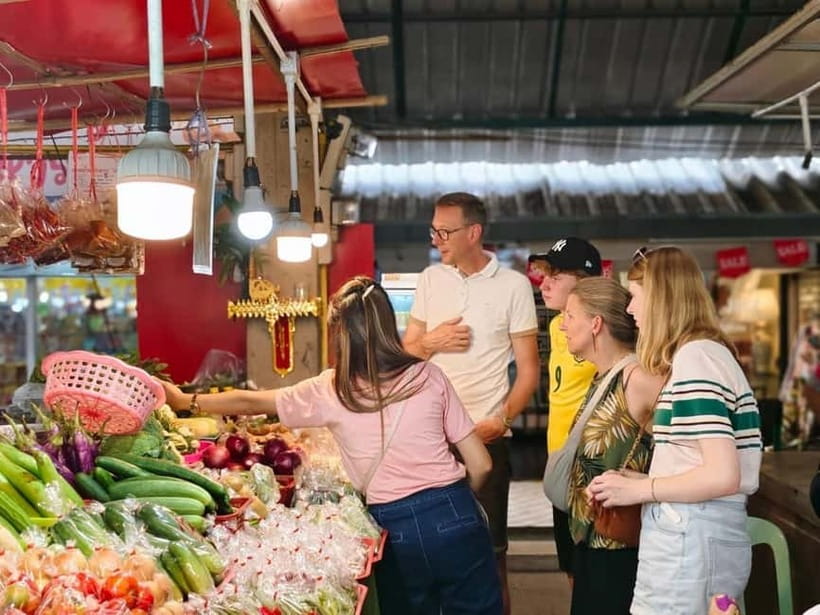
- Market-first ingredients: you learn what herbs and spices are, then cook with them
- Curry paste from scratch: not store-bought, so you understand the flavor logic
- Sticky rice with mango: you get the steps for Thailand’s classic sweet-and-sticky finish
- English-speaking teaching: you’ll cook with clear instruction, not guesswork
- Small-group attention: many people appreciated getting help at the station
- Recipe book to take home: you can recreate the dishes later
Cooking in a Lanna home near Chiang Mai Gate Market
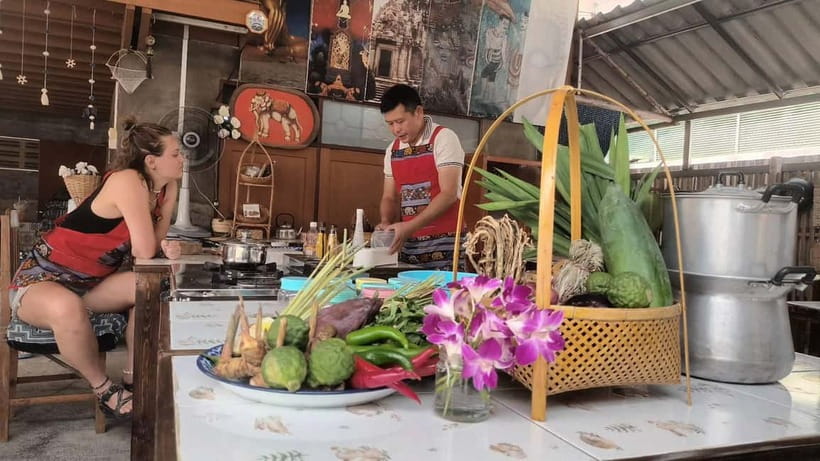
This class takes place in the old city area, in a traditional Lanna home near Chiang Mai Gate Market. That matters more than it sounds. A cooking class that feels like a living kitchen tends to teach you “why” as much as “what.” You’re not just following a script—you’re learning how Thai dishes come together with real ingredients, real tools, and real pacing.
After hotel pickup, the day flows like this: market visit first, then cooking. Starting in the market gives context for what you’ll chop, pound, simmer, and taste later. You’re better prepared when the chef says something like, use this herb for fragrance or use this ingredient to build depth—because you already saw it in its natural setting.
One more small plus: the class is designed for a hands-on group experience. People mention stations are set up and that the cleanup gets handled in a way that keeps the focus on cooking and eating, not washing every pot yourself.
You can also read our reviews of more tours and experiences in Chiang Mai.



The market tour: herbs, spices, and what they actually do
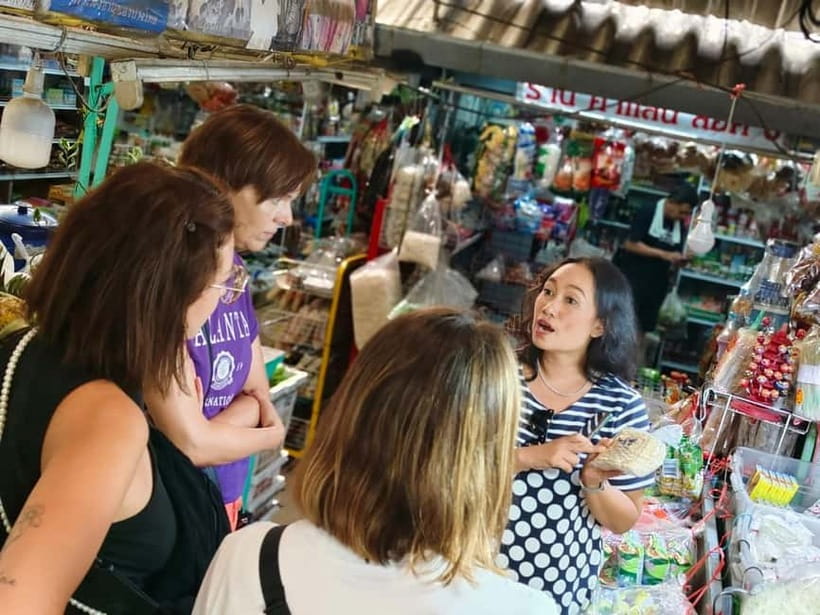
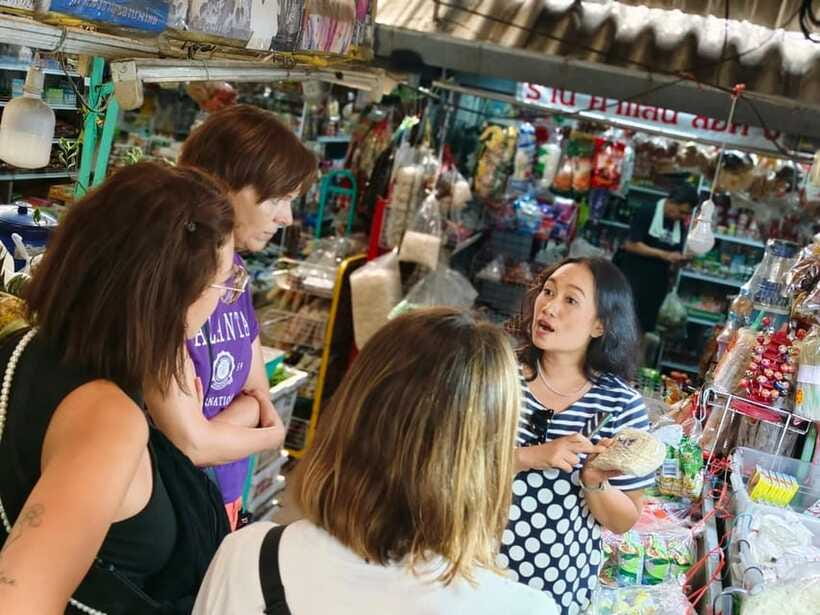
The market tour is one of the most useful parts for first-timers. You’re introduced to Thai herbs, spices, and vegetables—then you carry that knowledge into your cooking. This isn’t a casual stroll where you might recognize a few items and then forget the rest. You learn what the ingredients are for, how they smell, and how they show up in Thai flavor-building.
Why this is valuable: Thai cooking can look chaotic if you’re trying to translate everything in your head. But once you understand that Thai cuisine often builds flavor in layers (aromatics first, then sauces/pastes, then balance with sweet, salty, sour), the dishes start making sense. The market is where those layers become visible.
You also get a sense of what’s “normal” in Thailand—how fresh produce looks, how spices are handled, and how people shop daily. That makes the class feel more like cultural learning and less like a staged demo.
Possible drawback: a couple of participants felt the market visit could use more guidance on what to look for at different stalls. If you’re the type who likes detail—what to buy, how to choose it, and how to substitute it later—ask questions during the tour so you don’t miss the key lessons.
Curry paste from scratch: the skill that makes everything click
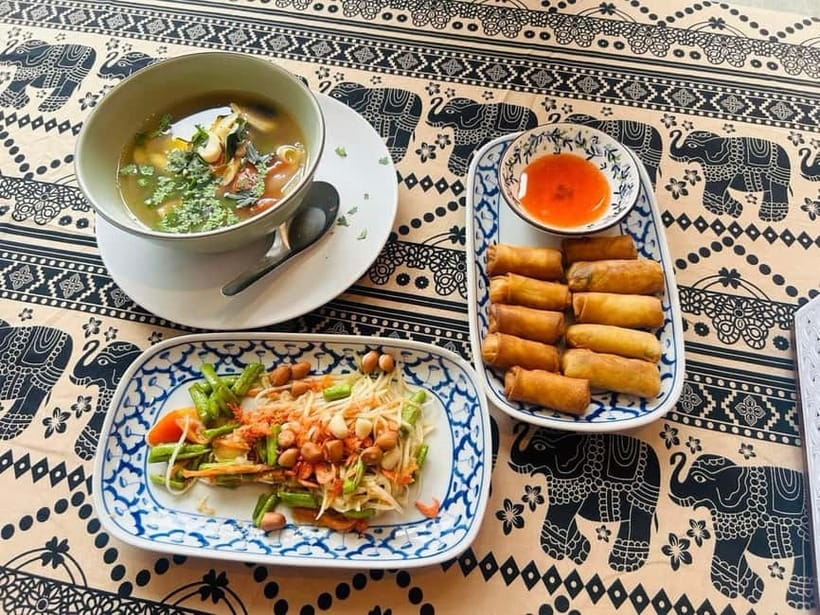
Curry paste from scratch is the headline item for a reason. Store-bought paste can taste good, but it often hides the process. Making it yourself teaches you how Thai curry gets its personality: the mix of toasted aromatics, fresh herbs, and spices that create that signature smell and depth.
In class, you’ll learn the basics of making curry paste, then use that paste as part of the dishes you cook. Even if you don’t memorize every exact motion, you walk away with a mental model: the paste is not just seasoning—it’s the engine of the curry.
Here’s what I’d watch for when you’re making it:
- Texture matters: you’re aiming for the right consistency, not just mixing.
- Aroma comes first: if it smells right early, the final dish usually follows.
- Taste guidance: you’ll be encouraged to pay attention to how things develop as you cook.
If you’ve ever tried Thai curry at home and it tasted flat, this is the fix. The difference is often the paste.
Sticky rice with mango: timing and balance, not just sweetness
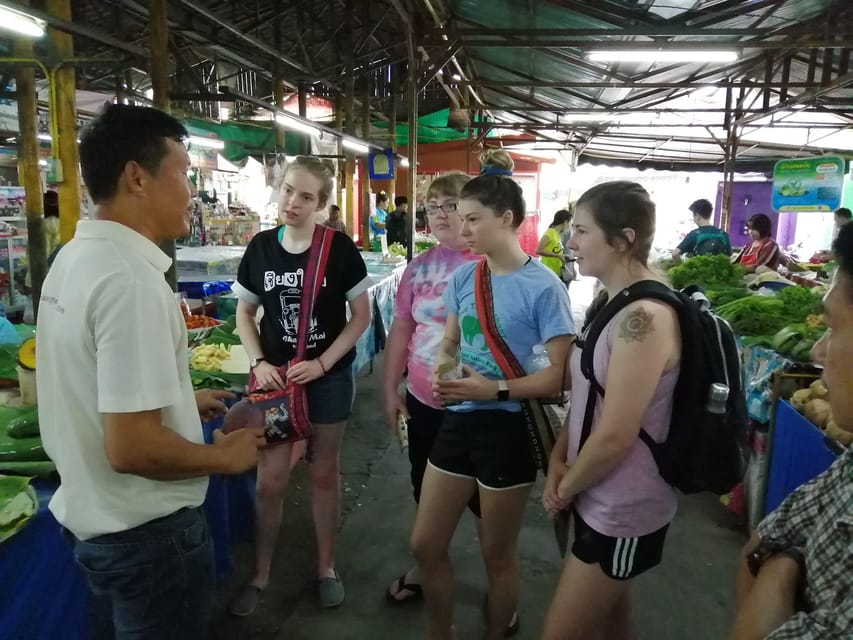
The class includes sticky rice with mango, one of Thailand’s most recognizable sweet desserts. The key learning isn’t only the final sweetness—it’s how sticky rice works (and why it turns out chewy rather than just clumpy or watery).
What you should expect in a good class: clear steps, attention to texture, and quick checks for doneness. Thai sticky rice can be sensitive—especially if you’re cooking at home with different equipment—so learning the method in Thailand helps you understand what to replicate later.
This also helps you understand Thai flavor balance. Mango is sweet, sticky rice is neutral-but-starchy, and the right touch of salt or coconut (depending on how the class handles it) makes the dessert taste more “Thai” and less like generic tropical fruit.
The full 4-hour flow: what you’ll do step by step
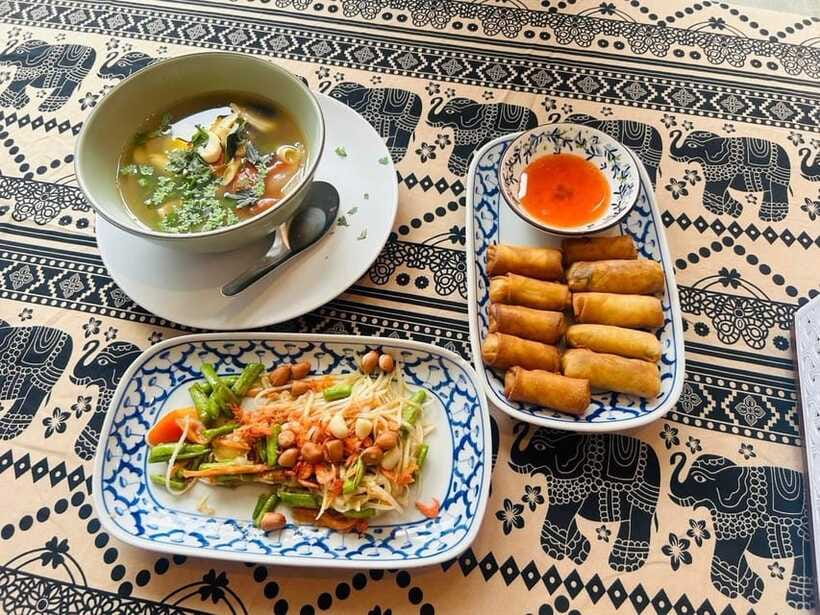
The experience is described as a 4-hour program, and the focus is on cooking six traditional Thai dishes. A few people also mentioned they ended up making four meals, but either way, you’ll be eating what you cook and learning the core techniques behind the dishes.
Typical flow you can expect:
- Hotel pickup: you’re collected before heading out.
- Market tour: herbs, spices, and vegetables are explained with time to observe.
- Cooking in the Lanna home: you learn and cook multiple dishes, including curry paste and sticky rice with mango.
- Meal together: you finish with the dishes you prepared.
Even if the exact dish list varies, the learning structure stays consistent: ingredients first, then technique, then tasting. That’s what makes the class work for both beginners and food lovers who want more depth.
Also, you’ll get ingredients prepared for the class and a recipe book to take home. That recipe book is the practical payoff. It turns your memory into something you can actually use in your own kitchen.





Group size, English instruction, and the difference good chefs make
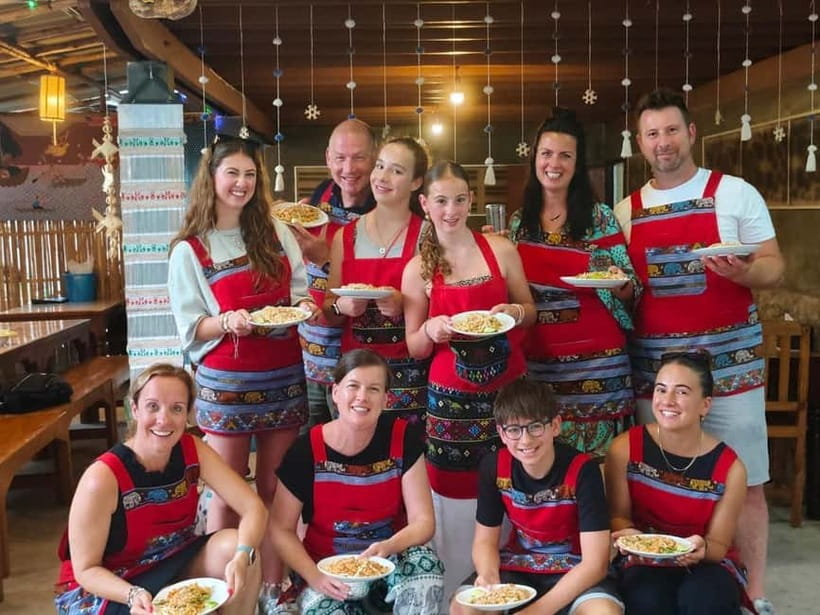
An easy way to judge a cooking class is whether you get help when you need it. Many participants praised the teaching approach as friendly, organized, and supportive, with instructors like Tu, Wave, Flook, Balloon, and Mew stepping in during steps and encouraging questions.
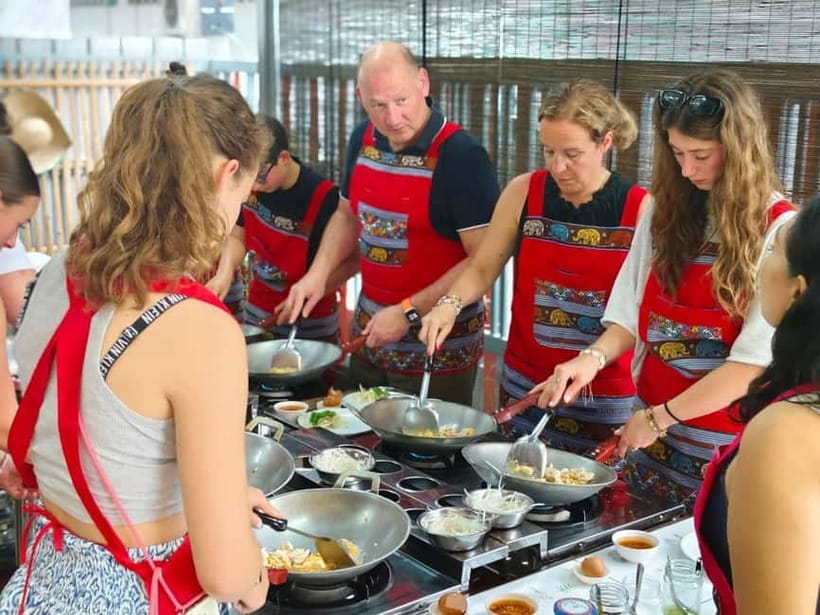
You’ll also notice how the class setup supports learning. People mention cooking stations are set up so you can focus on cooking steps instead of organizing ingredients yourself. There’s also praise for how instructors help with each part of the process, and how cleanup is handled so the experience stays smooth.
For language: the instructor is listed as English, which matters if you want to understand small technique points. When you’re learning curry paste or sticky rice steps, missing one instruction can change the outcome. English instruction makes it easier to follow what the chef means, not just what they demonstrate.
Transport and timing: what to plan for on pickup days
Hotel pickup is included, and you’re asked to wait in the hotel lobby 15–30 minutes before the scheduled pickup time. If you want the day to feel calm, do that. In Chiang Mai, traffic and schedules can shift, and you’ll have a better experience if you’re ready early.
Transport is part of the deal—free transportation is mentioned—but one or two people noted the ride could be bumpy, and in at least one case, a jeep was used rather than an air-conditioned minivan. That’s not a deal-breaker, but it’s useful to know if you’re sensitive to heat or rough roads.
What to bring is simple: comfortable clothes for standing, chopping, and cooking. If you’re the kind of person who likes to protect your clothing, consider bringing something you don’t mind getting a little splashed.
Price and value: why $32 can feel fair (or not)
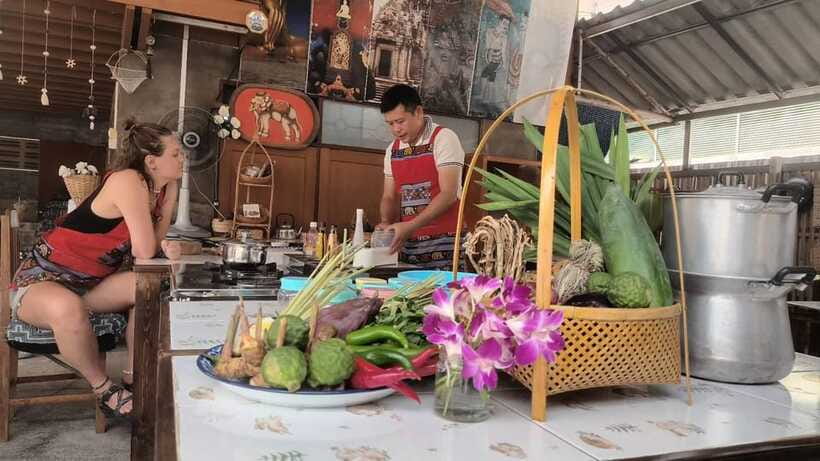
At $32 per person for about 4 hours, this class is priced like a value-forward Chiang Mai experience. You’re not just paying for food or a recipe—you’re paying for:
- Hotel pickup
- Market tour
- English instruction
- Ingredients for cooking
- Cooking for multiple dishes
- A recipe book
That stack matters. Many cooking classes in Thailand cost more when they include fewer dishes or fewer guided ingredient lessons. Here, the market portion adds real value for people who want to shop smart after the class.
That said, one participant felt they left still a bit hungry and that portion sizes were smaller than expected for a full dinner. So I’d treat the meal as “generous enough,” not guaranteed as a replacement for a big Thai dinner. If you’re the kind of eater who wants a full plate late in the day, plan a snack afterward.
Who should book this class (and who might skip it)
This experience is a great match if you:
- want a hands-on Thai cooking class with real ingredient learning
- enjoy food culture as much as recipes
- like the idea of learning curry paste from scratch
- want a take-home recipe book for practicing later
- prefer instruction in English
You might think twice if:
- you want a guaranteed alcohol package (beer and alcohol aren’t included)
- you’re traveling with children under 5 (not suitable)
- you expect the meal to feel like a full dinner with very large portions
If you’re a solo traveler, a couple, or a small group, the teaching style that many people praised—small-group attention—usually makes it easier to ask questions and get support at the station.
Should you book Chiang Mai Smart Cook?
If your goal is to leave Chiang Mai with skills you can recreate—especially curry paste techniques and sticky rice with mango—I think this is worth booking. The market-first approach is the secret sauce: you learn ingredients and then use them immediately, which helps everything stick.
Book it if you want a structured day, clear English instruction, and a friendly kitchen atmosphere in a traditional Lanna setting near Chiang Mai Gate Market. Skip it or go in with adjusted expectations if you’re counting on huge portions or alcohol to be part of the experience.
FAQ
How long is the Chiang Mai Traditional Thai Cooking Class?
The duration is 4 hours.
How many Thai dishes will I learn to cook?
You’ll learn how to cook 6 traditional Thai dishes, including making curry paste from scratch and sticky rice with mango.
Is there a market tour included?
Yes. The experience includes a local market tour where you learn about Thai herbs, spices, and vegetables.
Does the class include hotel pickup?
Yes. Hotel pickup is included. You should wait in the hotel lobby 15–30 minutes before your scheduled pickup time.
Are the instructors English-speaking?
Yes. The instructor is listed as English.
What should I wear or bring?
Wear comfortable clothes.
Is beer or alcohol included?
No. Beer and alcohol are not included.
Is the tour suitable for young children?
It is not suitable for children under 5 years.
Can I cancel for a refund?
Yes. You can cancel up to 24 hours in advance for a full refund.