REVIEW · CHIANG MAI
Chiang Mai: Doi Inthanon National Park Eco-Friendly Tour
Book on GetYourGuide →Operated by TripGuru Thailand · Bookable on GetYourGuide
On a mountain day, Doi Inthanon does the work. You get Thailand’s highest point plus major nature stops like the 80m Wachirathan Waterfall, and you also build in culture with a hill-tribe village visit and coffee brewing. My one heads-up: it is not a hardcore trekking day, so if you want long hikes and tough climbs, this will feel more like guided sightseeing than an adventure workout.
I like how the tour keeps things organized and paced, with small-group energy and guides who know how to explain each stop without turning it into a lecture. I also like the eco touches that actually show up in your day—a glass bottle of drinking water plus carbon emissions offset credits. A final consideration: lunch and extra drinks are not included, so you’ll need a bit of cash and a plan for food breaks.
In This Review
- Key Things I’d Target on This Tour
- A Mountain Day That Changes the Pace From Chiang Mai
- The Van Ride: How to Make the Long Transfer Feel Worth It
- Inside Doi Inthanon National Park: The Guided Nature Portion
- Ang Ka Nature Trail Boardwalk: Easy Walk, Real Forest Learning
- Twin Pagodas and Highest Point Sign: Viewpoints That Earn Your Photos
- Mae Klang Luang Village: Hill-Tribe Culture and Coffee Brewing Break
- Wachirathan Waterfall: The 80m Show
- Pacing, Group Size, and the Real Logistics of a 9-Hour Day
- Eco-Friendly Touches That Actually Show Up
- Price and Value: What $46 Gets You (and What It Might Not)
- Who Should Book This Tour (and Who Might Skip It)
- Should You Book This Chiang Mai Doi Inthanon Eco-Friendly Tour?
- FAQ
- How long is the Chiang Mai: Doi Inthanon National Park tour?
- Where do I meet the guide?
- Is the Doi Inthanon entrance fee included?
- What is included in the tour price?
- What should I bring for the day trip?
- What languages are the guides available in?
Key Things I’d Target on This Tour
- Thailand’s highest point and summit photo moment: You’re not guessing where to stand for the classic sign shot.
- Wachirathan Waterfall’s 80m scale: It’s the kind of stop where you feel the mist and hear the thunder before you see it clearly.
- Ang Ka Nature Trail boardwalk: It’s short (360 meters), but it’s a low-effort way to learn what’s living in the forest.
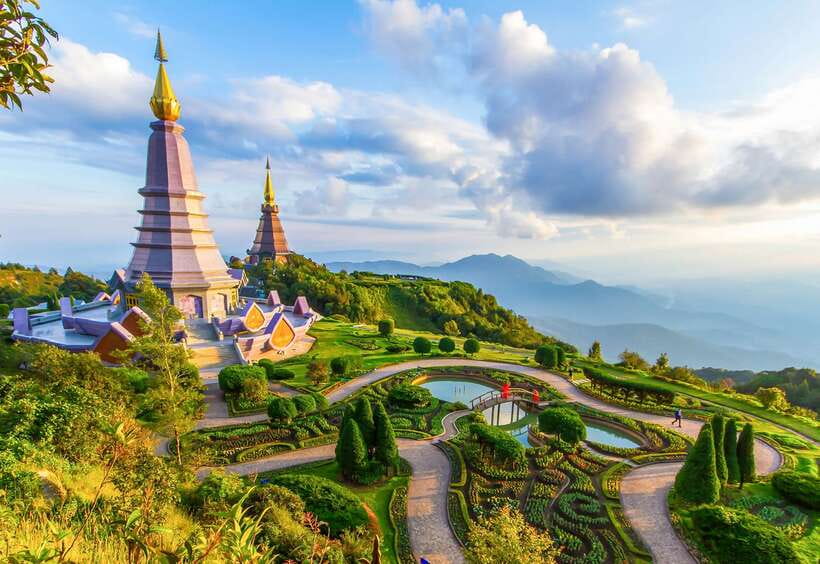
- Twin pagodas over the park: The pagoda viewpoint is a strong payoff for a relatively easy stop.
- Hill-tribe village time with coffee brewing: You get a cultural break after the mountain leg, not just another photo stop.
- Small-group feel with strong guide support: Names that show up often include Nom, Sunny, Lila, Jin, Jackie, Nuttaya, and Avi.
A Mountain Day That Changes the Pace From Chiang Mai
Most Chiang Mai days are about markets, temples, and traffic dodging. This one swaps that for cooler air and a clear route into Doi Inthanon National Park. The “day trip” format matters here: you’re out of the city early enough to feel like you escaped, then back soon enough to still have an easy evening.
What I like is the mix. You’re not stuck in one type of activity. You’ll do a guided park section, a short nature walk, viewpoint-style pagodas, a village cultural stop, and a waterfall big enough to matter. Guides mentioned in feedback—like Nom, Sunny, and Lila—are repeatedly credited for keeping the day fun and structured, with enough time at each location to look around.
The main drawback is also part of the design. The walking is not built to be a strenuous hike day. Even the nature part (Ang Ka Nature Trail) is a short boardwalk, not a full trail system. If you’re hunting for steep climbs and hours of trekking, you’ll probably want a different type of northern Thailand excursion.
You can also read our reviews of more tours and experiences in Chiang Mai.



The Van Ride: How to Make the Long Transfer Feel Worth It

You start with a van transfer of about 1.5 hours into the park area. Later, you get a 2-hour return, and then you’re dropped at locations in Chiang Mai (including a McDonald’s near Im Thapae). That’s a lot of seat time, but it’s also how you reach a remote national park without planning your own transport.
This is where a good guide earns their keep. In feedback, guides like Jin, Jackie, and Avi are often praised for filling the ride with context—what you’re seeing and why it matters—so the travel time doesn’t feel empty. If you hate being trapped in silence, this setup is a win.
Two practical tips: bring your sun protection and keep a light jacket handy. The tour’s own packing list calls out sunglasses, hat, umbrella, sunscreen, insect repellent, and a jacket, and that’s not overkill. In mountain areas you can get bright sun and sudden cool moments, plus you’ll be outside for waterfall time.
Inside Doi Inthanon National Park: The Guided Nature Portion
Doi Inthanon National Park is the heart of the day, and you spend time there with a guide. The tour is built around guided movement, so you don’t need to figure out timings, entrances, and what to prioritize. That’s a big deal if you’re only in Chiang Mai for a short stay.
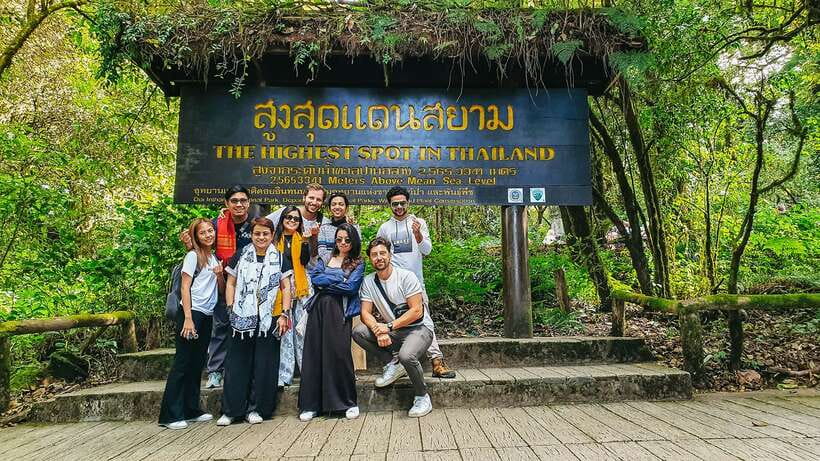
A highlight is the push toward the park’s highest point. The tour description emphasizes reaching Thailand’s highest peak, with a summit sign that’s perfect for your “we really went there” photo. This is one of those stops that’s simple but satisfying. You don’t need specialized hiking gear—just comfortable shoes and patience for the schedule.
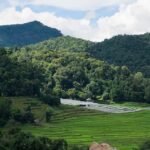
You’ll also be surrounded by forested viewpoints and guided interpretation. The Ang Ka portion is only one small segment, but the park itself gives you that change of scenery you came for. If you’re the type who likes hearing how plants, animals, and local weather affect what you see, the guided format will work well for you.
Ang Ka Nature Trail Boardwalk: Easy Walk, Real Forest Learning

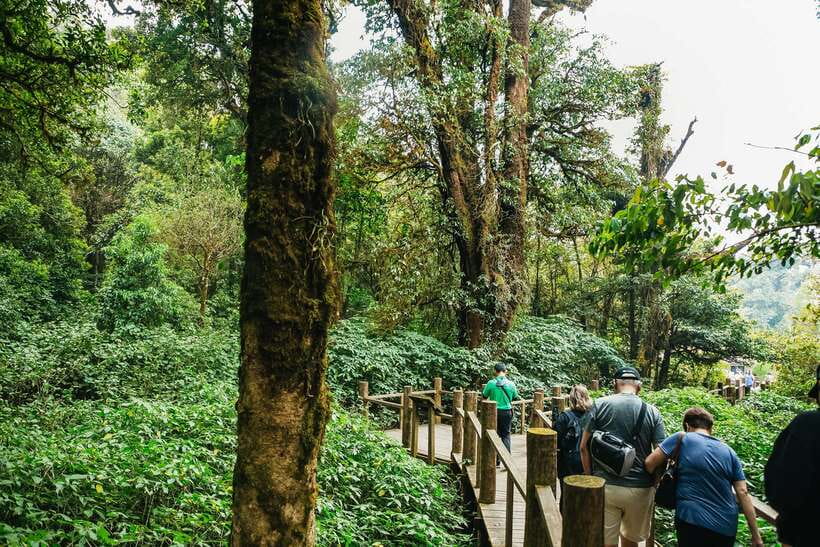
Right after the main park time, you do the Ang Ka Nature Trail. This is a short 360-meter boardwalk. I like this kind of stop when I want nature without paying the “tired legs all afternoon” tax.
The boardwalk format also means you can focus on details. Informational placards are part of the experience, so it’s not just a stroll. You’ll learn about local fauna and what’s going on in the ecosystem around you, but in a way that doesn’t demand serious stamina.
The drawback is baked in. It’s short, so this is not the “walk until your shoes complain” section. Some people want a longer hike day in Doi Inthanon. If that’s you, treat this trail as the gentle warm-up, not your main fitness challenge.
Still, for most visitors, it’s a smart move. It keeps the day moving and keeps you fresh for the bigger visual rewards later—especially the pagodas and the waterfall.
Twin Pagodas and Highest Point Sign: Viewpoints That Earn Your Photos
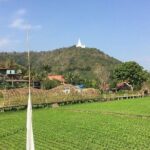
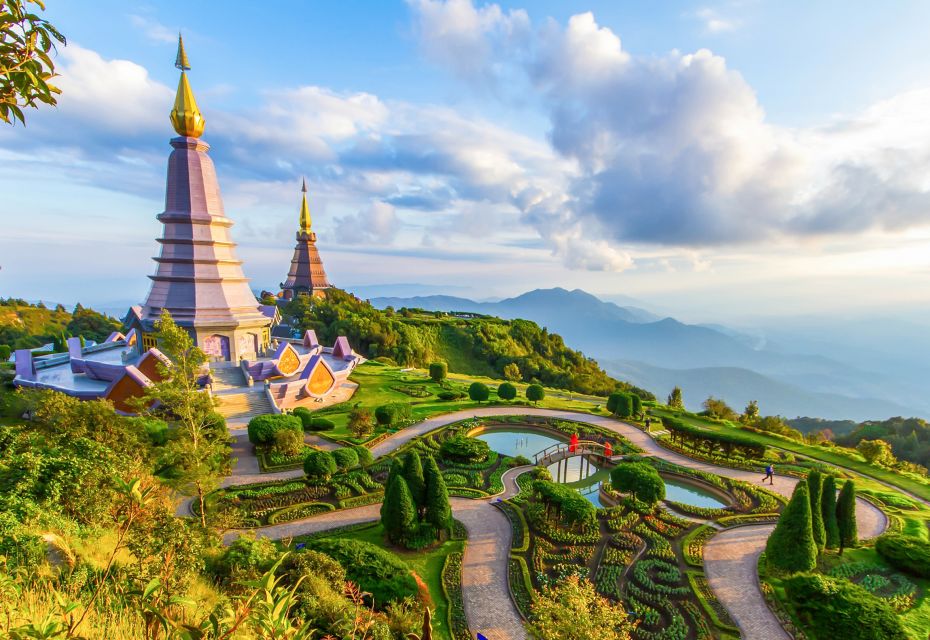
The pagoda stop is Grand Pagoda Nabhapolbhumisiri—part of the wider Twin Pagodas concept dedicated to the late King and Queen of Thailand. These are viewpoint-oriented structures, and the tour sets you up to see the park from higher ground.
What makes this worth your time is how it contrasts with the forest and waterfall. The boardwalk and park sections are close-up and grounded. The pagodas shift the perspective outward, letting you see the national park as a whole.
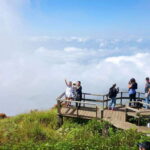
Then there’s the highest point angle. The tour explicitly calls out Thailand’s highest point and the summit sign. The photo payoff here is straightforward: you get the landmark moment and the context of being in the park’s high elevation zone.
In terms of expectations, your feet won’t be doing heroic work. This is more “look, take photos, listen to the guide” than “climb for hours.” In feedback, guides such as Sunny, Nom, and Nuttaya are repeatedly credited for adding explanation, which turns a viewpoint into something you actually remember later.





Mae Klang Luang Village: Hill-Tribe Culture and Coffee Brewing Break
After lunch, you head to Mae Klang Luang for a guided village visit. This is where the day adds meaning beyond scenery. The tour wording points to hill-tribe customs and traditional coffee brewing, and the village visit is commonly described as connected to Karen village life in the feedback.
You’ll get a chance to learn about local traditions and participate in coffee brewing. It’s a cultural pause after time in the trees and at water’s edge. I like this structure because it prevents the day from turning into a checklist of viewpoints. You get to slow down and see everyday life.
One important way to think about this stop: treat it as an education moment, not a safari. It’s a real community. You’ll get more out of it if you ask respectful questions and keep your expectations aligned with learning and conversation rather than entertainment.
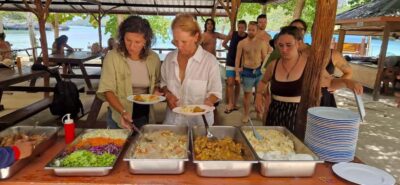
A practical note: lunch and extra drinks aren’t included in the tour price. So even though you’ll eat during the day, you’ll want some cash ready and an open mind about where lunch ends up being. Some feedback mentions a lunch that can feel basic or paid as an extra, so plan for that possibility.
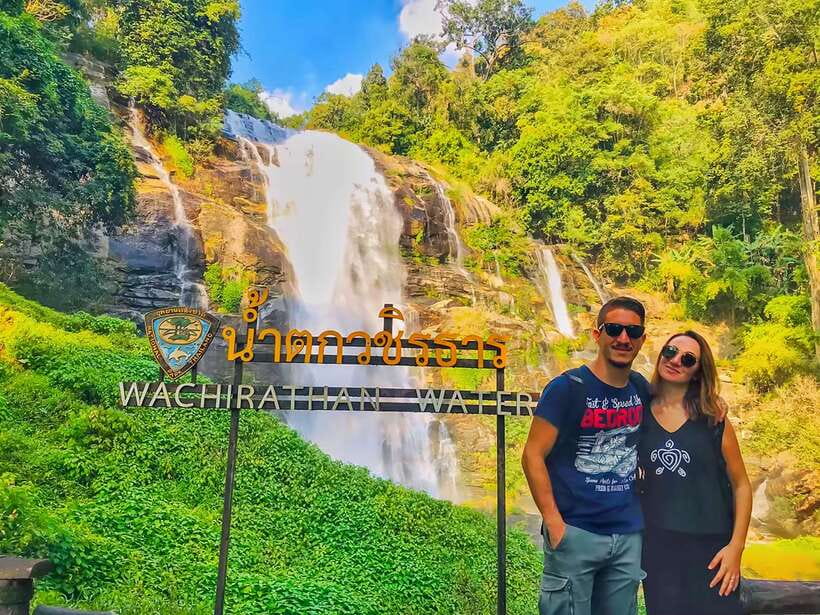
Wachirathan Waterfall: The 80m Show
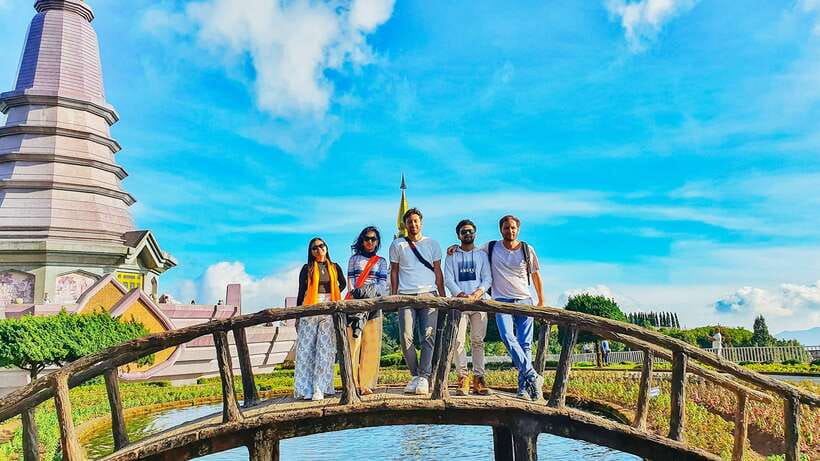
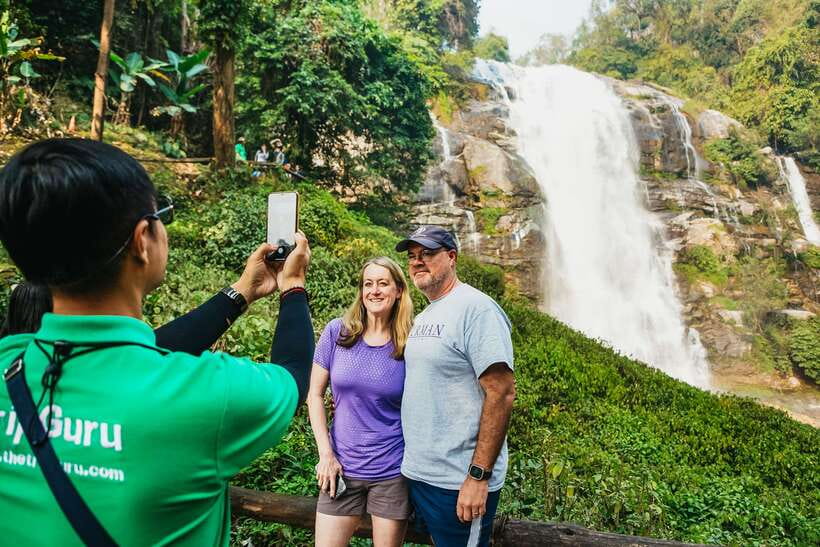
Wachirathan Waterfall is the big finale-style nature stop, and the tour sets you up for the scale. It’s described as an 80-meter waterfall, often with rainbow conditions when the light and mist cooperate.
This is where the packing list matters again. Wear shoes you trust on uneven ground. Bring an umbrella or rain cover if you don’t mind sharing the mist. And protect your eyes and skin—sunglasses and sunscreen are on the recommended list for a reason.
The waterfall time also tends to be sensory. You hear it before you fully see it, and once you’re close, it’s a different world from the pagoda viewpoint. It’s also the part of the day where you can take classic photos, including shots with people for scale.
In feedback, guides like Lila and Leila are praised for pacing the group so you can get your photos without feeling rushed. That’s the kind of small operational detail that turns a waterfall stop from chaotic to enjoyable.
Pacing, Group Size, and the Real Logistics of a 9-Hour Day
This is a 9-hour tour. That sounds long until you factor in the transfer times and the number of stops built in for different interests: park nature, boardwalk learning, pagodas, village culture, and a major waterfall.
It’s designed as a small group, and the difference matters. Smaller groups mean fewer people trying to squeeze into the same viewpoint at the same time. In feedback, people often call out smooth timing and an organized day, plus guides who keep things moving without rushing you through each location.
Still, you should know what kind of day it is. One feedback theme is that it’s enjoyable and informative, but not the most adventurous option compared with things like trekking or multi-day trekking-focused tours. If you’re looking for a physically demanding experience, you might still enjoy this, but it should be your “easy-to-moderate mountain day with big sights” rather than your “I want to suffer on purpose” day.
If you like variety, though, the pacing works. You’re never stuck doing one thing for the entire trip. And because it’s guided, you’re not wandering around wondering what to look for.
Eco-Friendly Touches That Actually Show Up
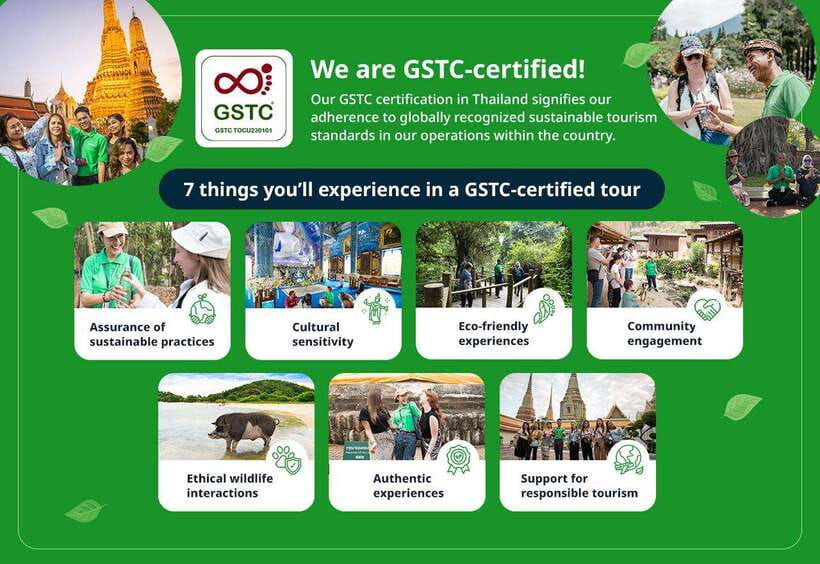
This tour is described as eco-friendly and GSTC-certified, and that isn’t just marketing language on paper. The practical part is simple: you get water in a glass bottle as part of the included items. That reduces disposable plastic waste and also means you’re less likely to scramble for drinks in the middle of the day.
You also get carbon emissions offset credits included. I can’t pretend offsets make the trip’s footprint disappear, but they do signal that the operator is thinking beyond the obvious. For a day trip this long, it’s at least better than ignoring the issue entirely.
One more eco-related theme from the overall experience design: it’s low-impact in its walking. The nature trail is short. The activities are staged so you can see a lot without hours of trampling through sensitive areas.
So if you want a day in nature without turning it into a heavy, destructive-style tour, this format fits the bill.
Price and Value: What $46 Gets You (and What It Might Not)
The headline price is $46 per person for a 9-hour day. On paper, that can look cheap for a full-day organized tour. The real test is what’s included.
Included items:
- Air-conditioned transportation (van)
- Tour guide
- Insurance
- Doi Inthanon entrance fees and Twin Pagoda entry fees if you choose that option
- A glass bottle of drinking water
- Carbon emissions offset credits
- Hotel pickup and drop-off if you select the pickup option
Not included:
- Food and extra drinks
If you don’t choose the option that includes park fees, the tour data lists the entrance costs: 300 Thai Baht for Doi Inthanon National Park and 100 Thai Baht for the Twin Pagodas. That means you may need to plan extra cash depending on how you book.
Value-wise, I think the strongest part is the “you don’t have to figure it out” value. With a guided route, entrance handling (if selected), and A/C transport, you’re buying time and mental ease. If you’d otherwise rent a car or hire a driver to cover all the same sites, this is often a good deal—especially if you’re not traveling with someone who loves logistics.
One caution: lunch being extra means you should budget for it. Some feedback points out the lunch can be paid separately, so treat lunch as your flexible cost.
Who Should Book This Tour (and Who Might Skip It)
I’d steer you toward this tour if you want:
- a first-timer-friendly Doi Inthanon day with clear highlights
- nature plus culture, without hours of hard trekking
- a short guided boardwalk experience and a big waterfall finale
It’s also a good pick if you care about guide quality. Names that show up in the feedback include Nom, Sunny, Lila, Jin, Jackie, Nuttaya, Pranom, and Avi, and the common thread is that the guides explain what you’re seeing and keep the day enjoyable.
You might skip it if:
- your main goal is a tough hiking challenge with long trails
- you hate group schedules and want complete freedom to linger at your favorite spot
- you’re on a strict budget that can’t handle lunch and drinks being extra
Should You Book This Chiang Mai Doi Inthanon Eco-Friendly Tour?
If your ideal Chiang Mai day includes major scenery plus cultural context, book it. The price-to-coverage ratio is strong, and the day is built around high-impact stops: highest point, twin pagodas, a short nature trail with learning placards, a hill-tribe village coffee break, and Wachirathan Waterfall.
I’d especially recommend it for first-time visitors who don’t want to plan park logistics. Just go in with realistic expectations: this is a guided sightseeing day, not a grueling trek. Bring sunscreen, insect repellent, and shoes you trust, and keep a little cash aside for lunch.
FAQ
How long is the Chiang Mai: Doi Inthanon National Park tour?
It runs for 9 hours.
Where do I meet the guide?
If you choose the meeting point option, meet at McDonald’s at Thapae Gate in Chiang Mai Old City: https://goo.gl/maps/LvgTsA86MR7hALEu9.
Is the Doi Inthanon entrance fee included?
It depends on the booking option. If you select the option with entrance fees included, the fees are included. Otherwise, Doi Inthanon is 300 Thai Baht and the Twin Pagodas are 100 Thai Baht.
What is included in the tour price?
Included items are transportation by air-conditioned vehicle, a tour guide, insurance, a glass bottle of drinking water, carbon emissions offset credits, and park entrance fees if you select the entry-fee option.
What should I bring for the day trip?
Bring comfortable shoes, sunglasses, a hat, an umbrella, camera, sunscreen, insect repellent, cash, and a jacket.
What languages are the guides available in?
The live tour guide is available in English, French, Spanish, and Japanese.