REVIEW · CHIANG MAI
Evening Cooking Class
Book on Viator →Operated by Galangal Cooking Studio · Bookable on Viator
Thai cooking clicks when you learn the ingredients first. This evening class in Chiang Mai starts with a local market and then moves to the kitchen at Galangal Cooking Studio, where a professional instructor helps you turn those ingredients into real Thai dishes. You finish by eating what you cook, plus you get a recipe PDF with 40 pages included at no extra cost.
What I like most is the market-to-studio flow. You don’t just get recipes—you understand what you’re buying and why, and you even hear about Thai herbs and fruits as part of the experience. A standout detail from past participants: Chef Neu is specifically praised for being an awesome teacher in both the market and the kitchen.
One consideration: it’s a group class that runs about 4 hours, so if you want lots of personal, one-on-one tweaks, you’ll have to work around the group pace.
In This Review
- Key things that make this evening class worth it
- Entering the Galangal Cooking Studio at 3:30 pm
- Hotel pickup and group size: why logistics affect your cooking
- The market walk: where you learn what Thai cooking is really built on
- Head to the studio: getting hands-on guidance without guessing
- What you’ll cook: multiple dishes, not just one plate
- The garden-and-herb angle: why it feels more authentic than a basic demo
- Dine on what you made: the best part of an evening class
- The 40-page PDF recipe take-home: how to use it after your Chiang Mai night
- Price and value: what you’re really paying for at about $33.43
- Who this is best for (and who might want something else)
- Should you book this Chiang Mai evening cooking class?
- FAQ
- How long is the evening cooking class in Chiang Mai?
- What time does the class start?
- Is hotel pickup offered?
- Do we visit a market before cooking?
- What happens at the end of the class?
- Are recipes included?
- Is there free cancellation?
Key things that make this evening class worth it
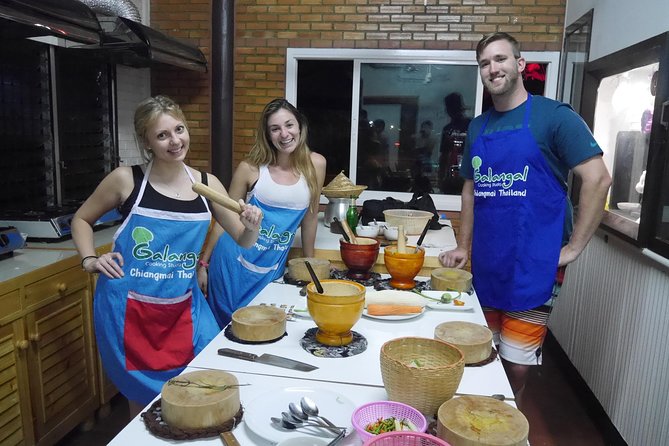
- A market stop before you cook, with an instructor explaining the ingredients you’ll use
- Galangal Cooking Studio in central Chiang Mai, with the session anchored around a real cooking kitchen
- Professional guidance throughout, so Thai flavors feel less mysterious back home
- Shared dinner at the end, built around what you actually made
- Small group cap of 24, which helps keep the experience friendly and interactive
- A 40-page recipe PDF included, so you can recreate dishes later
Entering the Galangal Cooking Studio at 3:30 pm
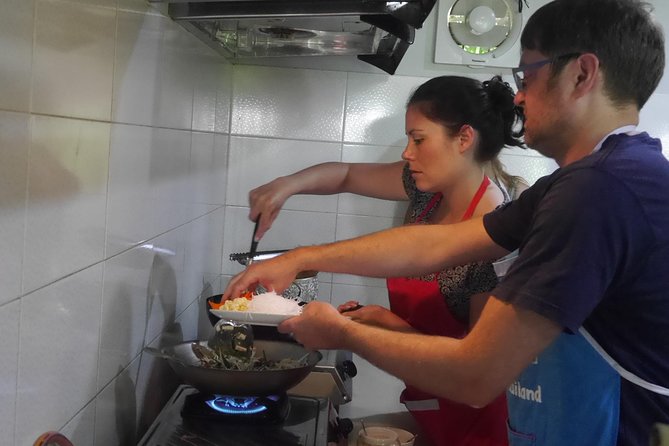
This is a proper evening activity, starting at 3:30 pm and running about 4 hours. The session ends back at the meeting point, which makes it easy to plan your night afterward without needing a complicated return ride.
The location is Galangal Cooking Studio at 366 Thanon Charoenrajd, Tambon Wat Ket, Amphoe Mueang Chiang Mai, near the Wat Ket area. If your hotel is in the pickup zone, you’ll get transfers from select hotels—so you can show up without juggling taxis right before a cooking class.
The timing also makes sense for Chiang Mai. You’re not racing the heat of the afternoon, and you’re not stuck waiting until late. You’ll finish with a meal, so you’re not scrambling for dinner plans afterward.
You can also read our reviews of more tours and experiences in Chiang Mai.



Hotel pickup and group size: why logistics affect your cooking
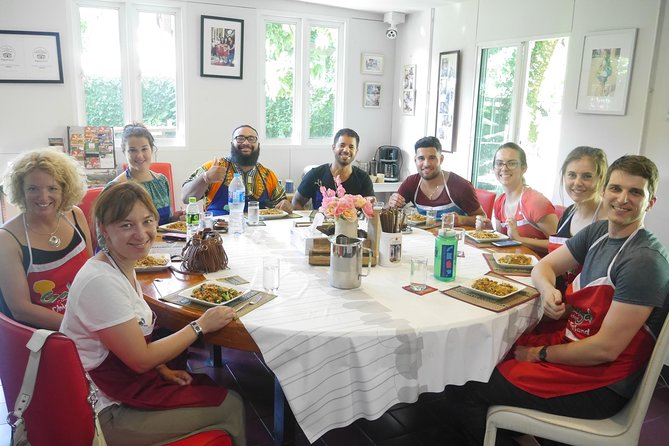
This class caps at 24 travelers, which matters more than it sounds. In a group kitchen, fewer people means the instructor can keep watch over what’s happening at each station, and you’re more likely to get quick help when something tastes off.
If you’re staying in or near the pickup area, transfers take the stress out of getting there. Cooking classes are busy by nature—wet hands, sharp knives, hot pans—and the last thing you want is to waste your energy on navigation or finding parking.
If you’re planning on walking or using rideshare instead of pickup, build a little buffer. You’ll be starting at 3:30 pm, and you’ll want to settle in before the market portion begins.
The market walk: where you learn what Thai cooking is really built on
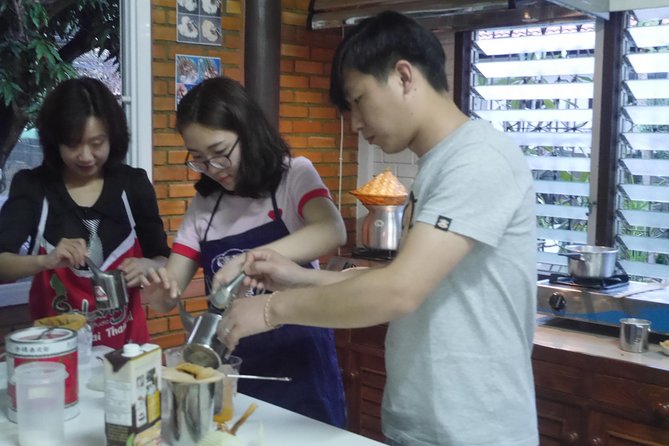
The class begins (after pickup, if available) with a visit to the local market. This is not a quick photo stop. The teacher introduces the ingredients you’ll use during the class, so you connect the cooking steps to real, recognizable items.
That ingredient context is the difference between copying a recipe and cooking Thai food with confidence. Thai flavor is driven by combinations—herbs, aromatics, chili heat, sour notes—and when you understand what each ingredient does, you can make better choices later when you’re shopping at home.
Based on what people highlight, this market time also sets the tone for the rest of the evening: relaxed, guided, and practical. One praised element is how the instructor explains herbs and fruits, including a small garden-like tour component that helps you recognize Thai ingredients beyond just spices in packets.
Head to the studio: getting hands-on guidance without guessing
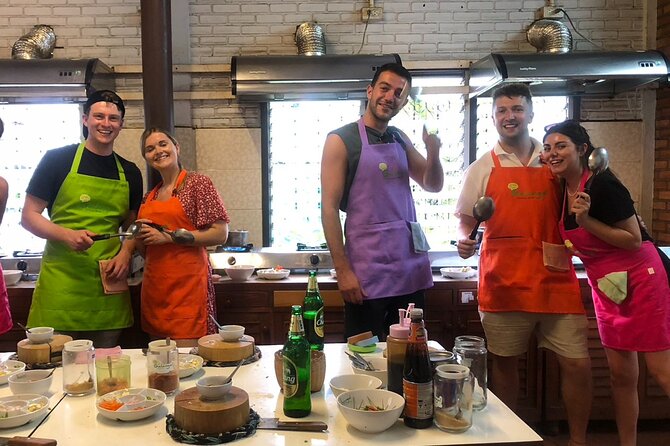
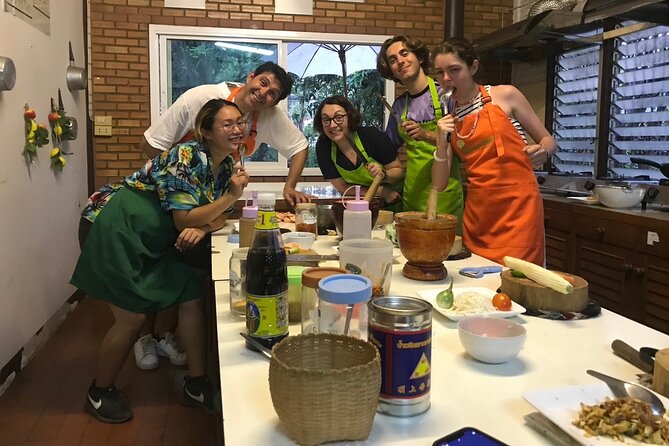
After the market, you go to the cooking studio where the teacher guides you through making Thai dishes. The studio setup is the heart of the experience: you’ll be cooking with instruction in real time, not just reading steps off a card.
The pacing matters here. Thai cooking involves more than one technique at once—chopping, pounding, stir-frying, balancing flavors—so having a professional instructor there to steer the order and timing helps you avoid common mistakes like under-seasoning, overcooking, or losing the flavor balance.
A name that comes up strongly is Chef Neu. People specifically mention enjoying learning from her in both the market and the kitchen. While you can’t count on the same instructor every time, it’s still a good signal of how teaching quality can shape the whole evening.
What you’ll cook: multiple dishes, not just one plate
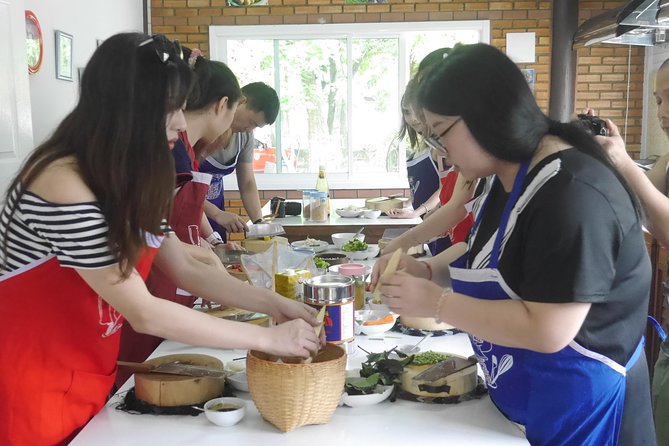
The class is structured so you cook dishes you can serve and share. A recurring theme in strong feedback: people end up cooking several dishes, with one of the commonly reported outcomes being four dishes each.
That “several dishes” format is valuable. One dish teaches one flavor pattern; multiple dishes teach how Thai cooking shifts across different bases and sauces. It also helps you build a small menu you can repeat later—especially useful if you like hosting or want variety without doing the whole process from scratch.
You’ll also learn how to handle ingredients in ways that match Thai cooking style, not Western assumptions. For example, herbs and aromatics are often used for fragrance and balance, not just as garnish. When you see how that works in the kitchen, it becomes easier to reproduce.


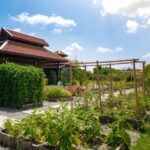


The garden-and-herb angle: why it feels more authentic than a basic demo
Some cooking classes feel like you’re watching a show with occasional participation. This one tends to include more context. Past participants highlight that there can be a small garden tour tied to Thai herbs and fruits, which adds a grounded, place-based element.
That matters because many Thai ingredients aren’t common at home. When you understand what an herb smells like and how it behaves in cooking, you’re less likely to substitute blindly later. You’ll be more careful about freshness and balance, and your results are more consistent.
Think of this as the “why” behind the steps. It turns cooking into learning, not just memorizing.
Dine on what you made: the best part of an evening class
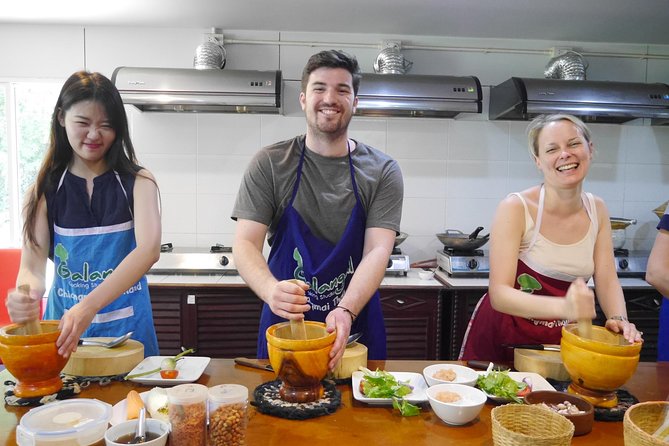
At the end, you dine on your creations. This is more than a reward—it’s how the learning sticks. Tasting your own food right away lets you notice flavor balance, texture, and seasoning in a way that’s hard to replicate later without guidance.
One of the most praised elements in the feedback is the social feel. People describe a friendly atmosphere where you share, try each other’s dishes, and pass food around so everyone gets variety. It’s the kind of camaraderie that makes a group cooking class feel like an experience, not a chore.
If you’re traveling with friends, this is a nice fit. If you’re traveling solo, it’s also a good option because the format naturally pulls you into conversation during cooking and at the table.
The 40-page PDF recipe take-home: how to use it after your Chiang Mai night
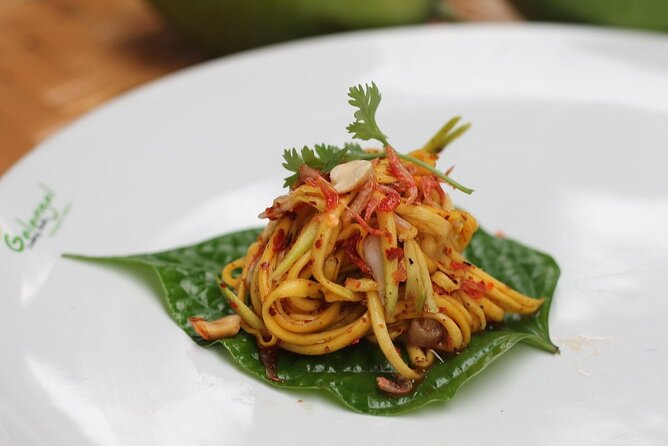
You get a PDF with 40 pages of recipes included at no extra cost. That’s a big deal for value, because cooking classes often stop at the meal. Here, you can keep going once you’re back home.
I recommend using the PDF strategically. Don’t try to cook everything in the first week. Pick one dish you loved most, then compare your ingredients with what you can actually find near you. When you treat the PDF like a roadmap instead of a homework assignment, you’ll make better food sooner.
Also, because Thai flavors rely on balancing elements (sour, salty, sweet, heat, and fragrance), having multiple recipes on hand can help you build repeatable flavor instincts. Even if you can’t find an exact ingredient, the recipe guidance helps you understand what you’re substituting for.
Price and value: what you’re really paying for at about $33.43
At $33.43 per person, the price looks straightforward—until you break down what’s included. You’re paying for:
- a market visit with an instructor introducing ingredients
- guided cooking in a studio kitchen
- the meal at the end (food you made)
- a 40-page recipe PDF included
- and for many people, an option for transfer from select hotels
For many Chiang Mai activities, you pay once and leave. Here, you pay once and you get a dinner plus a learning tool you can keep using. That’s the kind of value that makes the class feel worth it even if you’re not planning to cook Thai food every week.
One practical tip: because average booking is about 5 days in advance, it’s smart to reserve ahead of time during busy stretches. This keeps you from playing scheduling roulette.
Who this is best for (and who might want something else)
This evening cooking class is a strong match if you want Thai cooking to feel doable. If you’ve ever tried a Thai recipe at home and thought, My food doesn’t taste right, this kind of ingredient-first guidance helps fix the root problem.
It also suits couples and small groups who want a shared activity with a meal at the end. And if you’re solo, the group format—plus the emphasis on sharing and tasting—makes it easier to feel included.
Who might skip it? If you already cook Thai food confidently and you want a deep, technical lesson on a single dish with serious one-on-one time, a group class may feel a bit rushed. The best approach is to choose what you need right now: broad learning and a great meal, or highly specialized instruction.
Should you book this Chiang Mai evening cooking class?
If you want a fun, practical introduction to Thai cooking in Chiang Mai, I’d book it. The big reasons are simple: you start with a market ingredient lesson, you cook with professional guidance, and you finish by eating what you made. Add in a 40-page recipe PDF, and you have a solid way to keep learning after the class ends.
Before you book, check whether your hotel is on the pickup list and make sure you’re comfortable with a 4-hour group format. If that fits your travel style, this is one of those experiences that gives you something to remember and something you can actually use later.
FAQ
How long is the evening cooking class in Chiang Mai?
It runs for about 4 hours.
What time does the class start?
The start time is 3:30 pm.
Is hotel pickup offered?
Transfers from select hotels are available.
Do we visit a market before cooking?
Yes. You visit a local market first, where the teacher introduces the ingredients you’ll use.
What happens at the end of the class?
You dine on the Thai food you cook during the session.
Are recipes included?
Yes. You receive a PDF with 40 pages of recipes at no extra cost.
Is there free cancellation?
Yes. You can cancel for a full refund up to 24 hours in advance of the experience’s start time.