REVIEW · CHIANG MAI
Chiang Mai Temples and Market Tuk-Tuk Evening Night Tour
Book on Viator →Operated by WanderSiam · Bookable on Viator
Dusk temples hit different. This tuk-tuk night tour makes it easy to tick off major sights like Wat Phra Singh, and you get included street-food tastings that make the night market feel like a plan, not a guess. One thing to budget for: entrance fees for Wat Phra Singh and Wat Chedi Luang aren’t included, and you’ll need cash on the day.
I love how the timing works. You ride between temples after sunset, when the old city looks calmer and the temple lighting is part of the experience. And you end at the Night Bazaar, so you can turn your last stop into dinner and easy browsing.
This is a small-group tour (max 12) with an English-speaking guide, starting at 6:30 pm. It’s a straightforward loop that runs about 4 hours, but you’ll want to arrive at the meeting point on time, because the tour can start with only a short grace window.
In This Review
- Key Highlights You’ll Actually Care About
- Dusk Tuk-Tuk Temple Hopping: The 6:30 pm Advantage
- Wat Phra Singh at Night: The Lion Buddha Stop (and Its Extra Fee)
- Wat Phan Tao and Wat Chedi Luang: Ancient Roots in the Old City
- Wat Lok Molee: A Quieter Temple Stop Outside the Center
- Chiang Mai Night Bazaar: Street Food Tastings and a Much Easier First Visit
- Price and Value: What You’re Paying For (and What You’re Not)
- Tuk-Tuk Reality Check: Comfort, Rain, and Getting In and Out
- Guide Quality: Why It Can Make or Break Your Night
- Who Should Book This Tour (and Who Should Consider DIY)
- Should You Book This Chiang Mai Temples and Market Tuk-Tuk Evening Night Tour?
- FAQ
- How long is the Chiang Mai Temples and Market Tuk-Tuk Evening Night Tour?
- What time does the tour start, and where do I meet?
- Where does the tour end?
- Which temples are included on this tour?
- Are temple entrance fees included?
- What food is included?
- Is the tour a small group?
- What happens if it rains?
- Can I use a mobile ticket?
- What is the cancellation/refund window?
Key Highlights You’ll Actually Care About
- After-sunset temple photos: cooler air, dramatic lights, and fewer daytime crowds
- Wat Phra Singh stop: one of the best-known temples in Chiang Mai’s old walled area
- Temple mix with smart pacing: 30-minute blocks that keep the evening moving
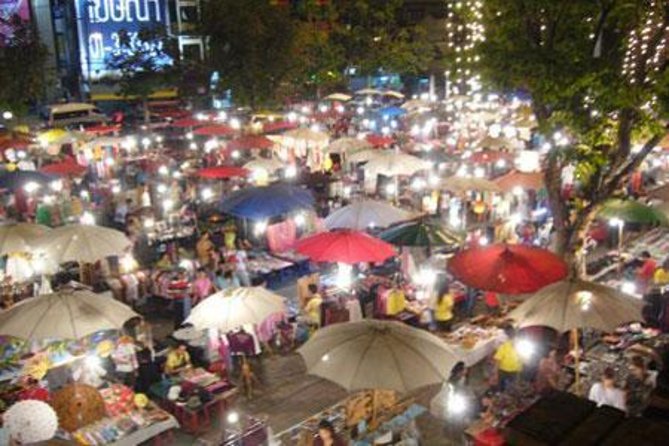
- Night Bazaar as your payoff: guided street-food tastings plus time to shop and eat
- Driver + tuk-tuk included: you skip the navigation stress between stops
- Cash required for 2 temples: Wat Phra Singh and Wat Chedi Luang cost extra
Dusk Tuk-Tuk Temple Hopping: The 6:30 pm Advantage
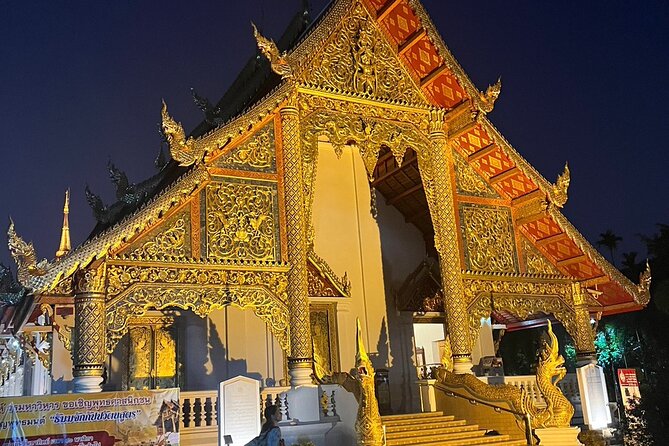
The big reason to choose a night tour in Chiang Mai is comfort. By late afternoon and evening, the heat takes a step back, and temple lighting becomes part of the wow-factor. Instead of pushing through daytime crowds, you get that slow, glide-along feeling as you travel by tuk-tuk and stop when the lighting looks best.
This tour starts at 6:30 pm, right after much of the city’s heat has eased. You’ll spend the first part of the evening in temples around the old city, then shift gears to the Chiang Mai Night Bazaar for street food and casual shopping. That arc matters: temples can be mentally tiring, and having the market at the end helps your brain switch from history to hunger.
One practical note: you’re not doing a long hike here. The plan is built around short visits (about 30 minutes each) paired with quick travel by tuk-tuk, so you can see a lot without feeling wrecked by hour two. If you want a first introduction to Chiang Mai’s temple circuit—without getting lost—this format is one of the easiest ways to do it.
You can also read our reviews of more tours and experiences in Chiang Mai.



Wat Phra Singh at Night: The Lion Buddha Stop (and Its Extra Fee)
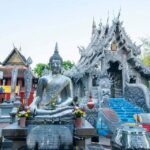
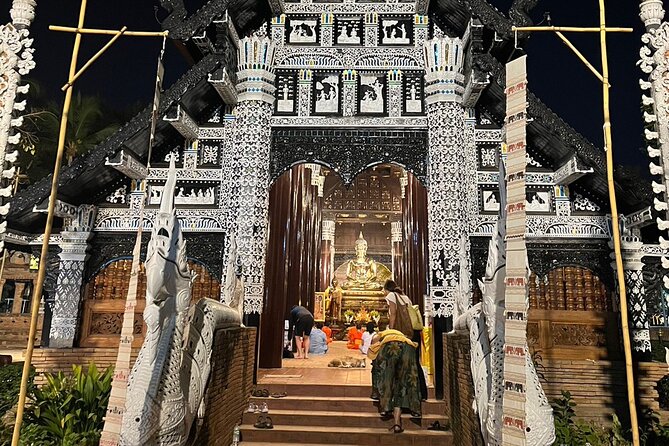
Wat Phra Singh is a headliner. It’s one of the most famous temples in Chiang Mai’s walled old city, and it’s also known as the Monastery of the Lion Buddha. This is an active temple, which means you’re seeing a living religious space, not just a museum set.
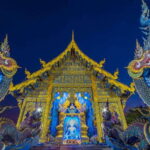
Why it works at night: the temple lighting softens the visual load. Stone details look sharper, and the atmosphere is less frantic than midday. You’ll have about 30 minutes here, which is enough time to walk the main areas, look closely at key details, and still move on with the group before the night market rush takes over.
Budget reality: this is one of the two temples that costs extra. Entrance fees for Wat Phra Singh aren’t included and are listed as THB 50 per person, paid in cash on the day of the tour. If you’re the type who forgets to carry small bills, make a point to withdraw some cash before you go.
Also, small comfort detail: having a guide at this stop can change what you notice. With the right person guiding the conversation, you won’t just point and shoot—you’ll understand what you’re looking at and why certain sculptures and design elements matter.
Wat Phan Tao and Wat Chedi Luang: Ancient Roots in the Old City
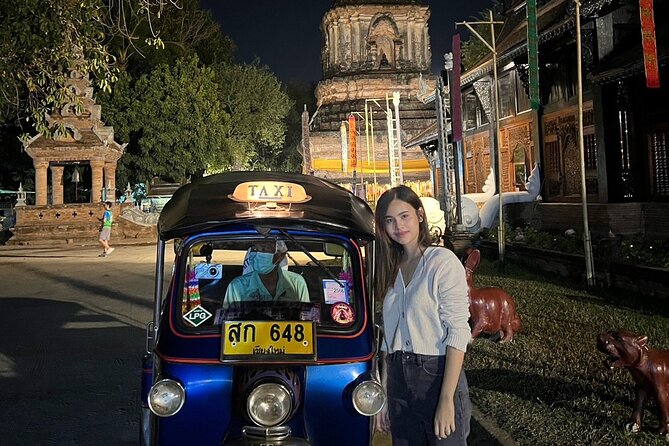
After Wat Phra Singh, the route shifts to two older, historically weighted stops—Wat Phan Tao and Wat Chedi Luang—both near the old city temple cluster.
Wat Phan Tao is described as one of the oldest temples in Chiang Mai, with early structures likely dating to the late 14th century. That means you’re stepping into a site with real age behind it. At around 30 minutes, it’s the kind of stop where you can slow down a bit, spot layout cues, and let the story of the place sink in without overthinking it.
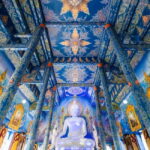
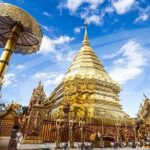
Then comes Wat Chedi Luang Varavihara, also known as the temple of the Great Stupa. This one has a dramatic timeline: construction is listed from 1391 to 1475, and the site later collapsed in 1545 due to an earthquake. Seeing that kind of history in person gives you a different perspective on restoration and ruins. It’s not just pretty—it’s evidence of time and survival.
One more practical thing: the entrance fee for Wat Chedi Luang isn’t included either, again listed as THB 50 per person, cash day-of. So, your evening math looks like this: two paid temples (plus multiple free ones), all worked into a tight evening schedule.
If you care about photography, these ruins and older structures can be surprisingly good at night. The stone and stupa areas catch light well, and you get the best results when you’re not rushing—something a guided schedule helps with.
Wat Lok Molee: A Quieter Temple Stop Outside the Center
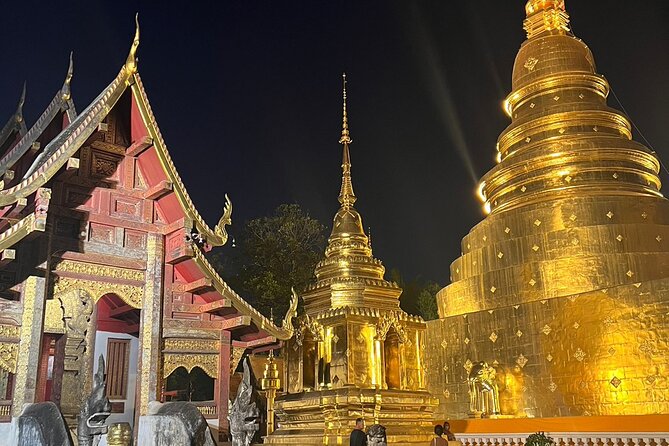
Wat Lok Molee is a different flavor. It’s described as being just outside Chiang Mai’s old walled center, and it’s known as one of the city’s older temples. The tour gives it about 30 minutes, which is the right amount of time for a stop like this: long enough to appreciate the architecture, short enough that you’re not dragging the evening when your energy starts to fade.
I like this kind of placement in a tour. If every stop is right in the thick of the old city lanes, you can feel like you’re doing temple-and-traffic theater. Adding a stop just outside the core gives you a tiny reset before you head into the Night Bazaar.
Even though the tour time stays consistent (30 minutes), the vibe changes. The best part is that you’re still in temple mode without the sense that you’re repeating the same visual experience. If you want to understand Chiang Mai as more than one tight cluster, this stop helps.
Chiang Mai Night Bazaar: Street Food Tastings and a Much Easier First Visit
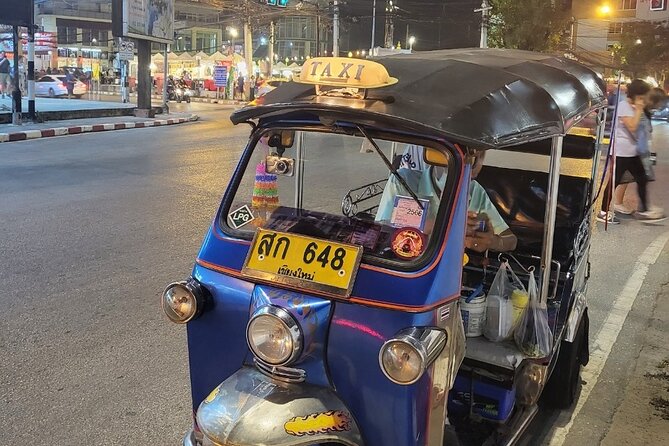
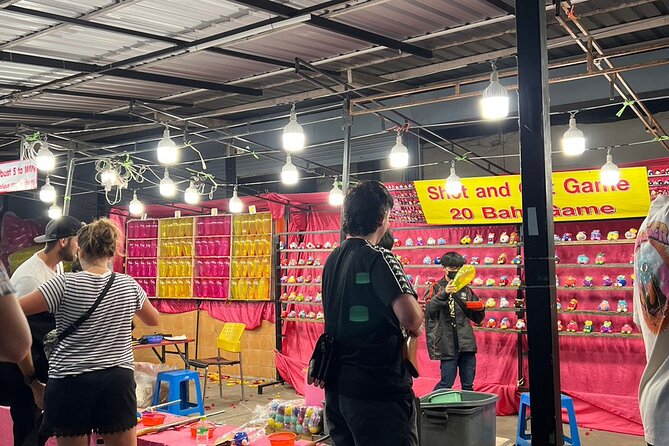
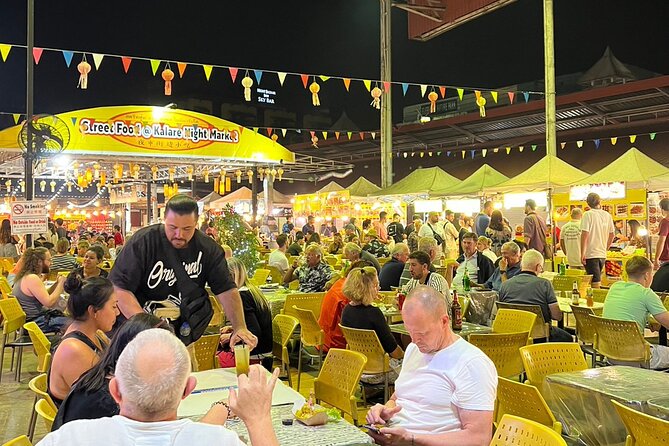
Your final stretch is the Chiang Mai Night Bazaar. This is the most famous market in Chiang Mai, and it’s one of those places that can be fun even if you don’t know where to start. You’ll get about 1.5 hours here.
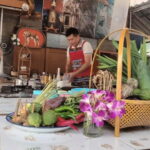
The key advantage of doing it with this tour is that you’re not on your own with new foods, new money, and crowded stalls. The tour includes a simple street-food meal, plus dessert, and you get help from your guide along the way.
What you can expect in practice:
- You’ll see lots of stalls that lean heavily toward clothing and handicrafts.
- Food is the real star, and you’re guided to sample local specialties instead of guessing.
- You’ll have enough time to keep eating, but not so much time that you feel trapped in the market.
One small caution: the Night Bazaar is a shopping magnet. If your main goal is temple history only, the market can feel like a detour. But if your goal is a full evening out—culture first, then dinner—ending here is a smart finish.


Price and Value: What You’re Paying For (and What You’re Not)
At $34.24 per person for a roughly 4-hour evening tour, this is positioned as a value-friendly way to see multiple temples with transport and some food included. Here’s how the value usually lands:
Included that actually matters:
- Tuk-tuk with driver (so you don’t fight traffic or navigation between temples)
- English-speaking guide
- Street-food meal plus dessert
- Bottle of drinking water
Not included (and you should plan for it):
- Entrance fees for Wat Chedi Luang and Wat Phra Singh (THB 50 each, cash day-of)
- Soft drinks and alcohol
- Personal expenses
- Optional gratuities
For many people, the biggest value is the coordination. You’re getting a compact route (four temple stops plus the Night Bazaar) without having to design it, drive it, or worry about missed opening hours. That’s hard to DIY at night when you’re also trying to enjoy the evening.
Also, the tour caps at 12 travelers. Smaller groups often mean easier movement and fewer delays between stops, which is important when you’re relying on tuk-tuks to keep the schedule.
If you’re trying to squeeze in temples during a tight Chiang Mai stay, this price can make sense fast.
Tuk-Tuk Reality Check: Comfort, Rain, and Getting In and Out
Tuk-tuks are part of the fun here. Several guides also helped passengers get great photo angles, and the open-air ride can feel refreshing after a hot day. That breeze is real.
But tuk-tuks also come with trade-offs. Seats can be high; getting in and out can be a slow, careful job. One review even complained about access and the setup in rainy conditions, so if you’re carrying mobility challenges, take extra care.
Rain is another consideration. The tour runs rain or shine, with the expectation that tropical showers usually don’t last long. The operator says they try to seek shelter if it’s heavy, then continue when it improves. I’d still bring a raincoat or poncho. It’s cheap insurance for a long evening with multiple stops.
Finally, remember you’re on a fixed timeline. The tour can wait only up to 10 minutes after the scheduled meeting time. If you’re late, the guide starts the tour. So set a timer, not a vibe.
Guide Quality: Why It Can Make or Break Your Night
This tour lives and dies by the guide. In the strong reviews, guides are praised for clear explanations, good pacing, and adding context to what you’re seeing. Names that came up include Tik, Nancy, Jane, Saman, Molly, Maa, and Malee.
When the guide is strong, you get more than temple photos. You learn how Buddhism shows up in everyday practice, and you understand why specific features matter. Some guides also help with practical stuff at the Night Bazaar—like talking with vendors on your behalf and helping you choose dishes without getting stuck.
That said, there are also a few reviews pointing to English issues or a guide whose focus felt too narrow. So here’s my practical advice: if English clarity is crucial for you, show up on time, ask questions early, and speak up if you can’t follow. The tour’s value rises fast once you’re actively engaged.
Who Should Book This Tour (and Who Should Consider DIY)
This tour is a great fit if:
- You want a first introduction to Chiang Mai temples without planning stress.
- You prefer night views and cooler weather.
- You want street food tastings handled for you.
- You like seeing several sites in one evening with minimal navigation.
You might want to think twice if:
- You’re the type who only wants a deep, slow temple experience (30 minutes can feel short).
- You already know the temple circuit well and want full freedom.
- You’re worried about understanding English details; guide quality can vary.
If you’re traveling with limited time and want a clean, structured evening plan, this checks a lot of boxes.
Should You Book This Chiang Mai Temples and Market Tuk-Tuk Evening Night Tour?
I’d book it if you want a simple evening formula: temples by night + guided food + transport included. The route makes sense for first-timers, and the Night Bazaar finish is a good way to turn your tour time into real dinner plans.
Book it with one clear expectation: you’ll pay cash for Wat Phra Singh and Wat Chedi Luang entrances, and your evening is paced in short stops rather than long stays. If that fits your style, this tour is an efficient and enjoyable way to see Chiang Mai after dark.
FAQ
How long is the Chiang Mai Temples and Market Tuk-Tuk Evening Night Tour?
It runs about 4 hours (approximately).
What time does the tour start, and where do I meet?
The start time is 6:30 pm. You meet at Burger King on Thapae 2-6 Rachadamnoen Rd, Chiang Mai.
Where does the tour end?
It ends at Chiang Mai Night Bazaar on Changklan Rd.
Which temples are included on this tour?
You visit Wat Phra Singh, Wat Phan Tao, Wat Chedi Luang Varavihara, and Wat Lok Molee.
Are temple entrance fees included?
No. Entrance fees for Wat Chedi Luang and Wat Phra Singh are not included and are THB 50 per person for each temple. You pay in cash on the day.
What food is included?
The tour includes a simple street-food meal and dessert, plus a bottle of drinking water.
Is the tour a small group?
Yes. The maximum group size is 12 travelers.
What happens if it rains?
The tour operates rain or shine. Tropical rain showers are usually short, and the team tries to seek shelter if it rains heavily, then continues when the weather improves. Cancellations due to weather are not eligible for a refund.
Can I use a mobile ticket?
Yes, the tour uses a mobile ticket.
What is the cancellation/refund window?
You can cancel up to 24 hours in advance for a full refund. If you cancel less than 24 hours before the start time, the amount you paid is not refunded.