REVIEW · CHIANG MAI
Chiang Mai: Historic Old City Bike Tour – Morning or Night
Book on Viator →Operated by Discova Thailand · Bookable on Viator
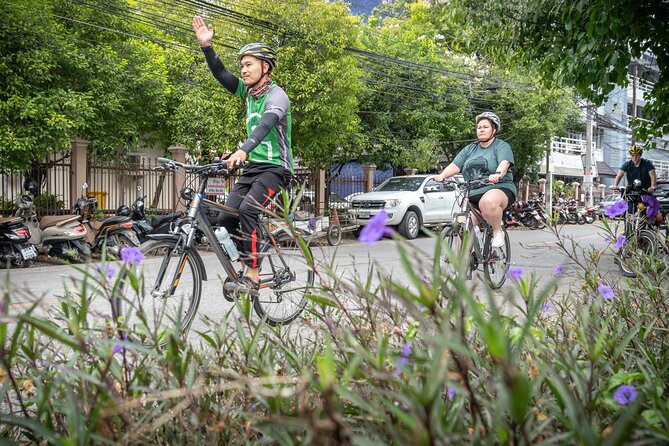
Two wheels beat two feet in Chiang Mai. This Old City bike tour makes first-timer orientation easy by linking major sights with quiet back lanes, guided by English-speaking hosts. What also helps is the small group size, so you get time to ask questions and actually see what you’re cycling past.
I also like the simple, practical setup: quality mountain bikes, a helmet, and a clear plan that covers temples and landmarks without turning the day into a sprint. You get drinking water and light snacks, plus temple donation allowance and a market stop where your guide nudges you toward a few tasty bites.
One thing to consider: temple access can come with rules. A review noted that one temple stop can be difficult to enter depending on gender, so plan to enjoy the grounds even if you can’t go inside every structure.
In This Review
- Key things that make this Chiang Mai bike tour work
- Chiang Mai’s Old City by bike: the point of doing it this way
- Where you start: Discova Day Tour Shop near Chang Puak Gate
- Riding to Tha Phae Gate: from quiet lanes to a historic trade entrance
- Wat Chedi Luang: the ruined chedi and the City Pillar stop
- Wat Inthakhin (City Navel Temple): the “symbolic center” feeling
- Three Kings Monument: an easy landmark that still tells a story
- The market stop: morning produce or a night-food loop
- Back to the shop: why the route feels like exploration, not just transport
- Guides matter: Kitty, Tom, Farm, Boy, James, Gun, and the rest
- Biking through Old City back lanes: what it feels like on the ground
- Price and value: why $39 can make sense for a half-day plan
- Who this Chiang Mai bike tour suits best (and who should think twice)
- Quick practical tips before you go
- Should you book the Chiang Mai Historic Old City Bike Tour?
- FAQ
- How long is the Chiang Mai Historic Old City Bike Tour?
- How far do you bike during the tour?
- Where does the tour start and end?
- Are bikes and helmets included?
- Is water and snacks included?
- Do you stop at markets during the tour?
- What main temples and landmarks are included?
- What’s the group size limit?
Key things that make this Chiang Mai bike tour work
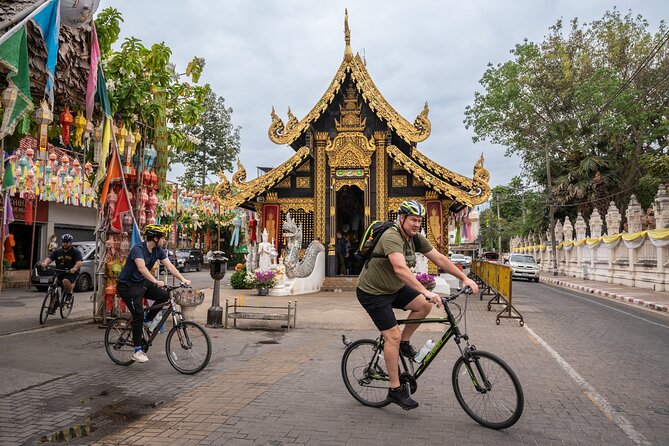
- 7.5 miles (12 km) in about 4 hours at a relaxed pace, with lots of stops to cool down and look around
- Small groups (max 20) for easier navigation through back lanes and better attention from your guide
- Temples and landmarks you can’t easily stitch together on foot, including Wat Chedi Luang and the Three Kings Monument
- A market stop included, either a morning market or a night market depending on your departure
- Safety-first biking basics: helmet provided and guided riding through calmer streets
- Snacks, water, and temple donation allowance included so you’re not hunting down extra add-ons mid-tour
Chiang Mai’s Old City by bike: the point of doing it this way
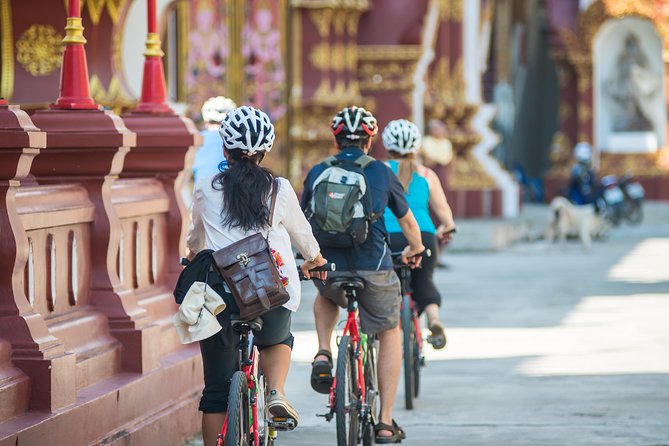
Chiang Mai’s Old City is full of “how do I even get there?” moments. Walls, gates, lanes, and temple compounds can feel like a maze when you’re on foot. A bike tour fixes that by giving you transport plus a route, so you get both movement and context.
This tour is built around that balance. You’ll cover roughly 12–14 km across about 4 hours, which is long enough to feel like you explored, but short enough that you’re not wrecked by the end. You’re mostly dealing with flat riding routes (based on multiple guides and rider feedback), which matters in a city where the heat can sneak up on you.
You’ll also get the kind of structure that makes sightseeing stick. When someone explains why Tha Phae Gate mattered for trade, or why Wat Chedi Luang’s ruined chedi is so important, the places stop being just photo backdrops. They become landmarks with stories you can remember later as you walk on your own.
You can also read our reviews of more tours and experiences in Chiang Mai.


Where you start: Discova Day Tour Shop near Chang Puak Gate
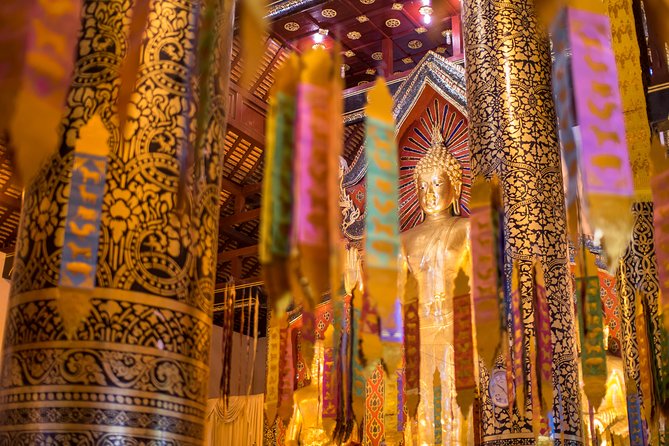
Your ride begins at the Discova Day Tour Shop Chiang Mai, on Wiang Kaew Rd, near Chang Puak Gate (the north gate). This is handy because it’s in the right zone for Old City exploring: you’re close enough to start fast, but you’re not forced into an awkward long transfer across town.
Starting and ending back at the same spot keeps the logistics simple. After four hours, you don’t have to think about where the tour ends, how to get back, or whether you’ll miss a step. For many people, that alone is part of the value.
You’ll also meet your guide there, and the tour includes the bike and helmet setup before you roll out. That means you can focus on the route instead of troubleshooting gear.
Riding to Tha Phae Gate: from quiet lanes to a historic trade entrance
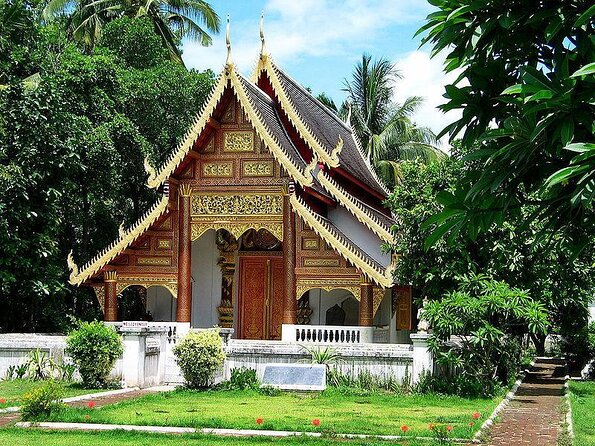
Your first real “you’re in the right place” moment comes as you cycle toward the Old City and Tha Phae Gate. This gate was once a major trading entrance, so it’s a good place for the guide to set the scene: Chiang Mai’s Old City wasn’t just temples and paperwork—it was movement, goods, and people coming through.
Expect a short ride that feels like it’s doing two jobs. You’re getting your legs warm-up, and you’re also watching how the city transitions from busier edges into calmer lanes. The tour gives you time here (about 30 minutes at this stage) so you’re not just glancing and pedaling away.
If you’re arriving in Chiang Mai for the first time, this kind of first landmark stop helps. It gives your brain a reference point. Later, when you walk back through the area, the streets start making sense faster.
Wat Chedi Luang: the ruined chedi and the City Pillar stop
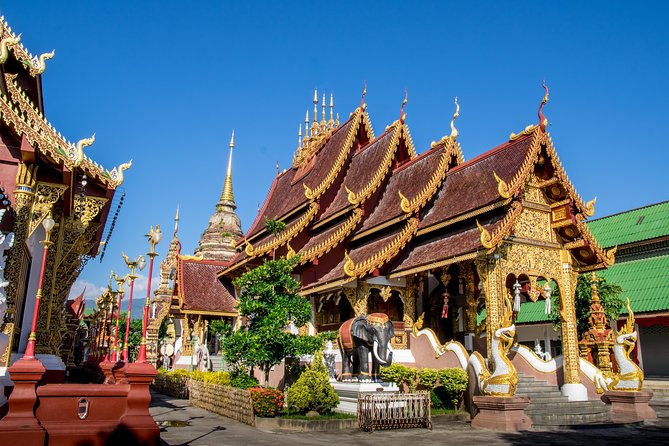
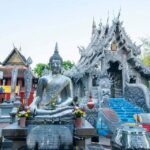
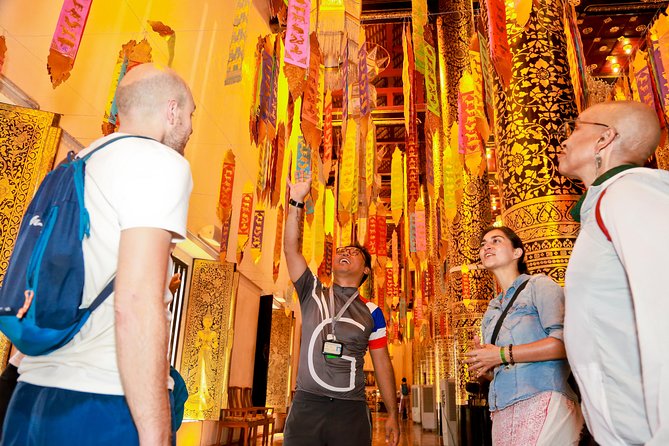
Next up is Wat Chedi Luang Varavihara, one of the Old City’s headline temples. You’ll spend around 30 minutes here, with the visit shaped around what makes it distinctive: the massive ruined chedi and the ancient City Pillar.
This stop is valuable even if you’re not a hardcore temple-hopper. A guide can explain what you’re looking at—why the chedi is ruined, why it matters, and how the City Pillar fits into local belief. Without that, it’s easy to see the scale but miss the meaning.
A practical note: you’ll likely be walking around temple grounds as part of the experience, so wear shoes you’re happy to get dusty. Also, plan for humidity. Shaded temple areas help, but you’ll still want water later—good news is you’re not left without it.
Wat Inthakhin (City Navel Temple): the “symbolic center” feeling
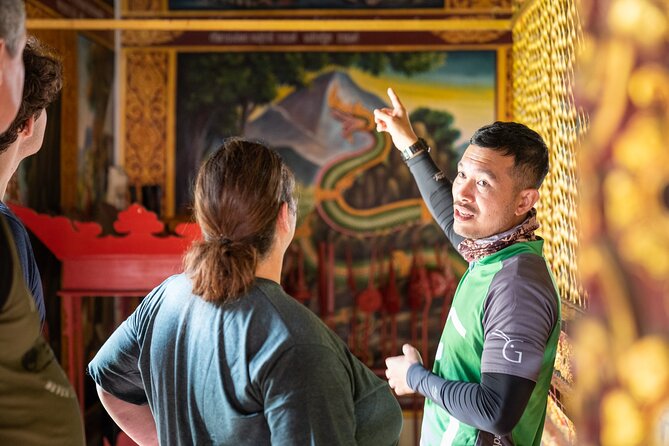
After cycling onward, you’ll reach Wat Inthakhin Sadue Muang, commonly linked with the City Navel Temple idea—a symbolic center of the ancient kingdom. The tour sets aside about 30 minutes here.
I like this stop because it’s a different kind of meaning than the big famous structures. Instead of focusing only on monumental ruins, you’re stepping into a place framed around center, orientation, and spiritual geography. If you enjoy learning how Thai Buddhism shapes everyday space, this one tends to land well.
Another plus: the pacing. Temple stops are spaced so you’re not constantly swinging between intense rides and intense crowds. You get time to look, ask, and absorb.

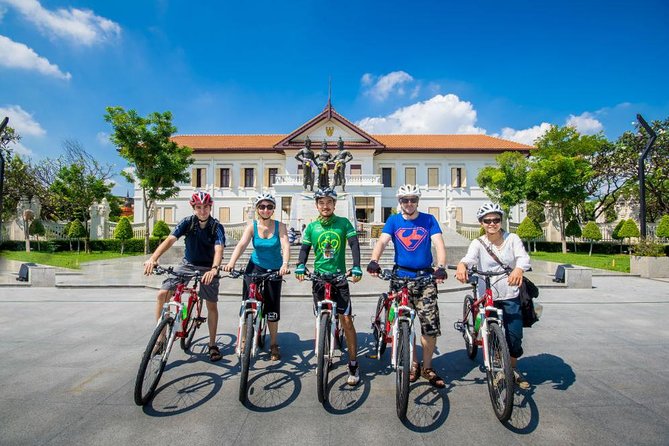
Three Kings Monument: an easy landmark that still tells a story
Then you’ll ride to the Three Kings Monument area. The tour gives you about 30 minutes here as well.
This isn’t just a photo stop. It’s a landmark that ties into Chiang Mai’s identity. When you’re on a bike, you can reach it without fighting traffic or backtracking for an hour. When you’re walking later, you’ll know what this monument is connected to—because your guide helped you place it in context.
If you like short, strong highlights, this segment is a good one. It breaks up the temple-heavy portions and gives your legs a change of pace.
The market stop: morning produce or a night-food loop
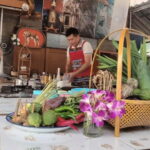
One of the smartest parts of this tour is the included market time. You’ll stop at a local market on all departures, and the experience differs depending on whether you’re on the morning or night tour. The guide will also help you try a few simple snacks.
At roughly 1 hour, this is your “eat and people-watch” break. In Chiang Mai, markets aren’t just shopping—they’re where you understand what locals actually eat and how the day moves. You’ll taste things you might not pick on your own, even if you’re reasonably adventurous.
A couple of real-world details from rider feedback matter here:
- Some groups reported trying favorites like smoothies and fruit drinks.
- Guides often steer you toward quick, easy items rather than overwhelming you with a huge menu.
My advice: go a little hungry and treat the market as part of the tour, not a separate side quest. You’ll get more out of it when the guide is helping with what to order and why it’s special.
Back to the shop: why the route feels like exploration, not just transport
The tour wraps back at Discova Day Tour Shop Chiang Mai. You’ll cover about 12–14 km total at a relaxed pace, so the end doesn’t feel like a chore.
What I like about finishing where you started is that you can immediately convert this half-day into your own plan. Maybe you’ll walk to another temple you liked. Maybe you’ll head to a café. Maybe you’ll simply do what half the work does for you: wander with better direction.
Also, several riders highlighted that guides chose quieter lanes. That kind of routing matters. In a city with traffic, calmer streets make biking feel relaxed instead of stressful.
Guides matter: Kitty, Tom, Farm, Boy, James, Gun, and the rest
The tour’s quality shows in the guide style, and names keep popping up in feedback.
- Kitty and Tom are praised for clear history, easy bike handling, and taking lots of photos and videos.
- Farm stood out for a smooth, safe pace and helpful tips afterward, like where to grab lunch or a massage.
- Boy is mentioned for direct, confident guidance through city traffic and for keeping the group together.
- James (also tagged as 007) is noted for clear English and lots of Thai history context.
- Gun comes up for safe, friendly guiding and for the overall “great intro” feeling.
Why you should care: an Old City bike tour isn’t just about route maps. It’s about turning what you see into something you understand. Good guides time stops well, explain what matters, and keep the group moving without rushing your eyes.
Biking through Old City back lanes: what it feels like on the ground
This is not a race. You’re cycling through streets that range from main approaches to smaller lanes. The best part, according to multiple riders, is how much you can see while still feeling connected to local life—like the smells from food cooking and the everyday rhythm around markets.
You’ll likely spend more time riding than you expect early on, but the plan is built around frequent short stops. That’s important because it keeps you from arriving at temples already exhausted and sweaty.
Some riders even mentioned additional character in the route—quiet canal stretches or short off-road touches—while others focused on flat, easy cycling. Bottom line: you should expect smooth, manageable effort with frequent breaks.
Price and value: why $39 can make sense for a half-day plan
At $39 per person for roughly 4 hours, this tour can be a good value if you want three things at once:
1) transportation around the Old City,
2) a guide to explain temples and landmarks,
3) food time built into the itinerary.
Bike rental with safety gear normally costs money on its own in many travel areas. Add in an English-speaking guide, water, light snacks, and an included market stop, and the cost starts to look less like a “tour premium” and more like a package that saves you time and mental energy.
You also get small extras that matter in real life:
- temple donation allowance
- accidental insurance
- snacks and water so you don’t have to budget every break
If you’re the type who likes to wander without a strict plan, that’s where the tour shines: it helps you understand what you’re seeing, and then you can freestyle afterward.
Who this Chiang Mai bike tour suits best (and who should think twice)
This tour fits you if:
- You’re in Chiang Mai for the first time and want fast orientation.
- You want to see key temples and monuments without stacking buses, taxis, or long walks.
- You enjoy history explanations you can actually connect to the sights on-screen.
It might be less perfect if:
- You hate temple-focused days and want mostly neighborhoods and street scenes.
- You have a strong need for access to temple interiors every time (some places can have rules; one review flagged a situation where a woman couldn’t enter).
In most cases, even when interiors aren’t accessible, the grounds and landmark context are still useful. But if you’re aiming for a very specific type of viewing, consider that limitation.
Quick practical tips before you go
- Wear breathable clothes and shoes you’re okay with getting a bit dusty.
- Bring sunscreen and plan for heat even if your ride is mostly flat.
- If you’re going on a night-market departure, expect dinner-ish vibes and bring a little room in your stomach for the market stop.
- Be ready to participate respectfully at temples. Your guide may explain small activities offered on-site.
Should you book the Chiang Mai Historic Old City Bike Tour?
I’d book it if you want an easy, structured way to get oriented in the Old City and you’d rather spend your energy learning than figuring out logistics. The small groups, English guidance, and the combo of temples plus market time make it a strong half-day value at this price.
Skip it only if you’re chasing a very different kind of day—like a pure food tour, or a long cycling-only route with fewer stops. Otherwise, this is one of those tours that does the quiet work for you: it turns Chiang Mai’s Old City from confusing streets into memorable places you can name.
FAQ
How long is the Chiang Mai Historic Old City Bike Tour?
The tour runs for about 4 hours.
How far do you bike during the tour?
You’ll bike around 12 kilometers (about 7.5 miles) during the tour.
Where does the tour start and end?
It starts at the Discova Day Tour Shop Chiang Mai and ends back at the same meeting point.
Are bikes and helmets included?
Yes. You’ll be provided with a quality mountain bike and a safety helmet.
Is water and snacks included?
Yes. Drinking water and light snacks are included.
Do you stop at markets during the tour?
Yes. A local market stop is included on all departures, and it can be a fresh morning market or a night market depending on the tour.
What main temples and landmarks are included?
The tour includes stops at Wat Chedi Luang, Wat Inthakhin, and the Three Kings Monument, plus cycling to Tha Phae Gate.
What’s the group size limit?
The tour lists a maximum of 20 travelers.