REVIEW · CHIANG MAI
Chiang Mai: Temple And City Walking Tour Part I
Book on GetYourGuide →Operated by Journey D Travel · Bookable on GetYourGuide
Morning temples in Chiang Mai hit different. This 4-hour walk pairs Wat Chedi Luang ruins with a guide who can explain Buddhism in plain, human terms, often including former-monk perspectives like Son or Katoon. One thing to plan for: temple entrance fees are extra (50 THB for Wat Chedi Luang and 40 THB for Wat Phra Singh).
I like that the route stays focused and walkable, not a chaotic temple stampede. You’ll spend time at Wat Pan Tao for its Lanna-style ordination hall and the murals showing scenes from the Buddha’s life, then finish at Wat Phra Singh, home to the Phra Singh Buddha statue and beautiful monastery grounds.
The only real catch is logistics on site: you’ll be standing and walking for most of the morning, and the temples have a strict dress code (no shorts, no sleeveless shirts, no smoking). If you’re okay with that, this is a great way to understand what you’re looking at, not just take photos.
In This Review
- Key Things I’d Put on Your Radar
- Why an 8:20 Temple Walk Works So Well
- Wat Chedi Luang: The Stupa Ruins That Still Feel Important
- Wat Pan Tao: Murals, Lanna Ordination Space, and Buddha-Life Stories
- Wat Phra Singh: The Monastery of the Lion Buddha
- The Real Value: Learning Buddhism From a Guide With Stories
- Price and Temple Fees: What $15 Really Buys You
- Dress Code and Temple Behavior: The Stuff That Can Trip You Up
- Walking Comfort: What 4 Hours Feels Like in Real Life
- Who This Tour Is Best For (And Who Should Skip It)
- Should You Book Chiang Mai Temple And City Walking Tour Part I?
- FAQ
- What time does the Chiang Mai Temple And City Walking Tour Part I start?
- How long is this walking tour?
- How much does it cost?
- Is there a guide included?
- Which temples do you visit?
- Are temple entrance fees included in the price?
- What languages is the tour guide available in?
- Is hotel pickup and drop-off included?
- What clothing rules should I follow?
Key Things I’d Put on Your Radar
- Early 8:20 start helps you see the temples before the day gets hot
- Wat Chedi Luang’s 14th-century chedi ruins tell a story of faith through natural disaster
- Wat Pan Tao murals show Buddha-life scenes in a way a normal guide script usually misses
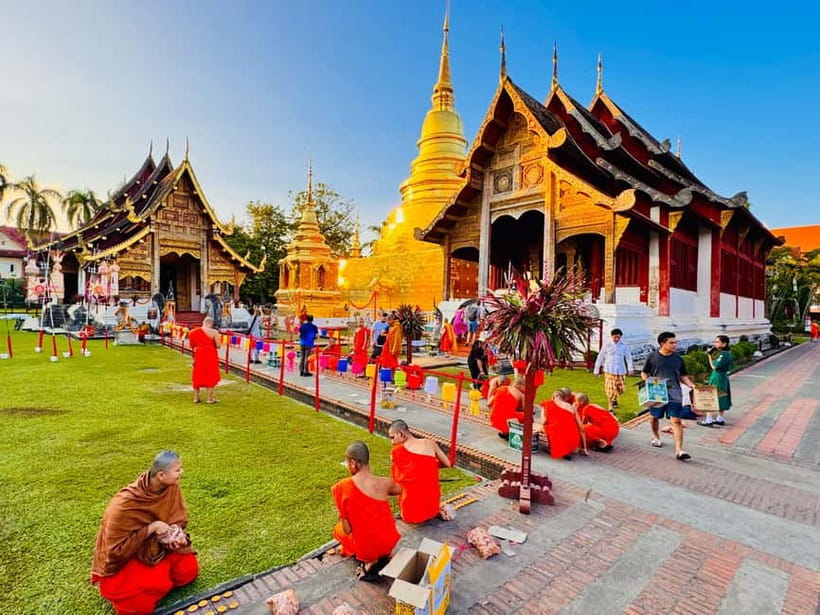
- Wat Phra Singh and the Phra Singh Buddha bring Chiang Mai’s religious heart into focus
- Ask-anything Buddhism Q&A is a standout, especially with guides who have real monk experience
- A walking route that’s easy to follow so you don’t lose time figuring out where to go next
Why an 8:20 Temple Walk Works So Well
Starting at 08.20 am is not random. In Chiang Mai, mornings are simply easier: cooler air, steadier energy, and less “I’m dying of heat” energy inside outdoor spaces. It also means you can take your time with details like doorway carvings, stupa shapes, and the little signs of how people actually behave in a temple.
This tour is built for walking, but it’s not the kind that rushes you along. You’ll have a guide taking you from one major stop to the next, which matters because Chiang Mai’s old-city temples can look similar until you know what you’re seeing. Once someone points out what’s important, the whole place starts making sense fast.
If you care about religion and culture beyond the postcard level, the morning timing helps even more. You’ll be sharper, more patient, and more likely to ask questions instead of just nodding along.
You can also read our reviews of more tours and experiences in Chiang Mai.


Wat Chedi Luang: The Stupa Ruins That Still Feel Important
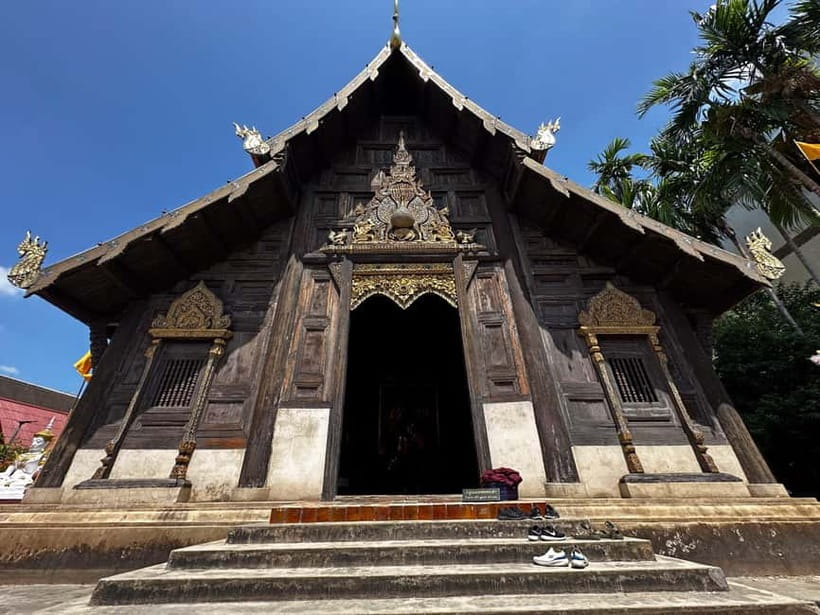
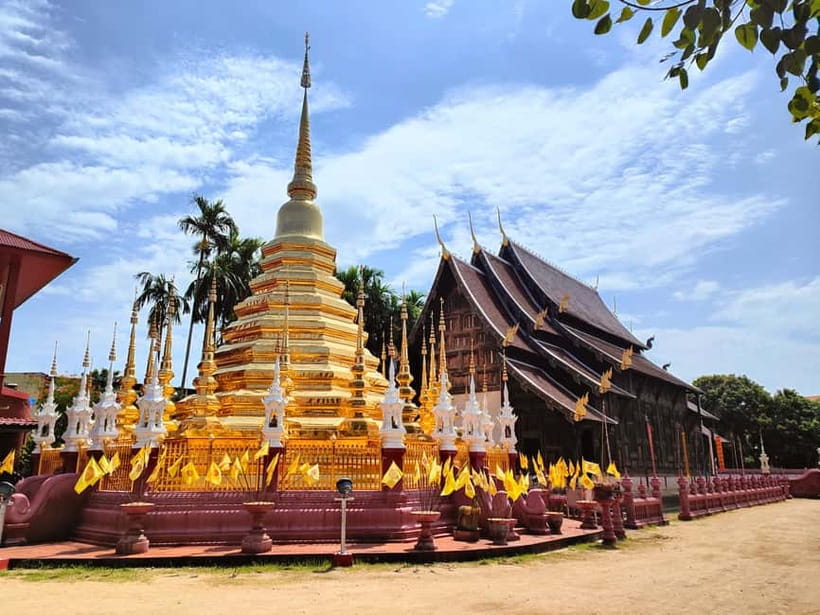
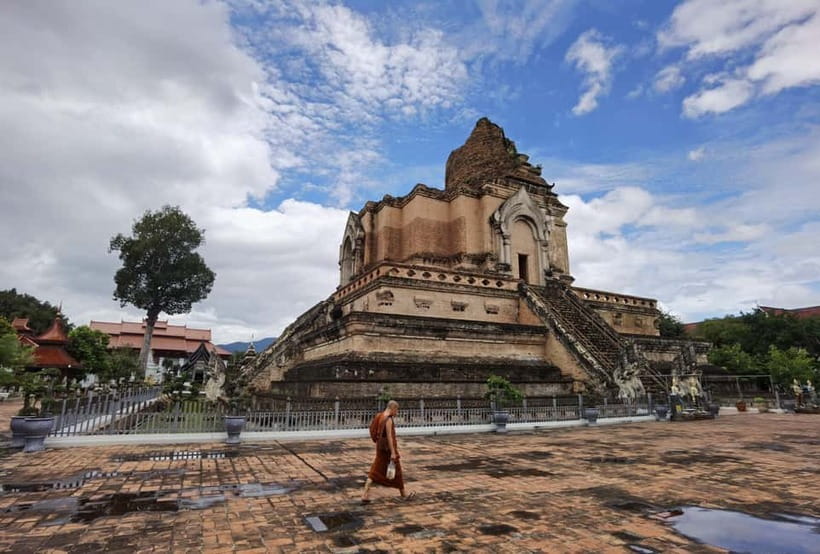
Wat Chedi Luang is the first anchor of the walk, and for good reason. The site is famous for its ruined chedi (stupa), once one of Chiang Mai’s most important temple complexes. The original chedi dates to the 14th century, and then disaster struck: it was severely damaged in an earthquake in 1545.
Here’s why I think this stop is more than “look at old rocks.” Ruins like this don’t just show age—they show survival. When you see how the structure was affected, you start understanding how long-term belief and rebuilding work in real life, not just in textbooks.
What to watch for:
- The stupa’s scale, even in damaged form
- The way people move through the space and where they pause
- The remnants of how the temple likely looked when it was whole
Practical note: Wat Chedi Luang entrance is 50 THB, and you’ll want to budget time for that before you settle in for explanations.
Wat Pan Tao: Murals, Lanna Ordination Space, and Buddha-Life Stories
From Wat Chedi Luang, you move to Wat Pan Tao, a small temple that’s close enough to keep the day from feeling like a constant transfer. This is where the tour shifts from “big landmark” to “smaller, more personal details.”
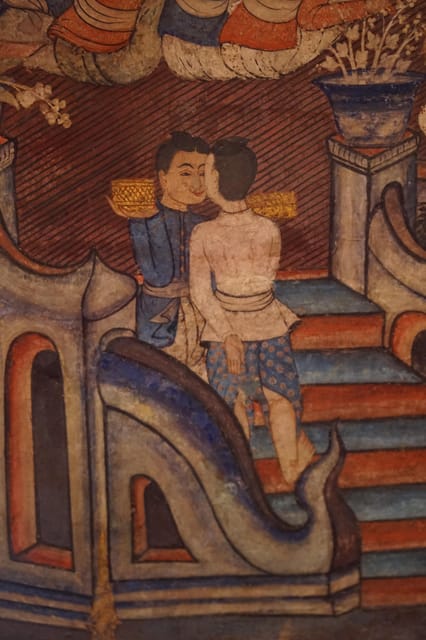
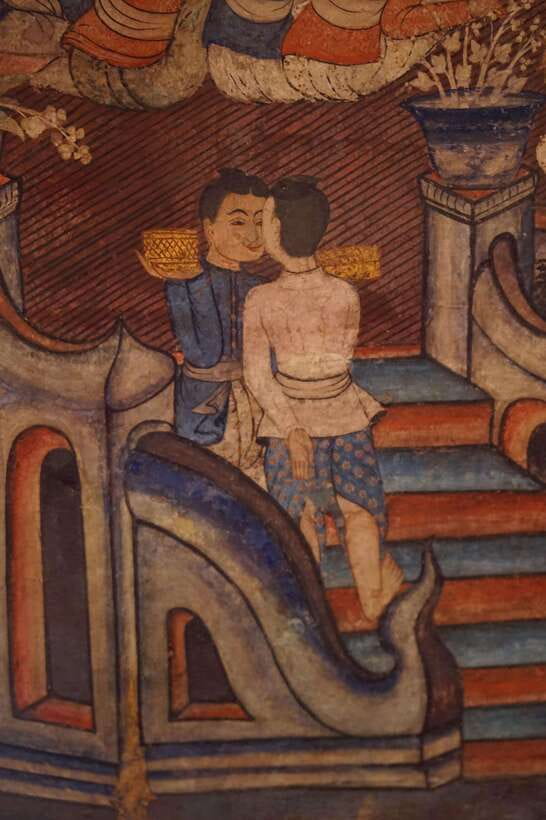
Wat Pan Tao is known for beautiful murals that depict scenes from the life of the Buddha. Even if you’ve read about Buddhism before, murals do something text can’t: they make the timeline visual. A good guide will help you connect the images to the meaning behind them—what people are learning, remembering, and practicing.
You’ll also visit its Lanna-style ordination hall, which helps explain how Northern Thailand shaped temple design. Lanna architecture isn’t just decorative. It’s part of how ceremonies happen and how religious life is organized around space.
If you’re the kind of person who likes seeing the “why” behind what you’re staring at, this is one of the best parts of the walk. It turns a quiet temple into a story you can actually follow.
Wat Phra Singh: The Monastery of the Lion Buddha
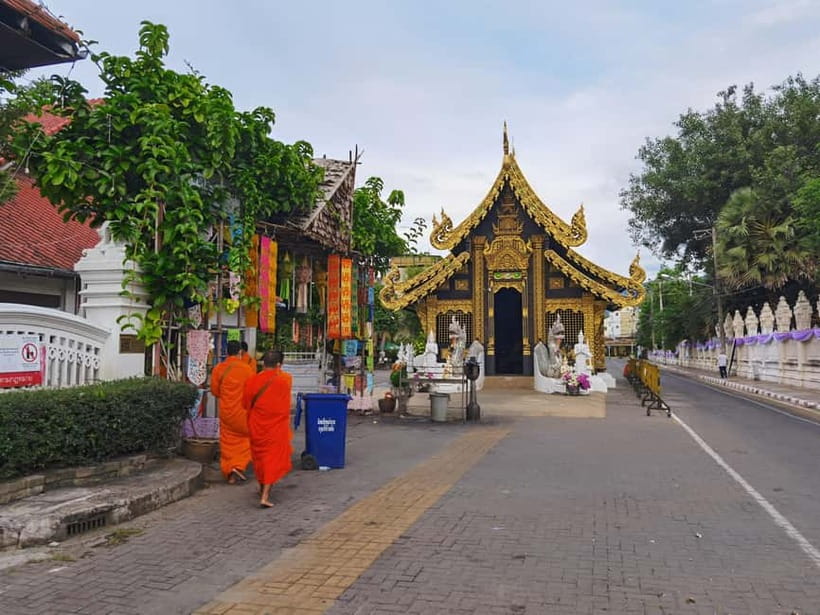
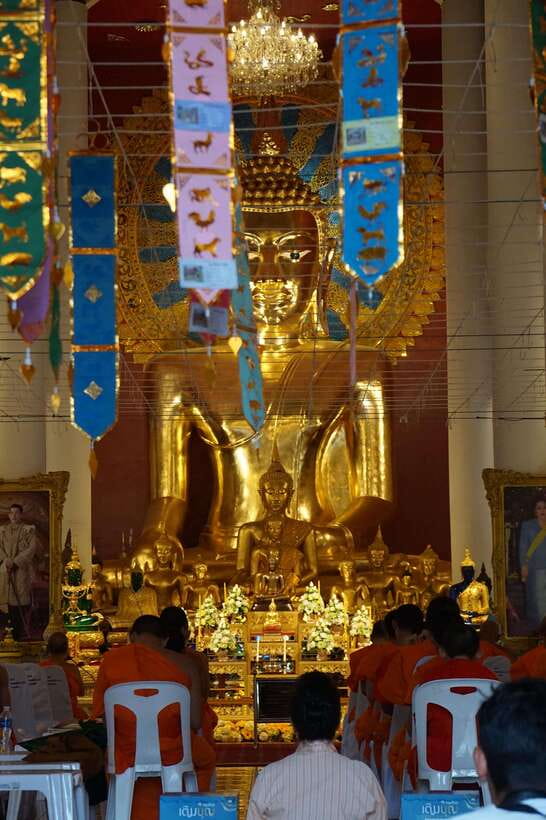
The final major temple stop is Wat Phra Singh, one of Chiang Mai’s most important monasteries. This place is famous for the Phra Singh Buddha statue, a revered relic that draws attention from worshippers and visitors alike.
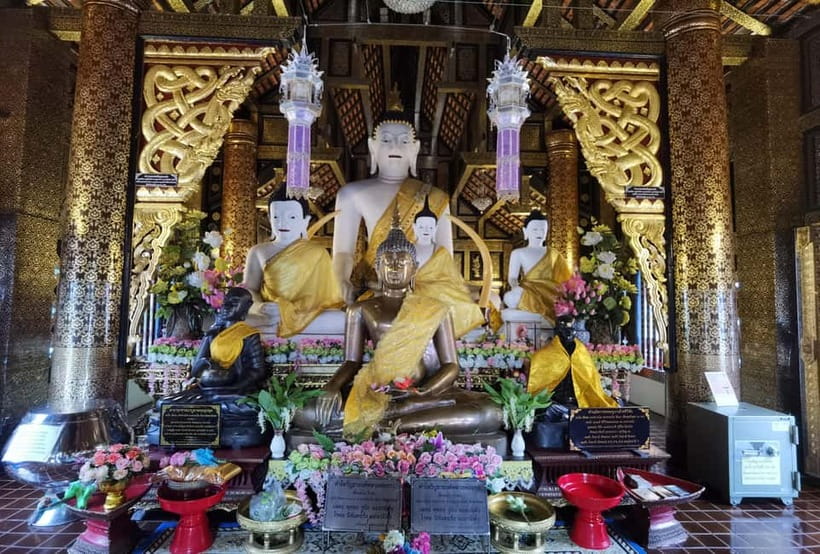
Again, it’s easy to look at a statue and stop there. A strong guide connection is what turns it into a living tradition. You’ll learn what makes the statue and its setting significant, and you’ll notice how the grounds are organized to support daily temple rhythms.
What I like about closing with Wat Phra Singh is the contrast. After two stops focused on history and art, you end with a temple that feels active and central. You’re not just learning what happened years ago—you’re seeing what matters now.
Entrance for Wat Phra Singh is 40 THB, so keep that in mind if you’re trying to control your budget.
The Real Value: Learning Buddhism From a Guide With Stories
The temples are the headline, but the guide is the muscle.
What consistently pops in the feedback is how well the guides handle questions and how often they share personal context—some guides (like Son and Katoon in past groups) come from a background as former monks. Even when the guide isn’t sharing life history, the best ones here can explain Buddhism in a way that doesn’t feel like a lecture.
That matters, because temple details can be confusing:
- different Buddha representations
- how people show respect
- why certain decorations or symbols are there
- how religious practice shapes daily behavior
You’ll get the kind of answers that help you look at a statue and understand what you’re actually seeing—position, meaning, and purpose. And because the format is a walking tour, you can ask questions as they come up instead of saving them for the end.
Some groups also mention extra hands-on elements like short meditation moments or learning how to pray at the temple. The core promise is education and temple context, but it’s worth being mentally open—if your guide includes practical pieces, this tour can feel more personal than a standard temple circuit.



Price and Temple Fees: What $15 Really Buys You
At $15 per person for a 4-hour guided walking tour, you’re paying for time, interpretation, and routing. You’re not only buying access to buildings—you’re buying someone to translate the place.
The catch: temple entry fees aren’t included. You should budget 50 THB + 40 THB for the two paid temples mentioned in the tour info. That’s usually still a small chunk compared with the value of having a guide who can point out what matters.
So here’s the math the way I’d think about it:
- You’re paying for a morning with a live guide and an organized route
- You still pay small extra fees for entry, which is common for temple tours
- Your real return is understanding—especially if you ask questions
If you’re the type who likes to wander on your own, you can always do the temples independently. But you’ll likely miss the connection between the ruins, the murals, the statue, and the meaning behind what people do there. For $15, that understanding is the main value.
Dress Code and Temple Behavior: The Stuff That Can Trip You Up
The tour has clear rules, and they’re not optional because temples expect respect.
You should come prepared:
- No shorts
- No sleeveless shirts
- No short skirts
- No smoking
- No climbing
- No drones
- No alcohol or drugs
- No nudity
If you forget, the easiest fix is to plan simple clothing that passes the test: lightweight long pants and a shirt with sleeves. Chiang Mai mornings can start cool and warm up fast, so breathable fabric helps.
Also, remember: temples are living religious spaces. Your best move is to stay calm, walk where you’re guided, and treat photos like a respectful activity, not a mission.
Walking Comfort: What 4 Hours Feels Like in Real Life
This is a 4-hour walking tour, and while the route is described as straightforward, you should still expect plenty of standing at each temple. That’s not a flaw—it’s part of why temple explanations work. You need time to look, pause, and listen.
If you want an easier day overall:
- start hydrated
- wear comfortable shoes
- bring a light layer in case the morning air is cool then shifts
Also note the tour isn’t suitable for everyone. It’s not listed for pregnant women, babies under 1 year, or people over 95 years old. If any of those apply, you’ll want a different option.
Who This Tour Is Best For (And Who Should Skip It)
This one fits you if:
- you like temples but also want meaning, not just scenery
- you’re curious about Buddhism and want a guide who can handle questions
- you enjoy early starts and don’t mind walking and standing
It may not fit you as well if:
- you strongly prefer to move at your own pace without a structured route
- you have trouble with stairs, long standing, or walking for most of the morning
- you don’t want to follow a strict dress code at religious sites
If you’re traveling with someone who gets impatient with slow explanations, you can still make it work—but set expectations early. The best tours here are the ones where you actually ask things.
Should You Book Chiang Mai Temple And City Walking Tour Part I?
I’d book this if you want a smart morning in Chiang Mai’s old-city temples and you’d rather understand the places than just collect photos. The big win is the combination of iconic stops—Wat Chedi Luang, Wat Pan Tao, and Wat Phra Singh—plus a guide who can explain Buddhism in a practical, question-friendly way. Former-monk-style insights, like those shared by guides such as Son or Katoon in past groups, seem to be a huge part of why the experience lands so well.
Skip it if you’re not up for early mornings, strict temple clothing rules, and standing/walking for about four hours. Also, if entrance fees stress your budget, remember you’ll need to add 50 THB and 40 THB for the two specified temples.
If those trade-offs are fine with you, this is one of the more cost-effective ways to get real context fast.
FAQ
What time does the Chiang Mai Temple And City Walking Tour Part I start?
The tour starts at 08.20 am.
How long is this walking tour?
It lasts 4 hours.
How much does it cost?
The price is $15 per person.
Is there a guide included?
Yes. A live tour guide is included.
Which temples do you visit?
You visit Wat Chedi Luang, Wat Pan Tao (Wat Phan Tao), and Wat Phra Singh.
Are temple entrance fees included in the price?
No. Entrance fee to Wat Chedi Luang is 50 THB, and entrance fee to Wat Phra Singh is 40 THB.
What languages is the tour guide available in?
The guide speaks Thai and English.
Is hotel pickup and drop-off included?
No. Hotel pickup and drop-off are not included.
What clothing rules should I follow?
Shorts, short skirts, sleeveless shirts are not allowed, along with smoking and other behaviors listed in the tour rules.