REVIEW · BANGKOK
Authentic Thai Cooking with the Largest market visit &TukTuk ride
Book on Viator →Operated by Sabieng Thai Cooking School · Bookable on Viator
Food is the shortcut to Bangkok. I love how this class pairs a real market visit with serious hands-on cooking. You start at Khlong Toei, then hop on a tuk-tuk to the school where you cook what you just bought and eat it right away.
Two things I really liked: the instruction quality (chefs like Chef Pim and Chef Alex are mentioned as clear, patient teachers) and the fact that you leave with practical recipes you can repeat at home. One thing to consider: the meeting point can be a little tricky to find if you show up right at the start time, so I’d plan to arrive early and confirm the exact spot.
In This Review
- Key things to know before you go
- Why this Bangkok class feels more real than a typical cooking stop
- Khlong Toei Market: your ingredient field trip in Bangkok
- The tuk-tuk ride: short, fun, and actually useful
- Inside Sabieng Thai Cooking School: clean kitchen, small-group flow
- What you’ll cook: Thai classics taught with real technique
- A note on customization and dietary needs
- The teaching style: what chefs like Chef Pim and Chef Alex do well
- How long is it, and how hungry should you be
- Price and value: is $44 a fair deal?
- Who should book this cooking class
- Practical tips to make the morning smoother
- Should you book Sabieng Thai Cooking School?
- FAQ
- FAQ
- Where is this cooking class located?
- How long is the experience?
- What does the tour include?
- How much does it cost?
- Is there a group limit?
- Will I get a ticket on my phone?
- How soon will I know my booking is confirmed?
- Is the meeting point near public transportation?
- Can I get a refund if I cancel?
- When does the tour end?
Key things to know before you go
- Khlong Toei Market first: you learn what to buy and why, not just what to cook.
- Tuk-tuk ride included: it keeps the morning fun and helps break up the pace.
- Small group size (max 12): you get more hands-on attention during prep and cooking.
- Clean, well-run cooking space: multiple mentions of a spotless school and a smooth class flow.
- You cook multiple dishes: the menu commonly includes Thai staples like Pad Thai and curry.
- Recipes to take home: you can rebuild what you made after you’re back from Thailand.
Why this Bangkok class feels more real than a typical cooking stop
Bangkok has cooking everywhere, but most classes miss the best part: where the ingredients come from. Here, you begin at Khlong Toei Market, a place that’s meant for buying real food, not taking souvenir photos. That changes how the recipes land. When you’ve seen produce, seafood, and pantry items in context, you cook with better instincts at home.
The other half of what makes this tour work is pacing. You’re not stuck in a classroom for hours. You walk a market, you ride in a tuk-tuk, and then you cook and eat. Multiple people mention the format as a key win: prep, cook each dish, then sit down as a group for the meal. It keeps energy up and makes the food feel earned.
Finally, you’re paying for more than food. The chefs have real credentials in Thai culinary arts and food preparation, including experience tied to major international food settings and advanced recipe development. Even if you’re not a “serious cook,” you’ll notice how they teach flavor balance and technique in a way that’s usable.
You can also read our reviews of more tours and experiences in Bangkok.



Khlong Toei Market: your ingredient field trip in Bangkok
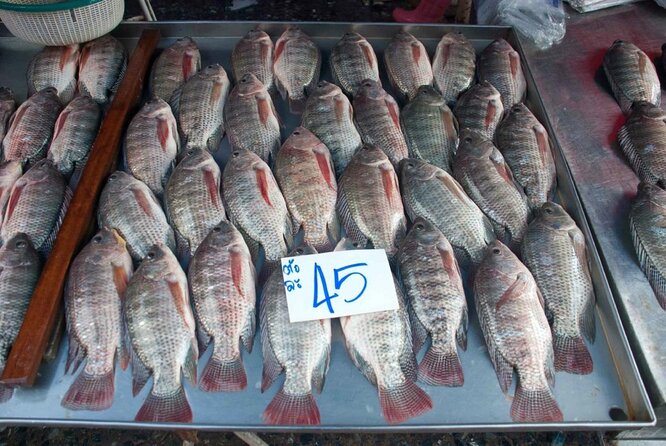
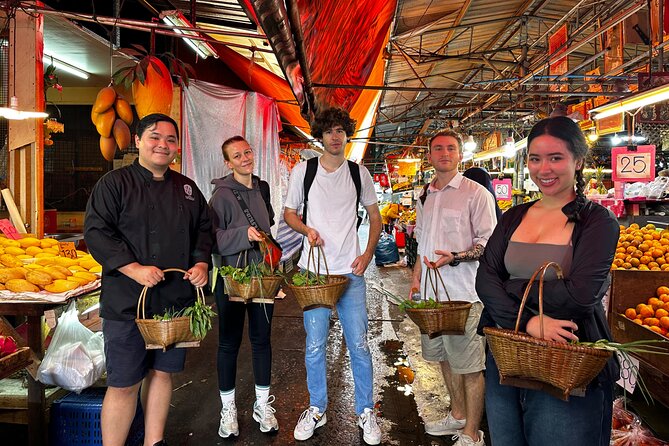
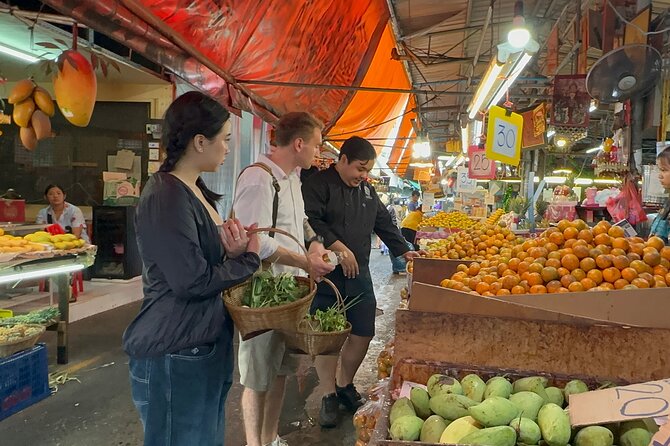
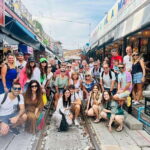
Your first stop is Khlong Toei Market, where you get the chance to see the raw materials behind Thai cooking. The value here is practical. You learn what ingredients look like fresh, how cooks think about them, and what gets used for different flavors and textures.
What you’re likely to notice:
- Lots of fresh produce with strong color and smell (Thai cooking is built on that).
- Seafood and other proteins being handled for everyday meals.
- A wide range of herbs and vegetables that make Thai food taste layered, not bland.
A repeated theme in the feedback is that the guide explains ingredients in plain terms and gives useful tips. That matters because Thai cooking can look complicated on paper—paste, balance of sweet/sour/salty, and the way herbs show up late in the process. Seeing the ingredients up close makes those steps feel logical instead of mysterious.
The tuk-tuk ride: short, fun, and actually useful
After the market, you take a tuk-tuk to the school. It’s not just a photo moment. This ride helps separate the experience into two modes: exploration, then cooking.
For you, that means:
- You get a mental reset before the cooking starts.
- The ride adds “Thailand energy” without adding a big time cost.
- The whole morning feels like one continuous activity instead of two disconnected parts.
If you’re sensitive to traffic noise or heat, plan to take it as part of the adventure. The school itself is described as clean with great air conditioning, which makes the contrast extra pleasant.
Inside Sabieng Thai Cooking School: clean kitchen, small-group flow
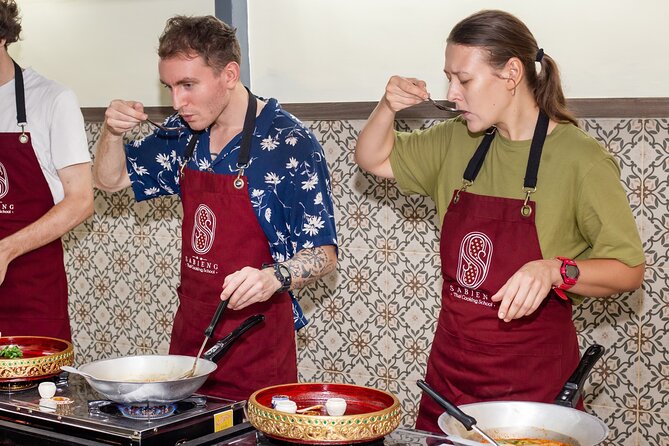
This experience is run by Sabieng Thai Cooking School. People repeatedly describe the space as clean and well cared for, with a kitchen that feels organized rather than chaotic. That’s important. Cooking with sharp knives, hot pans, and fresh herbs is much easier when the workspace is tidy.
Also, this is a small group tour with a maximum of 12 people. With a smaller class, you’re more likely to:
- Get quick help while you’re chopping or mixing.
- Hear the instructor’s directions clearly.
- Stay on track through prep and cooking.
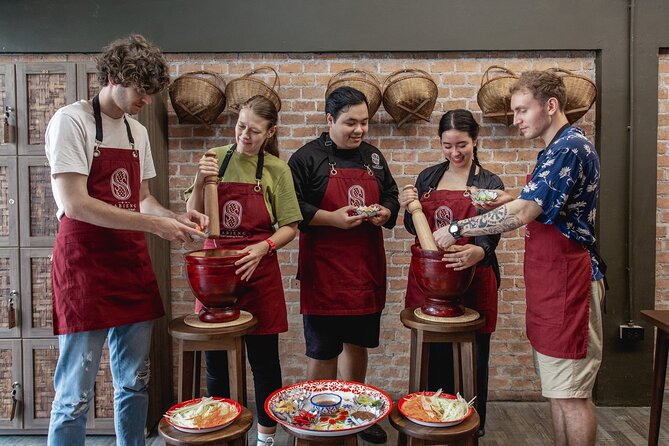
It’s also a nice change from the “watch only” cooking class model. This one is described as hands-on, where you do the cooking steps yourself and then eat what you make.
What you’ll cook: Thai classics taught with real technique
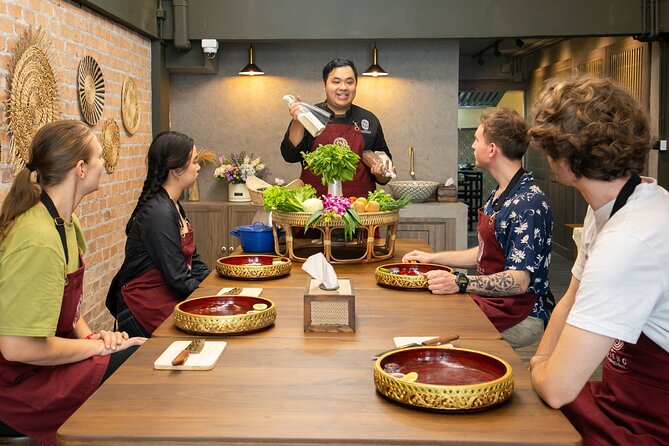
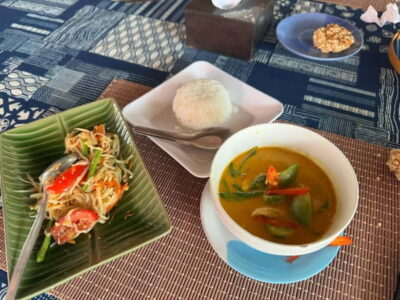
You’ll cook and eat your dishes during the class. Many classes in this format cover a set of Thai favorites, often including items like Pad Thai and Thai curries, plus a sweet finish.
From the menu examples given:
- Pad Thai (with a focus on practical steps and flavor balance)
- Red curry and/or green curry (with mentions of curry paste work from scratch)
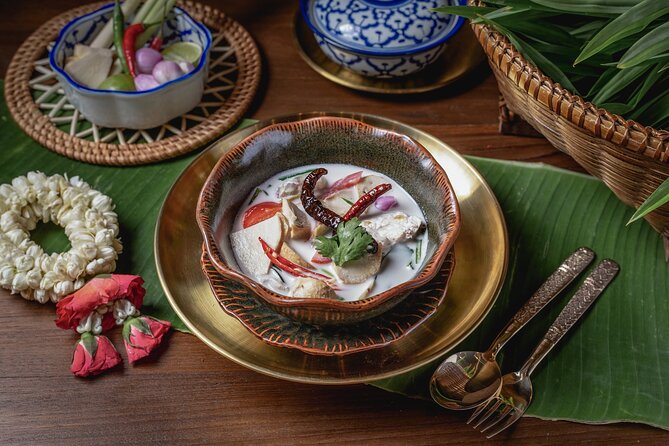
- Tom Yam soup (a common Thai sour-and-spicy starter)
- Mango sticky rice as the dessert finale
The best part for a home cook is how the chefs teach the “why,” not just the “what.” People mention clear instructions, patient guidance while they prep ingredients, and helpful answers when questions pop up. That’s how you learn to fix a dish instead of just copying a recipe.





A note on customization and dietary needs
One strong point mentioned is that the class can accommodate vegetarian folks with substitutes. If you have dietary preferences, I’d flag them when you book so the kitchen can plan. Thai cooking is flexible, but curry pastes, sauces, and garnishes can vary, so it helps to communicate early.
The teaching style: what chefs like Chef Pim and Chef Alex do well
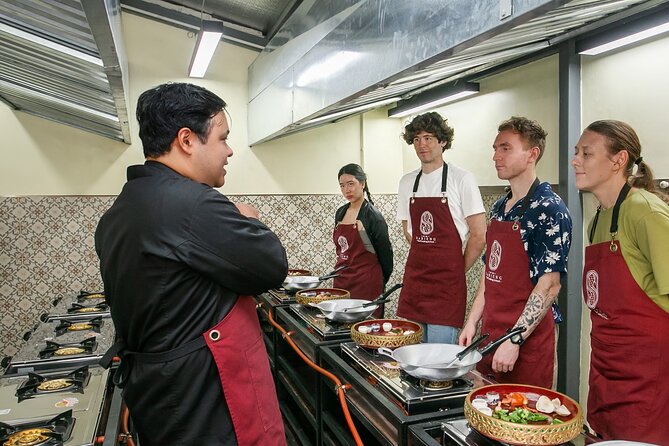
When a cooking class is good, it feels calm. You’re not rushed, and your chef doesn’t talk down to you. Multiple mentions highlight chefs such as Chef Pim and Chef Alex as approachable and clear, with instructions that are easy to follow.
What tends to make the class shine:
- The chef is hands-on and attentive during prep.
- Ingredient explanations are practical, not lecture-style.
- You get pro tips on flavor balance for dishes that can taste very different from one kitchen to another.
I also liked the “cook then eat” rhythm. You see how each dish should look and taste as it’s finished, then you sit down and enjoy it immediately. That makes it easier to remember what matters—texture, seasoning timing, and garnish.
How long is it, and how hungry should you be
The total time is about 3 hours 30 minutes. Plan your schedule as if this is your meal (or your big lunch). People explicitly recommend coming hungry, and it makes sense: you’re building dishes and then eating a multi-course Thai meal you cooked yourself.
If you arrive with an empty stomach, you’ll enjoy the experience more because:
- You’ll taste seasoning differences more clearly.
- You won’t feel sluggish during cooking.
- The final sweet course lands better.
Price and value: is $44 a fair deal?
At $44, you’re paying for a lot of moving parts: the market time, the tuk-tuk transport to the school, instruction from professional chefs, ingredients, and the meal itself. For a 3.5-hour experience, that price can feel like a bargain compared to options that only teach basics or only let you watch.
The best value signal here is what you take home:
- Recipes you can use later
- Technique you can repeat, like how curry components come together and how Pad Thai gets balanced
If you’re the kind of traveler who wants more than a souvenir, this is a strong choice. You’re not just learning Thai food as entertainment—you’re learning it as a skill.
Who should book this cooking class
This is a great fit if you:
- Want an authentic Thai food experience beyond restaurant eating
- Like hands-on activities with structured guidance
- Want to learn techniques you can recreate at home
- Prefer a small group setting over big tour buses
It’s also a good match for couples and friends who want a fun shared activity. If you’re traveling with teens or picky eaters, you may find Thai cooking classes work surprisingly well because the meals are prepared fresh and you can see the ingredients used along the way.
If you only want to “taste Thai food” with no cooking, you might feel this is more work than you want. But if you like learning by doing, it’s a great way to spend a morning in Bangkok.
Practical tips to make the morning smoother
Here are the things that matter most based on real-world feedback patterns:
- Arrive a few minutes early at the meeting location (PHC5+JVH, Bangkok). Some people found it unclear where to meet if they popped out of a transit exit in the wrong place.
- Bring an open mind for a market environment: it’s active, so comfortable shoes help.
- Plan to eat what you cook and don’t over-schedule right before or after. This is your main food event of the half day.
Also, keep in mind the class includes market shopping and then cooking. That makes it worth being on time, because the flow depends on everyone starting together.
Should you book Sabieng Thai Cooking School?
Yes, I’d book it if you want a Bangkok experience that mixes culture with skills. The combination of Khlong Toei Market, a built-in tuk-tuk ride, and hands-on cooking with chefs like Chef Pim and Chef Alex turns Thai food into something you can actually reproduce.
Book it especially if $44 feels reasonable for you as a full morning meal-and-learning package. The class format (cook, eat, then take recipes home) is exactly what makes it a practical memory, not just a nice afternoon.
If you hate getting lost or you’re starting a day with tight timing, do your homework on meeting location so you don’t start the class stressed. Once you’re there, the smooth, clean setup and the way they teach should make the morning feel easy.
FAQ
FAQ
Where is this cooking class located?
It’s in Bangkok, Thailand, and the meeting point is PHC5+JVH, Bangkok, Thailand.
How long is the experience?
It runs about 3 hours 30 minutes (approx.).
What does the tour include?
You’ll visit the Khlong Toei Market, take a tuk-tuk ride back to the school, cook authentic Thai dishes with professional instructors, and eat the food you make.
How much does it cost?
The price is $44.
Is there a group limit?
Yes. The experience has a maximum of 12 travelers.
Will I get a ticket on my phone?
Yes, it uses a mobile ticket.
How soon will I know my booking is confirmed?
Confirmation is received within 48 hours of booking, subject to availability.
Is the meeting point near public transportation?
Yes, it’s noted as near public transportation.
Can I get a refund if I cancel?
No. The experience is non-refundable and cannot be changed for any reason.
When does the tour end?
The activity ends back at the meeting point.