REVIEW · CHIANG MAI
Chiang Mai: Doi Suthep, Wat Umong, and Pha Lat Sunrise Tour
Book on GetYourGuide →Operated by TripGuru Thailand · Bookable on GetYourGuide
Doi Suthep at sunrise feels like a cheat code for Chiang Mai. This half-day tour strings together three very different temple moods: the famous pagoda view from above, a jungle hideout at Wat Pha Lat, and the cool, underground world of Wat Umong. I love the early quiet factor, and I especially like how Wat Pha Lat turns your morning from sightseeing into something more calm and nature-filled.
Two things I really like: first, climbing the 309 steps while the light is still soft. You end up at Doi Suthep for sunrise before the crowd wave hits, and the monks’ morning rhythm adds meaning without getting preachy. Second, the tour keeps things practical and respectful with a small group, a guide who can explain what you’re seeing, plus glass-bottle water and carbon offset credits.
One consideration: it’s a true early morning. You’ll be walking steps and temples with a strict dress code, so if you want a late start or you hate covering up, this may feel like more effort than reward.
In This Review
- Key Things I’d Pay Attention To
- Why This Sunrise Temple Route Works So Well
- Climbing 309 Steps at Wat Phra That Doi Suthep
- The Kruba Srivichai Monument: Where the Story Gets Human
- Wat Pha Lat: The Jungle Walk to the Hidden Temple
- Wat Umong: Tunnels, Forest Paths, and a Temple Dating to 1297
- How the 4-Hour Tour Feels in Real Life
- Price and Value: What You’re Actually Paying For
- Transport, Group Size, and the Role of Your Guide
- Dress Code and Packing: Avoid Getting Stopped at the Temple Door
- Responsible Tourism Without Making It a Big Lecture
- Who Should Book This (and Who Might Want to Skip)
- Should You Book This Chiang Mai Sunrise Temples Tour?
- FAQ
- How long is the Chiang Mai Doi Suthep, Wat Umong, and Pha Lat sunrise tour?
- Is hotel pickup and drop-off included?
- What if I don’t want pickup and want to meet at the start?
- What language is the tour guide?
- What temples are included?
- What should I wear or avoid wearing?
- Is optional temple offering money needed?
Key Things I’d Pay Attention To
- 309 steps up to Wat Phra That Doi Suthep before the rush
- Doi Suthep sunrise photos with a calmer arrival and big-city views
- Kruba Srivichai Monument and the monk-life context your guide explains
- Wat Pha Lat’s jungle setting with statues and shrines surrounded by nature
- Wat Umong’s underground tunnels in a temple complex dating back to 1297
- Low-impact touches like glass-bottle drinking water and carbon emissions offset credits
Why This Sunrise Temple Route Works So Well
Chiang Mai temples can be impressive any time of day, but sunrise changes the temperature of the whole experience. You’re not just collecting photos of gold and stone. You’re catching the moment when the mountain temples feel most alive—before tour groups multiply and before the city fully wakes up.
I also like that the tour doesn’t only chase the obvious. Yes, Doi Suthep is the headline. But Wat Pha Lat and Wat Umong give you contrast: one is quiet and hidden in the jungle, the other is cool and even a bit mysterious underground. That mix is why this feels like a real morning adventure instead of a checkbox tour.
You can also read our reviews of more tours and experiences in Chiang Mai.



Climbing 309 Steps at Wat Phra That Doi Suthep
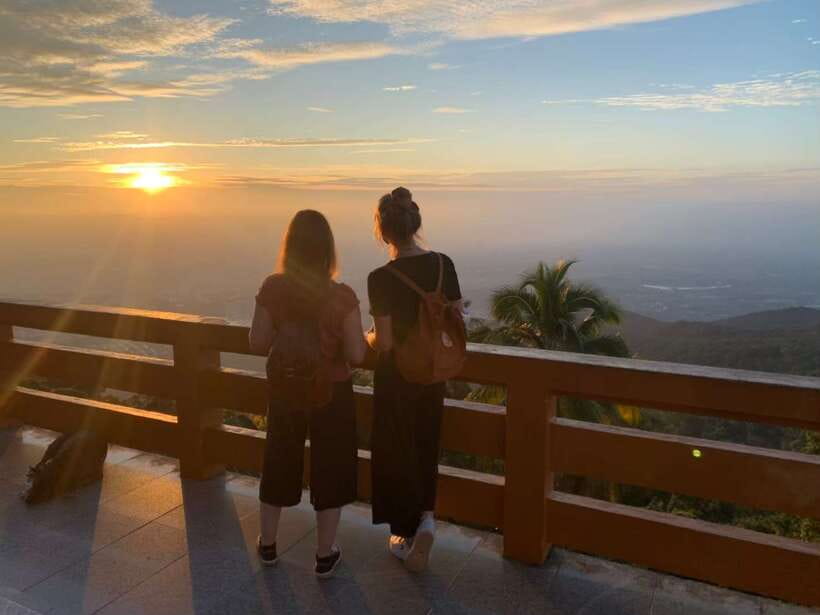
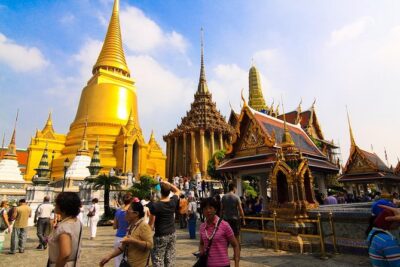
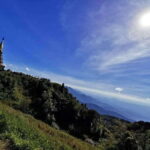
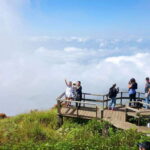
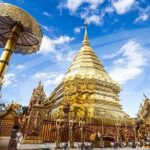
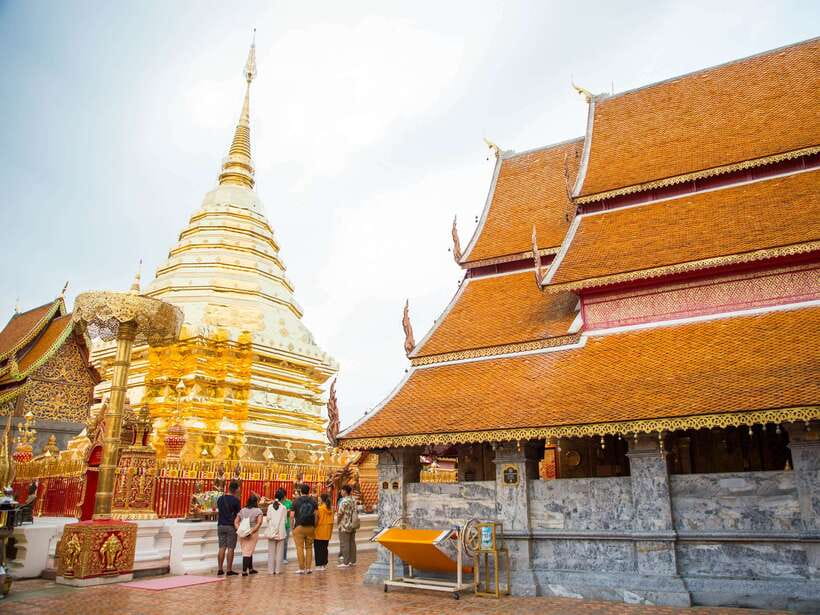
The day starts with a van ride up to Doi Suthep Temple, then it’s all about your feet. You climb 309 steps with your guide, and the payoff arrives as the sky brightens. Once you reach the top, you get that wide view over Chiang Mai, with sunrise light that makes the gold details pop without the harsh midday glare.
A practical tip: wear shoes you trust. You’ll want traction, and you’ll be standing, walking uneven temple surfaces, and climbing at an early hour when your legs are still waking up. A hat and sunscreen also help, because once the sun climbs, it can go from chilly to bright fast.
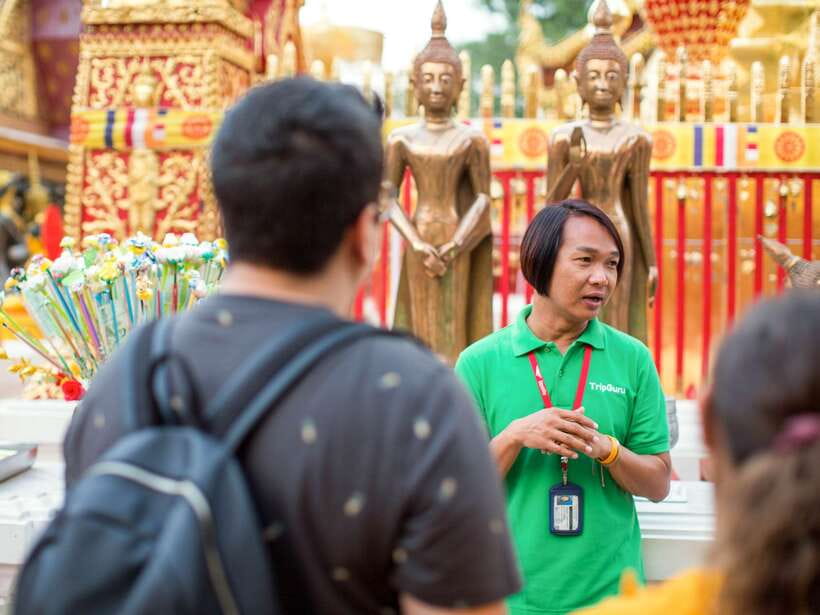
What makes Doi Suthep more than a scenic stop is the way guides bring context. You’re not only looking at a famous pagoda—you’re learning why the temple matters in Thai Buddhist life, and what you should notice when you see offerings and morning devotional activity. If your guide has monk background, it shows up here in how they explain temple rhythm and etiquette without turning it into a lecture. (Examples I’ve heard include guides like James Bond, who lived with monks for 5 years, and other guides who share Buddhist practice basics clearly.)
The Kruba Srivichai Monument: Where the Story Gets Human

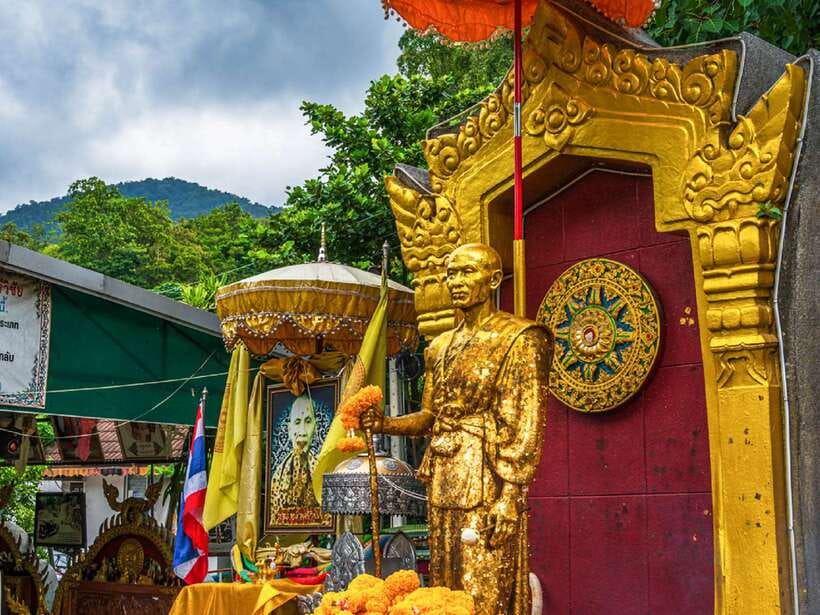
After Doi Suthep, you pause by the Kruba Srivichai Monument. This is the part where the tour shifts from architecture and views into people and tradition.
Your guide will explain who Kruba Srivichai is in the broader Thai monk story, and what the monument represents. I like this stop because it reminds you that temples aren’t museum pieces. They’re tied to lived faith and local religious history. It also helps you connect later experiences at Wat Pha Lat and Wat Umong, because the tour starts to feel like one continuous theme: spiritual practice in different settings.
This pause is also a nice reset for your legs. You’ve done the big climb already, so the pace becomes easier before heading deeper into the morning’s quieter corners.
Wat Pha Lat: The Jungle Walk to the Hidden Temple
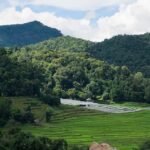
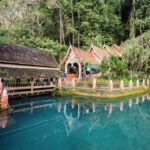
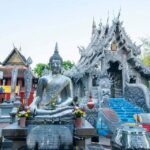
Then you head toward Wat Pha Lat, often described as the hidden temple because it feels tucked into the green. Expect a nature-forward stop: statues, shrines, and temple structures framed by jungle surroundings rather than open city views.
This temple is a different vibe from Doi Suthep. Instead of crowds gathering for the famous panorama, Wat Pha Lat feels more like you’re walking into a calm pocket of forest where people come to reflect. I like that shift because it keeps the morning from turning into pure spectacle.
One caution: the tour is designed for flexibility. On at least one occasion, Wat Pha Lat was closed, and the guide adjusted the route on the spot. So if you see your guide preparing for a plan change, don’t panic. The key thing is you’ll still get a meaningful temple-focused morning, just with a different balance of stops.
Wat Umong: Tunnels, Forest Paths, and a Temple Dating to 1297
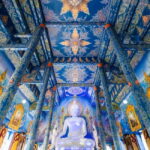
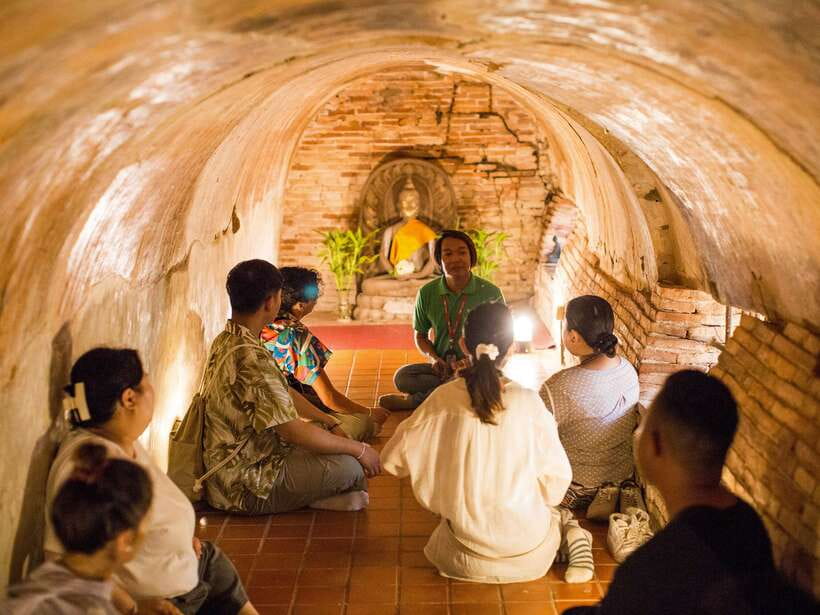
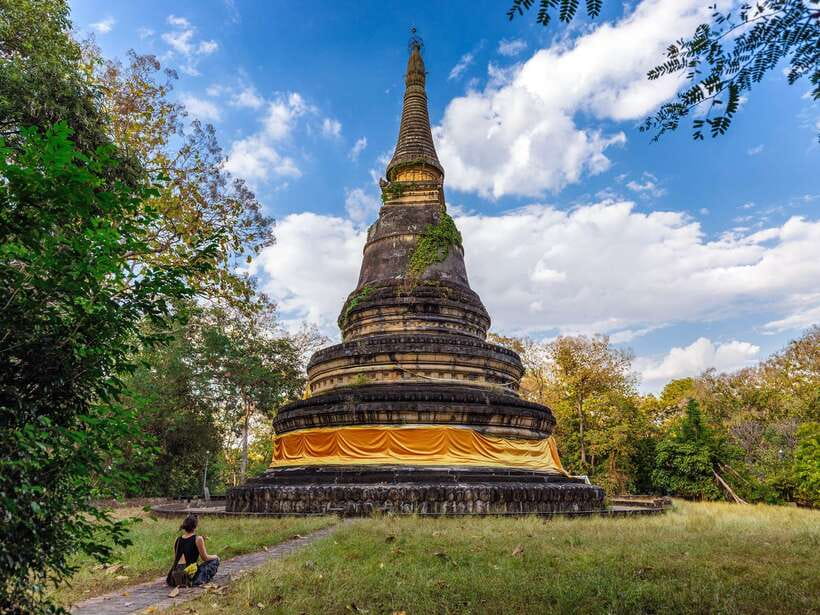
Finishing at Wat Umong is smart. It’s not just another gilded structure. This is a temple complex from 1297 with forest atmosphere and underground tunnels that add a surprising element of exploration.
I love this stop because it feels tactile. You’re not only viewing from a distance. You’re moving through a space with a cooler temperature and a sense of old intention. The chedi architecture here also reads differently than what you’ll see at Doi Suthep, and your guide can help you understand what you’re looking at instead of leaving you to guess.
If you enjoy unusual temple design—things like hidden pathways, tunnel layouts, and temple spaces that don’t broadcast themselves immediately—Wat Umong is often the “wait, that’s cool” moment of the tour.



How the 4-Hour Tour Feels in Real Life
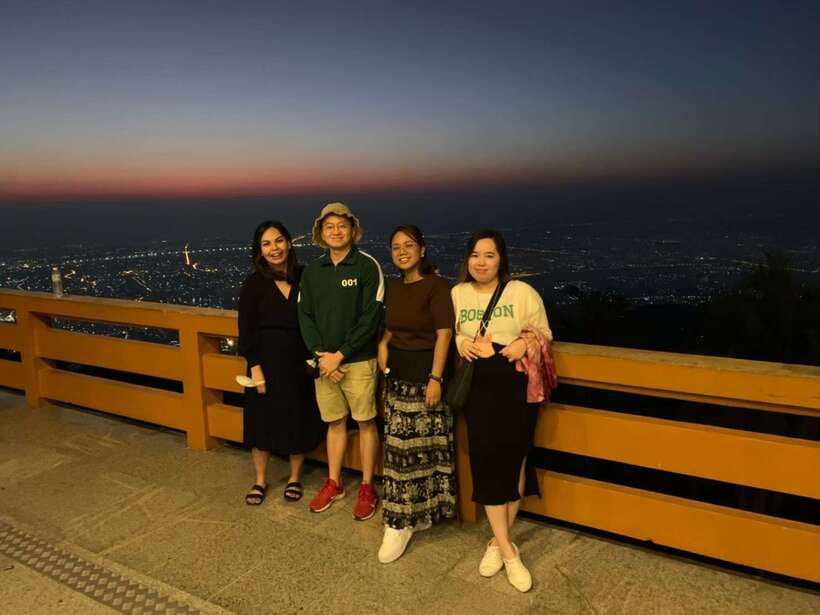
The tour is listed as about 4 hours, but the morning can stretch a bit depending on pickup timing, how the temples are running, and how long you choose to spend taking photos and asking questions.
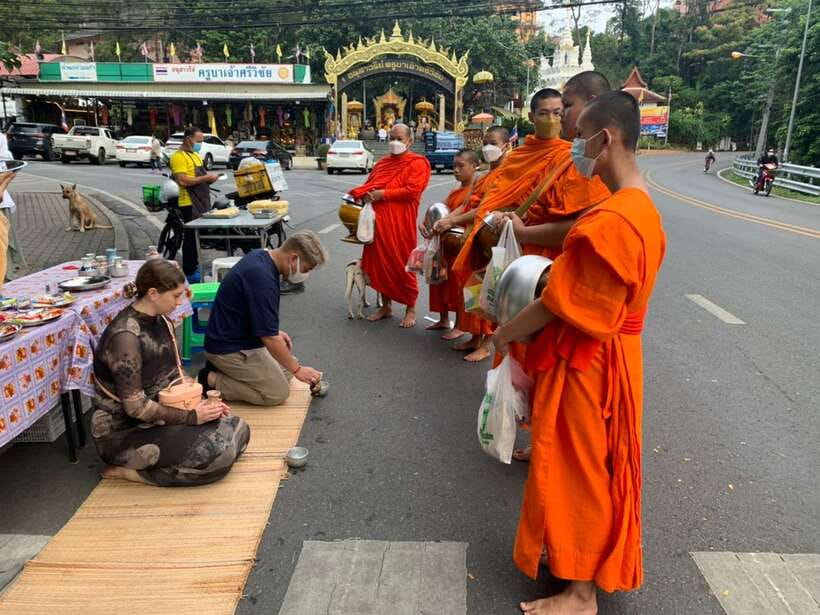
The route typically flows like this: a van ride up to start, about two hours at Doi Suthep for sunrise and the temple visit, then short stops and visits that gradually move from the monument area into the jungle temple and on to Wat Umong. You return by van to Chiang Mai afterward.
If you care about breakfast timing, plan for the realistic rhythm of an early climb and temple walking. One thing that comes through clearly in how people describe the experience is that the sunrise portion is the reason you accept the early start. If that part clicks for you, the rest of the tour usually feels like an added bonus.
Price and Value: What You’re Actually Paying For
At $32 per person, this tour is good value for the combination of things it covers. You get hotel pickup and drop-off, an air-conditioned vehicle, a tour guide, and entry fees. That matters in Chiang Mai because transportation and entry costs can add up fast if you piece it together on your own.
On top of that, you’re paying for two intangibles that are hard to price: early access to a quieter Doi Suthep moment and a guide who helps you understand what you’re seeing. Several guides described by name through real experiences include people with a real-life connection to monastic life or strong teaching ability. That kind of guidance can turn temple photos into memory you can explain.
Finally, the tour includes low-impact touches: glass bottles of drinking water and carbon emissions offset credits for every tour. Is offsetting a magic wand? No. But if you want to travel with a lighter footprint while still seeing the big sites, it’s a nice built-in step that costs you nothing extra.
Transport, Group Size, and the Role of Your Guide
This is set up for a small-group experience, which is a big deal at sunrise temples. You’re not fighting for elbow space at the viewpoint, and you can actually hear what the guide is explaining instead of watching people’s shoulders block your view.
You’ll ride in a van with air-conditioning, and the driver is part of the comfort of the morning. People consistently note smooth, comfortable transport, which is exactly what you want when you wake up early and you’re still half a person.
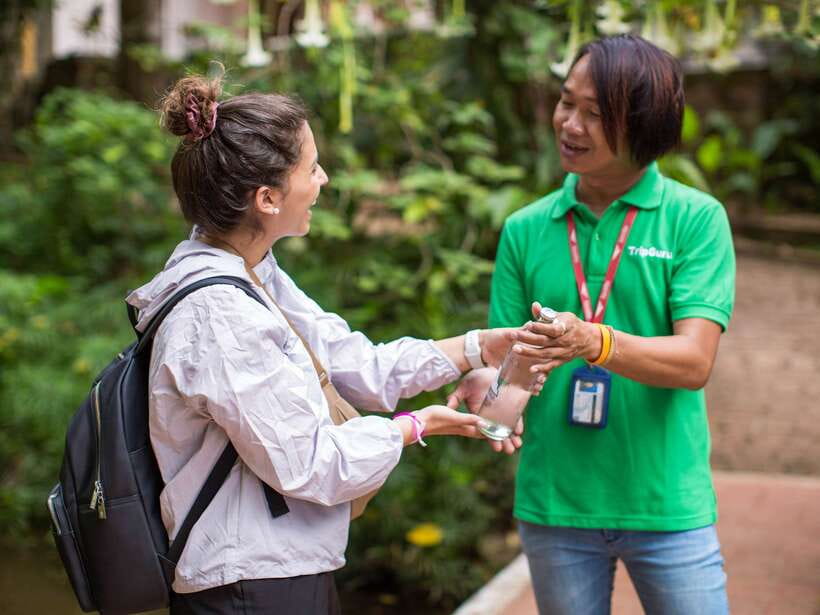
Guide quality is the secret sauce. I’ve seen examples of guides like Happy, Peter, Cookie, Nuttaya, Leela, and Matt, each described as friendly and effective at pacing and explanation. Some guides have unusual depth from monastic study or long-term involvement with temple life, like James Bond, who lived with monks for 5 years. That kind of firsthand framing changes the way you understand offerings, chanting, and why certain behavior matters.
Dress Code and Packing: Avoid Getting Stopped at the Temple Door
This tour includes multiple temple visits, and they have rules. Keep it simple: cover up. Shorts, short skirts, and sleeveless shirts aren’t allowed. Also note that clothing that reveals shoulders, underarms, back, and knees can be rejected at some temple locations.
What to bring is straightforward and worth following:
- Comfortable shoes with grip
- Sunglasses and a hat
- Camera
- Sunscreen
- Insect repellent
- Cash (useful for optional temple offerings)
If you hate clothing restrictions, you’ll feel it most at Doi Suthep and Umong. If you’re okay adapting for a morning, you’ll mostly forget about it and focus on the sights.
Responsible Tourism Without Making It a Big Lecture
The tour is branded as GSTC-certified, and the practical part shows up in small choices. You get water in glass bottles instead of disposable plastic bottles, and carbon emissions offset credits are included for every tour.
Will you still have cars, people, and visitors? Yes. Sunrise temple logistics aren’t a quiet hike in the woods. But it’s reassuring when the organizer builds in at least some measurable effort—especially if you’re trying to travel more thoughtfully in Thailand.
Who Should Book This (and Who Might Want to Skip)
Book this if you want a morning in Chiang Mai that feels purposeful. You’ll like it if you:
- Want sunrise at Doi Suthep when it’s calmer
- Enjoy learning from a guide instead of only walking and taking pictures
- Prefer a mix of temple types: pagoda views, jungle quiet, and underground tunnels
- Don’t mind a very early start and walking a lot of steps
Skip it if you:
- Can’t handle steep steps or early-morning cold
- Want a totally flexible late start with no dress-code expectations
If you’re traveling with a kid, this can still work, but you’ll need to judge the step climb and fatigue level honestly. The pace can be guided and adjusted, but the core walking is still part of the experience.
Should You Book This Chiang Mai Sunrise Temples Tour?
Yes, I’d book it if your priority is Doi Suthep sunrise plus variety in temple atmosphere. At this price, with pickup, entry fees, and a guide included, it’s a straightforward way to get a high-impact morning without the stress of arranging everything yourself.
The decision comes down to one thing: are you willing to wake up early and dress appropriately? If yes, you’ll get a sunrise moment, a jungle temple stop that feels calmer than the big names, and Wat Umong’s tunnel experience that breaks up the usual temple pattern.
If you want a more relaxed sightseeing day later, then keep your mornings for sleep. But if you want that early-light magic and temples that feel different from each other, this is a strong pick.
FAQ
How long is the Chiang Mai Doi Suthep, Wat Umong, and Pha Lat sunrise tour?
It’s listed as 4 hours. In some cases it may run a bit longer, so plan for a morning that could extend to around 5 to 5.5 hours.
Is hotel pickup and drop-off included?
Yes. The tour includes hotel pickup and drop-off within major downtown Chiang Mai areas near the Tha Pae Gate area.
What if I don’t want pickup and want to meet at the start?
You can meet at the Tha Pae Gate in front of McDonald’s. Your guide will be holding a TripGuru sign, and you should arrive about 10 minutes early.
What language is the tour guide?
The live tour guide is available in English and Spanish.
What temples are included?
The tour includes Wat Phra That Doi Suthep, the Kruba Srivichai Monument, Wat Pha Lat, and Wat Umong.
What should I wear or avoid wearing?
Avoid shorts, short skirts, and sleeveless shirts. Some temples also require coverage of shoulders, underarms, back, and knees.
Is optional temple offering money needed?
Temple offerings are optional and not included. It’s a good idea to bring cash in case you want to participate.