REVIEW · CHIANG MAI
Full Day Thai Cooking at Farm (Chiang Mai)
Book on Viator →Operated by Smile Organic Farm Cooking School · Bookable on Viator
Thai food in a farm kitchen sounds simple. Then you start chopping herbs. This full-day class in Chiang Mai pairs a market stop with hands-on cooking at Smile Organic Farm Cooking School. Two things I like a lot are the way you choose your own menu and the clear structure: you learn basic Thai technique across 8 categories, with guidance that even helps you feel confident with a wok. One drawback to consider is the pace and length: it’s about 8 hours, so it’s a long morning-to-afternoon commitment.
The experience also has a modern “teach you how to repeat it later” payoff. You get the ingredients plus a recipe book and a photo album, so the day isn’t just about eating on-site. In reviews, instructors like Natalie, Anya, and Lili get praised for patience and coaching, which matters because Thai cooking is both easy and precise. If you’re expecting a quick, casual snack-and-tour, you may find it more structured than that.
In This Review
- Key Things to Know Before You Go
- Why This Chiang Mai Cooking Class Starts at 8:00 AM
- The Market Stop: Where Your Ingredients Get Names
- Smile Organic Farm Cooking School: A Serene Kitchen Setup
- Choosing Your Menu: 8 Thai Categories, Built for Veg and Vegan
- What You Actually Learn in Each Cooking Category
- Curry Paste and Curry: The Flavor Engine
- Stir-Fried and Soup: Quick Heat, Smart Timing
- Spring Roll and Thai Salad: Crunch, Acid, and Freshness
- Dessert and Herbal Drink: The Finishing Notes
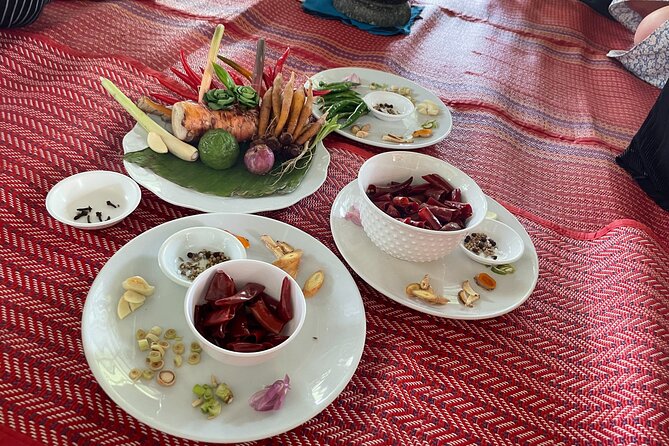
- The Kitchen Garden Lesson: Learn the Thai Herb Map
- Eating Together: Your Food, Your Group, Your Day’s Work
- Price and Value: What $39.13 Buys You in Chiang Mai
- Guides, Coaching, and the Wok Confidence Factor
- Timing, Group Size, and How to Plan Your Day
- Who This Farm Cooking Day Is Best For
- Should You Book Full Day Thai Cooking at Farm (Chiang Mai)?
- FAQ
- FAQ
- What time does the class start?
- How long is the full day Thai cooking experience?
- Is pickup and drop-off included?
- Do I need to bring a ticket?
- How many people are on the tour?
- What cooking dishes are included?
- Can the menu be made vegetarian or vegan?
- Can I choose how spicy the food is?
- What is included in the price besides the class?
- Are there age requirements for participants?
Key Things to Know Before You Go
- Small-group feel (max 12): More time with your instructor, less waiting around.
- Hotel pickup and return: Cuts down on Chiang Mai logistics.
- Market visit first: Lets you connect ingredients to what you’ll cook later.
- Organic farm garden lessons: You’ll learn Thai herbs and vegetables, not just recipes.
- 8 cooking categories: Curry paste, curry, stir-fry, soup, spring roll, Thai salad, dessert, herbal drink.
- Veg or vegan plus spice control: You can decide vegetarian/vegan and mild vs spicy.
Why This Chiang Mai Cooking Class Starts at 8:00 AM
You meet early. The start time is 8:00 am, and pickup is from your hotel or accommodation in Chiang Mai city. That early rhythm is part of the value: you beat the busiest hours and still have time for a full day that ends back at your lodging.
The day doesn’t feel rushed, though it is full. Expect the kind of schedule that moves: a market visit, a drive out to Smile Organic Farm, hands-on cooking, then eating what you made. If you like slow mornings, plan your sleep and breakfast timing the night before.
You can also read our reviews of more tours and experiences in Chiang Mai.



The Market Stop: Where Your Ingredients Get Names
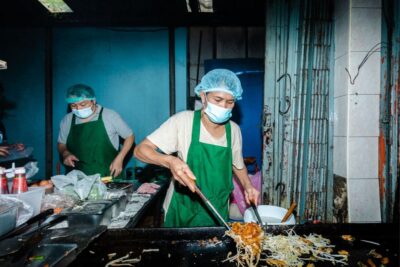
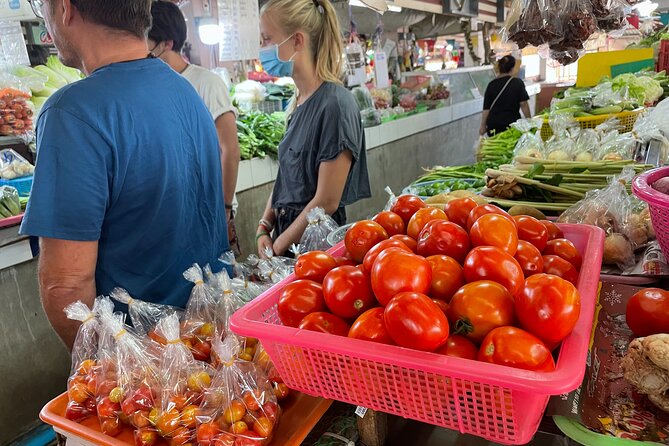
Before the cooking starts, you visit a local market for a brief look at ingredients. This part matters more than it sounds, because Thai cooking relies on specific flavors: herbs, aromatics, and vegetables that aren’t always obvious to substitute at home.
You’re not just browsing. The market visit helps you get oriented so when you arrive at the farm kitchen, you’re translating what you saw into what you’ll cook. It’s also a nice reality check if you’re used to Thai food only from restaurants—some ingredients will look different when you see them fresh.
Practical note: markets mean smells, heat, and lots of visual activity. Wear shoes you can stand in, and consider bringing water.
Smile Organic Farm Cooking School: A Serene Kitchen Setup
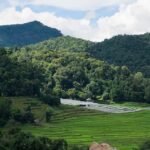
Once you arrive at Smile Organic Farm Cooking School, the atmosphere is meant to feel calm and grounded—this is a farm setting near Chiang Mai, not a crowded city classroom. On arrival, you’re shown what menu you’ll cook and you choose what you want within each category.
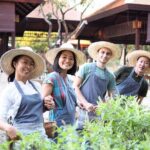
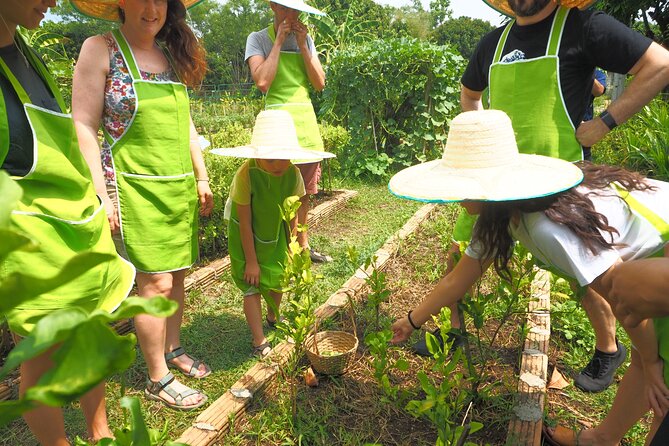
One thing that stands out is that you learn in an organic kitchen garden context. You’ll learn about Thai herbs and vegetables in the garden, then move into the cooking activities. For me, that’s where the class becomes more than a list of dishes. You start understanding why a dish tastes the way it does, not just which ingredients go into it.
Also, small group size (maximum 12 travelers) makes a difference in a working kitchen. You’re not fighting for counter space, and the instructor can watch what you’re doing.
Choosing Your Menu: 8 Thai Categories, Built for Veg and Vegan
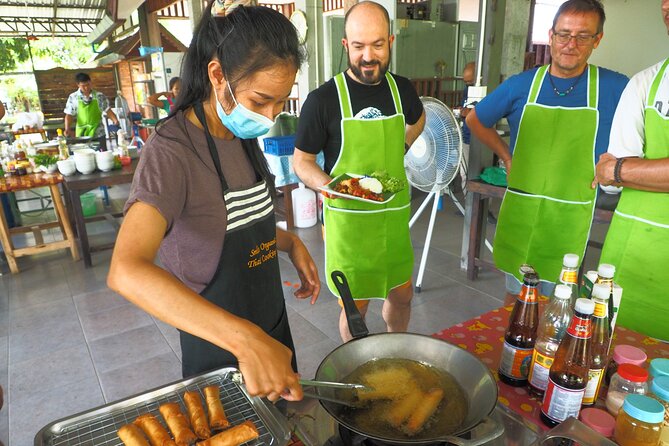
Here’s the heart of the course: you learn Thai basics across 8 categories, and you can steer the menu to your tastes.
You’ll cook:
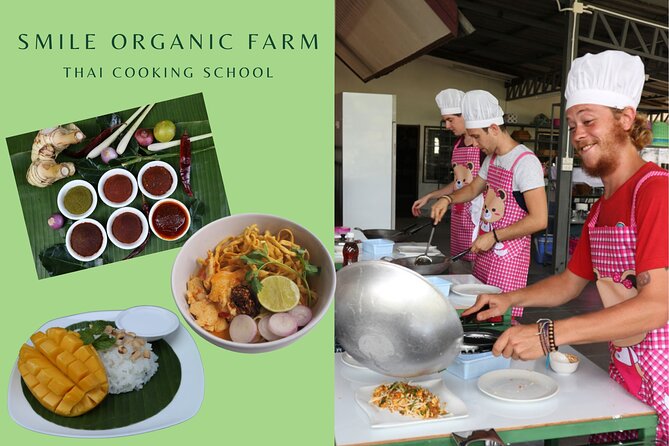
- Curry Paste
- Curry
- Stir-Fried
- Soup
- Spring Roll
- Thai Salad
- Dessert
- Herbal Drink
The class is also flexible. Every menu can be made vegetarian or vegan, and you can choose whether to make your food spicy or mild. That’s not just a comfort feature—it’s a practical way to learn flavor building without feeling forced into one style.
In the reviews, people point out that the coaching helps with technique. One featured review credits Natalie’s guidance for making the results taste like favorite dishes at home, and it also mentions learning to feel comfortable with a wok and curries. That lines up with what you’ll want from a class like this: not just memorizing recipes, but gaining repeatable skills.
What You Actually Learn in Each Cooking Category
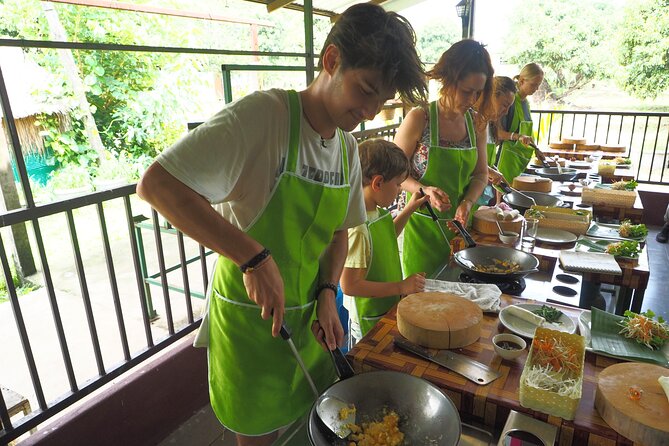
This is where the day turns into real competence. Thai food can feel intimidating if you think it’s all about complex steps. In this class, you’re taught basic technique by category, so the skills build logically.


Curry Paste and Curry: The Flavor Engine
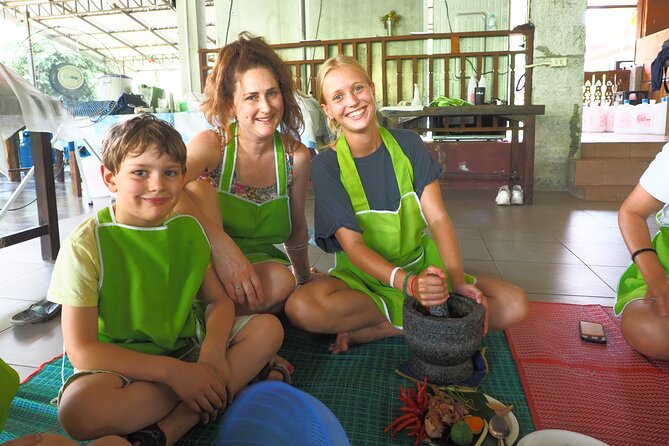
Curry in Thai cooking is built on curry paste, so learning the paste first is key. You’ll make it as part of the curriculum, then carry that flavor into a curry dish afterward. If you’ve ever wondered why some curries taste deeper than others, this is where you start seeing the difference—aroma plus balance, not just heat.
Stir-Fried and Soup: Quick Heat, Smart Timing
Stir-fried dishes usually reward speed and coordination. Soup is the opposite kind of lesson: it pushes you to think about how flavors meld and how herbs and vegetables behave in hot liquid. By splitting them into separate categories, you learn more than one cooking rhythm.
Spring Roll and Thai Salad: Crunch, Acid, and Freshness
Spring rolls teach wrapping and filling flow. Thai salad focuses on freshness and balance—often the kind of dish where a small tweak changes everything. Because you can make menus vegetarian or vegan, you can learn how to recreate that balance without relying on meat.
Dessert and Herbal Drink: The Finishing Notes
Dessert and herbal drink wrap up the day with Thai flavors that are easy to overlook when people only chase savory dishes. Herbal drinks are also a good reality check: Thai food is not only spicy and salty. It has cooling notes and herbal character too.
Reviews also mention learning substitutions for vegan cooking and the ingredients that make Thai food special. That’s the value here: you’ll come away knowing what to adjust, not just what to copy.
The Kitchen Garden Lesson: Learn the Thai Herb Map
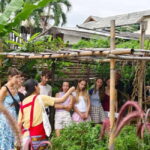
Before the main cooking, you’ll learn about Thai herbs and vegetables in the organic kitchen garden. Even if you don’t remember every name, the lesson helps you recognize flavor families.
This is especially useful if you want to cook at home later. When you know what an herb is supposed to do—fresh, aromatic, cooling, or grounding—you’re better at substituting when you can’t find the exact ingredient.
And since you’ll be making your chosen dishes that day, the herb learning isn’t abstract. It immediately turns into what ends up in your curry paste, your stir-fry, or your salad.
Eating Together: Your Food, Your Group, Your Day’s Work
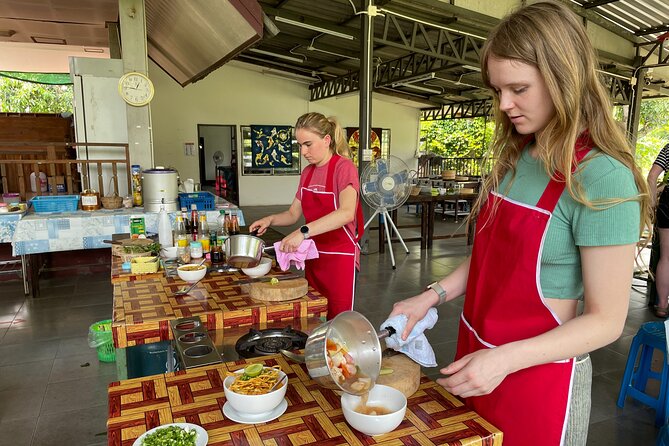
After the cooking activities, you eat the Thai food you made yourself. This part matters because the class is designed as a feedback loop: you cook, taste, and realize what worked.
The experience is in a relaxing atmosphere, and the small group dynamic means you get to share the table and compare menu choices. Reviews repeatedly praise the social feel—good food, friendly people, and instructors who keep it light.
One review even jokes about needing to come hungry and mentions a take-home doggy bag, which tells me the portions can be generous. Even if you finish everything, you’ll likely be tempted to keep extras for the next meal.
Price and Value: What $39.13 Buys You in Chiang Mai
At $39.13 per person, this class is positioned as a cost-conscious way to learn real Thai cooking. The “why it feels good” part isn’t just the number. It’s what’s included and how the class is structured.
What you get:
- Pickup and drop off for Chiang Mai city convenience
- Visit a local market before cooking
- Organic garden herb/vegetable lesson
- Cooking instruction across 8 categories
- Ingredients included
- Recipe book and photo album included
That means you’re not paying extra for basics, and you’re leaving with the tools to repeat the recipes. Most cooking classes end with a meal and a fuzzy memory. Here, you have something tangible: recipes written down and a photo album to remind you how the dishes looked.
Is it perfect value for everyone? If you want a private, ultra-long class with lots of theory, you might want a different format. But for most people who want to learn fast and practical, the price-to-instruction ratio looks strong.
Guides, Coaching, and the Wok Confidence Factor
A cooking class lives or dies on the instructor’s ability to explain and correct without making you feel lost. Reviews highlight that instructors were patient and clear, and a few names come up again and again: Natalie, Anya, Lili, and Nina.
What I’d take from that as a decision point is this: if you’re nervous about cooking in a group or using a wok, this course seems built to help you feel comfortable. One review explicitly says the course made someone confident with a wok and curries, and another calls out clear instructions and results that taste authentic.
That coaching quality matters because Thai cooking is not just a recipe—it’s technique, timing, and balance. The small group size also supports that coaching.
Timing, Group Size, and How to Plan Your Day
You should plan for an 8-hour day, starting at 8:00 am, with return to your accommodation at the end. The class is set up to keep you moving from market to farm to kitchen to lunch, then finish with eating and getting back.
With up to 12 travelers, you’re unlikely to feel like you’re stuck waiting for your turn. Still, it is a working kitchen. Wear comfortable clothes you don’t mind getting a little warm or messy.
If you’re also doing other Chiang Mai activities the same day, build in a buffer for a lighter evening. You’ll likely be tired in a good way—full, happy, and ready for a shower.
Who This Farm Cooking Day Is Best For
This is a great match if you:
- Want a practical way to learn Thai cooking beyond just ordering dishes
- Prefer hands-on learning with clear structure
- Like the idea of a market + farm combo day
- Want options for vegetarian or vegan cooking
- Want control over spice level (mild or spicy)
It also suits families with older kids. Children between 4 and 8 are listed under a child price category, and kids above 9 years can have their own cooking stations as participants. Children 0–3 are free of charge.
If your travel style is ultra-low-structure and you hate cooking, then this might not be for you. But if you’re the type who likes to learn by doing, this fits your lane.
Should You Book Full Day Thai Cooking at Farm (Chiang Mai)?
If you want Thai food skills you can use at home, I think this is an easy yes. The biggest reasons are the combination of a market visit, the herb/vegetable learning on a farm setting, and a structured day across 8 cooking categories. Then there’s the take-home support: ingredients, a recipe book, and a photo album.
One caution: it’s not a quick stop. You’re committing most of a day, and you’ll want to arrive ready to cook and eat. If that works with your schedule and you’re excited by the idea of making curry paste, curries, stir-fries, salads, and even herbal drinks, you’ll likely enjoy it a lot.
FAQ
FAQ
What time does the class start?
The tour starts at 8:00 am.
How long is the full day Thai cooking experience?
It lasts about 8 hours (approximately).
Is pickup and drop-off included?
Yes. Pickup and drop-off are provided for hotels or accommodations in Chiang Mai city.
Do I need to bring a ticket?
No. A mobile ticket is provided.
How many people are on the tour?
The group is limited to a maximum of 12 travelers.
What cooking dishes are included?
You’ll learn basic Thai cooking in 8 categories: curry paste, curry, stir-fried, soup, spring roll, Thai salad, dessert, and herbal drink.
Can the menu be made vegetarian or vegan?
Yes. Every menu is able to be cooked as vegetarian or vegan.
Can I choose how spicy the food is?
Yes. You can decide to make your food spicy or mild.
What is included in the price besides the class?
All ingredients, a recipe book, and a photo album are included.
Are there age requirements for participants?
Children 0–3 are free of charge. Children above 9 years old can have their own cooking stations as participants. Children between 4 and 8 years have a separate child price category.