REVIEW · CHIANG MAI
From Chiang Mai: Living Green Elephant Sanctuary Tour
Book on GetYourGuide →Operated by Living Green Elephant Sanctuary Chiang Mai and Chonburi · Bookable on GetYourGuide
Elephants, no tricks, just respect. I really like how this Chiang Mai elephant sanctuary experience is built around animal welfare, with no riding and no chains, plus real time feeding and walking with elephants. You also get guide-led stories about each elephant’s personality and daily behavior, which makes the day feel personal without being performative.
One thing to plan for: you will get wet. Bathing moments can be affected by temperature (they never force elephants into the river when it’s cold), but your comfort still depends on weather, clothing, and bringing a proper change of clothes.
In This Review
- Quick hits on Living Green Elephant Sanctuary
- Why This Elephant Sanctuary Tour Feels More Like Respect Than Entertainment
- The Ethical Setup: What “No Riding, No Chains” Means in Real Life
- Getting There From Chiang Mai: The 1.5-Hour Van Ride and Why It’s Part of the Value
- The Start of the Day: Mo Hom Clothing, Elephant Stories, and First Contact
- Feeding and Forest Walking: The Best Reason to Book Instead of Skipping
- River and Mud-Bath Moments: What It Looks Like, and How to Stay Comfortable
- Half-Day vs Full-Day: What You Gain With the Extra Hours
- Half-day program (about 6–7 hours)
- Full-day program (about 9–10 hours)
- The Pad Thai Portion: Cooking Workshop and the Included Vegetarian Lunch
- Photos, Guides, and the Human Side of the Sanctuary Day
- Price and Logistics: Does $46 Really Stack Up?
- What to Pack for an Elephant Day That Involves Water
- Who This Tour Fits Best (and Who Should Skip)
- Should You Book Living Green Elephant Sanctuary Chiang Mai?
- FAQ
- How long is the half-day elephant sanctuary program?
- How long is the full-day program?
- Is elephant riding included or allowed?
- What food is included during the tour?
- What should I bring if I plan to participate in bathing moments?
- Is the elephant river bath forced if it is cold?
Quick hits on Living Green Elephant Sanctuary
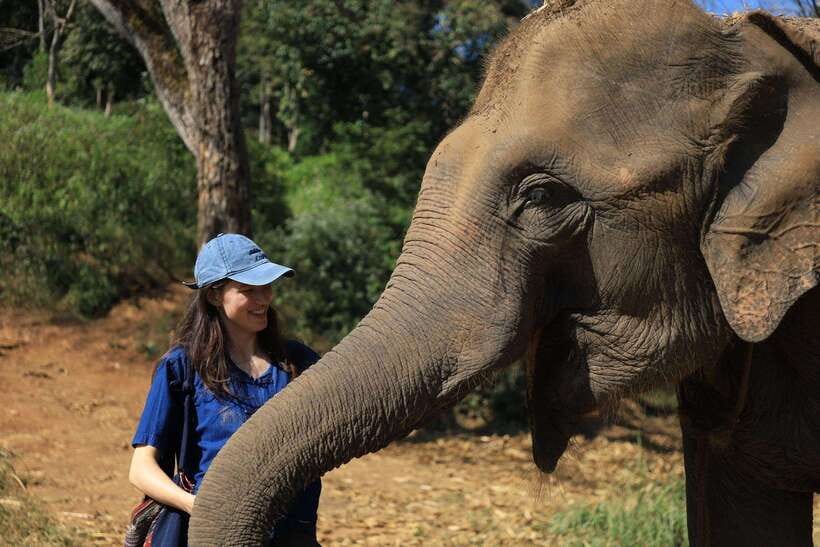
- No riding, no chains, no shows: the whole schedule is about observing and interacting on the elephants’ terms.
- Feeding + forest walking: you’re not just standing at a fence.
- River and mud-bath time: bathing is part of the day, when conditions allow and everyone stays comfortable.
- Half-day or full-day options: choose a time block that matches how energetic you feel in Chiang Mai.
- Pad Thai meals, plus a cooking workshop on full days: vegetarian and hands-on from 2 December.
- Guides with real names, real enthusiasm: people mention guides like Pao, Rainbow, John, and Mr Su for a warm, informative day.
Why This Elephant Sanctuary Tour Feels More Like Respect Than Entertainment
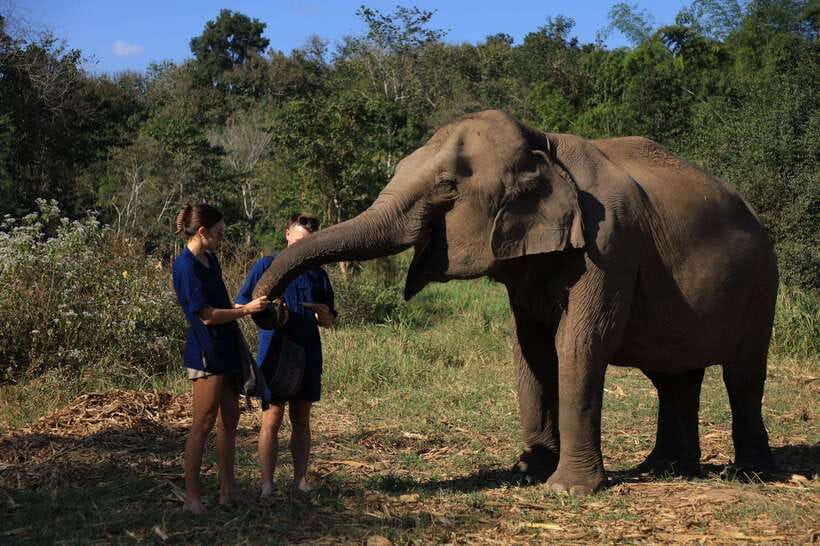
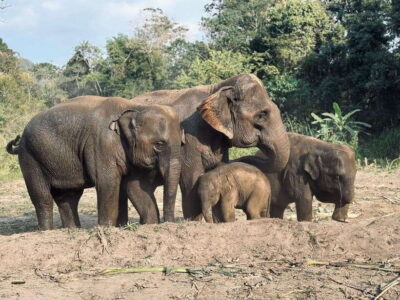
A lot of elephant tours in Thailand sell a quick photo moment. This one is different in the way it runs. The focus stays on welfare: the elephants roam in an open-air setting, and you’re there to feed, walk, and watch—without riding tricks or show-style staging.
I especially like the ethical clarity. The rules are straightforward: no riding, no chains, and no performances. That matters because it changes what you notice. When you’re not involved in controlling an animal, you start paying attention to body language, relaxed behavior, and how the elephants choose their pace.
The second thing I really like is the structure around the animals. You don’t rush past them. You spend time with caretakers guiding you through elephant stories and behavior, and the day keeps shifting naturally—from forest paths to river bathing—so it feels like an actual day in the sanctuary rather than a checklist.
One practical consideration: the day is active. Even if you’re not hiking mountains, you’ll be walking in a tropical environment and getting close enough to feel like you’re part of the scene, not just a spectator.
You can also read our reviews of more tours and experiences in Chiang Mai.


The Ethical Setup: What “No Riding, No Chains” Means in Real Life
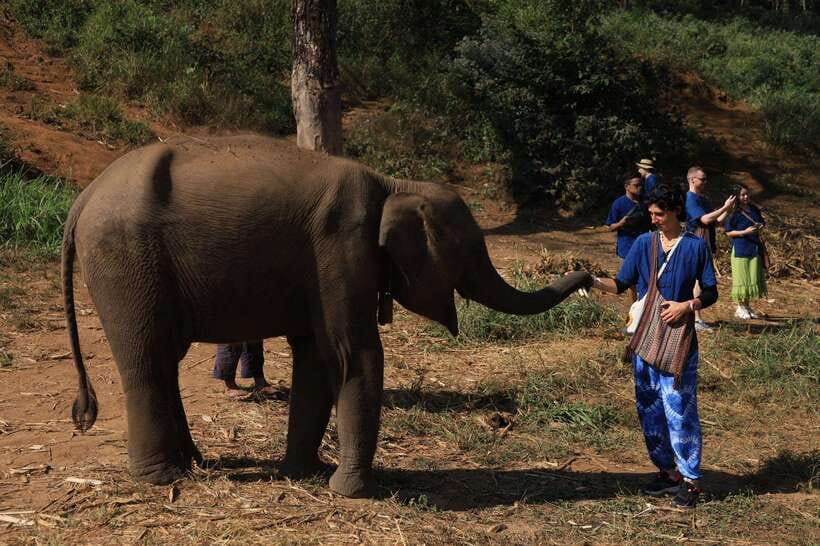
On this tour, the elephant ethics aren’t just marketing words. The activity design is built around welfare rules you’ll actually experience.
Here’s what you can expect to do:
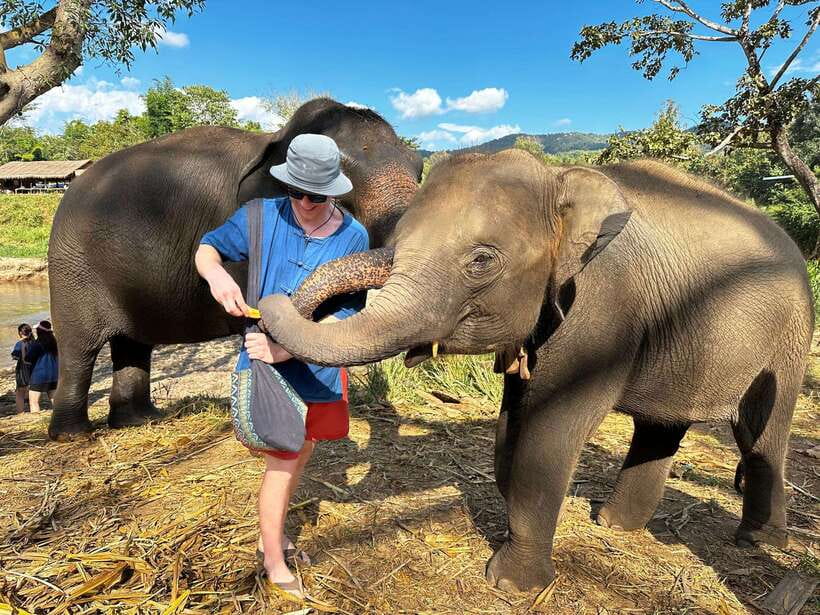
- Hand-feed the elephants
- Walk with them through the forest
- Observe natural bathing in river and mud-bath moments
And here’s what you won’t do:
- Ride the elephants
- Use forced behavior (including the important note that elephants are never forced into the river during cold weather)
Why that matters for you: riding-based elephant experiences tend to be driven by “performance” time. This is driven by elephant comfort time. The result is usually a calmer vibe, with more focus on gentle observation and caretaker guidance.
That said, no ethical tour is perfect for everyone. If you’re extremely anxious around animals, plan extra mental space. You’re close to large animals on purpose. The good news is that the sanctuary’s approach is explicitly welfare-first, and multiple guests highlight feeling safe around the elephants.
Getting There From Chiang Mai: The 1.5-Hour Van Ride and Why It’s Part of the Value
You leave Chiang Mai by van and drive about 1.5 hours each way through rural northern scenery. Think rivers, rice fields, and plantations. This is one of those drives where the countryside looks like it belongs to Thailand beyond the city.
Timing matters here. Your voucher time indicates morning or afternoon, but your exact pickup is confirmed one day prior. Also, traffic can change the day’s rhythm because the tour includes transport time in the total duration.
Why include this detail? Because it helps you manage your expectations for the rest of your Chiang Mai schedule. If you plan dinner reservations or a late-night market visit right after a half-day, you may feel rushed. On the other hand, if you treat the sanctuary day as the main event, the commute becomes part of the experience.
The Start of the Day: Mo Hom Clothing, Elephant Stories, and First Contact
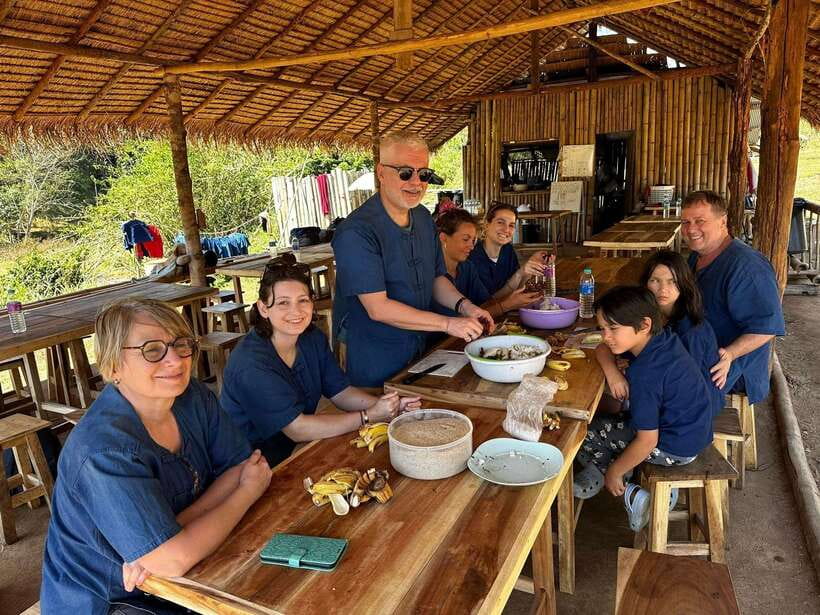
Your visit begins with a welcome briefing, then you change into traditional northern Mo Hom clothing. It’s not just for photos. It helps set the tone and makes you feel connected to the region’s cultural layer before you move into the elephant space.
Then comes the real heart of the day: meeting the elephants with caretakers who focus on behavior and welfare. This is where you learn why elephants act the way they do—what different behaviors can signal, and how each elephant has its own personality.
In reviews, guests repeatedly mention guides by name, including Pao and Rainbow, plus English-speaking guides like John and Mr Su. If you’re the type who likes context, this part is a big win. You’ll likely come away with a better sense of what you’re seeing, not just random elephant facts.
Feeding and Forest Walking: The Best Reason to Book Instead of Skipping
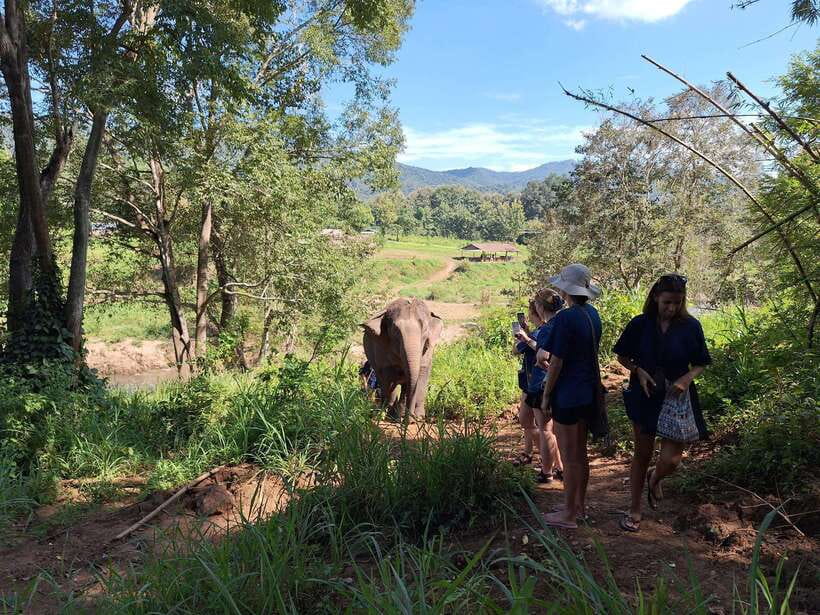
If you only cared about photos, you could find a faster stop. But the feeding and walking are the main reason I think this tour is worth your time.
When you hand-feed elephants, you’re doing it in a guided, controlled way—so the interaction stays respectful rather than chaotic. And when you walk with them through the forest, it changes your perspective completely. You’re not watching from a distance. You’re moving with the animals’ environment.
A few practical things you should mentally prepare for:
- You’ll be on the move more than you expect, even without a long hike.
- The environment is tropical, so wear comfortable clothes and plan for bugs.
- This is a close-up experience. Keep your focus on safety instructions and elephant signals.
This is also where you’ll notice the sanctuary’s “open” feel. One guest described it as open-air in a riverside jungle setting, with no fences, no shops, and no big crowds—so the elephants aren’t trapped in a staged route for visitors.




River and Mud-Bath Moments: What It Looks Like, and How to Stay Comfortable
Bathing is one of the most memorable parts of elephant life, and this tour includes natural bathing moments in river and mud.
The important detail for your comfort: elephants are not forced into the river during cold weather. That’s a welfare rule, but it also affects what your day looks like. If the water time is adjusted, don’t interpret it as a lack of care. It’s the opposite—comfort comes first.
You’ll also get wet. So even if you’re not expecting to swim, bring gear like you mean it. Pack:
- Swimwear
- A change of clothes
- A towel
- Sandals you don’t mind getting muddy
One more tip: if you hate cold water, consider how you feel about morning sessions. The tour does offer different start times (especially for half-day), so you can choose the schedule that best matches your comfort level.
Half-Day vs Full-Day: What You Gain With the Extra Hours
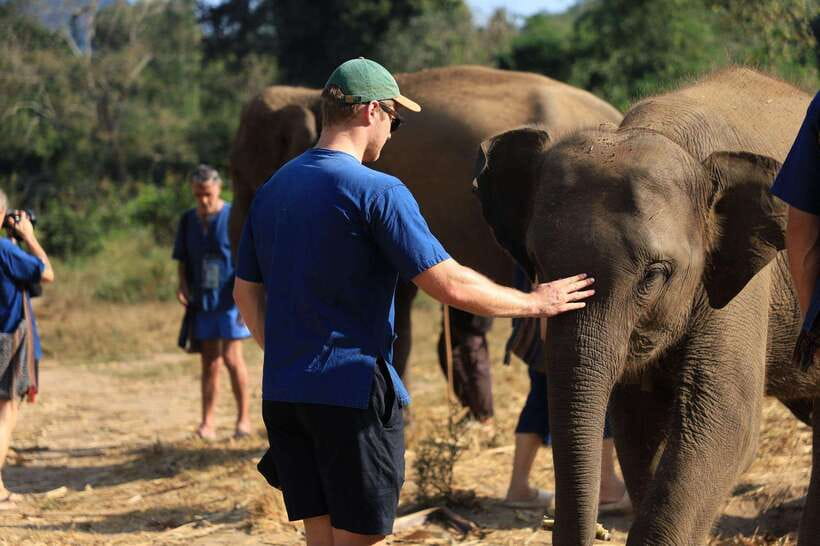
This tour comes in two main time blocks, and which one you choose depends on how much you want to do beyond the elephant time.
Half-day program (about 6–7 hours)
You typically get:
- Pick up from your Chiang Mai hotel
- Scenic drive through rural areas
- Welcome briefing and Mo Hom clothing
- Feed and interact with elephants
- Walk with elephants toward the river to observe bathing naturally
- A delicious included meal
- Return to Chiang Mai
In practice, half-day can be enough if your goal is simply to meet the elephants and experience the sanctuary vibe without turning it into your whole day.
Full-day program (about 9–10 hours)
Full-day keeps the elephant time, but adds extras:
- Pad Thai cooking workshop (available starting 2 December)
- Herbal medicine ball making (if that option is selected)
- Planting seedlings that will grow into natural elephant food (if selected)
- More time for feeding, walking, and river/mud-bath observing
- Herbal digestion-support balls and plant seeding focus on the idea of caring beyond feeding
If you love hands-on activities, full-day is the stronger value. You’re not just watching—you’re helping in small, symbolic, sanctuary-support ways and learning how food and digestion care fit into daily elephant welfare.
The Pad Thai Portion: Cooking Workshop and the Included Vegetarian Lunch
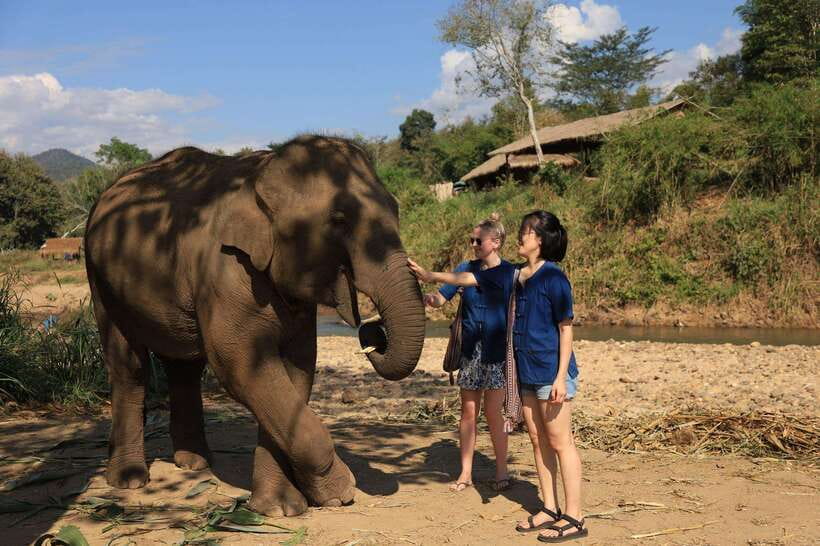
Food is a real part of the day here, and it’s not just a random snack break.
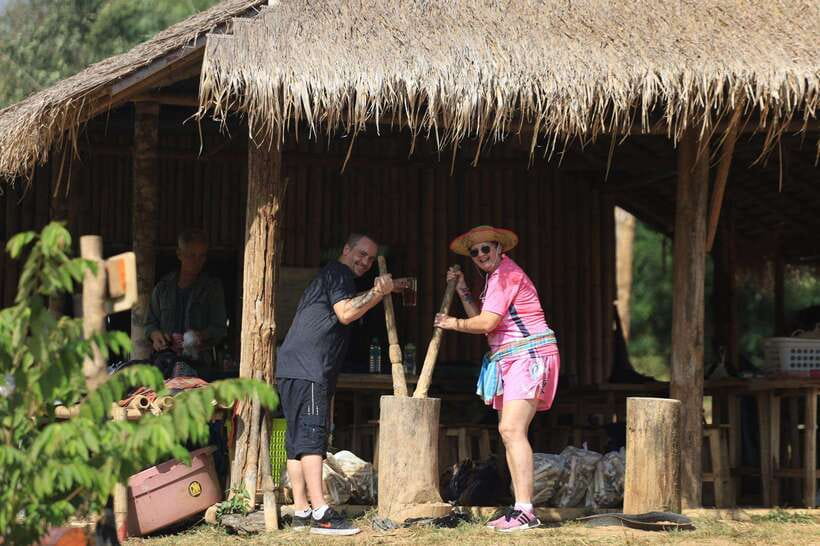
You can expect vegetarian Pad Thai as part of the meal experience. For full-day travelers, there’s also a vegetarian Pad Thai cooking workshop, and the cooking component is stated to be available starting from 2 December.
Why this is more than a meal: food is usually where tours lose authenticity. In this case, the day is framed as local ingredients and an activity you can enjoy, especially if you like food experiments. Even if you don’t cook, you’ll still likely enjoy a Pad Thai lunch described by guests as delicious, paired with fruit and a view of the river in at least some cases.
If you have dietary restrictions, you should still confirm specifics when you book. The tour data emphasizes vegetarian Pad Thai, but it doesn’t list allergy-handling details.
Photos, Guides, and the Human Side of the Sanctuary Day
There’s photography service included, which is a nice safety net if you want clear photos without juggling your phone while standing on uneven ground near large animals.
One note to keep yourself protected: I’d ask how photo delivery works before you go. A guest reported missing some afternoon photos, so you don’t want surprises at the end of a trip.
The guide experience is another strong point. Many guests mention the guides as warm, gentle, and passionate about the elephants. Names that come up include:
- Pao
- Rainbow
- John
- Mr Su
And for full-day travelers, a Chinese guide is available (one guest mentioned Nim helping with pickup and being around during the day).
Even if you don’t care about elephant facts, a good guide helps you notice the right things: calmer behavior, relaxed movement, and the subtle ways elephants communicate.
Price and Logistics: Does $46 Really Stack Up?
At about $46 per person, this is not the cheapest thing you can do in Chiang Mai. But it is competitive when you compare it to ethical animal experiences that include:
- hotel transfer,
- traditional clothing,
- guided elephant interaction and observation,
- and an included meal,
plus on full days, the Pad Thai cooking workshop from 2 December and optional welfare-support activities.
Where the value really shows is in what you get for that price: a full day structured around elephant welfare rather than an action-packed carnival around animals. You’re paying for time, guidance, and the sanctuary environment.
Potential logistical friction points are normal for a rural day:
- the drive takes time and traffic can shift the schedule,
- weather affects bathing moments,
- and you’ll want to pack for getting wet.
If you want a quick photo and move on, you can likely spend less elsewhere. If you want a day that changes how you think about elephants, this pricing feels fair.
What to Pack for an Elephant Day That Involves Water
Don’t show up with city shoes and hope for the best. You’ll have a better day if you pack like you’re going to be outside and near water.
Bring:
- Hat
- Swimwear
- Change of clothes
- Towel
- Sandals
- Camera
- Sunscreen
- Comfortable clothes
- Insect repellent
And plan for cleanliness. One review mentioned dirty windows in the van, and while that doesn’t relate to the elephants, it’s a reminder to expect some rough edges in a day that runs on local transport.
If you’re the type who sweats easily, bring breathable clothes. The combination of heat, walking, and close interaction can make you feel sticky fast.
Who This Tour Fits Best (and Who Should Skip)
This is not a pick for everyone, and the tour data is clear about that.
It’s not suitable for:
- children under 2,
- pregnant women,
- people with back problems,
- people with heart problems.
If you fall outside those categories, it still helps to be honest about your comfort level with large animals and getting wet. You should also avoid alcohol and drugs during the activity, and smoking is not allowed.
If you’re traveling with a group and someone in your party is risk-sensitive, full-day can be more demanding because it’s longer. Half-day may be a better compromise.
Also, if you want pure “elephant time” without extra side attractions, this tour is aligned with that style. One guest noted that it felt like time spent observing and being around elephants, rather than bouncing between villages or waterfalls.
Should You Book Living Green Elephant Sanctuary Chiang Mai?
I’d book it if you want an ethical Chiang Mai elephant sanctuary experience with no riding and a schedule focused on feeding, walking, and observing elephants in natural bathing moments. The half-day option is a strong fit when you’re short on time, and the full-day option is the better choice if you want the Pad Thai cooking workshop (starting 2 December) and the extra welfare-themed activities.
I’d think twice if getting wet, walking outdoors, or handling time changes from traffic would stress you out. Also, if you’re in a safety-risk category listed by the tour, skip it and choose a different kind of day.
FAQ
How long is the half-day elephant sanctuary program?
The half-day program runs about 6–7 hours. Morning is listed as 07:00–14:00, and the afternoon session is 12:00–19:00.
How long is the full-day program?
The full-day program is about 9–10 hours, typically 08:00–17:00, including time for hotel pickup and drop-off.
Is elephant riding included or allowed?
No. Riding the animals is not allowed, and the sanctuary approach is specifically described as having no riding.
What food is included during the tour?
You’ll have an included meal, and the experience emphasizes vegetarian Pad Thai. Full-day travelers also have a vegetarian Pad Thai cooking workshop available starting from 2 December.
What should I bring if I plan to participate in bathing moments?
Bring swimwear and a change of clothes, plus a towel. The tour also recommends a hat, comfortable clothes, sunscreen, sandals, and insect repellent.
Is the elephant river bath forced if it is cold?
No. The tour data states elephants are never forced into the river during cold weather.