REVIEW · CHIANG MAI
Chiang Mai: Private Historic Old City Bike Tour – Night
Book on GetYourGuide →Operated by Discova Thailand · Bookable on GetYourGuide
Night in Chiang Mai has its own mood. A bike tour through the Old City turns temples, gates, and alley life into an easy, low-effort plan with a human guide. I especially like how the route mixes major sights like Tha Phae Gate and Wat Chedi Luang with quieter temple lanes, and I love that guides such as Farm and Kitty focus on pacing and photos so you’re not just watching from a seat.
Two things I’d put near the top: you ride mostly flat streets at a relaxed speed, and you get a market stop with simple snacks that make the city feel lived-in, not staged. The main drawback to consider is that night cycling still means shared streets and stops require respectful temple clothing, since shorts and sleeveless shirts aren’t allowed.
In This Review
- Key points to know before you pedal
- Chiang Mai Old City after dark: what makes this ride work
- Meeting at Discova Day Tour Shop and getting your bike sorted
- Tha Phae Gate: the entrance vibe of Chiang Mai, lit up
- Wat Chedi Luang: ruined chedi, City Pillar symbolism, big-at-night atmosphere
- The Three Kings Monument and Wat Intakhin: where the city’s center gets explained
- Temple variety on your departure: Wat Chiang Man vs Wat Lok Molee
- Riding the moat and Old City walls: how a “history map” becomes real
- What the cycling actually feels like: safety, traffic, and pacing
- Market stop for snacks: simple choices with guide help
- Guides and the little details that change the experience
- Price and value: is $116 per group a fair deal?
- What to wear and pack (so the tour goes smoothly)
- Who this Chiang Mai night bike tour is best for
- Should you book this Chiang Mai night bike tour?
- FAQ
- What time does the tour run?
- Where is the meeting point?
- Is hotel pickup included?
- What’s included with the tour?
- Are meals included?
- Do I need to bring anything?
- What clothing is required or not allowed?
- Is the tour suitable for children?
- What details do I need to provide before the tour?
- Is the tour suitable for everyone?
Key points to know before you pedal
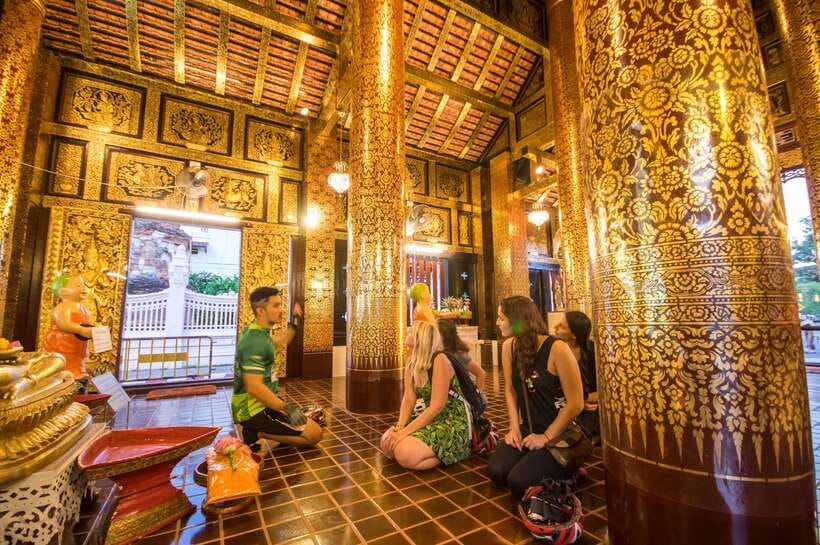
- Night temples look different with the lighting and fewer crowds compared with midday
- A relaxed 12–14 km ride that fits most travelers with easy handling on flat roads
- Tha Phae Gate and Three Kings Monument anchor the route with big-photo moments
- Wat Chedi Luang and City Pillar area are standout stops with major historical symbolism
- Market snacks are included, with help from your guide to choose food to try
- Private-small group feel, with guides like Farm, Don, Gun, and Tee mentioned often for safety and clear instructions
Chiang Mai Old City after dark: what makes this ride work
This is the kind of tour that fixes a common travel problem. Chiang Mai’s Old City is packed with temples and history, but walking can turn into a timing challenge: you rush, you miss details, and you spend energy just getting from place to place. On a bike, you trade that stress for rhythm. You cover ground, then slow down for each temple stop.
A night format adds an extra layer. Temples like Wat Chedi Luang and Wat Lok Molee (when included on your exact departure) can feel almost cinematic when they’re lit up. And because you’re moving through the Old City at the cooler, evening hours, the whole area feels more human-scale. You’re not fighting the brightest heat of the day.
Another big plus: this tour is built for easy cycling rather than fitness. You’re typically looking at around 12–14 km at a relaxed pace. That matters if you’re traveling with kids, you’re returning from a long travel day, or you just want to keep your energy for street food and night markets.
You can also read our reviews of more tours and experiences in Chiang Mai.

Meeting at Discova Day Tour Shop and getting your bike sorted
You meet at the Discova Day Tour Shop at 10/3 Wiang Kaew Rd, Tambon Si Phum, Muang, Chiang Mai 50200, near Chang Puak Gate. The office is in front of a greenery co-working space called Punspace, so you’re not guessing for long.
Arrive about 15 minutes early. That time is useful. You’ll fit your bike, get a safety helmet, and do a quick start-up check. The tour also asks you for practical details for the right setup, including each participant’s full name (for insurance purposes) and height (so the guide can arrange the correct bike). If you have dietary requirements, you’ll want to mention those ahead of time too, especially since you’ll stop for snacks.
No hotel pickup is included. So you’ll want to plan how you’ll get to the shop—walking if you’re nearby, a taxi/songthaew if you’re further out.
Tha Phae Gate: the entrance vibe of Chiang Mai, lit up
The ride begins by cycling into the Old City toward Tha Phae Gate, the classic trading entrance landmark. Even if you’ve seen this gate in photos, being near it at night gives it a different texture. It’s not just a monument. It’s a threshold that tells you where the city’s story used to move in and out.
Expect a short guided visit here, around 30 minutes. This is a smart first stop because it gives you context before you move deeper into temple lanes. Instead of arriving at sites as random buildings, you start seeing how the Old City is organized—gates, walls, moats, and the major religious anchors.
Wat Chedi Luang: ruined chedi, City Pillar symbolism, big-at-night atmosphere
Wat Chedi Luang is one of those Chiang Mai stops that tends to stick in your memory. The standout feature is the massive ruined chedi, and the area connects to the City Pillar concept tied to the old kingdom’s spiritual center.
The tour usually includes a guided visit here for about 30 minutes. In evening departures, the place can look especially dramatic with lighting on the stonework and courtyards. One practical benefit of coming at night: you often have more space to move around without getting swallowed by daytime crowds.
There’s also a cultural layer that the guide can help you understand. Some guides on this style of tour may lead small temple interactions in a respectful way—think things like participating in simple ceremonies or making offerings/donations, with clear guidance on what’s appropriate. You won’t be left guessing.
If you care about how Buddhism and local tradition play out in everyday spaces, this is where your guide’s storytelling really matters.
The Three Kings Monument and Wat Intakhin: where the city’s center gets explained
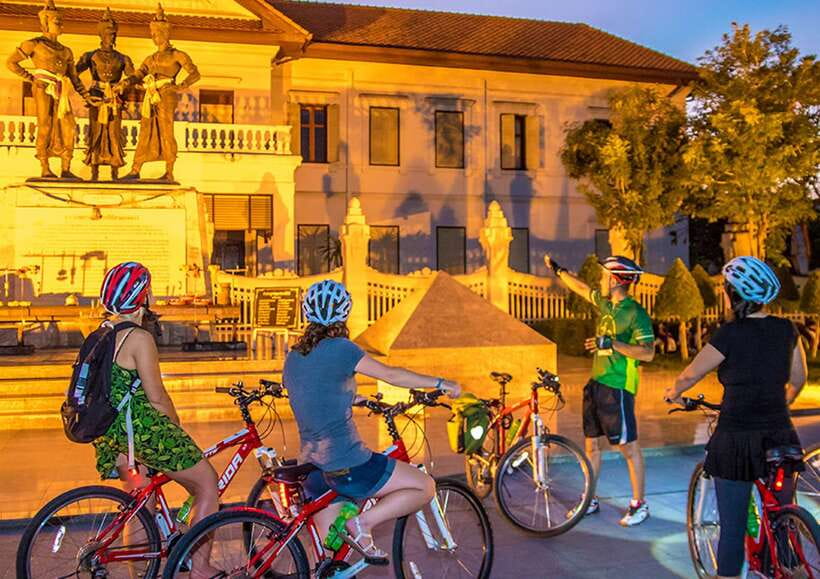
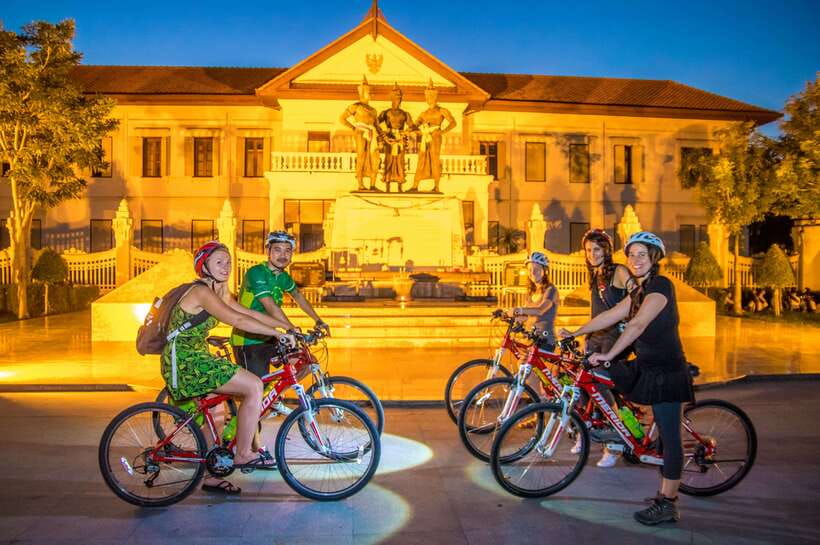
After the gate and major temple stop, you roll toward the historic square around the Three Kings Monument. It’s a key landmark because it helps you see how Chiang Mai frames its past—through people, monuments, and the spiritual geography of the city.
Right near that square is Wat Intakhin (City Navel Temple), described as an important spiritual site marking the symbolic center of the ancient kingdom. This stop is also guided and tends to be a short, focused walk with time to look around.
The value here isn’t long sightseeing. It’s understanding. Your guide can connect the dots between walls and moats, temple placement, and why these squares and shrines weren’t random. Even if you only get a short visit, the explanation can make the rest of the Old City feel less like a checklist.

Temple variety on your departure: Wat Chiang Man vs Wat Lok Molee
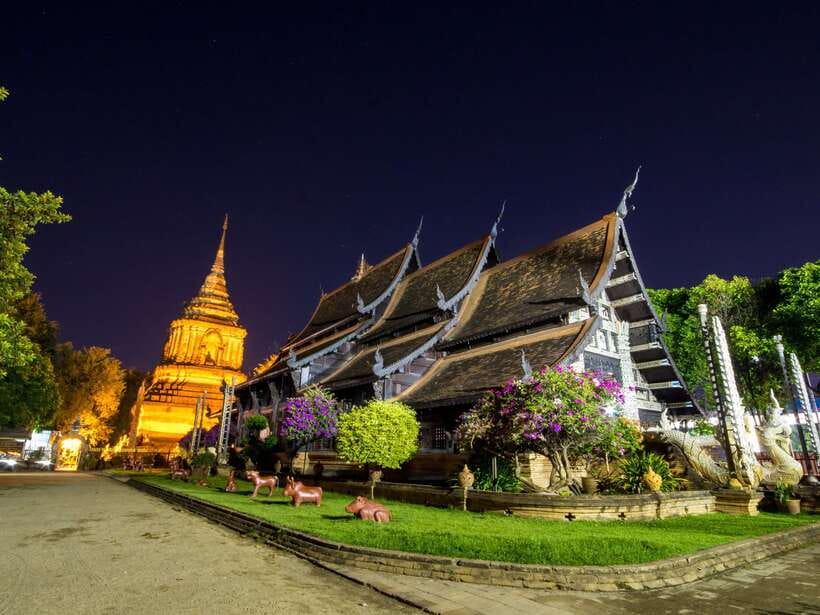
One detail that changes the feel of your tour is which temple is included depending on the timing. The route can pass Wat Chiang Man (noted as the oldest temple in the city) or Wat Lok Molee, known for its Lanna-style wooden viharn and a tall brick stupa.
Both are worth your attention, but they give different vibes:
- Wat Chiang Man tends to feel older and foundational because of its age and role early in the city’s spiritual life.
- Wat Lok Molee often feels more architectural, with the Lanna wood structure standing out and, at night, the lighting adding a sense of drama.
In evening settings, Wat Lok Molee and Wat Chedi Luang can be particularly photogenic. You’ll still need to be respectful of temple rules and keep your pace steady—your guide will help you do that smoothly.
Riding the moat and Old City walls: how a “history map” becomes real
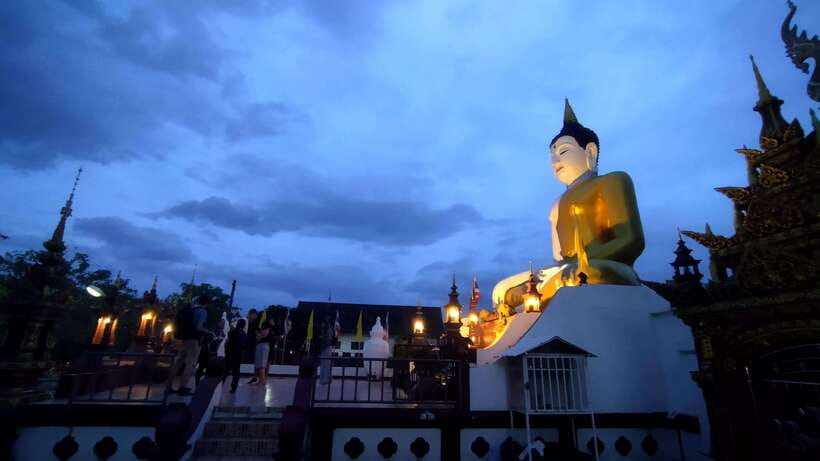
A big reason I like bike tours in walled cities is that they turn geography into a lived thing. In the Old City, you’re not just looking at landmarks—you’re experiencing the space they occupy.
This tour takes you along the ancient moat and past sections of the original city walls. That’s where your guide’s explanations can really pay off. When you see the layout from bike level, it’s easier to understand why the city was planned the way it was, and why the spiritual sites and entrances mattered to how the kingdom operated.
You’re covering enough distance to feel the Old City’s structure, but you’re still stopping often enough to actually absorb what you’re seeing. That balance is what prevents this from feeling like a transfer ride.
What the cycling actually feels like: safety, traffic, and pacing
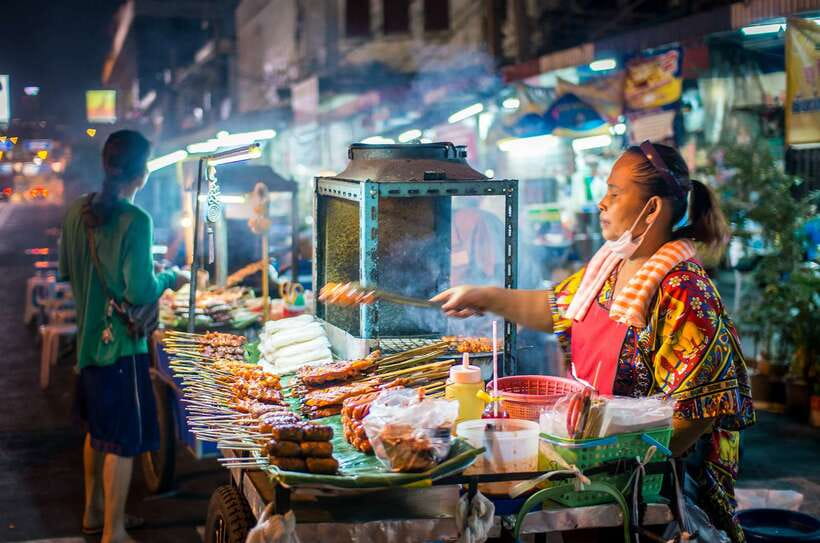
The cycling is described as easy, with the tour covering around 12–14 km. Roads are mostly flat, and the route typically leans toward quieter back lanes and historic alley areas rather than major traffic corridors.
In real-world terms, this matters for two reasons:
- It reduces fatigue, so you have the energy for temple time and snack time.
- It makes night riding less stressful, since you’re not constantly dealing with fast lanes or high speeds.
Your guide provides a safety talk at the start and clear instructions along the way. In guide feedback, people often point out that safety feels prioritized and that instructions for turning, stopping, and navigating narrow lanes are communicated clearly.
If you’re a first-time rider, the biggest tip is to go with the flow. Don’t fight the pace. You’ll be stopping and restarting through temple areas and market areas, so the best strategy is to stay relaxed and follow your guide’s rhythm.
Market stop for snacks: simple choices with guide help
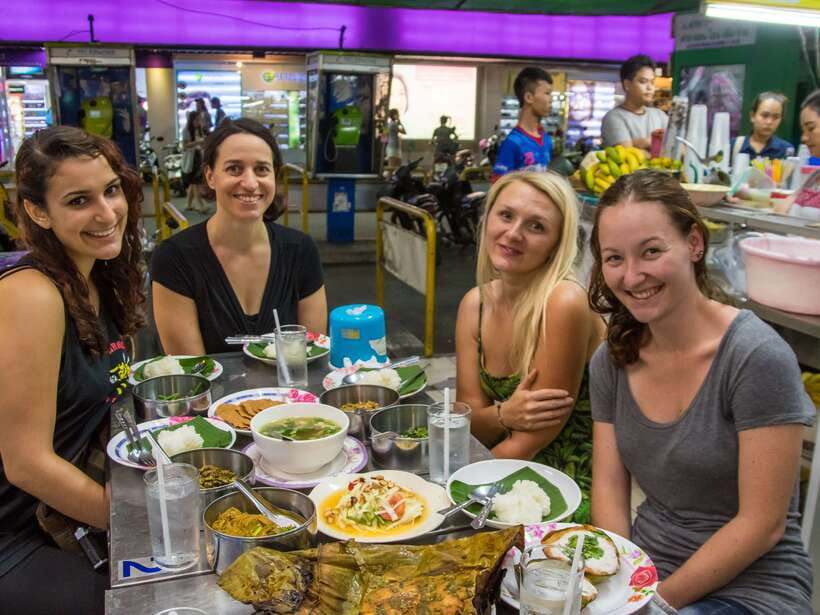
The included market stop is one of the smartest parts of the tour. It’s not a full meal, but it gives you a taste of Chiang Mai without forcing you to commit to a restaurant plan.
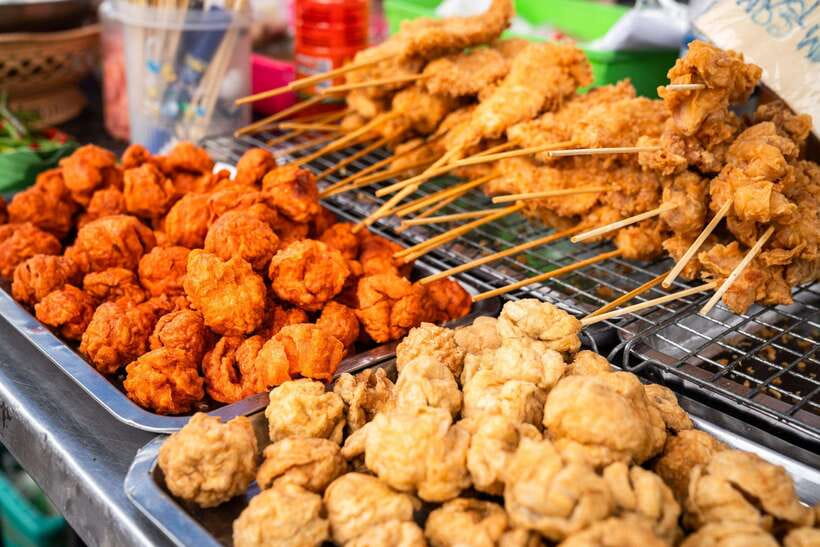
On this style of tour, you’ll either hit a morning market or a night market depending on departure time. Since this is the night option, expect more street-food energy. Your guide helps you try a few simple snacks or fruits, with suggestions so you’re not stuck staring at menus with no idea where to start.
One practical bonus from the experience: vegetarian options were mentioned as available, and guides helped people find variety. If you have dietary needs, let the company know at booking so your guide can steer you toward options that make sense.
Come hungry, but don’t overdo it. You want room for a few bites, not a full feast that makes temple visits uncomfortable.
Guides and the little details that change the experience
The tour lives and dies on the guide. And here, the names you’ll hear around this activity include Farm, Kitty, Don, Gun, Tee, Nan, Tree, James, Mai, and Aoy. Different personalities, same pattern: clear riding instructions, real city context, and a focus on making the ride feel safe.
Some guides also take extra care with practical touches. For example, people noted photo help, adjusting the route to match what a group wants, and giving explanations at each stop so you don’t feel like you’re just moving between points on a map.
A few more culture-focused details also show up in the way guides handle temple moments. Expect your guide to explain what you’re seeing and how to behave. When ceremonies or offerings are mentioned, it’s framed as guided and respectful rather than random participation.
If you’re the type who likes to ask questions, this is a good fit. Many people walk away saying they learned enough to feel confident exploring on their own afterward.
Price and value: is $116 per group a fair deal?
The price is listed as $116 per group (noted as up to 1 in the quote) for a 4-hour private tour with an English-speaking guide. That price will feel very different depending on how many people you’re paying for, which is why it’s worth double-checking the participant count while booking.
Here’s how I’d judge value for this specific tour:
- You’re paying for a guide who coordinates bike safety and route logic in the Old City.
- You’re getting helmet and a mountain bike, plus water and light snacks.
- You’re also getting temple donation allowance included, so you can participate appropriately without hunting for guidance on the spot.
If you’re traveling as a couple or a small family, the value improves because you’re spreading the guide’s time across more people (assuming the booking lets you include multiple participants). If you’re traveling solo, it’s still a strong value if you want the private attention and the convenience of having someone explain what you’re seeing in real time.
What to wear and pack (so the tour goes smoothly)
This tour is easy cycling, but it comes with temple clothing rules. Shorts and sleeveless shirts aren’t allowed. For many people, that’s the biggest surprise. Plan lightweight long pants and a breathable top with sleeves.
Bring comfortable shoes, not flip-flops. Even though you’re on a bike, you’ll walk through temple areas and market space, and those surfaces can be uneven.
If you’re considering kid seats, child seats are available on request, but they can accommodate a child up to 14 kg. You’ll also want to share your child’s relevant details during booking. There are discounts for children age 12 and under when kids bikes are used.
Also, this tour isn’t listed as suitable for pregnant women.
Who this Chiang Mai night bike tour is best for
This is a great match if you want:
- A first or early visit to Chiang Mai that helps you get your bearings fast
- A way to see major Old City landmarks without turning it into a long walking day
- Night temple photos and atmosphere without the midday crush
- A guided route that handles traffic nerves and temple logistics
It’s also a good family option with older children, since the ride is described as relaxed and not too intense. In group experiences, families have done well because the route pauses often enough to keep kids engaged.
If you’re not comfortable riding in city areas after dark, or you strongly dislike sudden stops at temples and gates, then you might prefer a walking or tuk-tuk style alternative.
Should you book this Chiang Mai night bike tour?
If you like your sightseeing with movement, and you want the Old City explained while you’re actually moving through it, I’d book it. This tour’s biggest strength is the combination: major temple anchors, quiet lane cycling, and a market snack stop that makes the city feel like home territory rather than a photo circuit.
Book it especially if you’re trying to fit in a lot of Chiang Mai context in a single evening, or if you’re traveling as a small group and want a guide who can manage pace and safety with attention. The only strong reason to skip is if the temple dress rules will be a hassle for your group, or if night cycling feels too stressful.
If you want one practical tip before you go: plan your outfit around the temple rules first, then pick your bike comfort second. Everything else should fall into place once you’re rolling with your guide.
FAQ
What time does the tour run?
The tour runs for 4 hours, and you can check availability for the starting times when you book.
Where is the meeting point?
You meet at Discova Day Tour Shop Chiang Mai, 10/3 Wiang Kaew Rd, near Chang Puak Gate. The office is in front of Punspace.
Is hotel pickup included?
No. Hotel pickup and drop-off are not included.
What’s included with the tour?
The tour includes a friendly English-speaking guide, quality mountain bike and helmet, drinking water and light snacks, temple donation allowance, and accidental insurance. It also includes engaging stories and cultural explanations.
Are meals included?
You’ll get simple snacks (and fruit) during the market stop, but meals beyond that are not included.
Do I need to bring anything?
Bring comfortable shoes. You should also dress appropriately for temple visits.
What clothing is required or not allowed?
Shorts and sleeveless shirts are not allowed. Plan for clothing that meets temple expectations.
Is the tour suitable for children?
It can be suitable for families with older children. Child seats are available upon request, but they only accommodate a child up to 14 kg. There are also discounts for children age 12 and under with kids bikes.
What details do I need to provide before the tour?
The tour asks for each participant’s full name (insurance purposes) and height (to arrange the right-side bike). You should also mention any dietary requirements at booking.
Is the tour suitable for everyone?
It’s not suitable for pregnant women, and it requires participants to be comfortable cycling and visiting temple sites with the clothing rules in mind.