REVIEW · CHIANG MAI
Chiang Mai: Ping River Night Kayaking into City Center
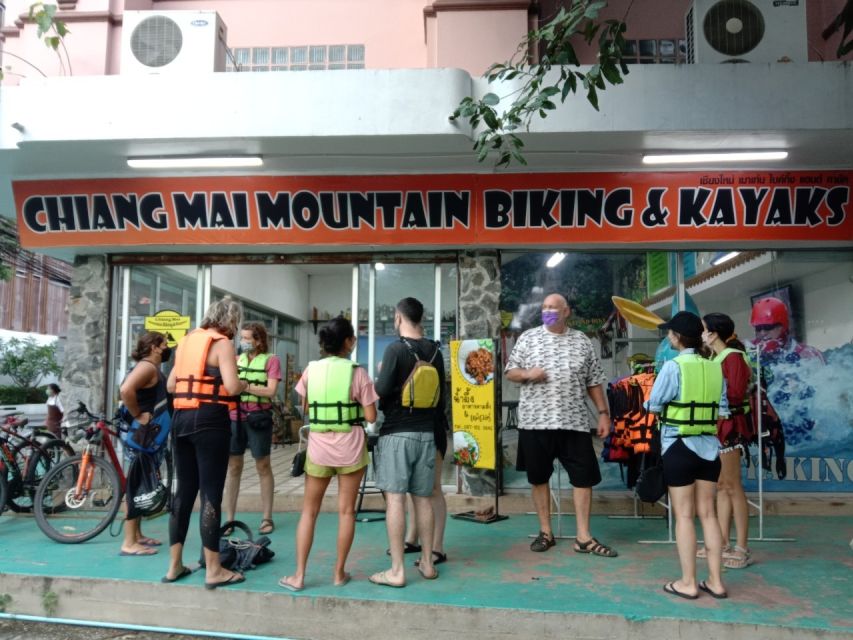
Book on GetYourGuide →Operated by CHIANG MAI MOUNTAIN BIKING & KAYAKS · Bookable on GetYourGuide
Night water in Chiang Mai is a whole different scene. This 2-hour Ping River kayaking trip lets you watch the city switch on—lights first, then music, then reflections—while you drift 6 kilometers with the help of the current.
I love the way the route mixes quiet nature moments with the Chiang Mai skyline at night. I also like that you’re not stuck guessing what to do; you get a safety briefing, good hard-shell kayaks, and an instructor escort with head lamps and safety lights.
One thing to consider: the first part can feel pretty dark, so you get the clearest “city wow” later as you move closer to the brighter stretches.
In This Review
- Key things that make this night paddle work
- Why kayaking the Ping at dusk feels special
- Getting on the water: pickup, ride time, and your first briefing
- Wat Taa-Luk to the city: how the route unfolds on the Ping
- The Mai Yai trees: the river’s slow-motion highlight
- Bridges, restaurants, and the night skyline from water level
- Paddling effort: easy for most endurance levels, but not zero work
- Gear and comfort: what’s provided, and what to bring
- Safety on a dark river: why the setup matters
- What guides bring to the experience (and what to expect from the vibe)
- How much it costs and why the value makes sense
- Who should book this Ping River night kayaking tour
- Should you book this night kayak on the Ping River?
- FAQ
- How long is the kayaking experience?
- Where does the tour start and what key point do you pass?
- Is the kayak route 6 kilometers long?
- Is this trip suitable for beginners?
- What safety gear is included?
- Do you provide hotel pickup and drop-off?
- What languages are available for the guide?
- Is it okay for children?
- What is included in the price besides the kayak?
- Can I cancel if my plans change?
- Should you book this night kayak on the Ping River?
Key things that make this night paddle work
- 6 km on the current: less effort than you’d expect for a night outing
- Mai Yai trees along the banks: big, native trees you pass slowly from the water
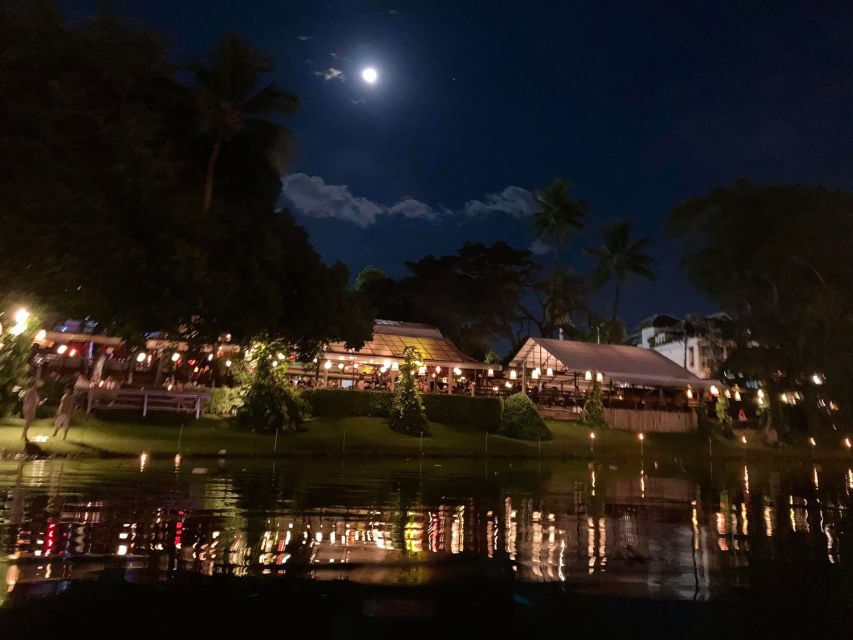
- Music from riverside restaurants: you’ll hear the night life drifting over the river
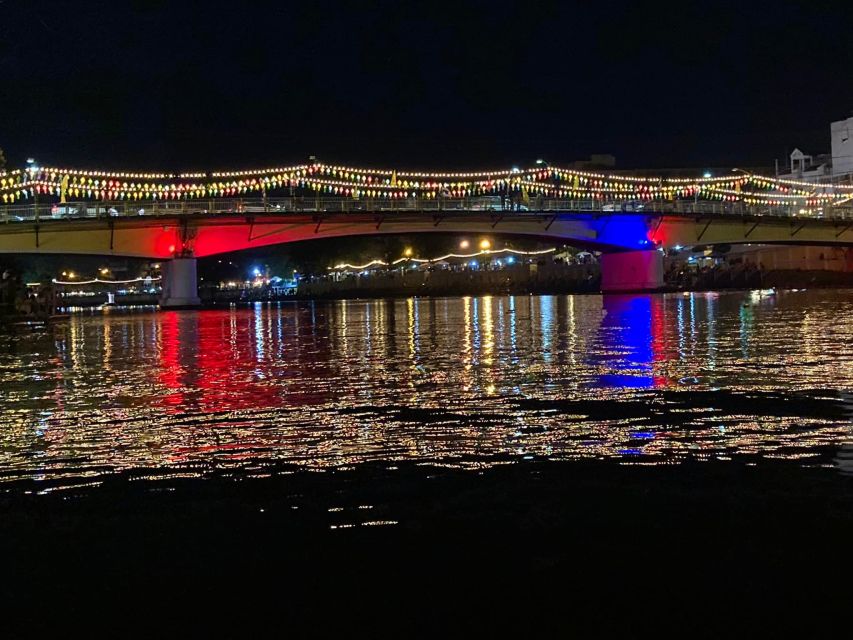
- Lit bridges in color: head lamps on, and bridges turn into glowing checkpoints
- Small-group feel: many trips run with a guide and a tight group size
- Wildlife surprises: you might spot bats and ducks when it gets quieter out of town
Why kayaking the Ping at dusk feels special
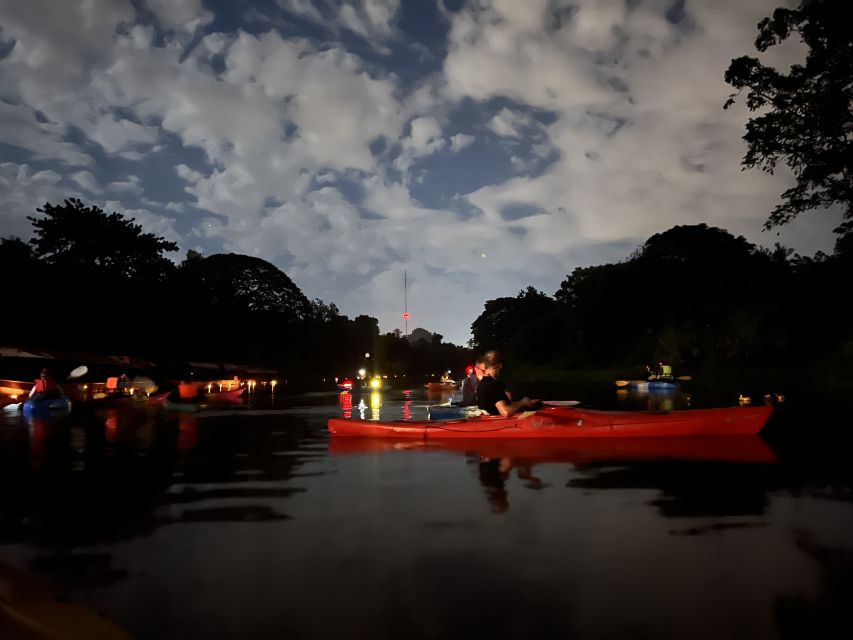
Night kayaking in Chiang Mai isn’t about speed or adrenaline. It’s about gliding—quiet enough that you can hear what’s going on around you, but still close to the city that makes Chiang Mai feel unmistakable.
What makes this trip click is the mix of settings in one run. You’ll start where the river feels more natural, then gradually shift into the city rhythm: bridges lit up, restaurants along the banks, and that multi-colored skyline reflection that’s hard to get from the street.
You can also read our reviews of more tours and experiences in Chiang Mai.



Getting on the water: pickup, ride time, and your first briefing
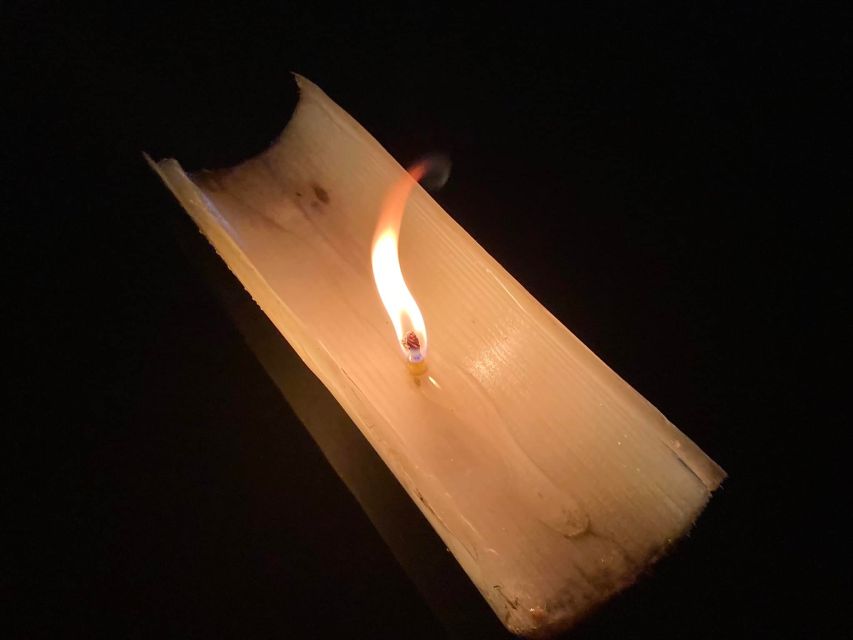
Plan around an evening start window, with hotel pickup typically running from 5:45 PM to 6:00 PM. Expect a couple of short drives in a jeep/SUV, plus a safety briefing before you launch.
The tour includes the basics that matter for a night trip: a life jacket (PFD), a head lamp, and extra safety lighting plus a whistle. You also get a professional instructor escort, and the trip includes insurance, so you’re not just handed a kayak and sent off into the dark.
You’ll get instruction on how to handle the kayak before you go, which is important because at night you’re steering by feel and by light, not by a clear shoreline view.
Wat Taa-Luk to the city: how the route unfolds on the Ping
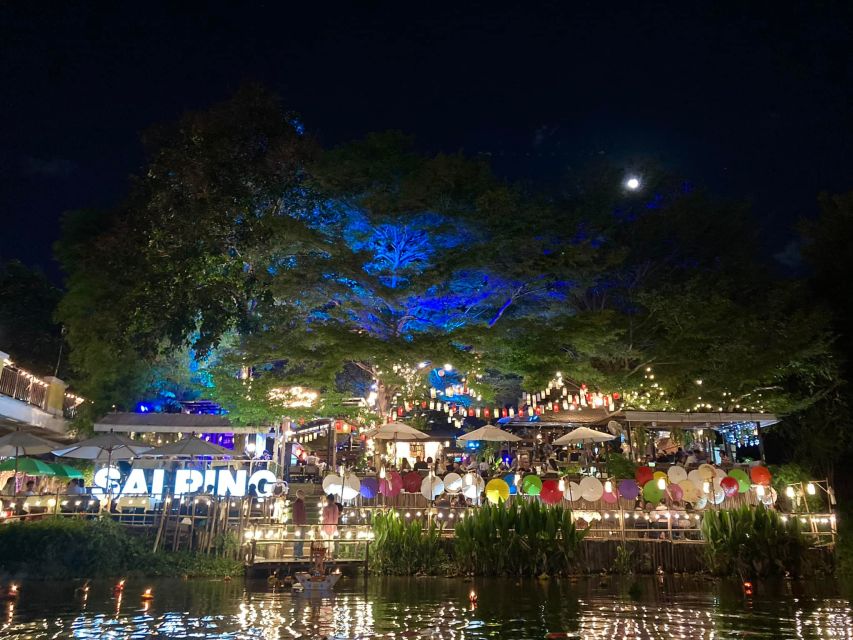
You spend about two hours on the river, starting at Wat Taa-Luk and continuing along the Ping toward the city-center stretch (with a major pass by Nawarat Bridge).
Here’s the flow you should expect:
- Early stretch: darker water and less visible scenery around you. This is the part where you’ll mostly focus on rhythm and keeping your kayak straight.
- Middle stretch: the river starts to “talk.” Music from riverside restaurants drifts over the water, and you’ll see homes and riverbank life sliding past at human speed.
- City stretch: lights and bridges show up. This is when the views get dramatically better because the skyline turns into color on the water.
Because the river current helps, you’re not paddling like it’s a workout class. Most of the time you’ll do what feels like steering and small corrections while the river carries you through the night.
The Mai Yai trees: the river’s slow-motion highlight
One of the most distinctive things on this trip is passing large Mai Yai trees growing along the riverbank. From a kayak, these trees don’t look like “background.” They feel close and grounded, like you’re moving through a living corridor.
They also fit the vibe of the tour: you’ll often slow down mentally when you’re near big trees—your attention goes from city lights to the natural scale of the river.
Bridges, restaurants, and the night skyline from water level
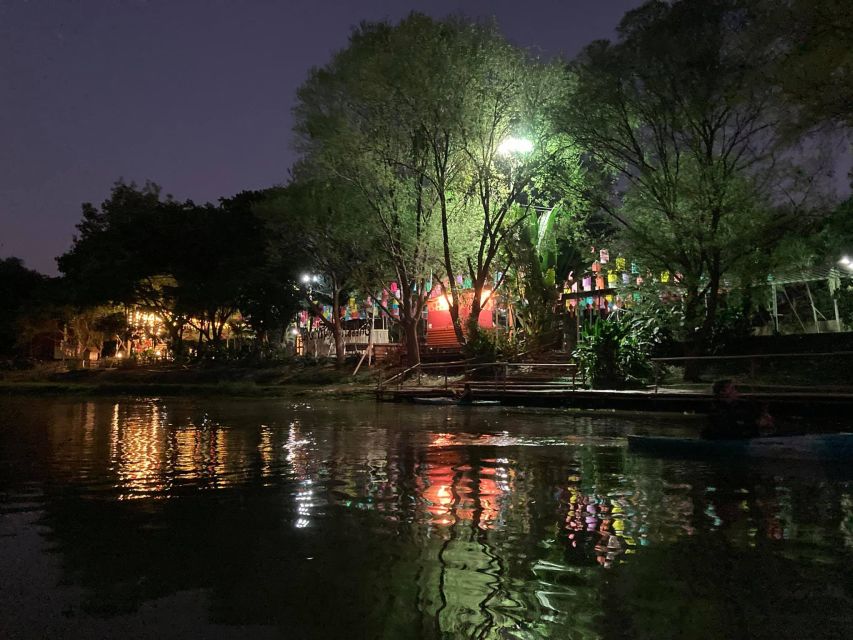
This is the “why night?” part. Chiang Mai is already pretty at night from the street. From the water, it’s another layer.
As you drift along, you’ll go under bridges lit in colors, and you’ll hear restaurant music carrying across the river. That combo—lights overhead and sound on your right and left—makes the city feel nearer, but still calm.
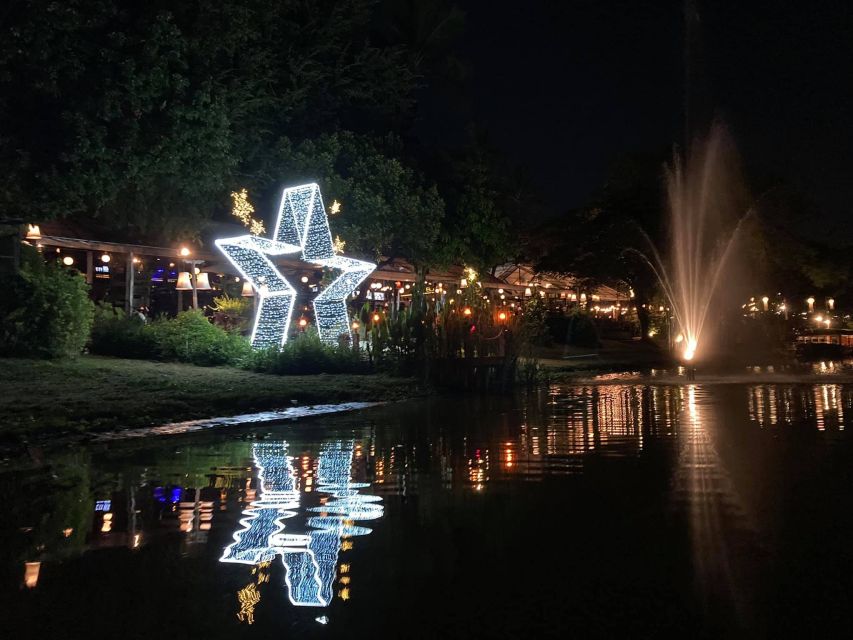
Then there’s the skyline itself. The views are multi-colored, and you’ll catch reflections that you just don’t get when you’re walking. From the kayak, the city feels like it’s floating too.






Paddling effort: easy for most endurance levels, but not zero work
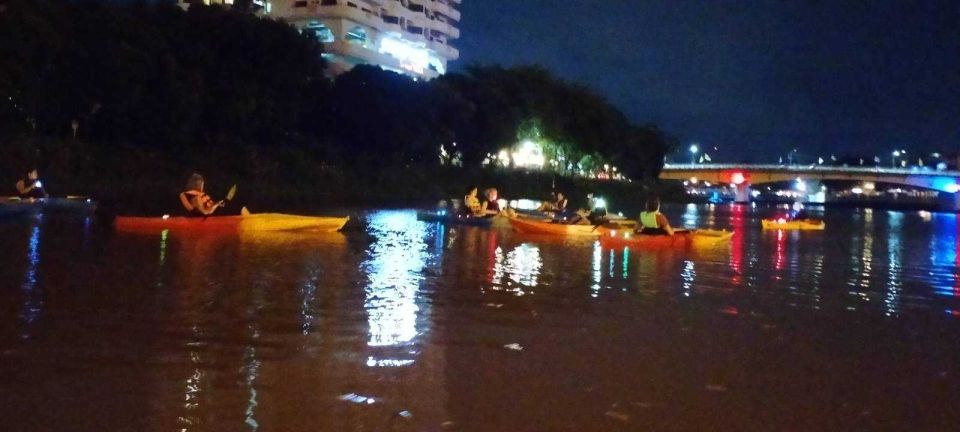
This tour is suitable for all endurance levels, and that’s believable once you’re on the water. The river’s current does a lot of the pushing, and the route is designed for a relaxing night pace.
That said, you’ll still paddle enough to steer and feel involved. The best comparison is more like gentle river transport with occasional strokes than like a long-distance grind.
If you’re nervous about night sports, focus on technique over speed: keep your strokes smooth, use your hands to make small corrections, and trust the current to keep the kayak moving.
Gear and comfort: what’s provided, and what to bring
The package covers the gear most people forget: hard-shell single and double kayaks, PFDs, head lamps, safety lights, and a whistle. You also get bottled water.
From practical experience in this kind of tour environment, the most helpful extras to think about are clothing and footwear. One key note that shows up in real-world trips: if the water level is low, you might get a bit muddy when walking to the water’s edge. So wear shoes that can handle water and dirt.
Bugs are another practical consideration. In one trip there were reported to be no bugs at all, but another traveler strongly recommended bug spray. My take: don’t gamble. Bring repellent and use it.
If you’re someone who tends to rely on lotions or creams, take the caution seriously—someone reported not to wear cream before the trip. You might find that bugs become more curious if you smell sweet or feel slippery.
Safety on a dark river: why the setup matters
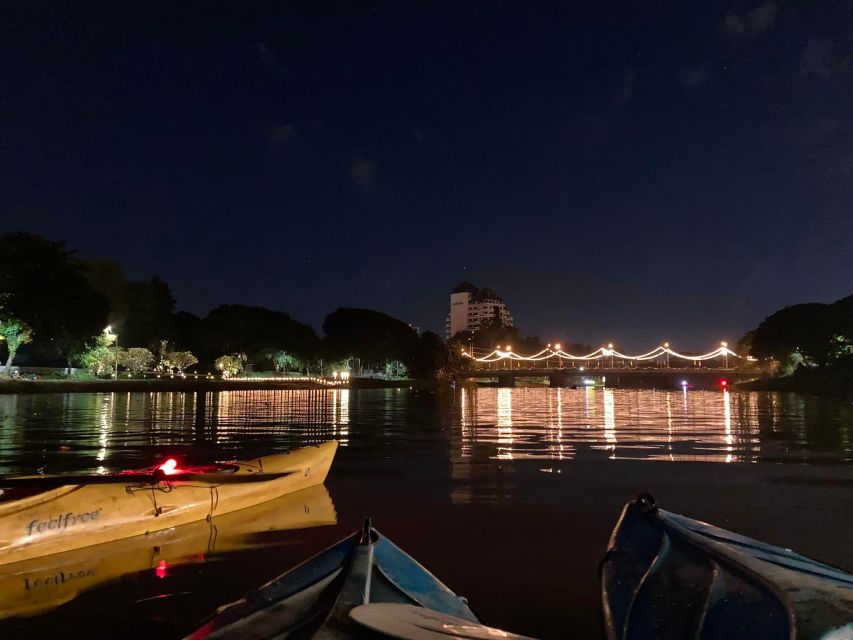
Night kayaking is safe when the basics are handled. This tour’s safety approach includes:
- PFD and safety lights so you’re visible
- a head lamp so you can read the river surface
- an instructor escort who stays with you
- a safety briefing before launching
- insurance included
Even if you’ve kayaked in daylight, night changes everything—your depth perception shifts and the shoreline turns into silhouettes. The head lamps and escort help you stay oriented without feeling like you’re in a survival scenario.
What guides bring to the experience (and what to expect from the vibe)
A lot of the enjoyment here comes from the guide’s tone. In the stories you’ll see names like Aidon/AJ and Jo Jo coming up for fun, attentive guiding—checking comfort, keeping safety tight, and adding humor to the ride.
One more useful expectation: this isn’t set up as a nonstop sightseeing lecture where you’ll identify every bridge and building. Instead, it’s more like: you paddle, you follow the guide, and the river itself does the talking—lights, music, homes, and trees in front of you.
Also, music and nighttime scenery can make it feel relaxed enough to talk. One reason people love this tour is that it’s an easy social space for couples and small groups—no pressure, just night air and gentle drifting.
How much it costs and why the value makes sense
At $50 per person for about 2 hours, this is one of the more straightforward activities you’ll do in Chiang Mai that still feels special.
Here’s what you get for the price:
- hotel pickup and drop-off
- a safety briefing and professional escort
- top-quality hard-shell kayaks
- PFD, head lamp, safety lights, whistle
- bottled water
- river fee and insurance
That matters because you’re paying for more than a kayak rental. You’re paying for night-appropriate equipment, guidance, and getting to the river without renting a car or figuring out logistics after dark.
Is it more expensive than a day-time boat rental? Likely. But night kayaking with safety gear, pickup, and an escort is rarely cheap—and this one feels priced to be accessible while still covering the real costs.
Who should book this Ping River night kayaking tour
This is a strong match if you want:
- a calm night activity that’s not centered on crowds
- a beginner-friendly introduction to kayaking with real safety support
- the “city lights from a new angle” experience without climbing or squeezing into viewpoints
- a romantic-feeling evening that still works for families older than preschool age
It’s less ideal if you want:
- bright, nonstop sightseeing from start to finish (the first stretch is often dim)
- a highly structured tour where you’ll stop and learn about every sight in detail
Should you book this night kayak on the Ping River?
If you’re in Chiang Mai and you want one evening that feels different from temples and markets, this is an easy yes. The combination of 6 km drift, Mai Yai trees, colored bridges, and that skyline reflection makes it one of those “how is this so calming at night?” activities.
Book it if you’re okay with a darker early paddle and you want the river to set the pace. Skip it if you need a bright, interpretive sightseeing tour the whole time.
FAQ
How long is the kayaking experience?
The tour duration is about 2 hours.
Where does the tour start and what key point do you pass?
You kayak starting near Wat Taa-Luk and you pass by Nawarat Bridge during the ride.
Is the kayak route 6 kilometers long?
Yes. The trip is described as a 6 kilometer kayaking route with the help of the current.
Is this trip suitable for beginners?
Yes. The activity is suitable for all endurance levels, and the tour includes a safety briefing and instruction on kayaking before you go.
What safety gear is included?
You’ll get a PFD (life jacket), a head lamp, safety lights, and a whistle, plus an escort by a professional kayak instructor.
Do you provide hotel pickup and drop-off?
Yes. Hotel pickup and drop-off are included, with pickup typically running from 5:45 PM to 6:00 PM depending on your location.
What languages are available for the guide?
The live tour guide is available in English, German, and Thai.
Is it okay for children?
It is not suitable for children under 4 years.
What is included in the price besides the kayak?
Besides the kayaks and instruction, it includes bottled water, river fee, safety briefing, insurance, and the instructor escort.
Can I cancel if my plans change?
Yes. There is free cancellation up to 24 hours in advance for a full refund. The option to reserve and pay later is also offered.
Should you book this night kayak on the Ping River?
If you want a low-stress, night-time way to see Chiang Mai—lights, music, and riverbank trees—this is a great pick. The main tradeoff is that the start can be dark and the ride is more about drifting than about constant sight-by-sight commentary.