REVIEW · CHIANG MAI
Chiang Mai: Elephant Sanctuary & Thai Cooking Workshop
Book on GetYourGuide →Operated by PON ELEPHANT (THAILAND) CO., LTD. · Bookable on GetYourGuide
Elephants and Thai cooking in one day? That combo is the reason this tour is so memorable: you get up-close, gentle elephant feeding in a natural setting and then cook classics using fresh garden ingredients. I also like how the day is paced for real learning, not a rushed checklist. The main thing to plan for is that some elephant activities (like river bathing) depend on the elephants, so timing can shift a bit.
I’m especially drawn to the guide factor here. Names like Pimdao and Som come up again and again in the way they explain Thai food and elephant behavior clearly, with lots of energy for small groups. If you care about both ethics and food skills, you’ll likely enjoy that balance.
At about $63 per person for a full 9-hour outing, this is strong value because you’re not only paying for the sanctuary visit—you’re also getting a structured cooking class, lunch or dinner depending on the session, and a recipe booklet to take home. One more consideration: you’ll want to pack for getting wet and warm, since elephant river time is part of the experience.
In This Review
- Key takeaways before you go
- Why this Chiang Mai day pairs elephants with Thai cooking
- Pon Elephant Thailand: welfare-first elephant time in a natural setting
- The morning and evening options: what changes in your day
- Hotel pickup and transport that actually helps
- Garden-to-kitchen start: herbs, organic ingredients, and Thai flavor logic
- Cooking workshop: Pad Thai, Khao Soi, Tom Yum, curry, and mango sticky rice
- Feeding time: Napier grass, sugarcane, and banana moments
- River bathing: when the elephants choose the plan
- Lunch and dinner: what you actually eat and why it matters
- Price and logistics: how $63 becomes real value
- What to bring (and what not to) so you’re set for elephant day
- Who should book this elephant sanctuary + cooking workshop
- Should you book this tour
- FAQ
- What’s the duration of the Chiang Mai elephant sanctuary and Thai cooking tour?
- How much does the tour cost?
- Is this tour a small group?
- Do I need hotel pickup?
- What’s included with the cooking class?
- Do both sessions include a market visit?
- What elephant activities are included?
- What should I bring for comfort during the day?
- Are towels and a change of clothes provided?
Key takeaways before you go
- Small group vibe (up to 10 people) makes it easier to ask questions during both elephant time and cooking
- Garden-first ingredients: you collect herbs and build dishes from what grows right on-site
- Thai flavor training: you learn the sweet, sour, salty, bitter, and spicy framework while you cook
- Sanctuary interactions that follow the elephants’ choices, including river bathing when they want it
- No-rush cooking: you practice multiple dishes and get recipes to recreate them later
Why this Chiang Mai day pairs elephants with Thai cooking
This isn’t just a wildlife stop with a snack at the end. The clever part is the pairing: you start outdoors, learning how caretakers think about elephant routines and behavior, and then you switch gears to the kitchen, where Thai food becomes a hands-on lesson.
For you, the value is practical. You’ll leave with two kinds of memories: the emotional elephant moments and the skills to make Thai dishes back home.
And yes, this day is outdoors in the mountains. That’s part of the charm, but it also means you should plan for heat, sun, and the possibility of getting wet.
You can also read our reviews of more tours and experiences in Chiang Mai.



Pon Elephant Thailand: welfare-first elephant time in a natural setting
Your day centers on Pon Elephant Thailand, where the focus is on elephant well-being rather than entertainment. You’ll get a briefing on elephant habitat, history, habits, and behavior, including how to behave safely around them.
What I like about this setup is the “rules of respect” feeling. You don’t just follow along; you learn why caretakers do things the way they do, so your interaction feels calmer and safer.
Then you’ll walk around the natural environment with the elephants and feed them items like Napier grass, sugarcane, and bananas. That matters because you’re participating in a normal caretaking activity, not something staged.
You should also know the sanctuary emphasizes choice. The elephants choose to bathe in the river, and the tour notes that they don’t force them, so some activities may change.
The morning and evening options: what changes in your day
The tour runs about 9 hours, but the exact flow depends on the session you book.
Morning session (7:30 AM–8:00 AM start to around 5:00 PM return) includes a market visit plus an organic farm tour. Lunch is included, and this option tends to feel like a full day that ends before Chiang Mai turns quiet.
Afternoon session starts around 12:30–1:00 PM and returns around 9:00 PM. The package includes an organic farm tour, but it specifies there is no market visit because it’s in the evening, and dinner is included.
If you hate late nights, pick the morning. If you like a slower start and don’t mind a longer day, the afternoon session can work well.
Hotel pickup and transport that actually helps
Most people underestimate how much transport affects day trips. Here, you depart from Chiang Mai by air-conditioned van, and the pickup option (if selected) is hotel pickup and drop-off within Chiang Mai town.
The group size is limited to 10 participants. That’s a real advantage because it keeps the day organized when you’re moving between the office, the sanctuary area, and the cooking space.
Your meeting point is the Pon Elephant Thailand office in town, and you’ll want to arrive about 10–15 minutes early.
Garden-to-kitchen start: herbs, organic ingredients, and Thai flavor logic
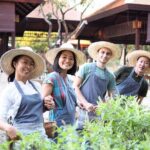
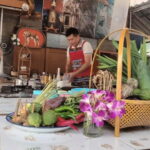
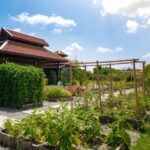
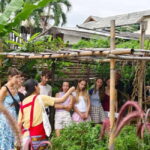
Before you cook, you start with herbs. You’ll begin under your guide by exploring an organic vegetable garden to collect fresh ingredients daily.
This matters because Thai cooking isn’t only about recipes. It’s about knowing which flavors lead, which ones balance, and how the same dish can taste different depending on the herbs you choose.
You’ll also learn how to prepare the core ingredient foundations for Thai cooking and the five basic flavors: sweet, sour, salty, bitter, and spicy. When you understand that framework, the dishes start to make sense instead of feeling like mystery food.
And you’re not stuck with only pre-measured ingredients. Ingredient selection from an on-site organic garden gives the class a “real” farm-to-table feel.


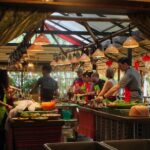

Cooking workshop: Pad Thai, Khao Soi, Tom Yum, curry, and mango sticky rice
This is a true cooking workshop with a local chef style of teaching. You’ll learn Thai cooking methods and then cook dishes you choose, guided through each step.
The classics you might make include Pad Thai, Khao Soi, Tom Yum Goong, Green Curry, and Mango Sticky Rice. That’s a strong lineup because it covers noodles, soups, curries, and dessert in one lesson.
You also get flexibility. The description notes dishes can be tailored to your culinary preferences with guidance from the experienced instructor. That usually means you’re not forced into the exact same menu no matter what you like.
Here’s what I’d pay attention to in the class: technique. Thai cooking often comes down to the order of ingredients, how you handle aromatics, and when you add sour or sweet elements. If you watch for that “why,” your future attempts at Thai food become much easier.
You’ll also get a recipe booklet to take home. For me, that turns the day from a one-off meal into something you can repeat.
Feeding time: Napier grass, sugarcane, and banana moments
After cooking and eating, the day swings back to the sanctuary.
You’ll receive a briefing on how elephants behave and how to interact with them. Then you’ll walk around the natural environment with the elephants and feed them items like Napier grass, sugarcane, and bananas.
What makes this part special is the “gentle giants” feel. The experience is designed for close, respectful contact, which keeps it peaceful rather than chaotic.
Also, plan for real elephant presence. If you’re the type who wants photos, make sure your phone is ready and charged. Elephant feeding often becomes a moment where you pause, look, and then realize the next animal is right in front of you.
River bathing: when the elephants choose the plan
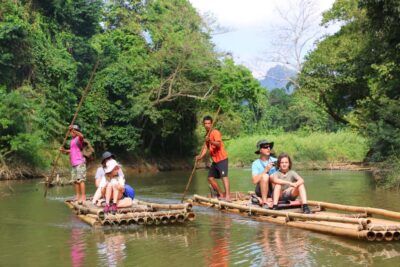
One of the most memorable parts is the chance to take elephants to the river, with swimming and bathing time that can include their family group.
You’ll be told clearly that the elephants choose whether to bathe. The tour notes you don’t force them, which means your schedule has some flexibility built in.
From a comfort standpoint, that’s exactly why you should bring the right gear. You can get wet, and the experience mentions you should bring items like beachwear and flip-flops.
It’s also why this isn’t the day trip for people who want everything timed to the minute. You’re working with animal behavior here, and that’s part of the authenticity.
Lunch and dinner: what you actually eat and why it matters
You’ll have a meal included as part of the experience: lunch on the morning session, dinner on the afternoon session.
The cooking portion includes the dishes you prepare, and the class is designed so you’re eating what you make, not just watching it happen. That’s the best kind of Thai cooking lesson because it forces you to practice flavors, not only memorizing steps.
There’s also an emphasis on ingredient quality. You’ll use cooking ingredients prepared for you, plus fruit for elephants as part of the feeding time.
Vegetarian and vegan options are available, which is important for a class where people may have dietary limits. If that applies to you, mention it when you book so your dishes match your needs.
Price and logistics: how $63 becomes real value
At $63 per person for a 9-hour day, the price works because the day is packed with more than one activity.
You’re paying for:
- Elephant sanctuary time with briefing and feeding interactions
- A guided Thai cooking workshop (with hands-on cooking and instruction)
- On-site organic garden ingredient gathering
- A meal included (lunch or dinner depending on session)
- A recipe booklet so you can recreate dishes later
- Insurance, drinking water, and fruit for elephants
The “hidden” value is that you’re learning two local systems at once. Elephant behavior and Thai cooking both follow routine and knowledge that locals take for granted. When you leave with a better understanding of both, the day feels more than entertainment.
Small group size also helps the value. If the group were larger, you’d likely get less time for questions. Here, the day stays interactive.
What to bring (and what not to) so you’re set for elephant day
The tour is clear about packing needs, and it’s worth listening.
Bring:
- Change of clothes (the tour notes towels and a change of clothes aren’t included)
- Camera
- Sunscreen, including biodegradable sunscreen
- Flip-flops
- Beachwear
- Cash
- Passport or ID card (copy accepted)
- Biodegradable insect repellent
Also think about comfort. River bathing and lots of outdoor walking can mean wet feet and sun on your skin, so plan to wear something that dries easily.
If you forget a towel or change of clothes, you’ll feel it. And if you forget sunscreen, the mountain sun can be strong.
Who should book this elephant sanctuary + cooking workshop
This tour suits you if you want a day that blends ethics-minded animal interaction with skills you’ll use again.
It’s a great fit for:
- Food lovers who want more than a tasting menu
- People who like hands-on learning with a real guide
- Travelers who care about welfare-first elephant care and want guidance on behavior
- Groups that want one day everyone can enjoy, from feeding elephants to cooking classics
It’s not a great fit if:
- You’re traveling with children under 5
- You’re over 70 (the tour states it isn’t suitable)
If you’re sensitive to animal behavior-driven schedule shifts, remember river bathing depends on the elephants, not a strict timeline.
Should you book this tour
Book it if you want one Chiang Mai day that feels meaningful and skill-building at the same time. The elephant part gives you close interaction in a natural setup with care and rules, and the Thai cooking workshop teaches you enough structure to cook classics like Pad Thai, Khao Soi, Tom Yum Goong, Green Curry, and Mango Sticky Rice again.
Skip or think twice if you dislike unpredictability. The tour openly notes that elephants choose whether to bathe in the river, so not every moment will run on a strict clock.
If you can pack for sun and getting wet, and you’re excited to cook, this is the kind of day trip you’ll remember long after Chiang Mai fades into your photo album.
FAQ
What’s the duration of the Chiang Mai elephant sanctuary and Thai cooking tour?
The tour runs for about 9 hours.
How much does the tour cost?
The price is listed as $63 per person.
Is this tour a small group?
Yes. The group is limited to 10 participants.
Do I need hotel pickup?
Pickup is optional. If selected, hotel pickup and drop-off are available in Chiang Mai town.
What’s included with the cooking class?
You’ll have an English-speaking guide, ingredients for cooking, and a recipe booklet. Vegetarian and vegan options are available, and you’ll also enjoy the meal you cook (lunch or dinner depending on the session).
Do both sessions include a market visit?
No. The morning session includes a market visit, while the afternoon/evening session does not.
What elephant activities are included?
You’ll get a briefing on elephant habitat and behavior, feed the elephants (Napier grass, sugarcane, and bananas), and walk in the natural environment with them. The river bathing part happens if the elephants choose to bathe, so activities may shift.
What should I bring for comfort during the day?
Bring change of clothes, sunscreen (preferably biodegradable), flip-flops, beachwear, and biodegradable insect repellent. A camera is also useful.
Are towels and a change of clothes provided?
No. Towels and a change of clothes are not included, so you’ll want to bring them yourself.