REVIEW · CHIANG MAI
Chiang Mai: 3 Hour Old City and Temples Guided Walking Tour
Book on GetYourGuide →Operated by TripGuru Thailand · Bookable on GetYourGuide
Three hours in Chiang Mai’s temple core can feel fast.
This guided walking tour is a focused way to understand Old City history and Buddhism without burning a whole day, starting at Wat Chedi Luang and ending at Wat Phra Singh Woramahawihan. You’ll also get a GSTC-certified low-impact approach that includes carbon-offset thinking, so your sightseeing stays mindful.
I really like the way this tour balances big sights with small, specific details: Wat Chedi Luang’s massive stupa contrasts nicely with the finely carved teak wood at Wat Phan Tao, and then you finish at the showpiece grounds of Wat Phra Singh. Another big plus is the local guide time spent answering questions and connecting the temples to Lanna life and Thai belief systems, so the visit feels like more than photos. One consideration: the advertised price doesn’t include temple entry fees and the sites require conservative dress, so plan for extra baht on arrival.
In This Review
- Key Things You’ll Notice on This Chiang Mai Old City Walk
- Starting at Wat Chedi Luang: The Best Place to Get Oriented
- Wat Chedi Luang: The Largest Stupa and the Lanna-Style Close-Ups
- Wat Phan Tao and Wat Phan Lao: Small Temple, Big Detail
- Wat Phra Singh: Mosaic Sanctuary, Lion Buddha, and Gilded Pagodas
- How the Guide Changes What You See
- Price and Value: What $16 Really Buys in Chiang Mai
- Walking Comfort, Dress Rules, and What to Pack
- Sustainability: GSTC Certification and Carbon Offsets
- Who This Tour Is Best For (and Who Should Skip It)
- Final Call: Should You Book This Chiang Mai Old City Temples Walk?
- FAQ
- How long is the Chiang Mai old city and temples walking tour?
- Where does the tour start?
- Is hotel pickup included?
- What is included in the price?
- Are temple entrance fees included?
- Is the tour guide language English?
- What should I wear for temple visits?
- What should I bring with me?
- What level of walking fitness is expected?
- Who should not book this tour?
Key Things You’ll Notice on This Chiang Mai Old City Walk
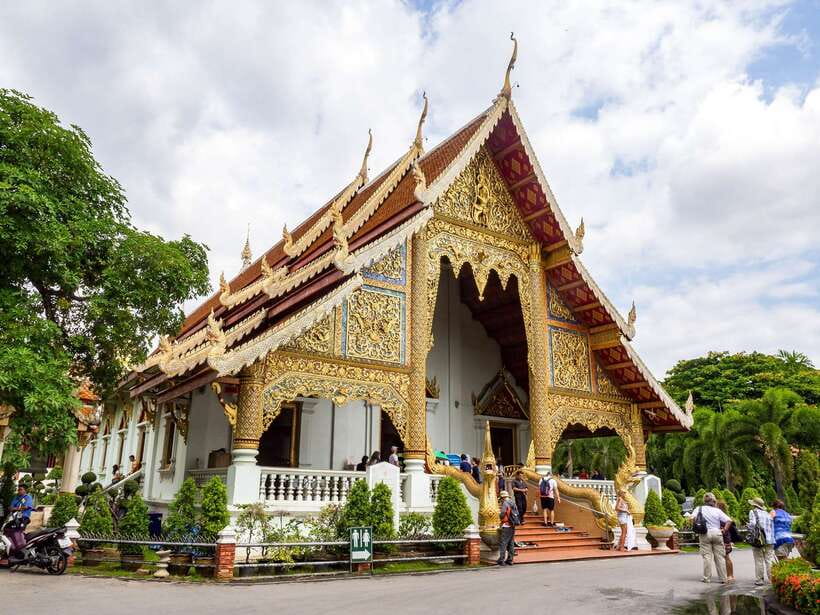
- Wat Chedi Luang’s largest stupa in Chiang Mai and up-close Lanna-style details in the compound
- Wat Phan Tao’s teak wood carvings, plus the temple’s former role as a throne hall for King Mahotara Prateth
- Wat Phra Singh’s mosaic sanctuary, Lion Buddha statue, and gilded pagodas, with lots of photo angles
- A GSTC-certified low-impact tour format that includes carbon-offset action
- English-speaking local guides who often keep things clear and lively, with names like Nana, TomTam, Boon, and Popcorn showing up in recent groups
Starting at Wat Chedi Luang: The Best Place to Get Oriented
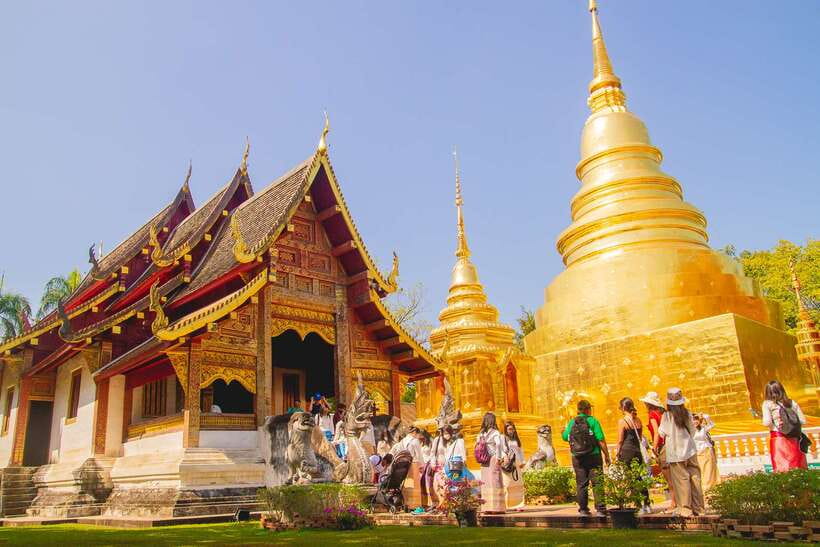
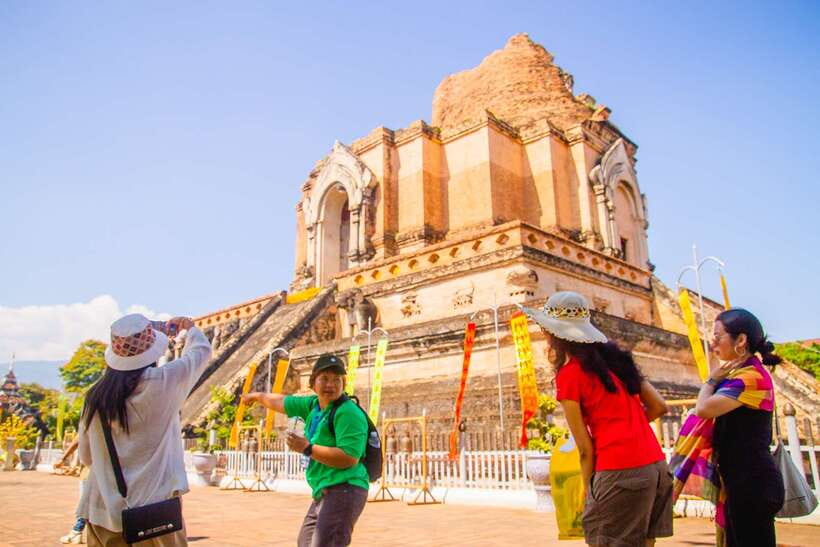
Your tour begins at the entrance of Wat Chedi Luang, where your guide holds a TripGuru sign. That matters more than it sounds. Starting at the site itself helps you understand what you’re looking at right away, instead of drifting in the Old City with only guidebooks for company.
From the start, you’ll move at a comfortable pace for temple hopping, with time to actually read details and ask questions. The tour runs about 3 hours total, and you’ll spend roughly two hours in the temples while the rest is for walking between stops and getting context.
You can also read our reviews of more tours and experiences in Chiang Mai.


Wat Chedi Luang: The Largest Stupa and the Lanna-Style Close-Ups
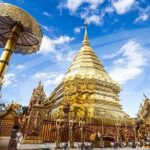
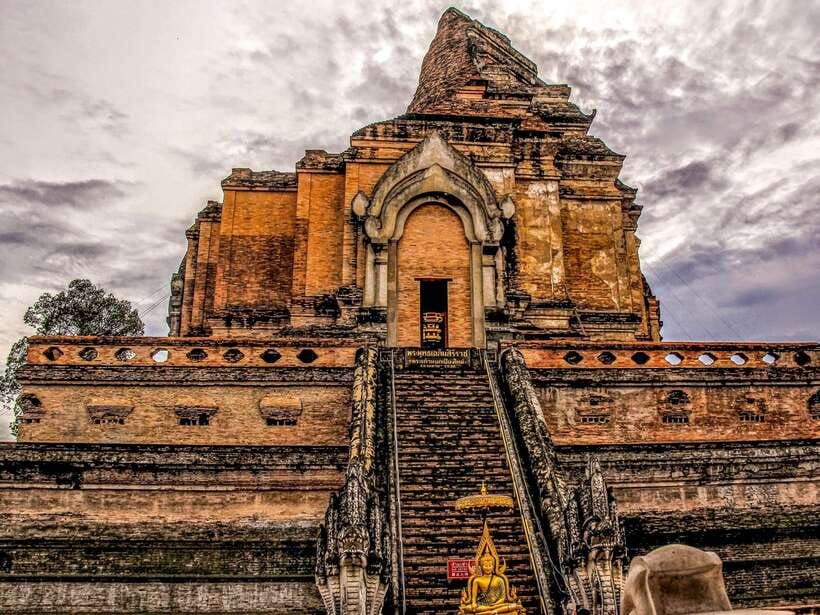
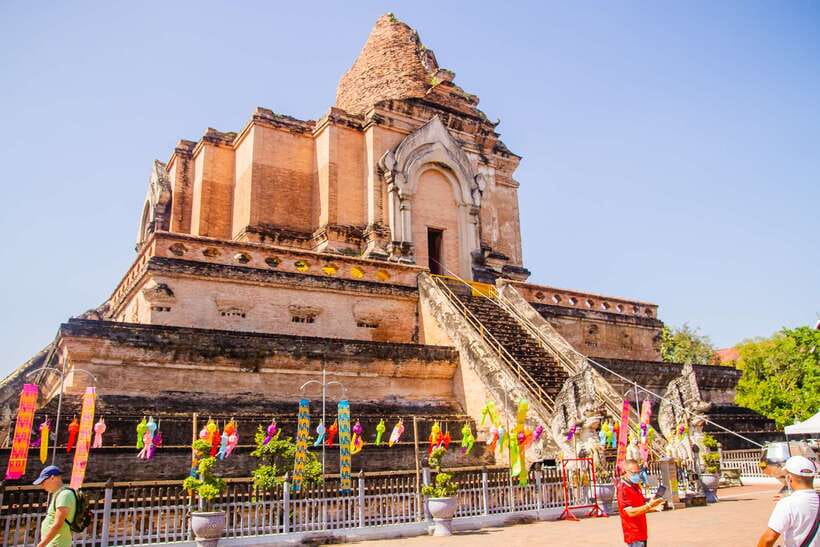
Wat Chedi Luang is your first real anchor. Built between the 14th and 15th centuries, it’s known for having the largest stupa in Chiang Mai. Even if you’ve seen photos, being on the grounds changes the scale. You can also spot design choices that feel unmistakably Lanna, from structure proportions to decorative rhythm.
What I like here is that you don’t just glance and move on. You’ll spend about an hour touring the compound with your guide, which gives you enough time to slow down and look at carvings and layout instead of rushing straight to the next photo spot.
Practical note: entrance fee is not included. Wat Chedi Luang’s entry is listed as 50 THB, so have some cash ready. Also, expect the typical temple rhythm of standing, turning, and sometimes removing shoes depending on where you’re allowed—bring footwear you can handle quickly.
Wat Phan Tao and Wat Phan Lao: Small Temple, Big Detail
After the grandeur of Wat Chedi Luang, the middle stretch is where the tour becomes more interesting in a nerdy-good way. You get contrast. Wat Phan Tao may feel smaller in size, but it makes up for it with craft.
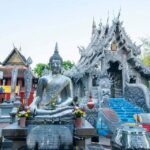
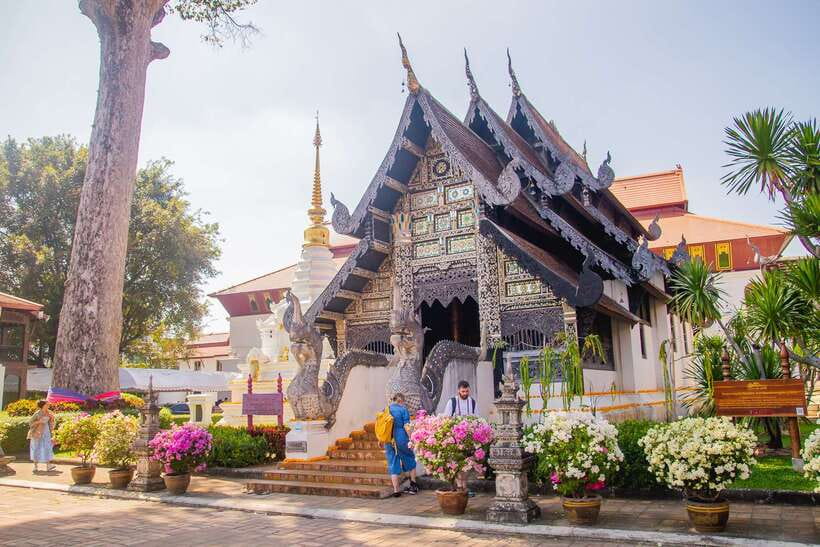
At Wat Phan Tao, look closely at the intricately carved teak wood facades. This isn’t decorative “for the sake of it.” The temple was once a throne hall for King Mahotara Prateth, later becoming a dedicated house of prayer. Your guide’s explanations help you see how the building’s purpose shifted, which changes how you interpret the woodwork and space.
Then there’s Wat Phan Lao, described as humble. That’s a good thing to include in a short tour. Big, dramatic temples can make everything blur together, so a quieter stop helps you reset your eyes and attention.
Entrance fees add up here too: Wat Phan Tao is 20 THB (not included). This is part of the math behind the deal: you’re paying a low tour price for guided time, and then you cover the temple entries yourself.
Wat Phra Singh: Mosaic Sanctuary, Lion Buddha, and Gilded Pagodas
The final stop is Wat Phra Singh, and it’s a fitting climax. This 14th-century temple is one of Chiang Mai’s finest, and it’s built for slow wandering even when your schedule is tight.
You’ll get a feel for the temple grounds, then focus on the sanctuary area. The highlights you should look for are:
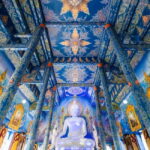
- a mosaic-inlaid sanctuary
- a large Lion Buddha statue
- gilded pagodas
If you like details, you’ll have plenty to work through. If you just like great photos, you’ll still win—there are multiple vantage points where the gold, stone, and patterns create strong compositions.
You’ll also end not just at the temple area but at Wat Phra Singh Woramahawihan, which keeps the flow tidy. As with the other stops, entrance isn’t included (the listed fee for Wat Phra Singh is 50 THB). Bring cash, and don’t plan on buying anything expensive right after the tour—you may still be mid-exploration in the Old City.
How the Guide Changes What You See
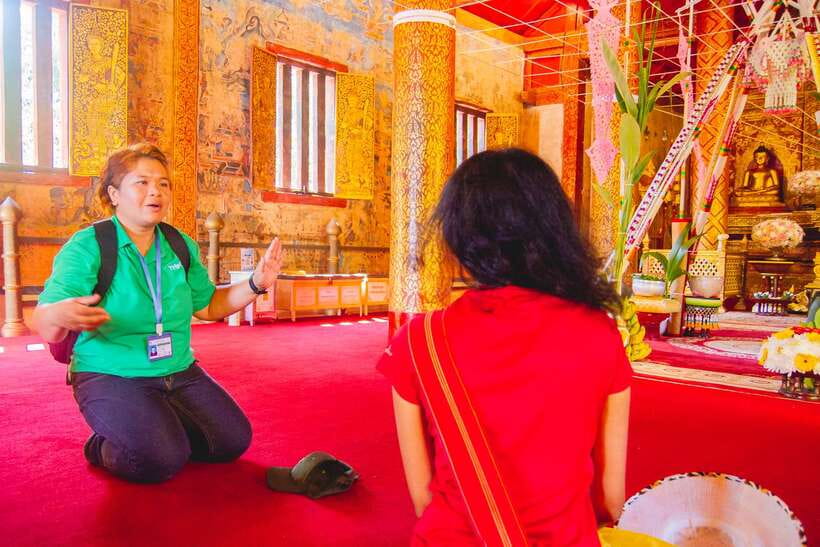
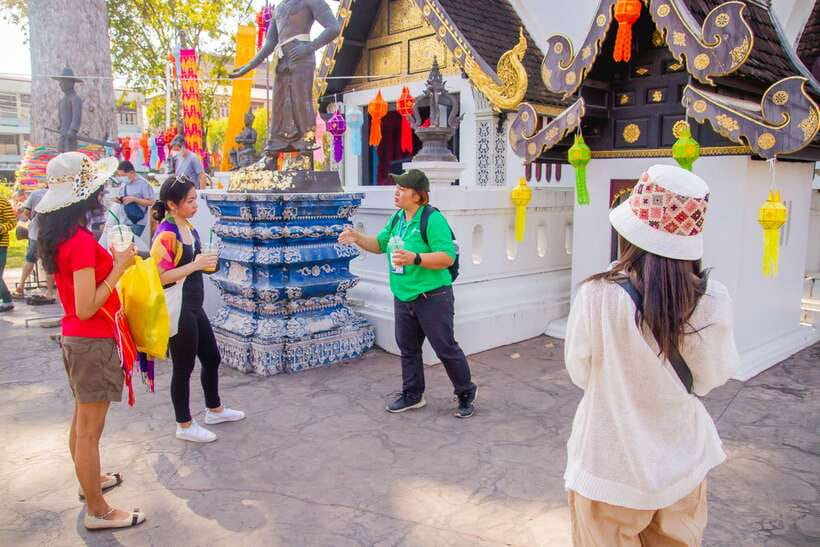
A walking tour lives or dies by the guide, and this one seems to have a real talent for explaining temple life without making it feel like a lecture.
Across recent groups, guides were praised for clear English, strong history and Buddhism context, and an ability to connect temple features to everyday belief in Thailand. Names that came up often include Nana, TomTam, Boon, Star, and Popcorn. One group even noted a guide teaching meditation, which is the kind of extra that turns a temple walk into a memory, not just a checklist.
Here’s what that means for you: when the guide explains why a stupa looks the way it does, or what certain religious symbols represent, you stop seeing “random decor.” Instead, you start recognizing a system—architecture as meaning, and ceremony as a living practice.
It’s also worth knowing the guide style can be flexible. One review mentioned a situation where the guide helped a participant get back via tuk-tuk due to a spinal issue. That doesn’t mean this tour is built for mobility limits (it isn’t), but it does suggest the guides pay attention when people struggle.





Price and Value: What $16 Really Buys in Chiang Mai
The tour price is $16 per person for about 3 hours of guided walking. That’s a solid value in Chiang Mai, especially because you’re not just visiting one temple—you’re hitting three of the most important names in the Old City area.
The main thing to budget for is temple entries. Based on the listed fees, you should expect to add:
- Wat Chedi Luang: 50 THB
- Wat Phan Tao: 20 THB
- Wat Phra Singh: 50 THB
That’s 120 THB total in entrance fees across the main paid sites. If you compare that to the cost of hiring private transport plus separate guide time, the math starts looking even better. You’re paying for a guide who can help you interpret what you’re seeing, and you’re covering the entry fees directly for each site.
Food and drinks are not included, so plan to handle snacks on your own. For many people, the best move is to pair this tour with a relaxed lunch afterward in the Old City.
Walking Comfort, Dress Rules, and What to Pack
This is a moderate walking experience, and the tour notes that moderate fitness levels are recommended. Some parts can involve uneven temple surfaces and lots of standing around looking. On top of that, Chiang Mai heat can sneak up even when the day feels mild.
The packing list is specific for a reason:
- comfortable shoes (and be ready for removals)
- sunglasses and hat
- sunscreen
- insect repellent
- camera
- cash
- a scarf
The dress code is strict at the temple level. You’ll need clothing that doesn’t show shoulders, underarm, back, or knees. Even if your casual travel clothes look fine outside, save yourself the stress and pack a light layer that covers what you need. A scarf can be a quick fix in a pinch.
One very practical tip from recent groups: wear shoes that are easy to take off. Slip-on styles or sandals can make the shoe-removal rhythm faster and more comfortable. If you’re the socks type, bring them; you’ll be glad if you end up taking shoes off more often than you expect.
Sustainability: GSTC Certification and Carbon Offsets
This tour is described as GSTC-certified and built around low-impact exploration. The important part for you is that the tour takes carbon-offsetting into account for each tour, with the goal of reducing environmental impact.
You’re still walking through a real part of a living city—so think of this as a mindset of responsible touring, not a magic shield. But it’s a meaningful add-on, especially when you’re spending your day visiting cultural sites that depend on careful stewardship.
Who This Tour Is Best For (and Who Should Skip It)
This is a good fit if you want:
- a guided overview of Chiang Mai’s Old City temples
- clear explanations of Buddhism and Thai beliefs
- a short, efficient walk that doesn’t require full-day planning
It’s also a smart choice for your first visit. Wat Chedi Luang helps you understand the city’s temple gravity. Wat Phan Tao teaches you to appreciate craftsmanship, not just scale. Wat Phra Singh gives you the “wow” ending that’s easy to remember later.
But it’s not suitable for:
- pregnant women
- people with mobility impairments
- people with heart problems
- people with respiratory issues
If any of those apply, it’s safer to choose a different format with less walking and fewer temple-entry constraints.
Final Call: Should You Book This Chiang Mai Old City Temples Walk?
I’d book this tour if you like temples but also care about understanding them. The guided format helps you connect temple architecture to Lanna-era history and Buddhism, and the temple mix gives you variety in a short time.
Before you commit, check three practical things:
- You can follow the dress code (covered shoulders and knees).
- You’re comfortable with about 3 hours of walking and standing.
- You’re ready to cover temple entrance fees in cash on the day.
If you want a fast, meaningful way to see Chiang Mai’s most important Old City temples in one guided loop, this is a strong value pick.
FAQ
How long is the Chiang Mai old city and temples walking tour?
The tour lasts 3 hours.
Where does the tour start?
It starts at the entrance of Wat Chedi Luang. Your guide will be holding a TripGuru sign.
Is hotel pickup included?
No, hotel pickup and drop-off are not included.
What is included in the price?
The price includes a local guide and the walking tour.
Are temple entrance fees included?
No. Entrance fees are listed separately: Wat Chedi Luang (50 THB), Wat Phan Tao (20 THB), and Wat Phra Singh (50 THB).
Is the tour guide language English?
Yes, the tour is run with an English-speaking guide.
What should I wear for temple visits?
You’ll need modest clothing that does not reveal shoulders, underarm, back, or knees. A scarf can help.
What should I bring with me?
Bring comfortable shoes, sunglasses, a hat, a camera, sunscreen, insect repellent, cash, and a scarf.
What level of walking fitness is expected?
Moderate fitness levels are recommended.
Who should not book this tour?
It’s not suitable for pregnant women, people with mobility impairments, people with heart problems, or people with respiratory issues.