REVIEW · BANGKOK
Bangkok: Elephant Sanctuary & Erawan Waterfall Tour
Book on GetYourGuide →Operated by TripGuru Thailand · Bookable on GetYourGuide
Mud, mahouts, and seven tiers. This Bangkok day trip pairs ElephantWorld care sessions with a proper mud bath ritual, guided by the sanctuary team and backed by a GSTC-certified, carbon-offset approach. Drivers like Siri help keep the day calm, with clear logistics and smart timing.
I love how Erawan National Park turns the afternoon into real nature time instead of just a photo stop. You’ll hike through forest areas and reach the emerald pools, with enough flexibility to swim or linger depending on your energy. It feels like a day you control, not a checklist you suffer through.
The only real drawback is the full-day pace: plan for a long drive from Bangkok and lots of steps, so hitting all seven waterfall tiers may be tough.
In This Review
- Key highlights at a glance
- Bangkok Pickup To Kanchanaburi: The Day Starts Early
- ElephantsWorld Sanctuary: Food Prep, Mud Baths, and Mahout Care
- Lunch at the Sanctuary: Real Thai Food, Real Break Time
- Erawan National Park Hike: Caves, Steps, and Choosing Your Tier
- Erawan Waterfall Swims: Life Jackets, Emerald Pools, and Fish
- Tour Pace and Group Setup: Driver-First, Sanctuary-Guided
- Sustainable Touches and GSTC-Certified Details
- Price and Value: Is $181 Worth a 12-Hour Day?
- Should You Book This Bangkok Elephant Sanctuary & Erawan Tour?
- FAQ
- How long is the Bangkok Elephant Sanctuary and Erawan Waterfall tour?
- Where does pickup happen?
- Is lunch included?
- Is there a tour guide included?
- What is the transportation like?
- Is this tour suitable for wheelchair users?
- Is the tour refundable if I cancel?
- What should I bring for the elephant activities and waterfall time?
Key highlights at a glance
- ElephantWorld hands-on care: you prepare food, feed, do a mud bath, and rinse/shower with the elephants
- Mahout-led elephant sessions: each mahout cares for a single elephant, with staff guiding respectful interaction
- Erawan National Park hike: caves, forest paths, and tier-by-tier access to the falls
- Pick your swimming tier: you can choose your stop level instead of forcing the whole route
- Smart extras for the climb: golf cart access for parts of the hike, plus tips like life jacket rental for swimming
Bangkok Pickup To Kanchanaburi: The Day Starts Early
This is a long day, and that is exactly why it feels like a real adventure. You leave Bangkok very early (many departures run around 6 AM in practice), then you head west toward Kanchanaburi Province for the elephant sanctuary. If mornings are not your thing, treat it like a training day: hydrate, eat something simple before pickup, and plan to nap on the ride.
The good news: logistics are handled well. Your driver speaks English, uses an air-conditioned vehicle, and confirms your pickup time by email the evening before. On the morning, you meet them in your hotel lobby with a TripGuru sign, and you should be ready about 10 minutes early. If you are staying outside the pickup network, you might need to adjust—pickup is only from hotels or registered accommodations, not from roadside points or shopping malls.
One more practical point: the drive time is real. Expect a chunk of hours on the road each way, and keep that in mind when you plan your schedule back in Bangkok. A tour like this works best when you give yourself a full day cushion afterward.
You can also read our reviews of more tours and experiences in Bangkok.


ElephantsWorld Sanctuary: Food Prep, Mud Baths, and Mahout Care
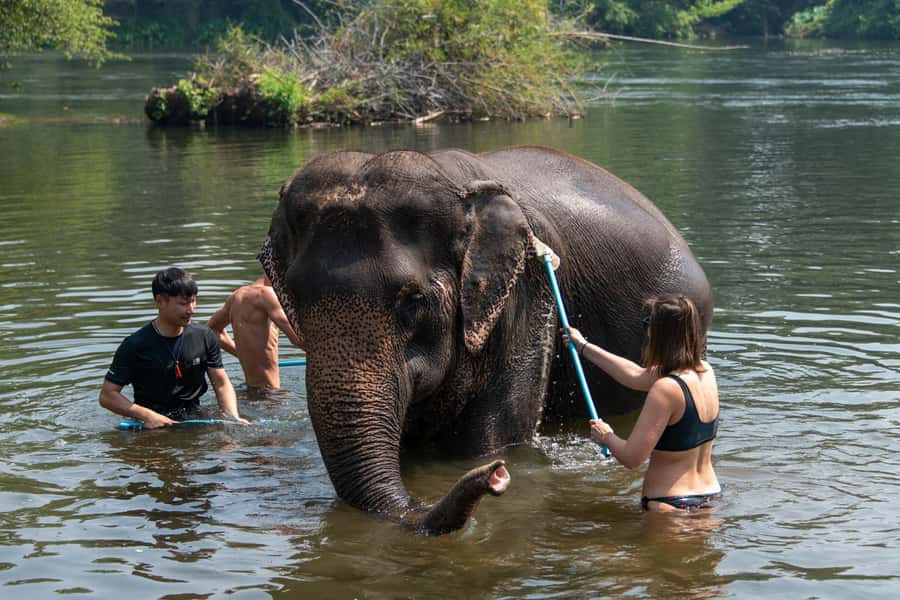
This is the heart of the trip, and it is what most people talk about later. At ElephantWorld, you get an intro and safety briefing before you start the elephant activities. Then you prepare food and get into the rhythm of feeding—right in the elephants’ space, with the sanctuary team guiding the safest, most respectful way to interact.
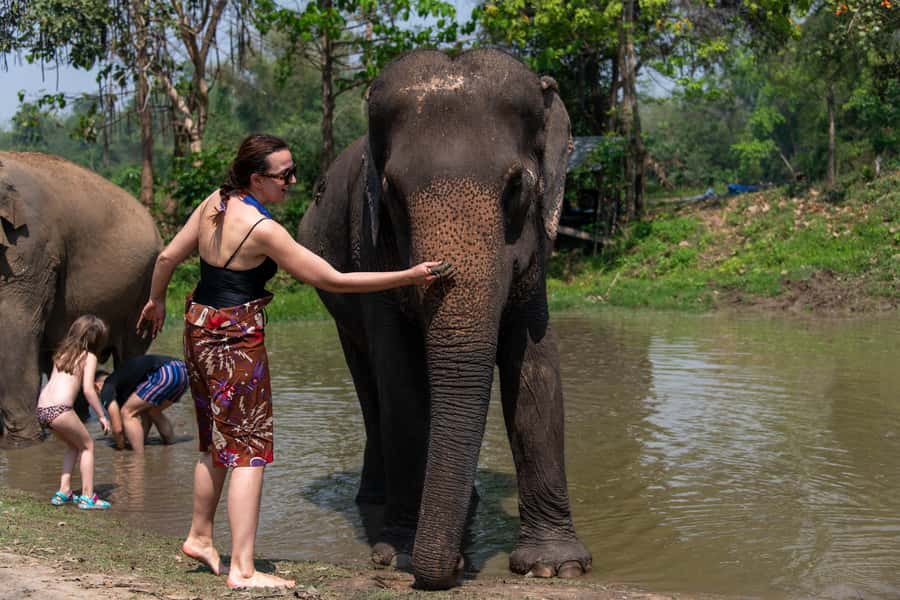
What I like most is how the experience is framed around care rather than entertainment. In one real example, each mahout takes care of one elephant, and the mahouts are there to explain behavior and routine. You can see healthy, well-kept animals up close, and you get the chance to feed them fruits/grass and participate in the mud bath portion of the day.
Yes, it gets messy. A mud bath is part of the activity flow, followed by a rinse in the river. After that, there is time to shower. That is why swimwear and a change of clothes are not optional. If you forget them, you will either suffer in damp clothes or buy time-killing replacements.
Also, do not come expecting a “ride” experience. The focus here is on hands-on interaction—feeding, bathing, and learning how these animals live and how their caretakers manage daily care.
Lunch at the Sanctuary: Real Thai Food, Real Break Time
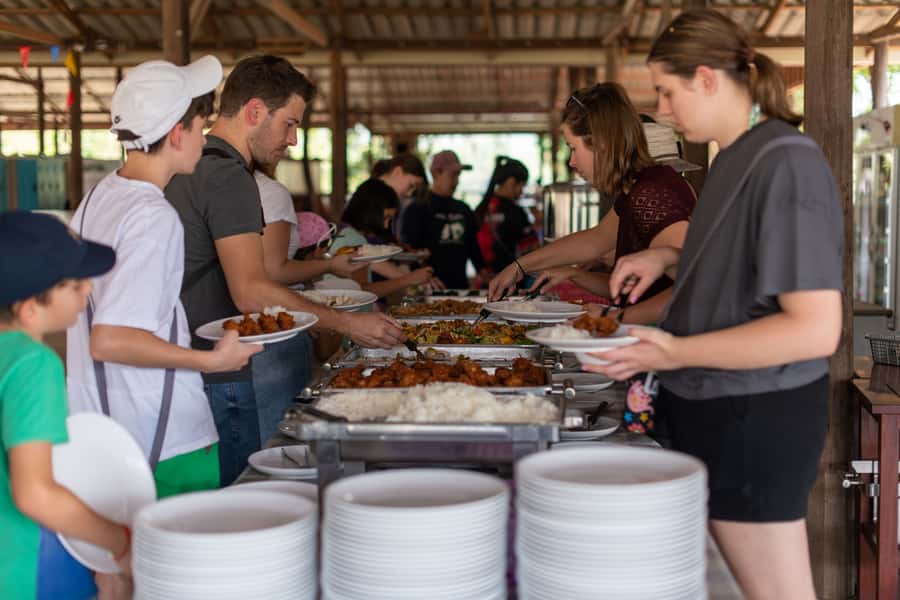
Right after the elephant activities, you get a buffet lunch, and it is a meaningful breather. You are coming off heat, movement, and splashing, so this break matters more than you might think. In practice, the lunch is set up so you can eat before the next big block of the day.
A few people mentioned the Thai food was surprisingly good—often better than they expected for a day trip. You should expect a buffet-style meal with Thai dishes (not a fine-dining service), but with enough variety to satisfy picky eaters and hungry hikers.
This is also the moment to reset your body for Erawan. Dry off as much as you can, put on sunscreen, and pack your hike essentials. If you are bringing an action camera, this is the time to check batteries and storage—later you will be in forest shade, then bright pool reflections, and it is easy to misplace small things.
Finally: if you are prone to motion sickness, this is also when you might want to take your preferred remedy before the drive to the national park.
Erawan National Park Hike: Caves, Steps, and Choosing Your Tier
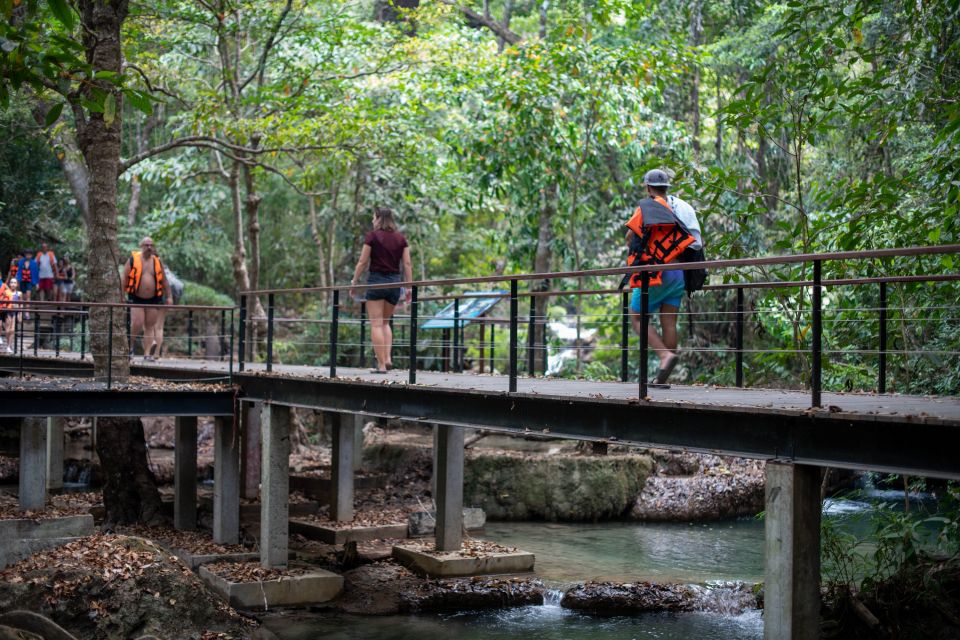
After lunch, you head into Erawan National Park. The route includes forest paths and caves before you arrive at the waterfall area. This part is not “walk-and-stroll” all the way—there are stairs and uneven sections, and it can feel steeper than the photos make it look.
Here is the key decision: the waterfall has seven tiers, but you do not need to force all of them in one visit. One person arrived at the falls and reached Level 2 before deciding to stop there because time was tight. Another mentioned the climb to Level 7 is worth it—but you need the stamina and time budget. If you only have a few hours, plan for a single tier zone and enjoy the day instead of chasing numbers.
If you want a cheat code for pacing, you can. Some visitors used a golf cart for portions of the route (for example, around 20 BHT one way to help with access around Level 1 and the entrance area). That does not turn it into a flat hike, but it can save your legs for the pool time when you get there.
And bring realistic expectations about crowds. Erawan is famous, so you will see other people at popular tiers. The good strategy is to take short breaks as you move—stop for views, then move again. This keeps the climb from feeling endless.
Erawan Waterfall Swims: Life Jackets, Emerald Pools, and Fish
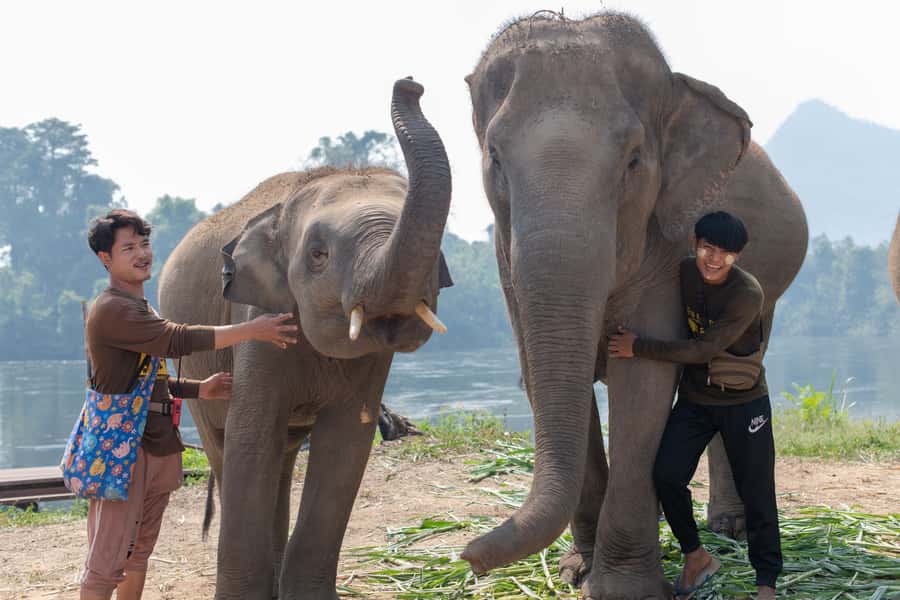
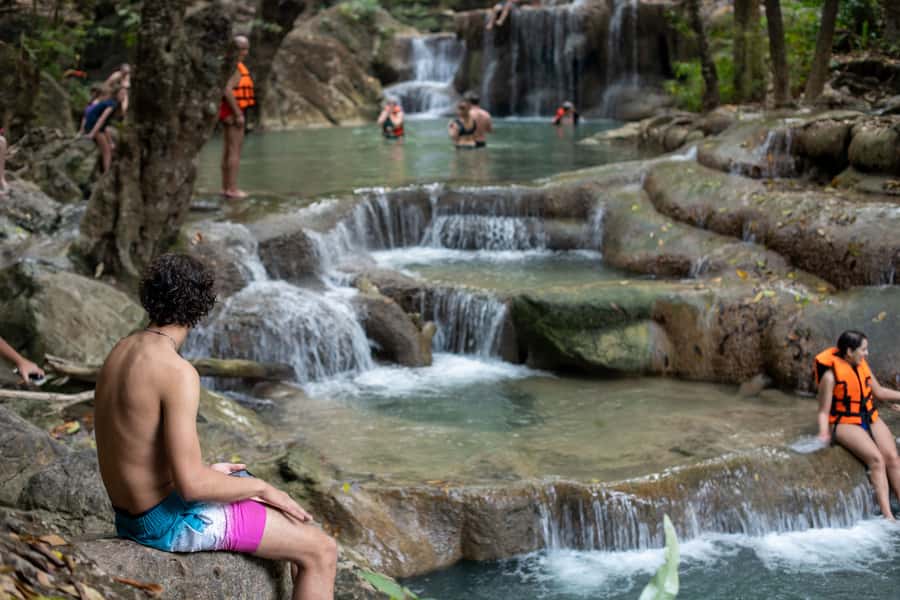
Once you reach the waterfall area, the day shifts into swim-and-relax mode. People describe the pools as emerald-toned, with multiple stopping points that feel different from each other. Some riders only made it up to a lower tier due to heat and time, then swam there—and still walked away happy because the water break was the whole point.
If you plan to swim, plan for safety rules. One tip that came up clearly: you may need to rent a life jacket if you want to swim in the waterfall pools. Do not assume you can just jump in and go. Check at the spot, then decide.
Also: you might encounter fish in the river pools. Several people noted fish that nip at you, which can be either amusing or annoying depending on your tolerance. One person joked it can feel like skin-nibbling therapy. If that thought makes you squeamish, keep your time in the water short and focus on wading or swimming with a calm rhythm.
Finally, there is a bonus style of exploring that not everyone hears about. One review mentioned you can swim behind the curtain of water and reach a hidden cave area. That is the kind of moment that makes tier-hopping worth it—just only attempt it if the area is open and conditions look safe.






Tour Pace and Group Setup: Driver-First, Sanctuary-Guided
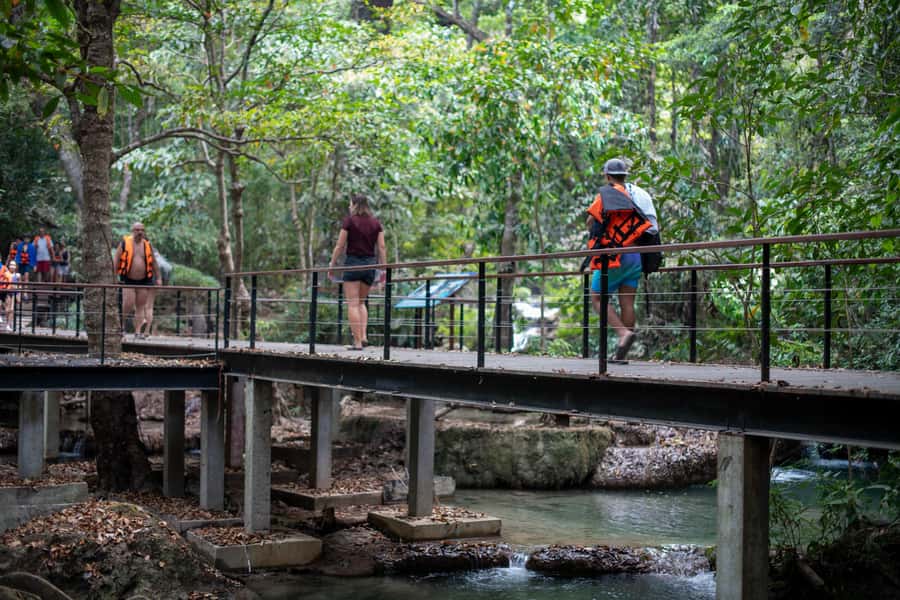
This tour runs on a driver-first model. You have a professional driver handling transport and timing, but there is no separate tour guide included for the whole day. The sanctuary experience itself is guided once you arrive, and the mahouts/caretakers are the ones directing elephant interaction safely.
That setup matters because it changes how you should think about questions. During the drive, you ask your driver about routes, timing, and practical stops. At the sanctuary, you follow staff guidance for elephant care procedures. It is a good division of roles—less mixed messaging, less confusion, and more time doing the real activities.
One reason the day seems to work for so many people: drivers are consistently described as organized and caring. Names that came up often include Siri, Krit, Athit, Artit, Songsak, and others. People also praised thoughtful touches like water waiting after the hike and towels at the end. Even small things like that help because you are coming back from sun and stairs.
There is also a communication benefit. Drivers tended to explain what happens next and check in on rest stops. One person noted the driver asked permission before restroom breaks, which tells you the day flow is controlled, not chaotic.
If you like a laid-back structure—some guidance, but still room to move at your pace—this format fits. If you want a full commentary-style tour guide everywhere, you might find yourself relying more on driver Q&A and sanctuary staff at each stop.
Sustainable Touches and GSTC-Certified Details
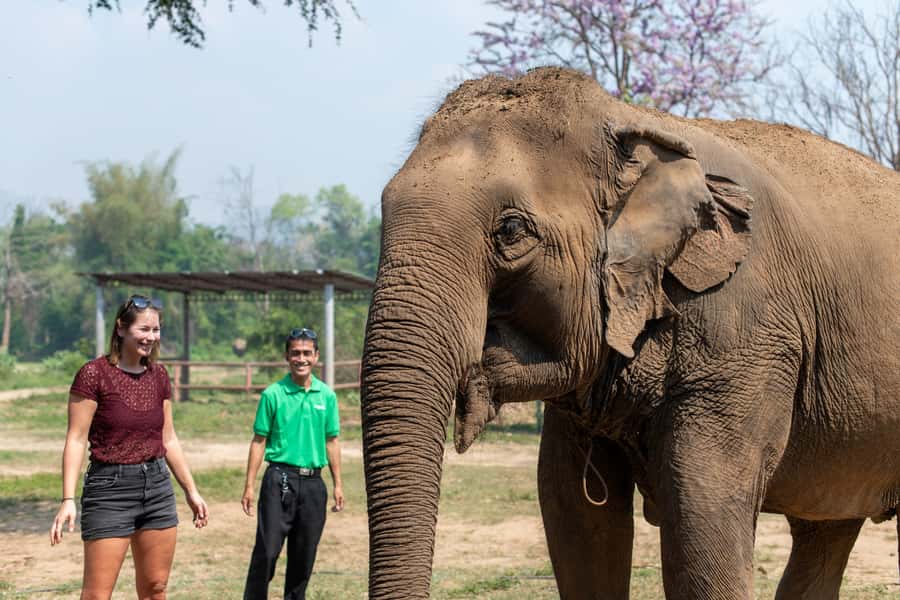
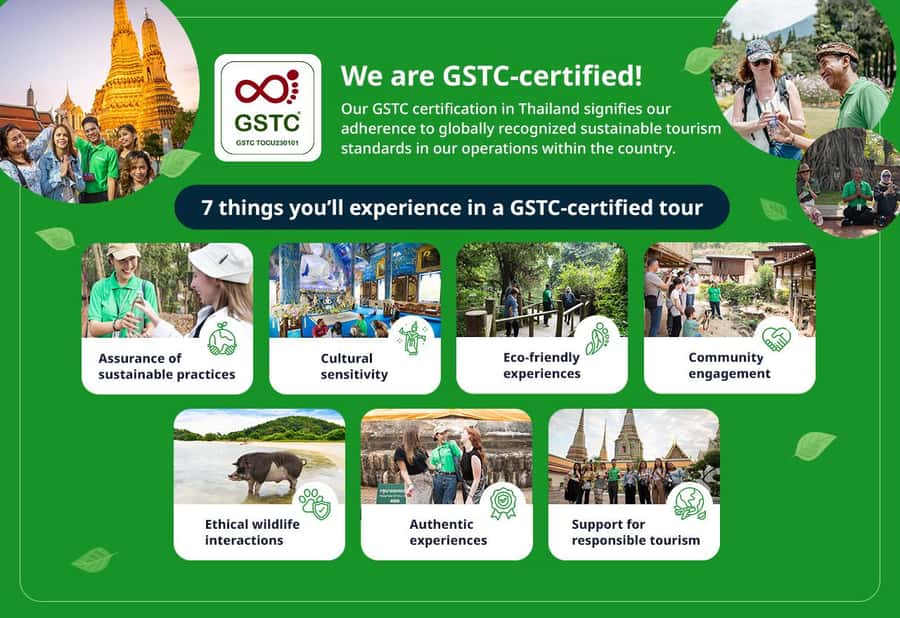
This is not just an “ethical” marketing line—it includes practical sustainability choices. The tour is described as GSTC-certified, and it includes carbon emissions offset credits. You also get water in a glass bottle, which sounds tiny until you remember how often tourists end up with plastic for the entire day.
I like these details because they are easy to notice and easy to accept. You are already spending the day in conservation-adjacent spaces; it helps when the trip itself follows a “do less harm” mindset rather than just asking you to feel good.
One more angle: offset credits do not replace responsible on-the-ground practices, but they do show the operator is treating emissions as part of the planning equation. In a day trip that involves a long drive out of Bangkok, that planning matters.
So, if you want a day where the elephant interaction is central and the rest of the trip includes sustainability steps you can actually see—glass bottle water, emissions credits, and GSTC positioning—this tour checks that box.
Price and Value: Is $181 Worth a 12-Hour Day?
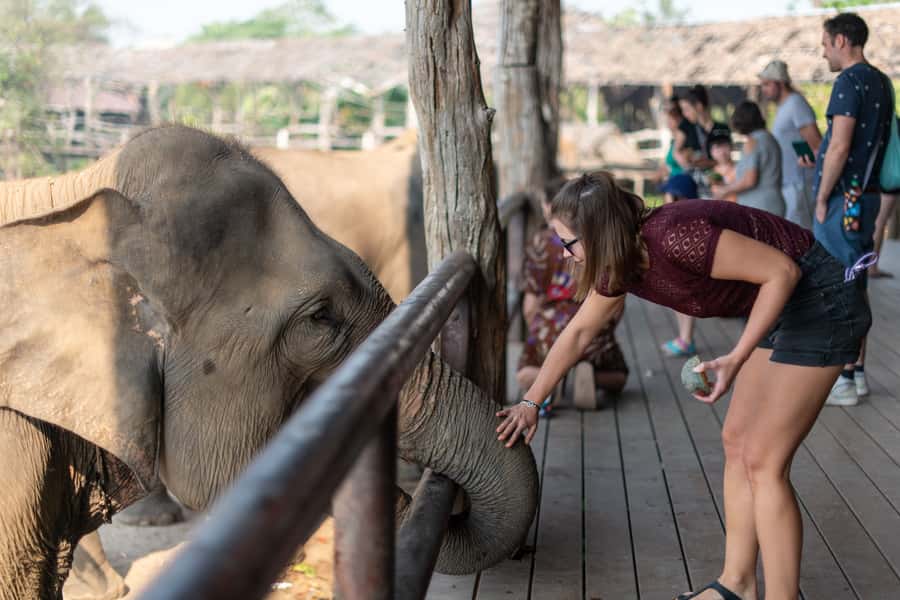
At about $181 per person, this is not a budget excursion. But in context, it includes a lot: hotel pickup/drop-off when selected, transport in an air-conditioned vehicle, Erawan National Park entrance, lunch, the half-day ElephantWorld visit, a glass bottle of drinking water, and carbon offset credits.
Most of the cost goes toward the two biggest drivers of value: the elephants experience and the long-distance logistics. The sanctuary segment includes structured activities (food prep, feeding, mud bath, river rinse, and shower time), and those are labor- and resource-intensive. The national park part adds entrance fees and an active hike experience with access to multiple tiers and pools.
Now the honest drawback: because it is a 12-hour day, it is best value when you have the energy to enjoy both halves. One solo traveler noted it can feel pricey when you are traveling by yourself. If you are going as a couple or small group, the shared logistics and comfort usually feel more worth it.
Who this tour suits best:
- Active couples and families who want one major day of elephants plus a waterfall hike
- People who want a hands-on elephant day without focusing on riding
- Travelers who prefer a driver running the logistics so you can focus on the experience
Who should reconsider:
- Anyone who struggles with stairs and long hikes (Erawan has serious steps)
- Wheelchair users, since the tour is not suitable for wheelchair access
- People who hate early mornings or want a relaxed, short day
Should You Book This Bangkok Elephant Sanctuary & Erawan Tour?
If you want a memorable Thailand day that combines elephant care interactions with a famous seven-tier waterfall hike, this is a strong choice. The elephant portion has the kind of structure that keeps it safe and meaningful: briefings, guided interaction, mud bath time, and a proper rinse. And the Erawan side gives you options—swim where you can, climb where you want, and stop without guilt.
Book it if your plan includes an early start and you are okay with a full-day schedule. If your dream is only the easiest waterfall stroll, or you cannot manage steps, you might regret the timing and uphill sections.
FAQ
How long is the Bangkok Elephant Sanctuary and Erawan Waterfall tour?
The duration is 12 hours.
Where does pickup happen?
Pickup services are offered only from hotels or registered accommodations. You will meet your driver in the hotel lobby, and the team emails you the evening before with the pickup time and meeting point.
Is lunch included?
Yes. Lunch is included as part of the day.
Is there a tour guide included?
No tour guide is included. A professional driver is provided, and the sanctuary activities have guidance on-site.
What is the transportation like?
You travel by an air-conditioned vehicle with a professional driver. The driver provides English language support.
Is this tour suitable for wheelchair users?
No. It is not suitable for wheelchair users.
Is the tour refundable if I cancel?
Yes. You can cancel up to 24 hours in advance for a full refund.
What should I bring for the elephant activities and waterfall time?
Bring comfortable shoes, sunglasses and sunscreen, a hat, insect repellent, swimwear, and a change of clothes with a towel. A camera can help, and cash may be useful.