REVIEW · BANGKOK
Bangkok: 2-Day River Kwai Trip with Floating Hotel and Meals
Book on GetYourGuide →Operated by Bigcountry Experience Co.,Ltd. · Bookable on GetYourGuide
Two days. One unforgettable river. This trip turns WW2 history into something you can really feel, then cools it down with a floating raft hotel on the River Kwai. I like how the itinerary doesn’t just point at famous places. It gives you the meaning behind them—then hands you a peaceful evening to process it all.
I love the way the day-to-day pacing builds. You start with the Thailand–Burma Railway story and the Allied War Cemetery, then move to the bridge and river scenery, and finally end at the rafts with Mon culture by night. One possible drawback: the schedule is packed, and Hellfire Pass is often hot, so you’ll want water, shade, and a calm attitude about moving briskly between stops.
What keeps it from feeling rushed is the English-speaking guide—and, when you get someone like Pat, the Mon perspective adds a human layer you won’t find in a guidebook. The Mon dance at the rafts is short (around 45 minutes), but it lands, because you’ve learned a bit about the community first.
In This Review
- Key highlights you’ll care about
- From Bangkok to Kanchanaburi: more than just a day trip
- Thailand–Burma Railway Centre: the story first, then the weight
- The Bridge over the River Kwai (and the river ride that keeps it human)
- River Kwai Jungle Rafts: bamboo floating hotel reality (and why it works)
- Hellfire Pass Memorial: where the heat meets the history
- Mon village + jungle trek: the culture part that actually feels lived-in
- The Death Railway train ride: historic track, real limits on photos
- Dinner, breakfast, and the practical rhythm of meals
- What to pack (and what to expect when the day turns hot)
- Price and value: where the $241 goes, and what you’re really paying for
- Who this River Kwai trip fits best (and who should skip it)
- Should you book this 2-day River Kwai trip?
- FAQ
- What does the tour price include?
- What meals are provided during the trip?
- Where do I meet if my hotel is not in the pickup areas?
- Is this tour wheelchair accessible?
- What should I bring?
- What are the accommodation details for the night on the raft?
- Is there a train ride included?
- Is Hellfire Pass included?
- What’s the cancellation policy?
- Are meals refundable if plans change?
Key highlights you’ll care about
- River Kwai Jungle Rafts on the water: bamboo raft accommodation with an outdoorsy, back-to-basics vibe
- Thailand–Burma Railway Centre + Allied War Cemetery: interactive learning followed by a very humbling memorial site
- Bridge over the River Kwai and river transport: boat rides that make the route feel real, not just scenic
- Hellfire Pass Memorial: a meaningful stop that can feel brutally warm—plan accordingly
- Mon tribal village + Mon Dance night: culture you understand more because you see daily life first
- Death Railway train ride: historic track experience, with a real-world note about photo angles
From Bangkok to Kanchanaburi: more than just a day trip
This is one of those trips where the journey out of Bangkok matters. You’re heading west to Kanchanaburi Province, and the pace shifts fast—from city convenience to river timing. Pickup is from selected central Bangkok hotel areas like Sathorn, Silom, Siam, Pratunam, Khaosan Road, and Ratchathewi. If you’re not in those zones, you go to River City Bangkok at 23 Soi Charoen Krung 24.
Expect early starts and a long but straightforward day. The value here is that you don’t need to rent a car or coordinate multiple tickets. The route is built for you, with guided context at each stop.
You can also read our reviews of more tours and experiences in Bangkok.
Thailand–Burma Railway Centre: the story first, then the weight
Your day begins with the Thailand–Burma Railway Centre, an interactive museum and research facility focused on the Thailand–Burma Railway. I like doing this first because it changes how you read everything that comes after. Instead of seeing ruins and names, you understand what the railway meant and why it was so deadly for POWs.
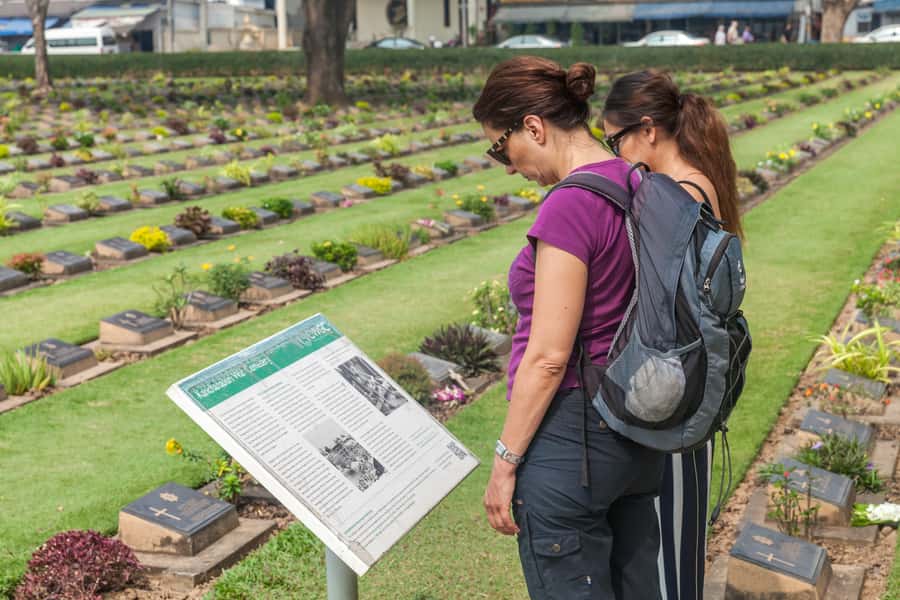
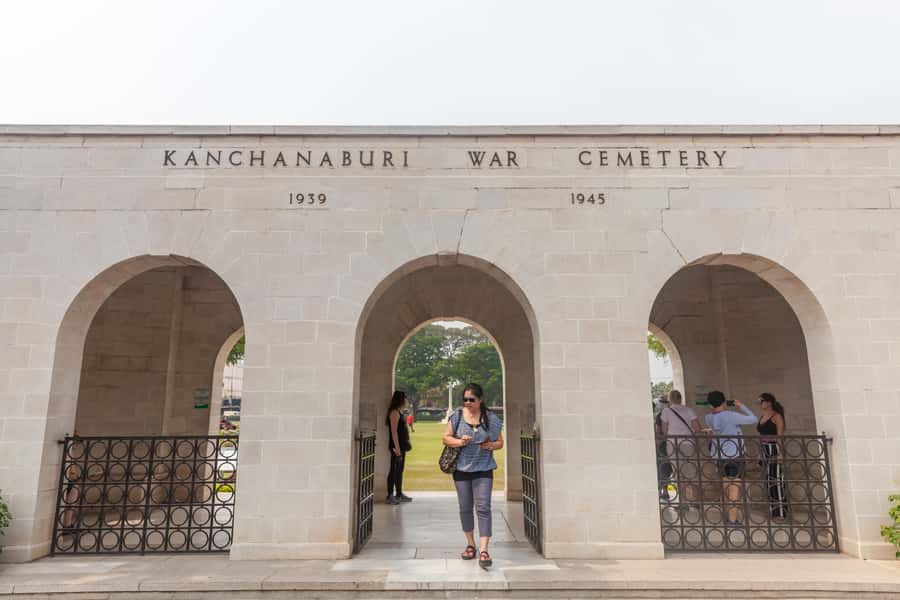
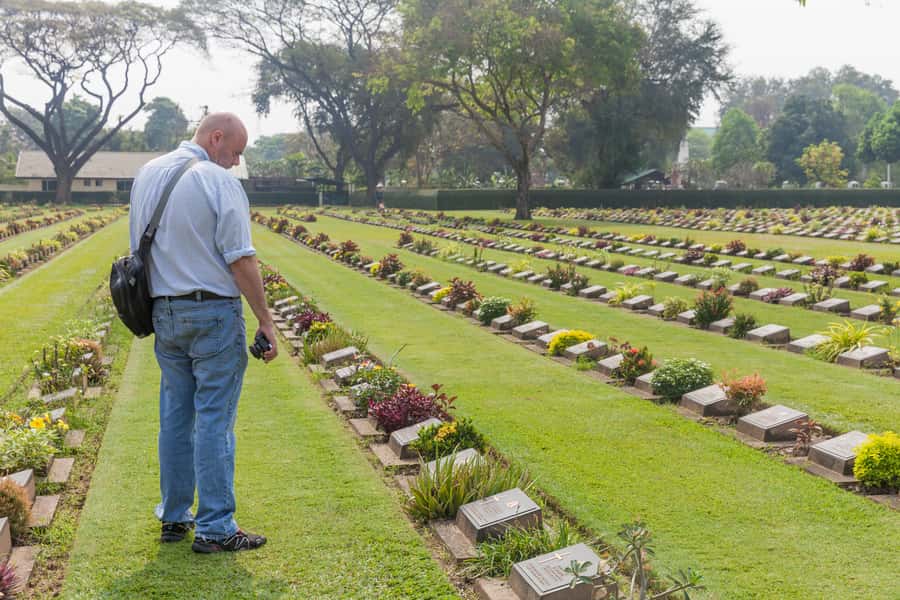
Right after, you visit the Allied War Cemetery. This cemetery commemorates about 6,000 allied prisoners of war who perished along the railway line and were later moved to their eternal resting place. Even if you’ve read about the Death Railway before, this site has that quiet, undeniable effect—well-kept grounds, clear commemoration, and a feeling that time has stopped.
Practical note: plan to slow your pace here. It’s not a “take photos and move on” kind of stop. If you rush, you’ll miss the emotional point.
The Bridge over the River Kwai (and the river ride that keeps it human)
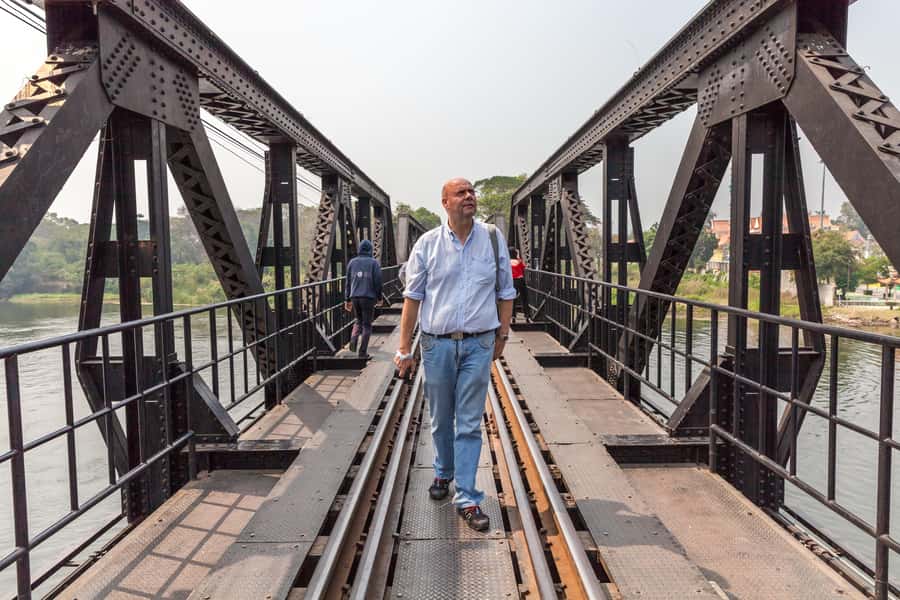
After the cemetery and museum, you reach the Bridge over the River Kwai. It’s part of the Death Railway, constructed by Allied POWs. The bridge itself is famous, but what I appreciate is how your earlier museum time helps you see it differently. The bridge isn’t just a landmark—it’s a physical outcome of forced labor and suffering.
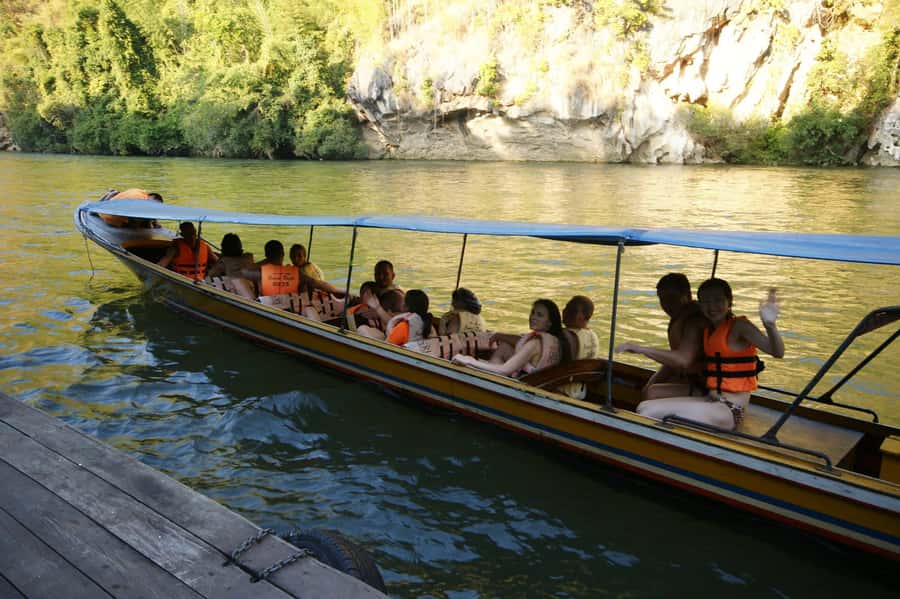
Then the trip shifts modes. You take a long-tail boat along the River Kwai to reach the floating hotel area for lunch at River Kwai Jungle Rafts. This boat segment does more than transport you. It gives your brain a break after the solemn sites, and it’s also a reminder that you’re in a river system that shaped the whole story.
If you tend to get travel-sick on boats, it’s worth being cautious here. Even short river rides can feel bouncy when you’re already tired from earlier driving.
River Kwai Jungle Rafts: bamboo floating hotel reality (and why it works)
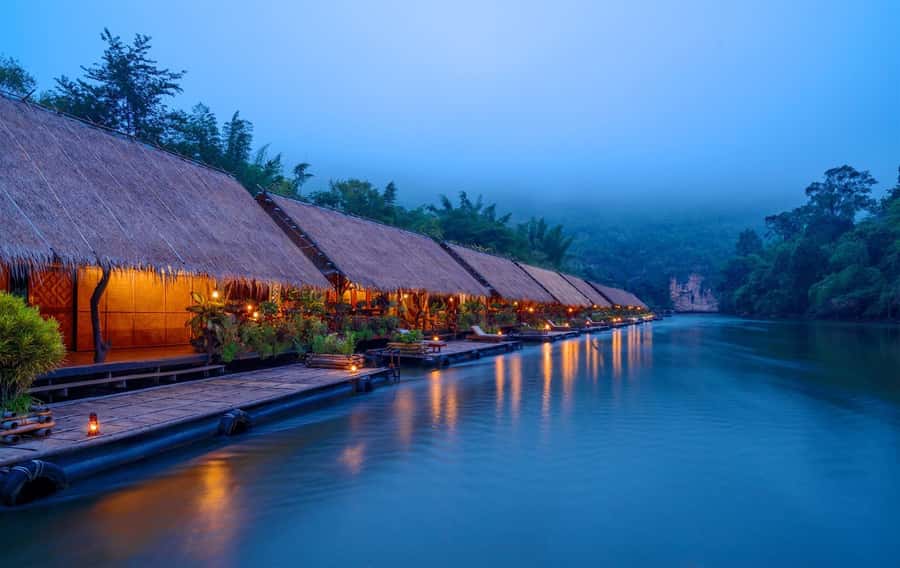
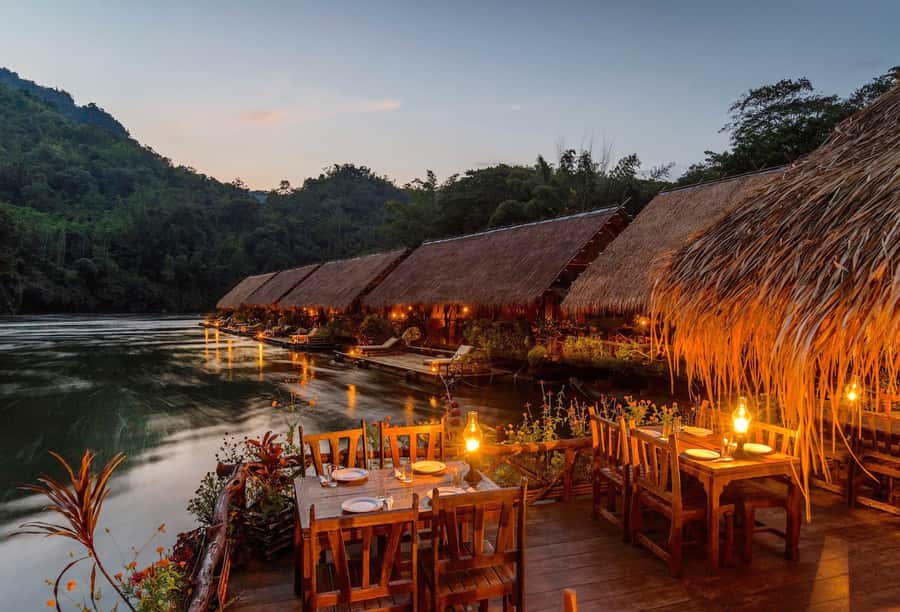
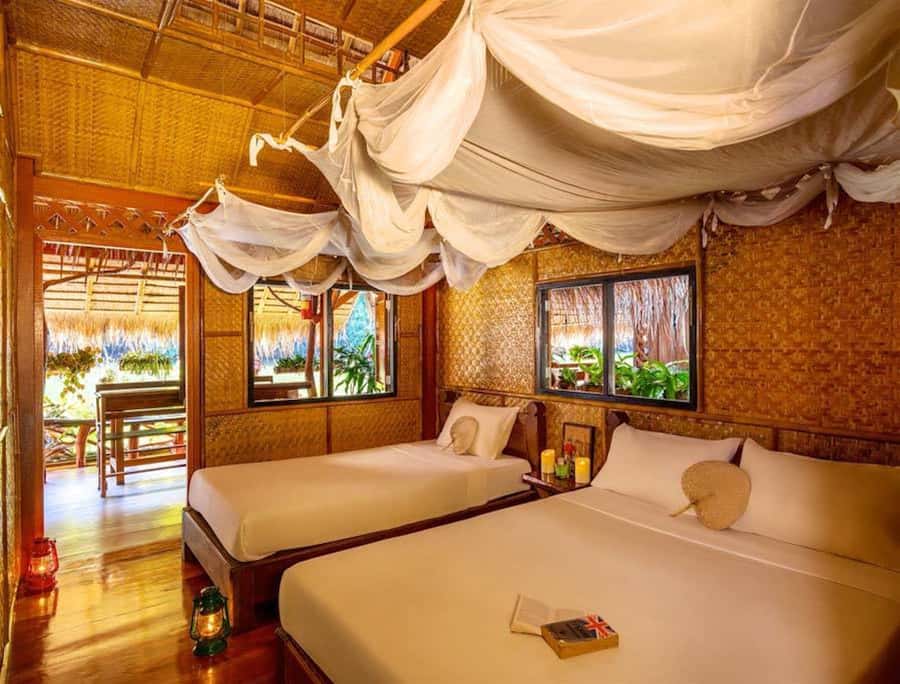
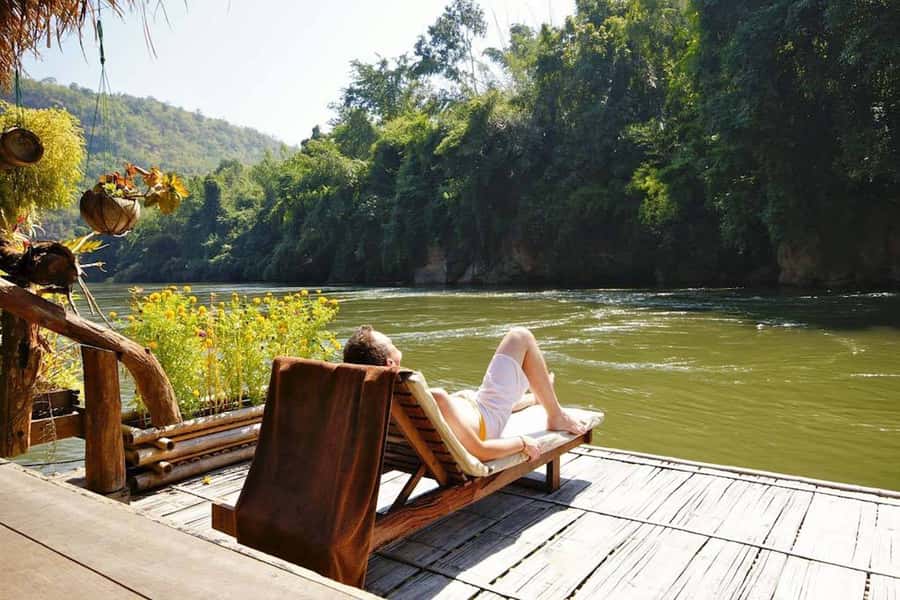
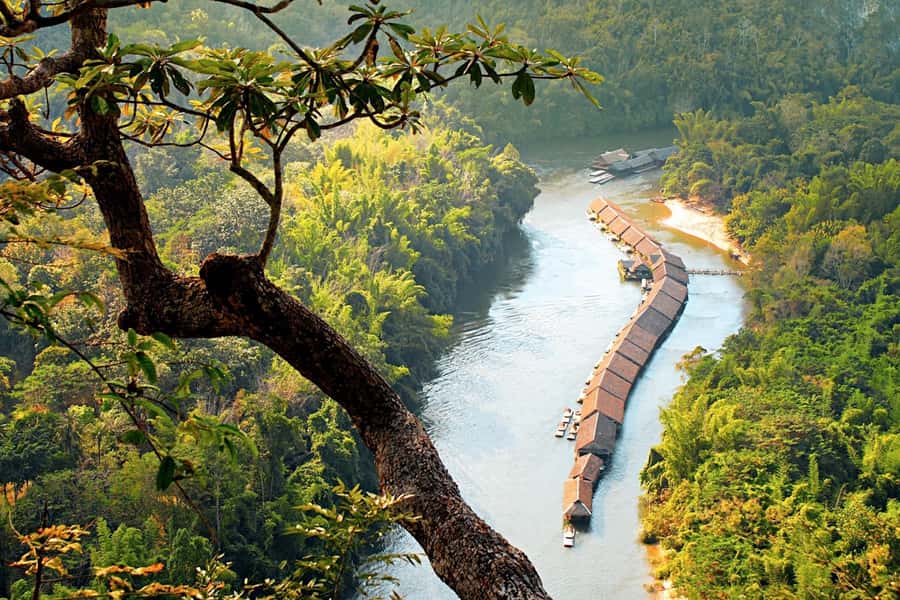
The star of the overnight is the River Kwai Jungle Rafts floating raft hotel—romantic, scenic, and not trying to be a five-star resort. You’re in a twin-room basic setup for one night (single supplement applies if you want a separate room). Don’t expect a typical hotel room experience.
Here’s the honest vibe you can plan for: it can feel like upmarket camping. Some guests note limited electricity and oil lamps, with a back-to-basics approach. Others mention the need for cooling due to humidity. Translation: you’re there for the setting and the experience, not for perfect climate control.
The big win is the “on-the-water” feeling. You can feel like you’re living beside the river rather than just visiting it. Many people love the calm, plus the fact that you’re surrounded by nature around the rafts. If you bring a small flashlight or headlamp, you’ll thank yourself later. One guest specifically recommended bringing your own light because the provided ones weren’t very effective.
Also, think ahead for what the raft night means practically. Wear shoes you can use for moving around the property. If you plan to swim, bring swimwear and a quick-dry towel if you have space.
Hellfire Pass Memorial: where the heat meets the history
After lunch and some river time, you head downstream to Phu Takian Pier and visit the Hellfire Pass Memorial. This is one of the most important stops on the route because it connects the Death Railway story to a specific, brutal location—the cutting.
It’s also where weather can push back. Hellfire Pass can be very hot, and you’ll be walking in exposed areas. That’s not a complaint; it’s just reality. Come ready with water and shade. If you have a hat, bring it. If you can, plan your breaks like a local: pause often, slow your pace, and keep your body cool.
One really helpful tip: grab the free audio guide available at the walking area. It can make the self-guided parts easier to understand, especially if your group pace doesn’t give you every detail verbally. (Some guides are excellent; a free audio option keeps you covered either way.)





Mon village + jungle trek: the culture part that actually feels lived-in
Day two starts with a Mon tribal village visit. This isn’t just a photo stop. You learn about local traditions and customs, and then you trek through the jungle. The goal is to connect Mon culture to the place you stayed the night before—so the floating hotel isn’t just a room. It’s part of a community story.
You’ll have lunch at a local restaurant after the trek. The terrain can be uneven, and “jungle trek” is exactly that. Wear footwear that can handle dirt and slippery ground. If you don’t like hiking, you might still enjoy the village portion, but the trek will set the pace.
The Death Railway train ride: historic track, real limits on photos
The highlight of Day Two is riding a historic train along the original track of the Death Railway. The train passes over an original wooden viaduct constructed by Allied prisoners of war. This gives you a perspective you don’t get from museums alone: you’re moving through the route with your own body, not just looking at it.
Now, a reality check: photography can be tricky. One review noted that photographing the old timber trestles from the moving train wasn’t easy. So don’t expect perfect, postcard-style shots. If you want photos, be ready for quick moments and don’t strain your eyes or device battery.
There’s also an option mentioned by guests to pay extra (150 Thai baht per person) for the first-class carriage. The claimed perks: more space, drinks included, and a certificate plus a different feel inside the carriage. If you care about comfort and room to move, it’s a reasonable add-on to consider.
Dinner, breakfast, and the practical rhythm of meals
Meals are built into the trip: dinner on Day 1, breakfast on Day 2, plus lunch on both days. This matters because it prevents the most common problem with tours like this—standing around hungry while everyone waits for the next bus.
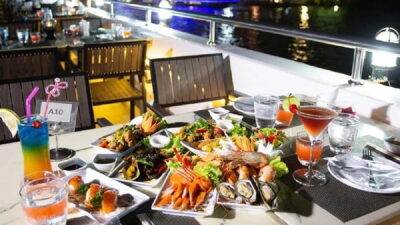
The food is widely praised by guests. Some describe it as good at the transfer points and at the hotel. If you have dietary needs, the best approach is to tell your guide at the start of the day. One guest reported that Pat helped arrange gluten-free food for a family member, which suggests the team can handle certain requests if you ask early.
What’s not included is snacks and drinks. So if you’re the type who keeps water and small treats handy, budget a little for that. Also remember: you may want something light for the ride and something energizing between stops. The tour provides the set meals; it won’t cover personal cravings.
What to pack (and what to expect when the day turns hot)
For this trip, you’re mixing museum time, memorial walking, river transport, a raft overnight, and a jungle trek. That combination means you need practical gear more than “travel style.”
Bring:
- Passport or ID card (required)
- Comfortable walking shoes (memorial areas and jungle trek)
- Hat and sunscreen for Hellfire Pass warmth
- A reusable water bottle if you like controlling your hydration
- Swimwear if you plan to use the river/raft area
- A small headlamp or flashlight for evening on the rafts
Also, be ready for long days. One guest described the schedule as moving at a pace that can feel rushed at museums and memorials. So go in expecting efficiency, not leisure.
Price and value: where the $241 goes, and what you’re really paying for
At $241 per person for a two-day, one-night package, you’re not just buying tickets. You’re paying for:
- Roundtrip transportation from central Bangkok hotel areas (or River City meeting point)
- An English-speaking guide
- Admission fees to the attractions on the route
- Meals (two lunches, one dinner, one breakfast)
- One night at River Kwai Jungle Rafts in a twin basic room
If you tried to recreate this on your own, the big costs would be time and coordination: getting from Bangkok, booking multiple attractions, finding transport to the river hotel area, and keeping a guided narrative consistent across the WW2 sites. This tour handles that friction for you.
Where you might spend extra:
- Drinks and snacks
- Extra meals beyond the included ones
- Any single supplement if you want your own room
- Optional train upgrade to first-class carriage (if offered/available on your departure)
So the value is strongest if you want a guided structure and the raft overnight. If you’d rather drive yourself and linger, you may feel the pace is too tight. If you’re okay with a packed two days and want the “story + setting + culture” combo, it’s a fair deal.
Who this River Kwai trip fits best (and who should skip it)
This tour fits you if:
- You want WW2 history with guided context, not just a checklist of sites
- You like a mix of solemn memorials and nature/river calm
- You’re curious about Mon culture and want more than a dance performance
- You’re the kind of traveler who enjoys organization because it buys you mental space
It’s less ideal if:
- You need lots of free time at museums and memorials. The route is efficient, and some people feel shortchanged by time at certain sites.
- You’re sensitive to heat. Hellfire Pass can be intense.
- You need wheelchair access. The activity is not wheelchair accessible.
Should you book this 2-day River Kwai trip?
Yes, if you want the best of both worlds: meaningful WW2 stops and a genuinely memorable floating stay, plus Mon culture that you experience in context. The strongest reason to book is the way the itinerary connects learning, place, and evening atmosphere. You’re not only transported—you’re guided through the emotional logic of the region.
Consider booking a different length (like a longer raft stay) only if you know you’ll want slow time for reflection. For many people, though, two days is enough to leave with clear understanding and a lasting image of bamboo rafts on the river.
FAQ
What does the tour price include?
The price includes insurance, an English-speaking guide, roundtrip transportation from central Bangkok hotel areas (or a meeting point at River City Bangkok), admission fees to the listed attractions, meals (dinner Day 1, breakfast Day 2, and lunches Day 1 and Day 2), and one night accommodation at River Kwai Jungle Rafts in a twin-room basic.
What meals are provided during the trip?
You’ll get lunch on Day 1, dinner on Day 1, breakfast on Day 2, and lunch on Day 2. Extra meals are not included.
Where do I meet if my hotel is not in the pickup areas?
If your hotel isn’t in the listed pickup zones, you’ll go to River City Bangkok at 23 Soi Charoen Krung 24. The tour also notes a meeting point map for navigation.
Is this tour wheelchair accessible?
No. The activity is not wheelchair accessible.
What should I bring?
Bring your passport or ID card.
What are the accommodation details for the night on the raft?
You get one night at River Kwai Jungle Rafts on a twin-room basic basis. A single supplement fee applies if you want a separate hotel room.
Is there a train ride included?
Yes. On Day 2, you ride a historic train along the original track of the Death Railway, including passing over an original wooden viaduct.
Is Hellfire Pass included?
Yes. You visit the Hellfire Pass Memorial on Day 1.
What’s the cancellation policy?
You can cancel up to 5 days in advance for a full refund.
Are meals refundable if plans change?
Meals are non-refundable.
If you tell me your travel dates and whether you’re more interested in WW2 sites or the raft + Mon culture side, I can help you decide if the 2 days feels like the right pace for you.