REVIEW · BANGKOK
Bangkok: Blue Elephant Thai Cooking Class
Book on GetYourGuide →Operated by Blue Elephant Cooking School&Restaurant · Bookable on GetYourGuide
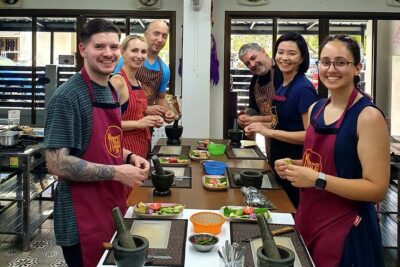
Thai food lessons are better than watching. Blue Elephant pairs a market visit with a chef-led cooking flow in a Michelin-recognized Bangkok institution. What I like most is the hands-on structure: you get theory first, then you cook at your own station with all the gear ready.
Two standout perks make this class feel worth the $143 price tag. You’re guided to select ingredients in the morning (and yes, it’s practical, not just for photos), and you finish in the school’s historic dining room with the dishes you made. One consideration: there’s no hotel transfer, and the pacing can feel quick once you’re reading recipes while cooking.
In This Review
- Key things to know before you go
- Blue Elephant in Bangkok: a cooking school with serious credentials
- Morning market vs afternoon class: pick the right session
- How the theory class teaches you Thai cooking logic
- Chef demo to your hands-on station: your 4-course meal day plan
- Eating in the historic dining room: more than a snack break
- What you take home: recipes, certificate, and the Blue Elephant feel
- Price and value: is $143 worth it?
- Practical tips so you don’t waste time in Bangkok traffic
- Who this class fits best (and who might prefer something else)
- Should you book Blue Elephant’s Thai Cooking Class?
- FAQ
- Is the market visit included?
- How many dishes will I cook?
- Does the price include ingredients and equipment?
- Is hotel transfer included?
- What’s the meeting point and how do I get there?
- Are afternoon classes available on Sundays?
- Can I cancel for a refund?
Key things to know before you go
- Market morning sets you up for real Thai flavors with ingredient choices you’ll use right away
- Theory + demo come before hands-on cooking, so you know what to taste for
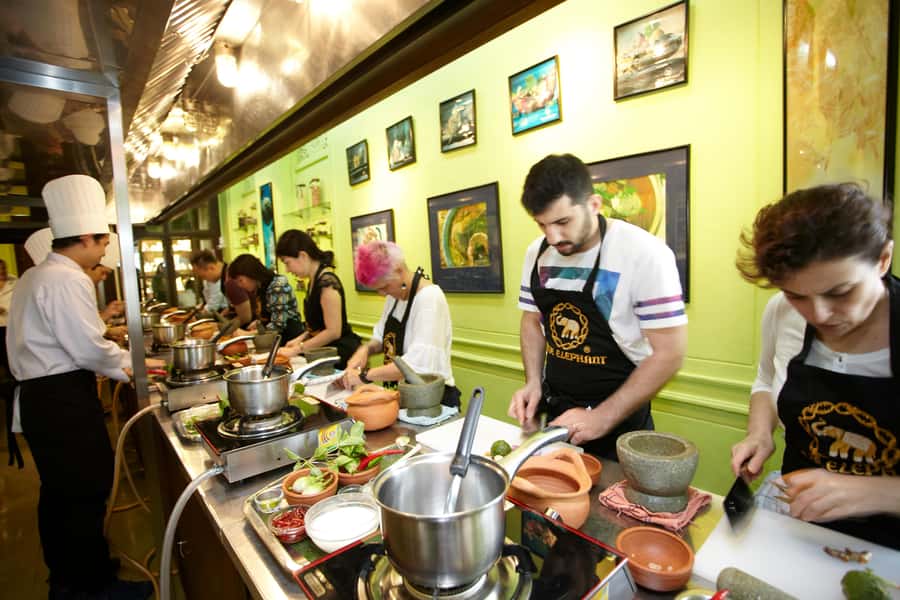
- Four-course meals at your own station with utensils, burner, and wok included
- English commentary keeps you on track, even if your Thai is basic
- You eat your own cooking in a century-old restaurant, then take recipes home
- Sunday schedule matters: no afternoon classes on Sundays
Blue Elephant in Bangkok: a cooking school with serious credentials
Blue Elephant is one of the best-known Thai cooking experiences in Bangkok for a simple reason: it’s built like a real school, not a casual workshop. You meet at the restaurant at 233 S Sathorn Rd, and from there the day follows a clear teaching rhythm—explanations, demonstrations, then your turn at the wok.
This is also the kind of place that tends to attract travelers and food-focused locals alike. It’s recognized by the Michelin Guide, and that reputation shows up in the setup: stations are equipped, instructions are structured, and the staff work to keep the day moving without turning it into chaos. You’ll hear Thai and English, with English commentary to support you.
If you’re wondering whether you’ll actually learn cooking basics (not just follow steps), the format is designed for that. You start with technique and ingredient logic, then build a meal in four parts. That makes it easier to repeat at home later.
You can also read our reviews of more tours and experiences in Bangkok.



Morning market vs afternoon class: pick the right session
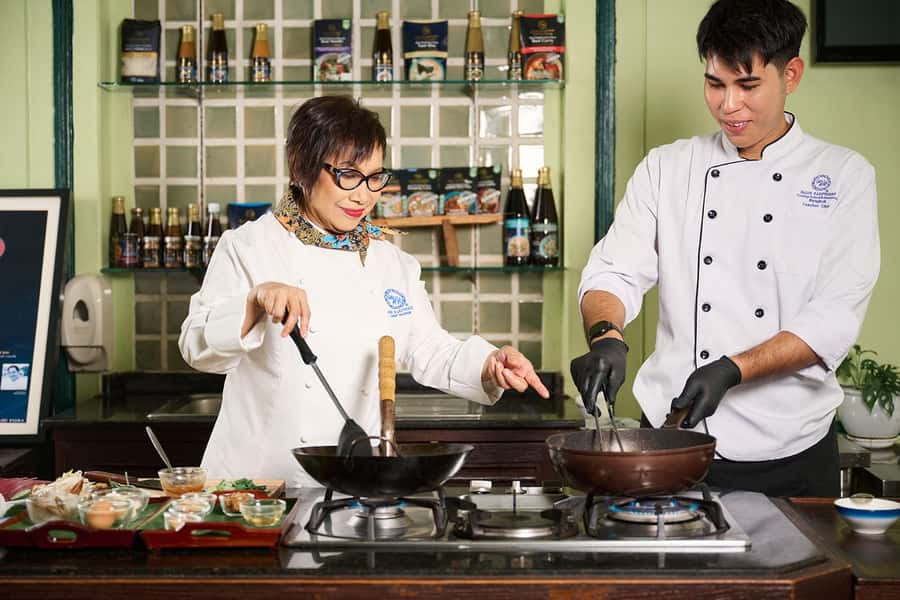
The class comes in two styles. If you book the morning class, you also get a market visit to pick ingredients for the day. If you book an afternoon class, you typically go straight into the kitchen work without the market segment.
That market time matters because you’re not just buying stuff. You’re learning what the ingredients are, what they smell like, and how Thai cooks think about them. In past sessions, a guide named Krishna has led market time via metro and short walks, and he’s known for sharing helpful vendor context—plus small tastings like Thai tea from stalls. Even if you don’t buy much, you’ll still come away with a clearer sense of what goes into Thai flavor.
Two scheduling notes to plan around:
- Market visit is morning only.
- There are no afternoon classes on Sundays.
If you love a full morning activity and want the ingredient context, choose morning. If you’d rather skip early logistics and just cook, the afternoon session can still be a great value because the core part is the chef-led teaching and your four-course meal.
How the theory class teaches you Thai cooking logic
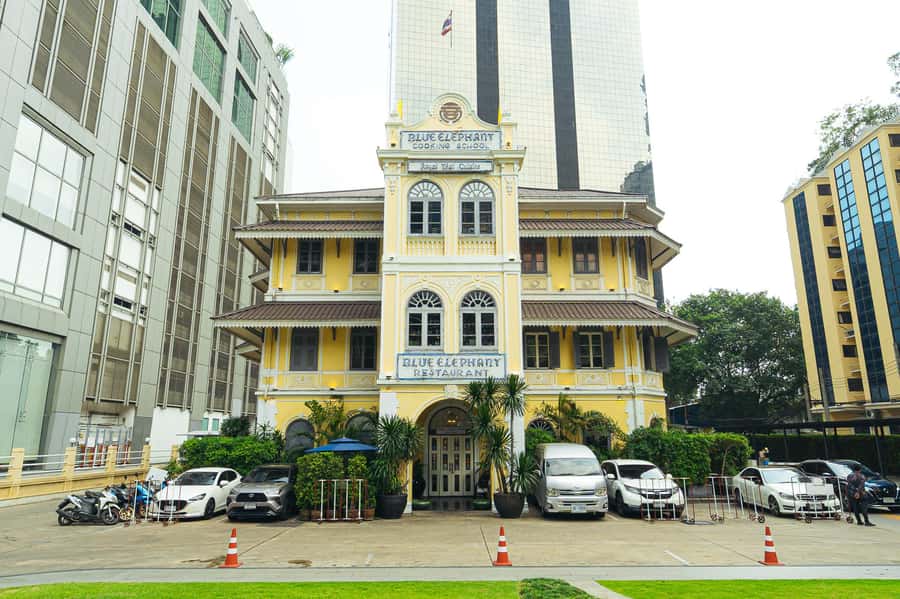
Before you cook, the day starts with a theory class. This is where the instructors explain ingredients and techniques behind Thai cooking, and they also demonstrate the recipes you’ll make later. This part is practical. Instead of memorizing steps, you start learning what each ingredient is doing and why certain methods matter.
The English support is important here. You’ll have commentary in English, and instructors have shown they’ll adjust instruction so you can keep up. In some sessions, staff like Teacher Yui and assistants help prompt cooks at stations, so you’re not stuck guessing while you’re trying to time sauces, stir-fry, or simmering steps.
You’ll also notice the menu changes day to day. That’s not a drawback if you’re there to learn technique and flavor logic. It just means you shouldn’t treat the class like a fixed “one recipe set.” Once booked, you can check the menu details directly with the local partner.
What you should pay attention to during theory:
- Aromatics and sauces: how they’re built and layered
- Texture targets: what “done” looks like in Thai cooking
- Timing: when you add things so flavors stay bright
If you come hungry and curious, the theory makes the rest of the day feel more like cooking with understanding, not copying.
Chef demo to your hands-on station: your 4-course meal day plan
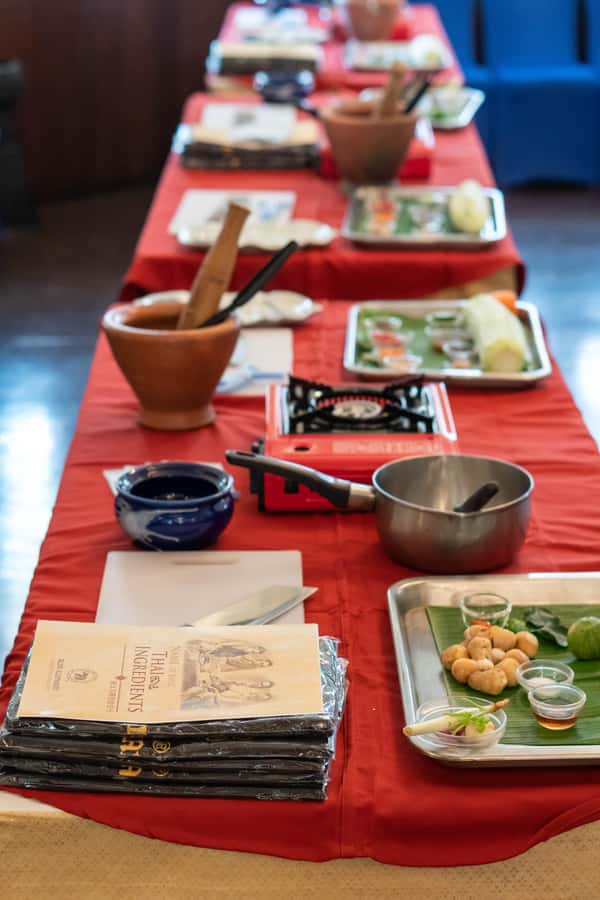
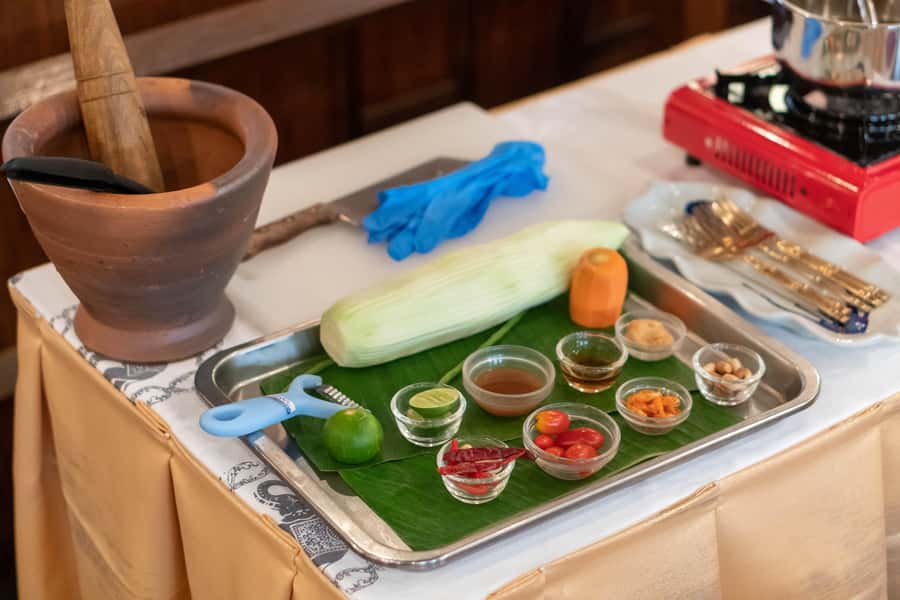
After theory, you put on your apron and move to your cooking station. Your setup includes ingredients, utensils, a burner, and a wok—so you’re not waiting on shared tools or running around for basics. The class is structured so you can watch a chef demonstrate each dish, then taste what it should become, then cook your own version.
That format works for two reasons. First, the demo shows technique clearly. Second, tasting right after gives you an immediate flavor benchmark. It’s easier to fix a dish when you know what you’re aiming for.
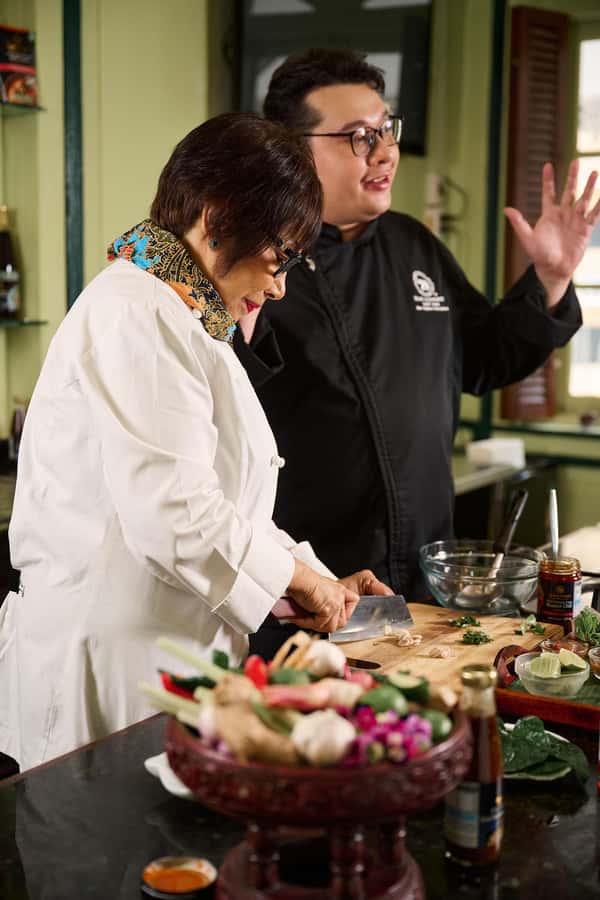
Across sessions, chefs such as Chay or Mint have taught classes, and they’re typically the ones demonstrating the full set of dishes. Even when the exact menu shifts, the teaching style is similar: you get step-by-step guidance, you’re actively cooking, and assistants help when you get stuck mid-recipe.
You’ll prepare a full four-course meal. Practically, that means you’ll experience a range of Thai cooking styles—something stir-fry based, something curry or sauce based, and other dishes that rely on different cooking times and heat control. You also get to see how Thai cooking manages balance: salty, sweet, sour, and spice all in one ecosystem.
One small warning: the class can feel fast-paced when you’re learning multiple recipes in one day. If you’re the type who freezes when looking down at a recipe card, just accept that you’ll need to listen first, then cook. Assistants help, and you’ll likely do better than you expect—even if you consider yourself a weak cook.
Eating in the historic dining room: more than a snack break
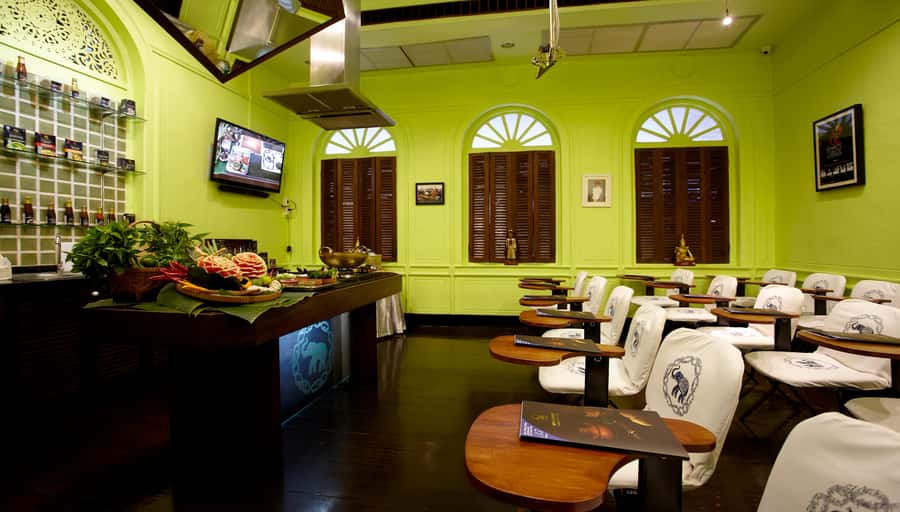
After cooking, you don’t just get a quick bite. You sit down and dine in the school’s restaurant, described as a beautiful, historic place that’s over a century old. That matters more than you might think. The atmosphere gives the food context, and it turns the meal you made into an actual sitting-down dinner.
The class also includes a Thai herbal drink, which is a nice touch because it’s part of the overall ritual. And desserts show up too. Mango sticky rice is served in some sessions as a goodbye treat, so plan to make room for it.
You’ll likely be surprised by how much you can eat. Even if the four courses sound “just four dishes,” they add up. Expect it to feel like a real meal, not samples only.






What you take home: recipes, certificate, and the Blue Elephant feel
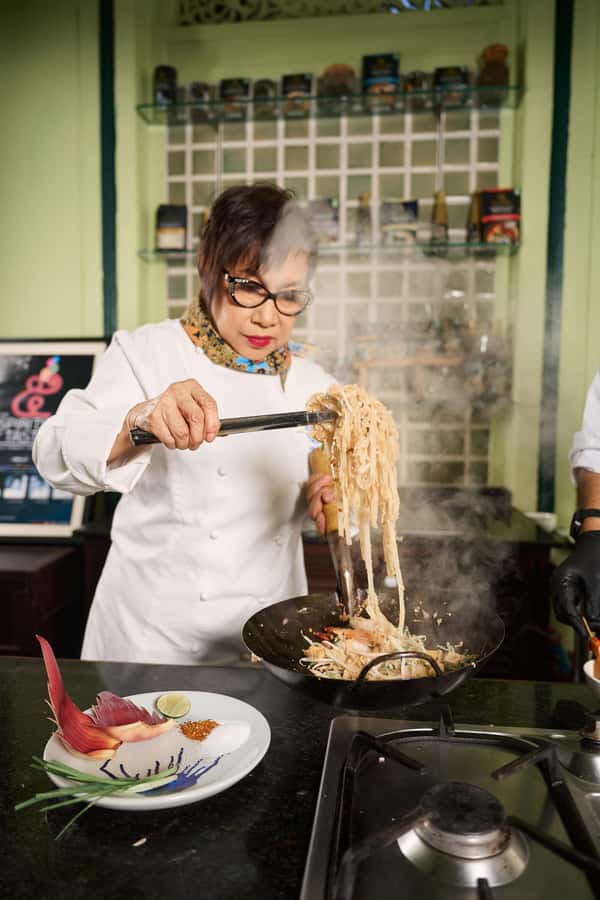
The best part of a cooking class isn’t always the day-of. It’s what you can recreate later. Blue Elephant includes recipes for all dishes you cook, so you don’t have to guess your way through your own notes at home. You also get a certificate and a souvenir bag, plus a Blue Elephant apron.
That take-home kit is part of the value. At this price point, you’re not just paying for food and a one-time workshop. You’re paying for equipment access, ingredient prep, chef instruction, and documentation you can use after the trip.
If you’re thinking about gifting or sharing what you learned, the apron and certificate also help. They turn the experience into something you can point to later when you cook Thai at home.
Price and value: is $143 worth it?
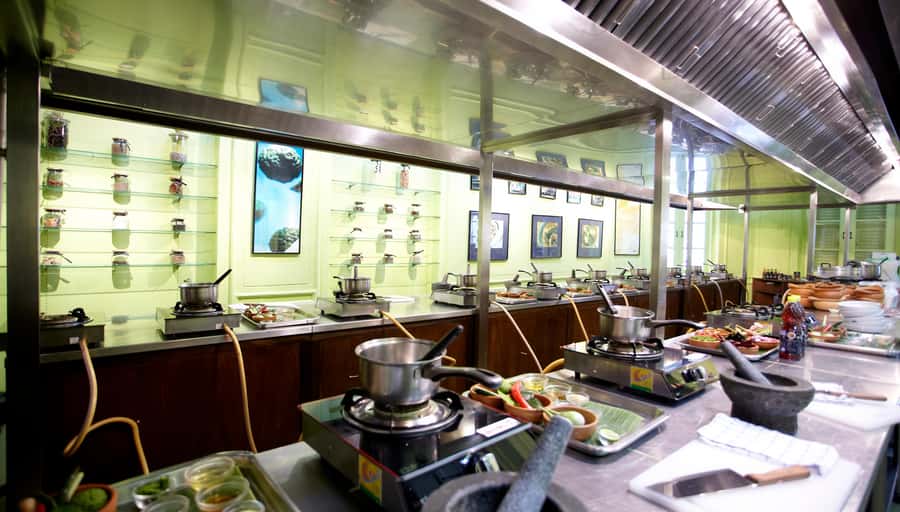
At $143 per person for a full day, this class sits in the higher end of the cooking-school range. The key question is what’s included—and Blue Elephant includes enough that the math starts to make sense.
You’re getting:
- a four-dish cooking experience
- all ingredients and cooking equipment (utensils, burner, wok)
- experienced chef teaching and English commentary
- a market visit for morning sessions
- Thai herbal drink
- recipes for every dish, plus certificate and an apron
What you’re not paying for separately is a big deal. Many short workshops make you source ingredients or learn with incomplete tools. Here, your station is set up so you can focus on cooking and technique.
The $143 also feels more reasonable when you compare it to what you’d spend on a similar “cooking plus dinner” day in Bangkok. You’re effectively paying for a structured lesson that ends with a meal you made yourself, in a major restaurant setting.
If you’re a serious foodie or you want to return home with repeatable methods, this price tends to land in the fair-to-strong value zone.
Practical tips so you don’t waste time in Bangkok traffic
A few small choices make the day smoother.
1) Plan your arrival to the meeting point
You meet at Blue Elephant on S Sathorn Rd. The simple route is to take the sky train to Surasak BTS Station, then handle the final walk or short taxi hop. A taxi directly is also an option. There’s no hotel transfer included, so don’t assume someone will pick you up.
2) Come hungry, but don’t overpack your expectations
You’ll taste as you go, then eat what you cooked. That can be a lot of food. You’re also learning multiple dishes, so expect a busy schedule.
3) Tell them your dietary needs before you book
The class asks you to indicate dietary requirements on checkout. That’s not window dressing. In past sessions, families and individuals have had menus adjusted for fish-free diets, and spice levels have been toned down when needed. If you have an allergy, say it clearly in advance.
4) If you care about spice, communicate early
Thai food can be spicy, and even when instructors are flexible, you’ll get the best outcome when you ask upfront. If you want mild, ask for mild.
5) Choose your day based on your energy level
Morning gives you the ingredient market and a fuller story arc. Afternoon is often easier on your schedule, but it skips the market. And remember: no afternoon classes on Sundays.
Who this class fits best (and who might prefer something else)
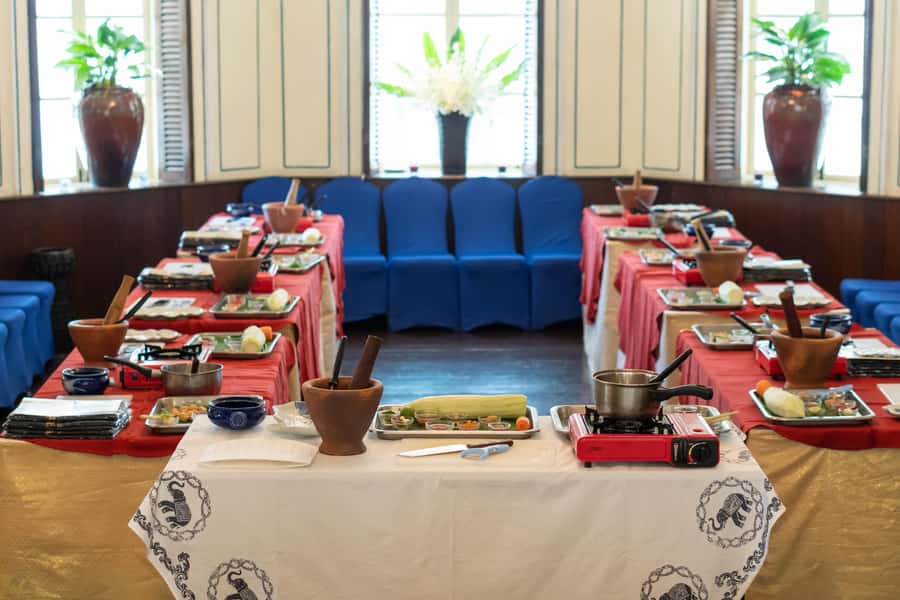
This experience is a strong match for you if you:
- want a guided way to learn Thai cooking instead of guessing from recipes
- like the idea of picking ingredients and then cooking them the same day
- enjoy a structured class with chef demonstrations
- want take-home recipes, not just a fun afternoon
It’s also a good pick if you travel with a child or someone who needs dietary adjustments, since the menu can be adapted when you request it ahead of time.
You might consider another option if you:
- hate fast pacing and prefer slower, single-recipe classes
- want zero cooking time and only a tasting experience (this one is built around cooking four dishes)
- need hotel pickup, since hotel transfer isn’t included
There’s also an option for a private class if you want quieter attention or a more tailored session. That’s worth considering if you’re traveling as a small group and want more instructor time per person.
Should you book Blue Elephant’s Thai Cooking Class?
If you want your Bangkok day to end with both a real meal and a practical recipe set, I’d book it. The structure is the selling point: market (morning), theory (always), demo-to-station cooking, and dining in the restaurant afterward. At $143, you’re paying for instruction, ingredients, equipment, and take-home materials, not just a one-off taste.
Choose morning if you want to learn ingredients firsthand. Choose afternoon if you’d rather focus on cooking without the market. Either way, expect a full day that helps you understand what Thai flavors are doing, so your home cooking can actually improve.
FAQ
Is the market visit included?
It depends on the session. The market visit is available only for those who booked the morning class.
How many dishes will I cook?
You’ll cook a 4-course meal, meaning four dishes during the class.
Does the price include ingredients and equipment?
Yes. All ingredients and equipment are included, along with the chef and experienced instruction.
Is hotel transfer included?
No. Hotel transfer is not included, so plan your own way to the meeting point.
What’s the meeting point and how do I get there?
You meet at The Blue Elephant, 233 S Sathorn Rd, Khwaeng Yan Nawa, Khet Sathon, Krung Thep Maha Nakhon 10120, Thailand. You can take the sky train to Surasak BTS Station, or take a taxi directly there.
Are afternoon classes available on Sundays?
No. There are no afternoon classes on Sundays.
Can I cancel for a refund?
Yes. You can cancel up to 24 hours in advance for a full refund.