REVIEW · BANGKOK
The Old Siam: Damnoen Saduak and Maeklong Railway Market
Book on GetYourGuide →Operated by Bigcountry Experience Co.,Ltd. · Bookable on GetYourGuide
Train tracks and floating boats in one day.
I like how this trip pairs two Thai market worlds in a single 7-hour loop: Maeklong Railway Market (Talad Rom Hup, Umbrella Pulldown Market) and Damnoen Saduak on the canals. I also enjoy that you’re not just dropped off and left guessing; the guide helps you read what’s going on and where to focus first.
My favorite part is the hands-on pacing. You go to Maeklong and then head to Damnoen Saduak by paddleboat, with time to wander and try snacks like mango sticky rice. The one drawback to plan for is that both markets can feel crowded and you may not get a super long, slow stroll at each stop, especially around Maeklong.
In This Review
- Key things that make this day trip work
- How the day runs from Bangkok without feeling chaotic
- Maeklong Railway Market: Talad Rom Hup in real time
- What to do once you’re down on the trackside market
- Damnoen Saduak Floating Market: paddleboat views and canal shopping
- Food you can plan for: mango sticky rice and more
- The guide factor: names you’ll hear in real life
- Crowds, heat, and time limits you should realistically expect
- Value check: does $32 feel fair for two iconic markets?
- Who this tour suits best
- Should you book the Old Siam day trip to Maeklong and Damnoen Saduak?
Key things that make this day trip work
- Maeklong’s Umbrella Pulldown moment right up against the rail line
- Paddleboat time at Damnoen Saduak, plus free wandering on your own
- Good guide support (you’ll hear stories, tips, and food direction on the way)
- Fresh-food market energy, including seafood at Maeklong
- A realistic schedule that gets you back to Bangkok in the afternoon
How the day runs from Bangkok without feeling chaotic
You start early from Bangkok, with roundtrip transportation in an air-conditioned vehicle. Depending on the option you choose, you’ll either meet at the Old Siam Plaza area (Bigcountry Old Town next to Starbucks) or get hotel pickup from listed zones like Sathorn/Silom, Siam/Pratunam, Khao San Road, and parts of Sukhumvit.
A typical flow looks like this: you leave Bangkok in the morning, arrive at Maeklong Railway Market, then go on to Damnoen Saduak Floating Market for a boat trip and shopping/eating time, and finally return to Bangkok by mid-afternoon (for example, drop-off around 3:30 pm in one of the options shown). In normal traffic, the tour is designed to fit everything into one full day without you needing to manage your own transport between far-flung pockets of central Thailand.
One practical thought: the schedule is busy, so don’t pack this as your only outing that day. Keep your evening light when you come back—your brain will be full of sights, noise, and strong market smells.
You can also read our reviews of more tours and experiences in Bangkok.

Maeklong Railway Market: Talad Rom Hup in real time
Maeklong Railway Market is built around an active railway line. The market is known for pulling back awnings and stall covers when a train approaches, which means you get that rare “it’s about to happen” tension you can’t recreate in photos. Seeing how tightly things are arranged—stalls, umbrellas, and goods right next to the track—can genuinely make you stop and stare for a moment.
What you’re likely to notice fast:
- The market is organized for constant flow. People move in narrow lanes while sellers keep working.
- Seafood is a big focus. This is one of the largest fresh seafood markets around, so expect a strong visual and sensory focus on the catch-of-the-day side of Thailand.
- The train-and-market relationship is not a gimmick. The timing matters, and the stall adjustments happen like a practiced routine.
You also get a guided explanation of how the market operates and what you’re seeing. From the reviews, guides like Pui and Tim are praised for being organized, clear, and attentive—especially around telling you what to watch for and how to navigate the railside layout.
One honest note: Maeklong can feel intense. It’s packed, and the heat can hit harder here than you expect, especially if you’re also on an older train segment that doesn’t have modern air-conditioning.
What to do once you’re down on the trackside market
At Maeklong, your best strategy is simple: walk with purpose for the first few minutes, then linger. Even when the tour gives you time to explore, the flow can get tight, so it helps to know what you want before you get distracted by everything at once.
Here’s how to make your minutes count:
- Buy near the train/central area first. One review advises that items near the exit point can be harder to bargain for and end up more expensive.
- Watch how stalls reset. When the train passes, sellers quickly adjust covers. That choreography is part of the show, so don’t rush past it.
- Use the guide like a GPS. People mention guides pointing out where to sit, where to shop, and what to try.
If you’re shopping for small gifts—snacks, dried goods, or seafood-related items—Maeklong is more fun when you treat it like a tasting and browsing stop, not a perfect bargain hunt.
Also: go in with an idea of what you can carry. This is a working market. You’ll be shoulder-to-shoulder at times, so bulky shopping bags can slow you down.
Damnoen Saduak Floating Market: paddleboat views and canal shopping
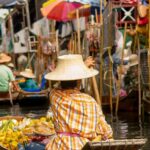
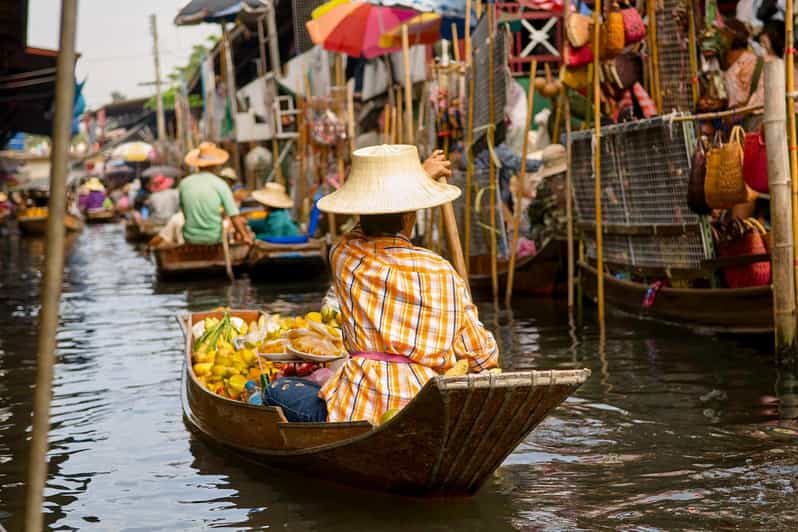
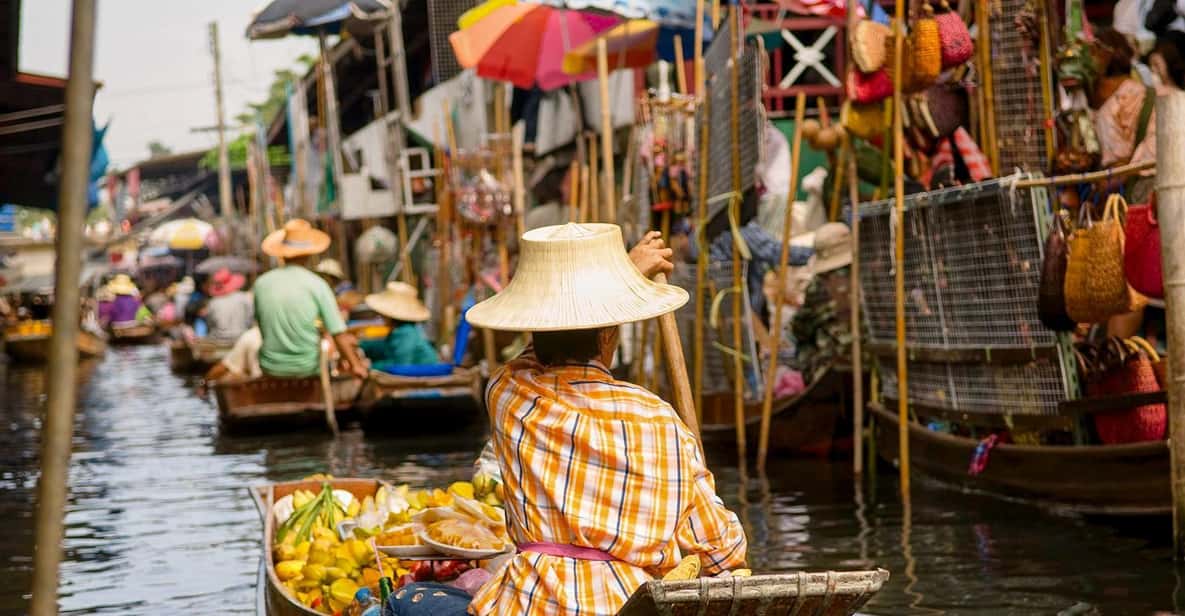
After Maeklong, the trip shifts from railside seafood to canal-life commerce at Damnoen Saduak Floating Market. This is where you take a short paddleboat ride to reach the market area, and that boat approach changes the whole mood. Instead of the loud, close rail line, you get water views and a different rhythm of movement.
What to expect when you arrive:
- Vendors sell directly from boats. You’ll see goods displayed right on the water routes.
- You can wander at your own pace once you’re on the market side.
- Your guide will point you toward what’s worth your time.
Some of the most mentioned “okay, wow” moments in the reviews:
- The sheer look of the canals packed with boats and color.
- The feeling of being part of the action instead of watching from land.
- The food stops. Mango sticky rice shows up in the highlight list, and one review also calls out coconut ice cream.
One extra detail worth knowing: on the water, sellers may try to push their boat toward you to sell. You don’t have to buy. You can simply move along. That’s how you keep the experience fun instead of stressful.
Food you can plan for: mango sticky rice and more
This is a food-positive day trip, but it’s not a restaurant meal. Lunch is not included, so you’ll be paying out of pocket for whatever you choose to eat along the way at the markets.
Still, you have a good set of options:
- Mango sticky rice (a classic choice at Damnoen Saduak)
- Pad thai and rice noodle soup (listed as available tasting/food opportunities in the experience highlights)
- Other market snacks you might see from boat to boat
My practical advice: decide your food priorities early. If you’re the type who hates making choices under pressure, pick one main “must eat” (like mango sticky rice), then grab smaller bites if you still have room.
And if you’re picky about timing: the trip includes plenty of time to explore at your own pace, but Maeklong and Damnoen Saduak can both move faster than you think once the group logistics start. You’ll eat best if you don’t wait until the very end of your free time window.





The guide factor: names you’ll hear in real life
This tour wins or loses on the guide. The good ones don’t just translate—they manage the day.
From the reviews, guides like Tim (praised for making the day run smoothly), Pui (praised for being knowledgeable and accommodating), Bobby, Pong, Sa, Kwan, Sara, Khun Jun, and Victor show up repeatedly with a common theme: they keep you moving, explain what you’re looking at, and help you choose where to go next.
A couple of practical examples from those comments that matter:
- Some guides set up a WhatsApp communication channel, which reduces the “where do we meet now?” stress.
- Guides help you find good train and market viewing angles, including helping you get seated for the train segment.
- They often give food recommendations so you don’t end up paying too much for something that isn’t great.
One caution: a review mentions a guide chasing guests rather than checking them calmly, which is a reminder to stay close to your group meeting point and on schedule. Market crowds grow fast, so your best insurance is simple: be ready when the guide says it’s time.
Crowds, heat, and time limits you should realistically expect
This is a classic “worth it, but be prepared” situation.
Here’s what you should plan for:
- Crowds at Maeklong. The market is packed, and it can feel claustrophobic in tight lanes.
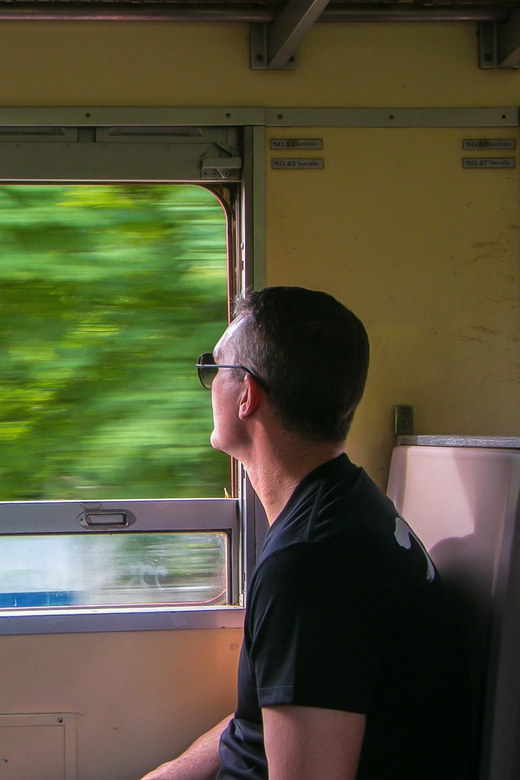
- Heat on older transport segments. One review specifically notes there’s no air-conditioning on the train, and suggests bringing your own fan. If you’re sensitive to heat, don’t ignore that advice.
- Limited time to browse. Multiple reviews suggest you may get around 15 to 30 minutes at the railway market, and the floating market often gets a longer stretch of free time. If you like to linger and take your time, you may feel it’s a bit rushed.
Balance point: Damnoen Saduak can be hit-or-miss for some people. One review says the floating market wasn’t special to them personally, while many others call it the highlight. The difference usually comes down to your expectations: if you want a calm, low-crowd market, you’ll be disappointed; if you want the energy of canal commerce and boat-to-boat browsing, you’ll likely love it.
Value check: does $32 feel fair for two iconic markets?
At around $32 per person for a full day, this tour is trying to solve two problems at once:
- Getting you out of Bangkok and back with minimal hassle
- Pairing Maeklong Railway Market and Damnoen Saduak Floating Market in one efficient route
What you’re getting for that price (based on the listed inclusions):
- Roundtrip transportation in an air-conditioned vehicle
- A guide
- Paddleboat (for the floating market portion)
- Water
- Optional hotel pickup (if you select it)
What’s not included:
- Lunch
- Personal expenses
So the real question is how much you value not having to coordinate transport, tickets, timing, and meeting points across two separate market areas. If you’re staying in Bangkok and want maximum “iconic Thailand market” time without turning your day into a logistics project, this is usually good value.
If you hate crowds or you’re trying to avoid heat, then no price makes a trip feel relaxing. In that case, you might spend your money better on a more flexible, less tightly timed market experience.
Who this tour suits best
This day trip is a strong fit if you:
- Want two top Thailand market experiences in one day
- Like street-level, real-world commerce over museum-style culture
- Enjoy food browsing and don’t mind paying for lunch separately
- Are okay with a schedule that moves, because otherwise you’ll miss the train and boat timing
It may be a weaker fit if you:
- Are very heat-sensitive (especially due to the noted no-AC train segment)
- Need long, quiet time in one location
- Dislike tight crowds and strong smells
Should you book the Old Siam day trip to Maeklong and Damnoen Saduak?
If you’re booking for the right reasons—two iconic markets, a guided plan, and a paddleboat experience—then yes, I’d book it. The best version of this day is when you treat Maeklong as the spectacle and Damnoen Saduak as the wandering payoff.
My decision checklist:
- If seeing the umbrella-and-stalls routine on the rails sounds like your kind of story, this is a must.
- If you’re excited to ride a paddleboat and shop/eat from the canal scene, you’ll probably enjoy the floating market more than you expect.
- Bring practical items (especially if you’re prone to heat). At least bring water in your personal bag mindset, even though the tour includes water, and consider a small fan based on the real feedback.
If you want an efficient, guided “classic markets of central Thailand” day without getting lost in transport plans, this one is a sensible choice.