REVIEW · BANGKOK
Floating Markets and Bridge on River Kwai Tour from Bangkok
Book on Viator →Operated by Tour East Thailand · Bookable on Viator
A canal tour plus a WWII bridge.
This full-day outing ties together Damnoen Saduak floating markets and Kanchanaburi’s Bridge over the River Kwai with real-world context, not just sightseeing boxes.
I really like that you get longtail-boat time on the canals and then switch gears to WWII sites with museum and cemetery visits. The other big plus is the small-group setup, with a maximum of 6 travelers on this tour, which usually means more personal attention from guides like Nikko, Suki, or Yelli.
One thing to consider: it’s a long day from Bangkok, and Damnoen Saduak can be crowded enough that boats and views sometimes feel a bit chaotic.
In This Review
- Key tour takeaways before you go
- Damnoen Saduak and the River Kwai in one long day
- Price and value: what $85.17 buys you
- Getting out of Bangkok: pickup, coach comfort, and countryside stops
- Coconut sugar farm stop: quick sweetness and a short presentation
- Damnoen Saduak floating market by longtail speedboat
- Shopping strategy: how to avoid the overpriced trap feeling
- The optional smaller canoe ride: when extra cost makes sense
- Lunch in Kanchanaburi: refuel before the WWII stops
- JEATH War Museum and the Kanchanaburi War Cemetery
- River Kwai Bridge: what you’ll see and what to look for
- Group size, guiding style, and how to get the most out of it
- Who should book this tour (and who might not)
- Should you book this Floating Markets and Bridge on River Kwai Tour?
- FAQ
- How long is the Floating Markets and Bridge on River Kwai tour?
- Does the tour include hotel pickup and drop-off?
- What parts of the day include paid admissions?
- Is lunch included?
- Is the boat trip to the floating market included?
- Can I add a closer boat ride inside the floating market?
- Is there a train ride included?
- What if the tour cancels due to minimum numbers?
Key tour takeaways before you go
- Longtail speedboat market run: You travel by boat through the canals, not just by coach.
- A real WWII context stop: You visit JEATH War Museum and the Kanchanaburi War Cemetery before you see the bridge.
- Small group feel: Maximum 6 travelers, with hotel pickup from selected hotels.
- You’ll likely want the optional smaller canoe ride: If you hate crowds or want better angles, it can be worth the extra cost.
- Pack for fumes and heat: Busy waterways can mean exhaust smell; bring protection if you’re sensitive.
- Lunch is included: A local restaurant meal is part of the day plan.
Damnoen Saduak and the River Kwai in one long day
This is the kind of itinerary that works because it gives you a full picture of Thailand outside Bangkok. You start with canal life at Damnoen Saduak, then spend the rest of the day in Kanchanaburi, where the River Kwai bridge sits inside the story of WWII.
The tour is also practical. Most of the main “getting there” headaches are handled for you with an air-conditioned vehicle and hotel pickup/drop-off from selected hotels, plus guided stops and included admissions.
The tradeoff is time. You’re looking at roughly 10 hours total, and the drive from Bangkok to Kanchanaburi is long enough that you’ll want to treat this as a day trip, not a casual stroll.
You can also read our reviews of more tours and experiences in Bangkok.
Price and value: what $85.17 buys you
At about $85.17 per person, you’re paying for transportation, a guided schedule, and entry costs that would be annoying to coordinate on your own. The tour includes hotel pickup/drop-off (selected hotels), a boat trip to the floating market, lunch, and museum admissions for JEATH and the war cemetery/bridge area.
If you were doing this independently, you’d likely spend comparable money on private transport for a full day, plus you’d still need to figure out how to time the floating market and museum stops. The value here is less about “cheap” and more about “low stress for a full day of big highlights.”
Still, keep your budget flexible for optional extras. The floating market has an optional boat ride you can pay for on-site, and you may see a push for additional activities depending on the exact day.
Getting out of Bangkok: pickup, coach comfort, and countryside stops
You’ll begin with hotel pickup and then head out of Bangkok in an air-conditioned vehicle. Along the way, the day is paced with planned stops rather than nonstop driving.
One included early break is the drive through salt fields in Samut Sakhon province, plus views of rice paddies and rural countryside. It’s not just scenery for scenery’s sake; this is the “buffer” that helps the market and WWII sites feel like part of a bigger region, not random photo stops.
Also, this tour is designed for small groups (maximum 6 travelers). In practice, that usually means less waiting around at transfer points, and more chance to ask your guide questions while you’re moving.
Coconut sugar farm stop: quick sweetness and a short presentation
Before you reach the floating market, you stop at a Coconut Sugar Farm for about 40 minutes. You’ll see how coconut sugar is made and taste natural candies.
There’s also a wild orchid presentation included on this stop. It’s brief, but it gives you a taste of how rural processing and local products fit into daily life around central Thailand.
If you prefer fewer stops, this is one you’ll either enjoy as a reset before the crowds or skim through quickly. Either way, it helps break up the long day.
Damnoen Saduak floating market by longtail speedboat
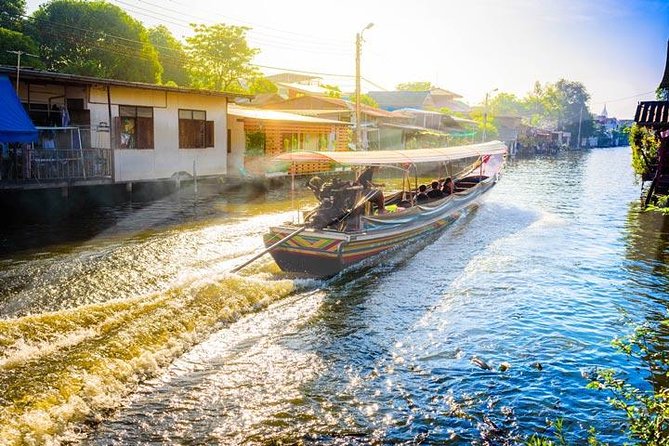
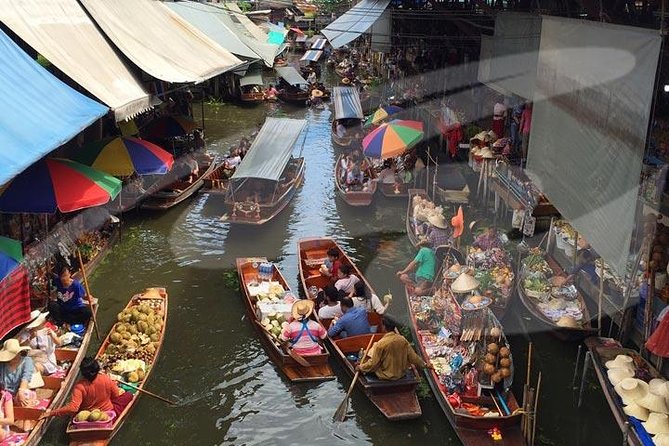
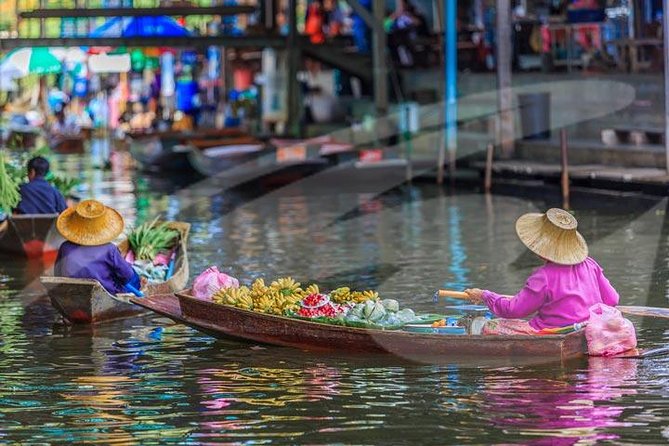
Damnoen Saduak is famous for a reason: it feels like you’re stepping into a canal-based food and goods system. You travel by longtail speedboat through the market area, then have about 1 hour 30 minutes at the floating market itself.
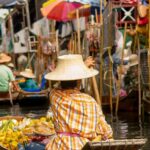
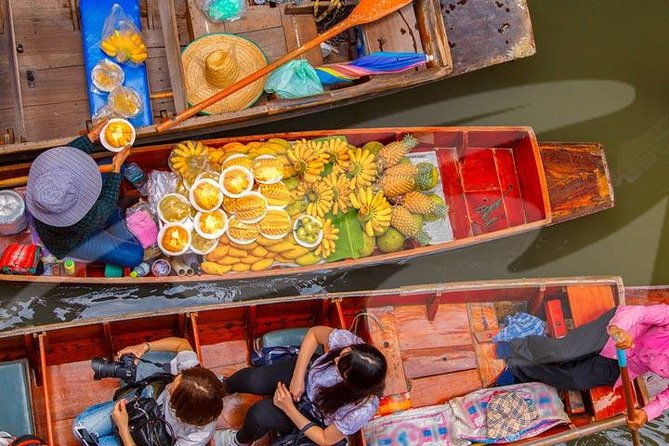
The classic scene is canoes packed with fruits, vegetables, sweets, and meats. It’s a visual shock after Bangkok because you’re shopping and moving through waterways that feel far more intimate than a normal street market.
But go in with realistic expectations. The market can be very busy, and boats can get stuck in traffic in the canals. One practical tip from the on-the-water reality: consider bringing a face mask if you’re sensitive to exhaust smell, especially when the area is crowded and motorized boats are churning up the water.


Shopping strategy: how to avoid the overpriced trap feeling
Shopping at Damnoen Saduak can be fun, but it can also feel like a tourist marketplace. Some items may be priced higher than you’ll see elsewhere, so I’d treat this market as more of a “try the moment” stop than a “load up for a bargain” stop.
If your goal is local food, fruit, and small edible snacks, you’ll probably enjoy it more than if you’re hunting for the cheapest souvenirs. The market works best when you view it like a living museum of daily canal commerce, not a price-comparison game.
You also get the most value when you pick a couple items, not a cartful. That way, you don’t lose time in crowds, and you’re more likely to buy what you actually want instead of what the moment pressures you toward.
The optional smaller canoe ride: when extra cost makes sense
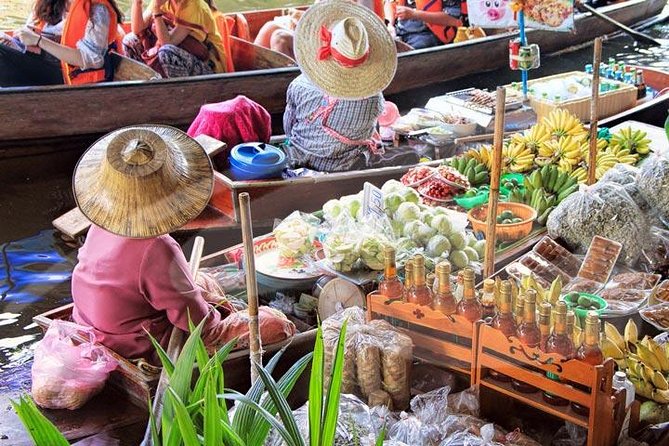
Here’s the part that often improves the experience: an optional boat ride through the market on a smaller canoe (paid directly on-site). The tour guide can help you organize it.
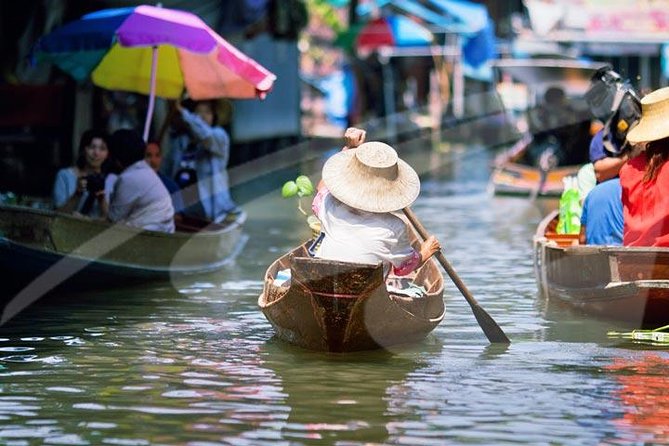
This is the add-on I’d consider if you want a closer look at canal life. One review highlighted that the smaller canoe ride was especially worth it compared to the bigger, more crowded boat traffic. If you’re short on patience for bottlenecks in the canals, this option can feel like the difference between watching the market and feeling inside it.
On the other hand, if you’re already happy with the longtail speedboat run and your time on the water, you may decide to skip the extra ride.
Lunch in Kanchanaburi: refuel before the WWII stops
After exploring the floating market, you return to the air-conditioned coach and head toward Kanchanaburi. The transfer is about 2 hours 30 minutes, so lunch comes at the right time.
Lunch is included at a local restaurant before you head to the next sites. For a long day like this, I appreciate when the meal is already handled. It keeps you from scrambling for food in between museum and bridge visits, and it keeps your schedule on track.
If you have dietary restrictions, plan ahead. The details of the meal aren’t spelled out in the tour info, so you’ll want to check with your provider before you go.
JEATH War Museum and the Kanchanaburi War Cemetery
Once you arrive in Kanchanaburi, the day turns serious. You’ll visit the JEATH War Museum and then the Kanchanaburi War Cemetery.
JEATH is where you get the visual and emotional context around the bridge and the wartime railway project. The museum uses pictures and paintings to explain what happened, and it sets you up to understand why the bridge site matters beyond a single postcard view.
Then comes the cemetery visit, which is the final resting place for many WWII prisoners of war. This is one of those stops where the value comes from recognition: you’re not just seeing a structure, you’re seeing the human cost tied to its construction.
The time at each site is short, but it’s enough to orient you. It’s also a good reminder that the bridge is a symbol with real weight.
River Kwai Bridge: what you’ll see and what to look for
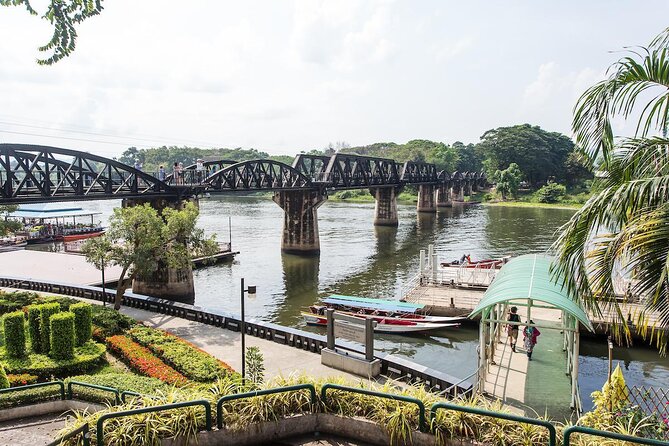
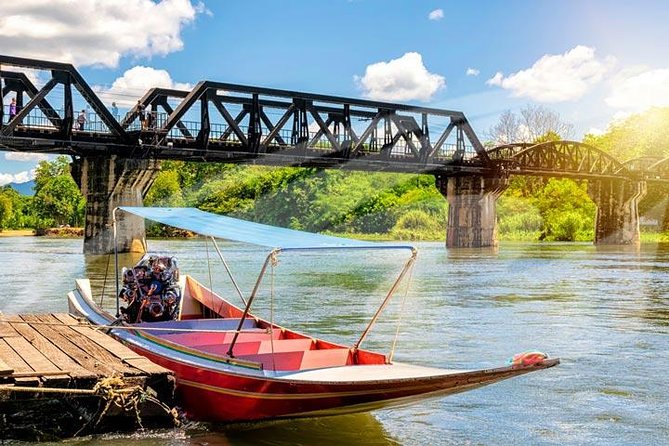
You’ll visit the River Kwai Bridge itself after the museum and cemetery. The bridge building dates to 1943 and is tied to a wartime effort to connect rail lines and support the Japanese occupation in Burma.
The tour guide’s role matters here. Without context, you might just see a bridge and a train-track structure. With context, you start noticing details as part of a bigger story—labor, prisoners of war, and the railway project that shaped this region.
One practical note: the bridge experience can feel different depending on what’s happening at the time. If your package includes a train ride option, that can add a bit of motion to the scene, but the core visit is still about the bridge and surrounding WWII significance.
Also, the bridge is worth visiting even if it looks modern in parts. The important thing is the meaning of the site, and the tour gives you that meaning before you get there.
Group size, guiding style, and how to get the most out of it
With a maximum of 6 travelers, this tour often feels more personal than big-bus day trips. In several experiences shared by past participants, the guide made the biggest difference—especially when it came to explaining what you’re looking at, not just moving from stop to stop.
You may hear different guiding styles depending on who’s on your day. Some guides mentioned by name include Nikko, Suki, and Yelli, and those names pop up alongside comments about clear explanations and helpful handling during the day.
How you can get the most out of it:
- Ask your guide what you should notice at each stop, especially at the bridge.
- Keep your optional-ride decisions flexible until you see how crowded things feel.
- Plan for the long drive mentally so the day doesn’t feel like one blur.
Who should book this tour (and who might not)
This tour fits best if you want a single-day package that covers both Damnoen Saduak and the Bridge over the River Kwai with included admissions and lunch. It also suits you if you’d rather let someone else handle the transport and timing.
It’s less ideal if you strongly dislike long driving days. Kanchanaburi is far from Bangkok, so this is a “start early, return late” type of day.
It may also not be your favorite if you hate tourist-trap vibes. Damnoen Saduak can feel crowded and commercial, and extra stops or add-on pressure can happen on some days. If you feel strongly about animal-themed or souvenir-heavy detours, you’ll want to confirm what’s included for your specific departure before you go.
Finally, if you’re a history-first traveler, you may still want to follow up later with extra reading. The time at each WWII site is efficient, not long.
Should you book this Floating Markets and Bridge on River Kwai Tour?
If you have one full day in Bangkok and want two major Thailand highlights without the logistics headache, I’d book it. The included boat trip, lunch, and paid admissions make it a solid value, and the museum + cemetery setup helps the bridge mean something.
I’d only hesitate if you’re very sensitive to crowds, exhaust smell on the water, or long drive times. If that sounds like you, consider adding the optional smaller canoe ride and bring a face mask and water so the day stays comfortable.
If you want a well-organized “best of the region” sampler—this is one of the most efficient ways to do it.
FAQ
How long is the Floating Markets and Bridge on River Kwai tour?
The tour runs about 10 hours.
Does the tour include hotel pickup and drop-off?
Yes, pickup and drop-off are included from selected hotels. You’ll need to provide your hotel details at booking.
What parts of the day include paid admissions?
Admissions are included for the Coconut Sugar Farm, Damnoen Saduak Floating Market, JEATH War Museum, Kanchanaburi War Cemetery, and the River Kwai Bridge area.
Is lunch included?
Yes. Lunch is included at a local restaurant during the Kanchanaburi portion of the day.
Is the boat trip to the floating market included?
Yes. The tour includes a boat trip to the floating markets as part of the Damnoen Saduak segment.
Can I add a closer boat ride inside the floating market?
Yes, there’s an optional smaller boat ride inside the markets. It is not included and is payable directly on-site.
Is there a train ride included?
A train ride is included only if you select the option. The tour info lists it as optional.
What if the tour cancels due to minimum numbers?
If minimum numbers aren’t met, you may be offered an alternative or a full refund. You also have free cancellation up to 24 hours before the start time for a full refund.