REVIEW · BANGKOK
From Bangkok: Floating & Railway Markets Tour & Coconut Farm
Book on GetYourGuide →Operated by Thailand Insight Travel · Bookable on GetYourGuide
A day of markets, boats, and a train strike.
That mix is why this tour works: you get the floating market atmosphere and the railway “stall” drama in one packed morning.
Two things I especially like are the longtail boat ride at Damnoen Saduak and the way the tour adds hands-on rural stops (coconut sugar and salt). When the day is running well, you see how food and daily life are made, not just how they’re sold.
One consideration: timing and seasons can affect what you actually get, especially for the train/railway access and whether every farm stop runs as expected. That can be frustrating if you’re hoping for a single, specific photo moment.
In This Review
- Key highlights at a glance
- Why this floating-plus-railway day is more than a checklist
- Getting to Ratchaburi: standard vs luxury transport from Bangkok
- Damnoen Saduak floating market by longtail boat: what you’re really seeing
- The railway market train ride: the moment everyone talks about
- Coconut sugar farm workshop: tasting the work behind a sweet product
- Salt field lesson: seawater to cooking and skincare
- Price and value: is $98 worth it for 7 hours?
- Who should book this tour (and who may want to skip it)
- Should you book: my recommendation
- FAQ
- How long is the tour?
- What’s included in the price?
- Is the train ride always guaranteed?
- Do I need to pay extra for lunch?
- Where are pickups in Bangkok?
- Can I choose my pickup time?
- Is the coconut farm workshop always included?
- What should I bring?
- Is this tour suitable for people with mobility issues?
Key highlights at a glance
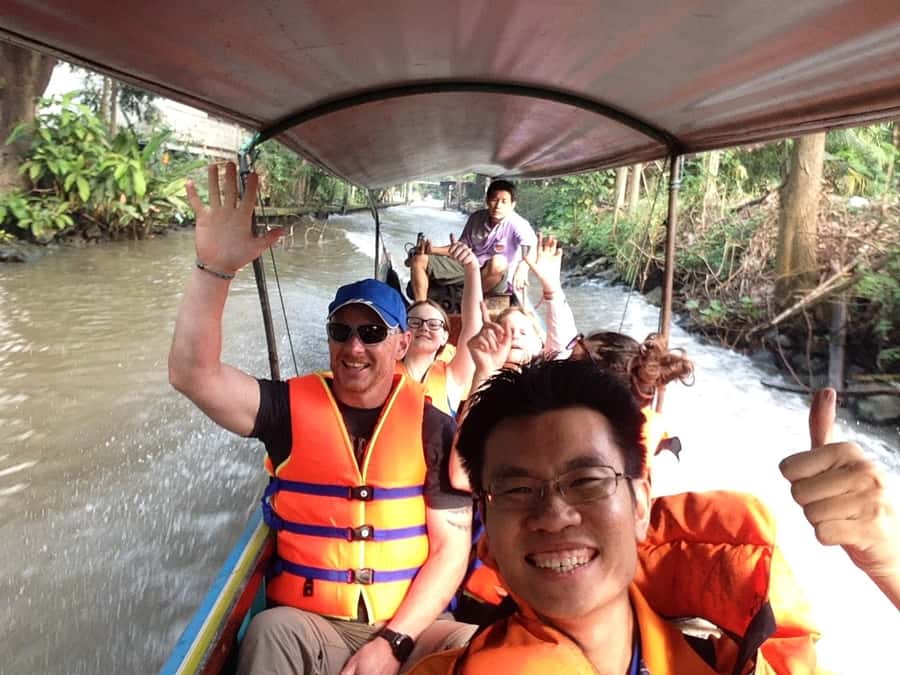
- Damnoen Saduak by longtail boat for close-up canal views and market action
- Railway Market train ride where vendors pull back stalls as the train comes through
- Coconut sugar farm mini workshop with a practical look at how sugar is made
- Salt field visit to understand how sea salt becomes cooking and skincare ingredients
- English-speaking guide with strong cultural context and photos covered (often with staff like Lin, Pop, or Adam)
Why this floating-plus-railway day is more than a checklist
Damnoen Saduak floating market is the headline, but it’s the full sequence that makes this outing worthwhile. You start with water life and food stalls, then shift gears to a local market built around a working rail line. It’s one thing to see these places on video; it’s another to experience the rhythm—boats, shouting vendors, close negotiating, then suddenly the sound of a train and everyone working fast.
The other smart part is the rural add-ons. A coconut sugar farm stop teaches the labor behind a product you’ll often just see wrapped on shelves. The salt field visit explains how seawater becomes a gritty ingredient you use at home. Those stops make the markets feel less like a show and more like an everyday supply chain.
You can also read our reviews of more tours and experiences in Bangkok.

Getting to Ratchaburi: standard vs luxury transport from Bangkok
You’re leaving Bangkok early, so comfort matters. This tour offers a choice: a standard vehicle or a luxury vehicle, with roundtrip transfers and a licensed guide. If you’re doing this as a first-time outing, I’d lean toward the more comfortable option because you’ll be in transit before the fun starts and after it ends.
Pickup is built around BTS Siam as a central hub for downtown Bangkok hotels. You’ll meet your guide in the hotel lobby and should be ready about 10 minutes before the scheduled pickup time. For private tours you can select your pickup time, while the standard pickup time is listed as 6:30 AM.
Here’s the practical truth: early starts can feel long, especially if you’re traveling light and don’t want to think about clothes, water, and sun. Bring what you need so the day stays easy.
Damnoen Saduak floating market by longtail boat: what you’re really seeing
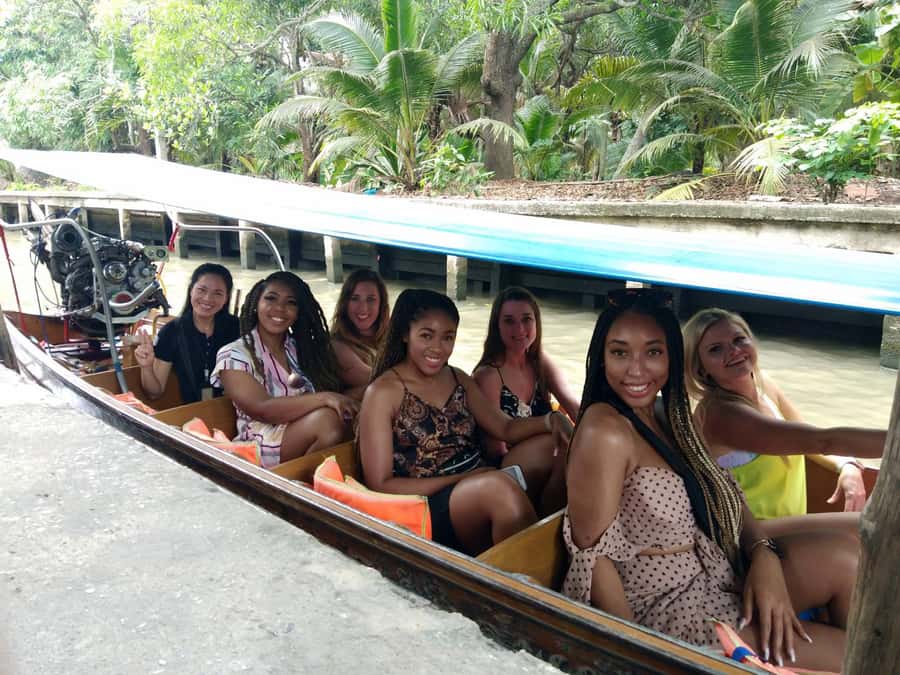
The longtail boat ride is the heart of the Damnoen Saduak portion. Instead of just standing on a walkway and watching from a distance, you get on the water and move through the canal—so you can see homes along the waterways, vendor boats passing by, and the way people buy, sell, and snack while they go about their day.
What I like about doing Damnoen Saduak this way is control. You can look at the stalls when they come into range, then shift your angle as the boat turns. That helps you avoid the typical chaos where everyone squeezes for the same photo. And yes, you’ll have plenty of opportunities to pick up small items, Thai snacks, and souvenirs, but the real value is the atmosphere.
Downside? The floating market experience can be tour-heavy. If you’re expecting mostly locals buying daily necessities, you may find more visitor-oriented stalls too. Still, the boat ride makes it worth it for the scale of the setting and the simple fact that you’re floating through it rather than just watching it.
The railway market train ride: the moment everyone talks about
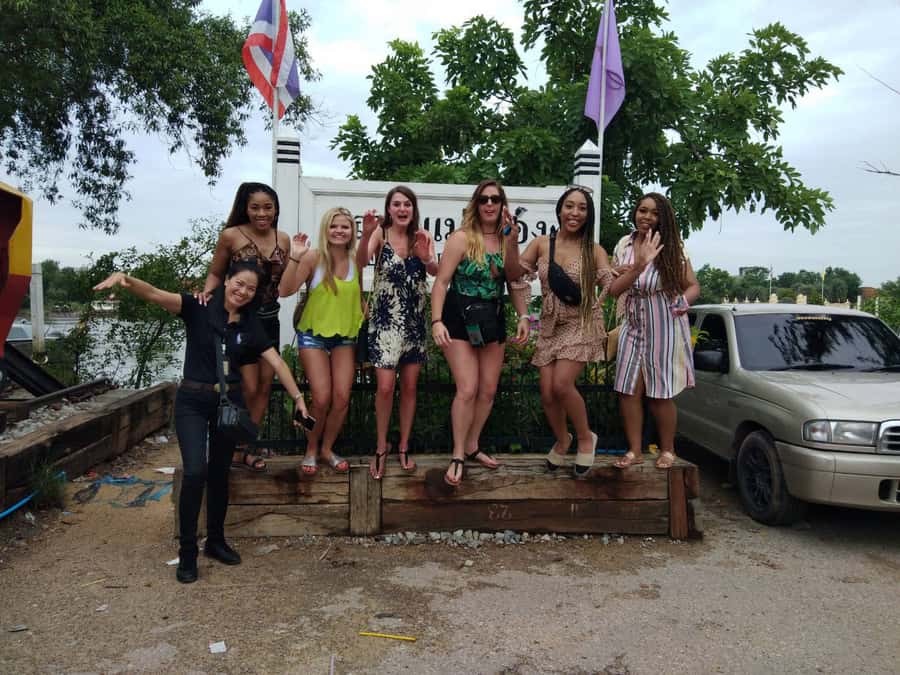
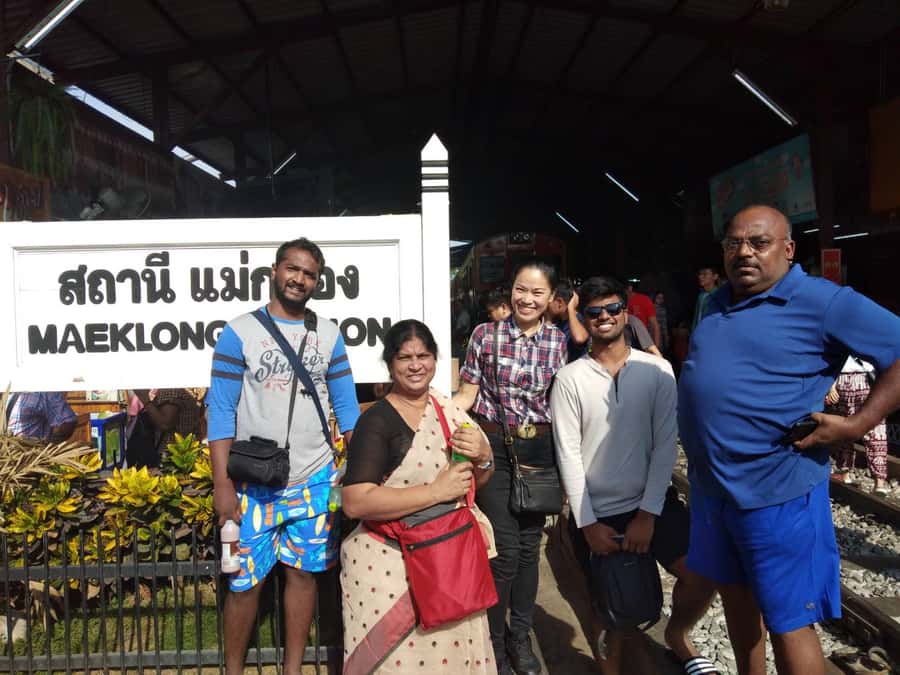
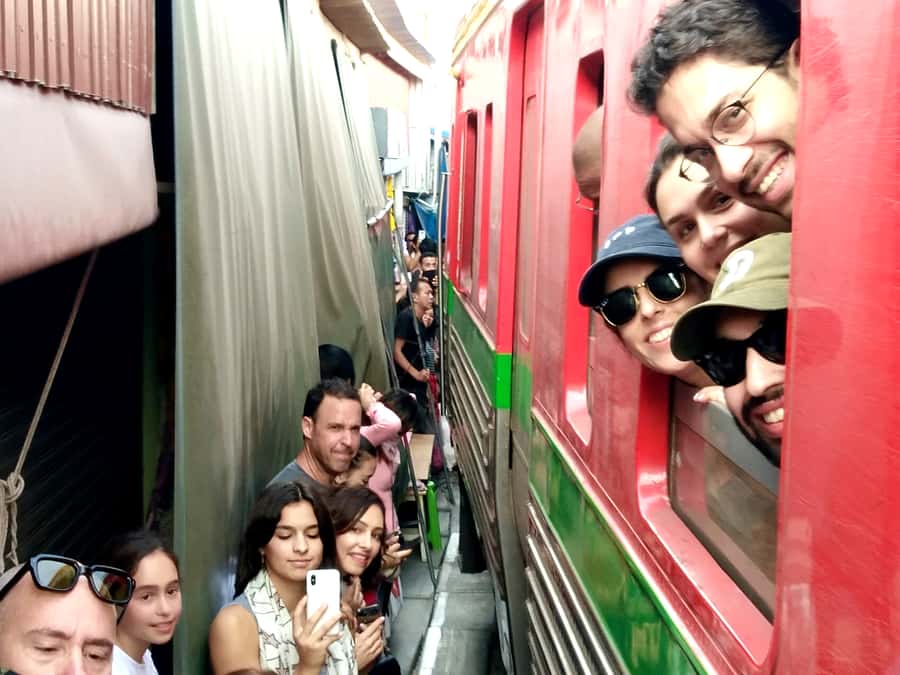
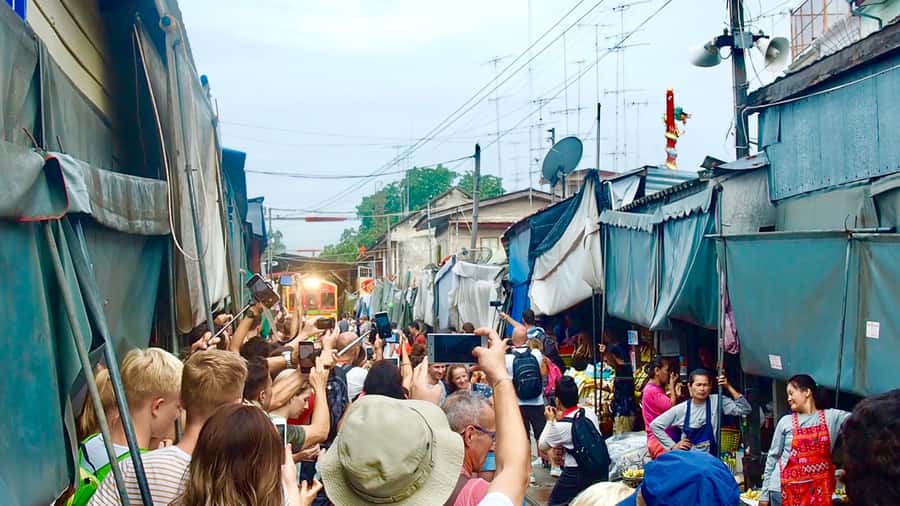
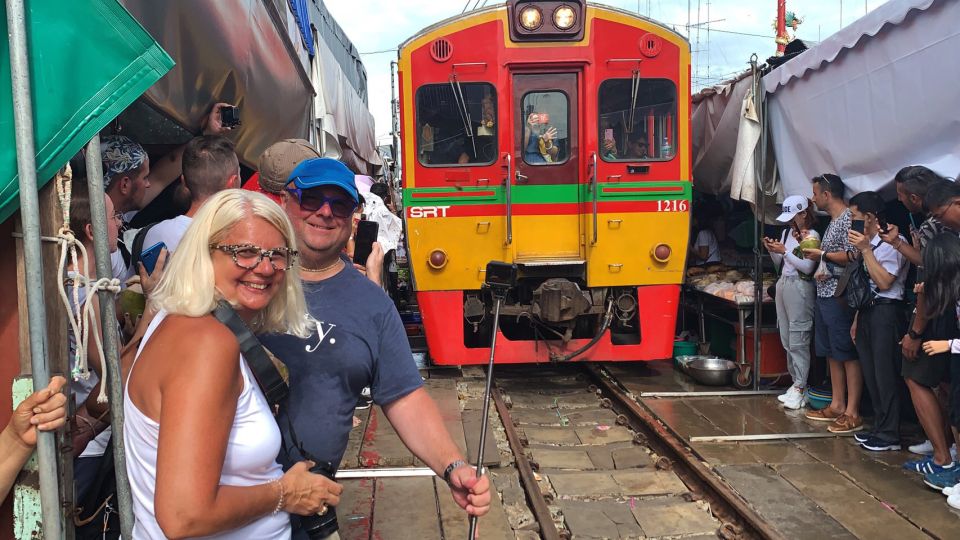
Now for the star attraction: the railway market, where the train comes through and vendors pull back stalls to make space. The tour includes a walking portion tied to this setup, often described as the risky market because the timing is tight and everyone has to react quickly when the train approaches.
The biggest win here is the sense of timing and teamwork. You’re watching commerce happen right next to infrastructure that moves on a strict schedule. Vendors aren’t posing; they’re working. When you’re on the train, you can see the stalls lining the area, and when you’re walking, you can feel how fast the scene changes as people retract and reposition goods.
Practical tip: this is one of those moments where your camera matters, but your stance matters more. Wear comfortable shoes and keep your plan simple: protect your gear from splashes, and don’t try to get perfect shots at the exact second the train arrives. Instead, be ready a few seconds earlier.
Note on inclusion: train ride availability can be conditional depending on tour type and day conditions. Private and luxury versions include the train ride, while group tours may have conditions on the day.
Coconut sugar farm workshop: tasting the work behind a sweet product
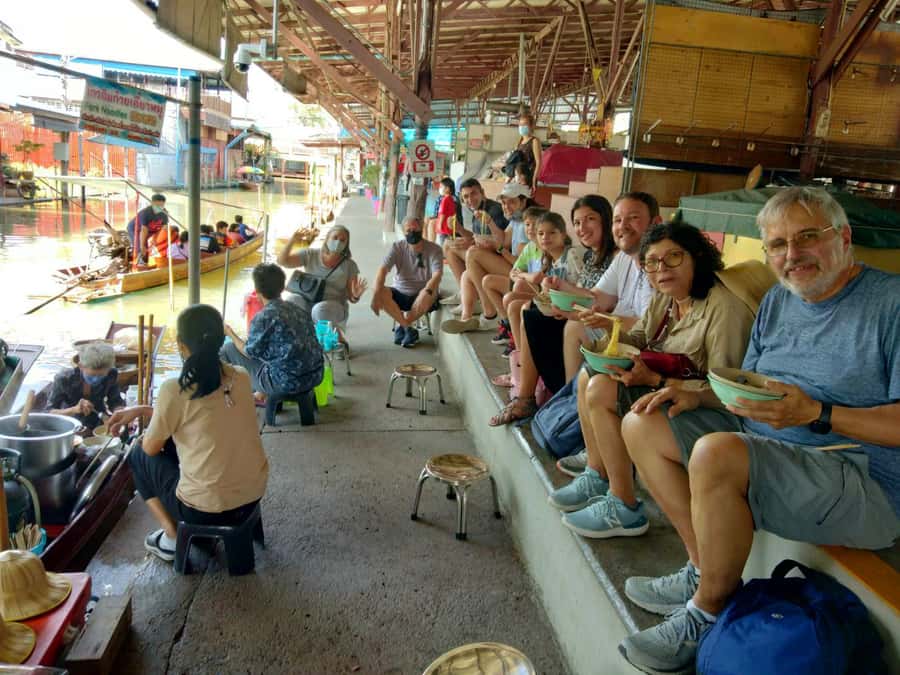
The coconut sugar farm stop is usually the “wait, I didn’t expect that” part of the day. You’ll learn how coconut sugar is made and get a hands-on mini workshop experience at the farm. For people who like food crafts, it’s a smart contrast to the markets, where everything is already packaged and priced.
What you gain from this stop isn’t just knowledge—it’s a better way to evaluate what you buy later. When you understand the labor and steps behind coconut sugar, the little packages you pick up at the market stop feel less like tourist goods and more like something you chose because you truly understand what it is.
One caution from the info you have: for private tours with a 9:00 AM hotel pickup, the coconut farm workshop may not be offered. If you’re booking a private schedule and coconut sugar is a priority, you’ll want to confirm the exact pickup time and whether the hands-on portion runs for that slot.




Salt field lesson: seawater to cooking and skincare
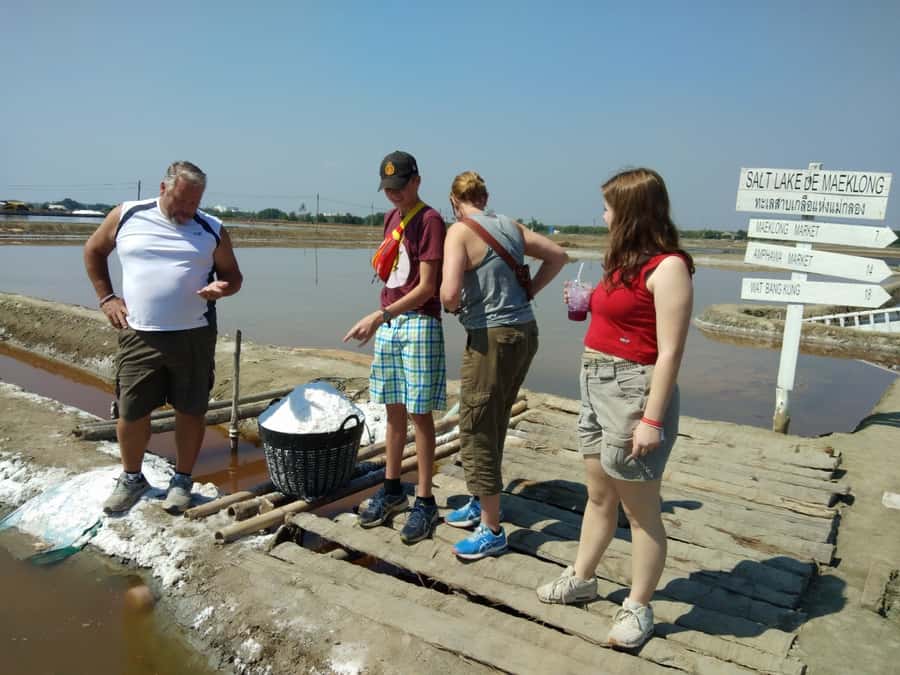
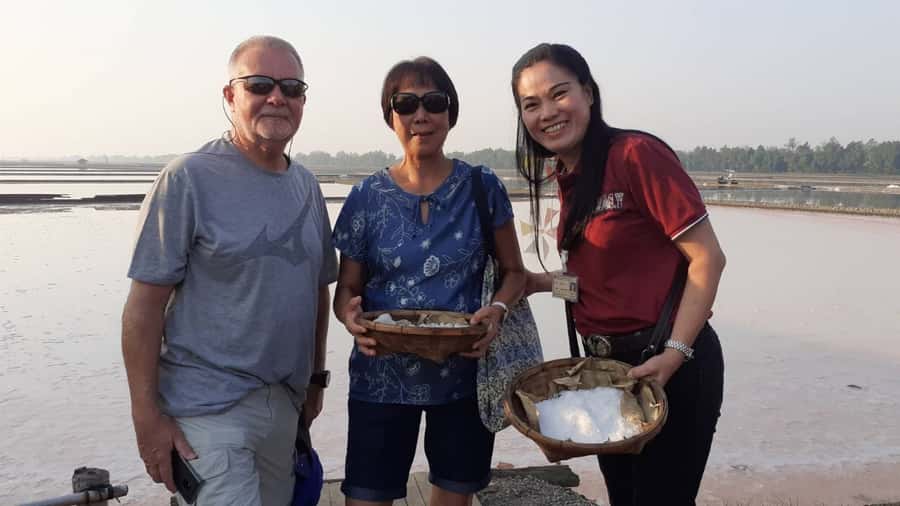
The salt field visit adds a different kind of education. Instead of focusing on consumer products, you’ll learn how a farmer produces salt from seawater—often linked to both cooking and skincare uses. It’s hands-on in the sense that you’re seeing the process and understanding the purpose, not just taking photos.
Even if you don’t remember every step, the value is the scale and logic. This is a slow, weather-based process, and it helps you see why ingredients like salt are treated differently than something made quickly in a factory.
Seasonality can affect what you see. Some days may include all the expected visuals; other days, certain farm elements may not show as clearly. If you’re the type who plans around one perfect photo, treat this as a lesson stop where flexibility helps.
Price and value: is $98 worth it for 7 hours?
At $98 per person for about 7 hours, this tour is priced like a “transport + licensed guide + multiple signature activities” package. You’re not just paying for one market. You’re paying for:
- A guided day structure with a licensed guide
- Boat time at Damnoen Saduak
- A railway market experience with a train component
- Farm visits tied to coconut sugar and salt production
- Travel accident insurance included
The lunch isn’t included, so factor that into your day budget. But that’s also normal for market tours; you typically get chances to buy snacks and small meals. The value equation comes down to this: if you want a guided path that connects floating + railway + rural food production, it’s hard to match that efficiency on your own without lots of research and transport juggling.
Where the price feels less “perfect value” is when you get the wrong mix of what’s running that day—like a missing stop or shorter time at one place. That’s why it helps to keep expectations flexible and focus on the overall experience rather than one single component.
Who should book this tour (and who may want to skip it)
This is a great fit if you want Thai culture that’s practical and sensory: boats, food stalls, working vendors, and food production lessons. It’s also a good choice if you don’t want to stress about timing between sites. Having an English-speaking guide helps you understand what you’re looking at and where to stand for photos.
It may not be a great fit if you have mobility impairments. The walking and market surfaces can be challenging, and the day involves getting on and off transport more than once.
If you’re a family group, friends, or solo traveler, small-group or private options can make the day easier. In multiple accounts, guides like Lin, Pop, MK, and Adam are noted for friendliness, timing, and helping with seats or photo moments.
Should you book: my recommendation
I’d book this tour if you like seeing how Thailand actually works—markets tied to real life, plus food production stops that explain what you’re eating and buying. The railway market train ride is the kind of experience that changes your sense of place fast, and the boat ride gives you the other side of the coin.
Skip it or at least lower expectations if you’re mostly chasing one quiet, low-tourist market moment. This is a structured day, and part of the charm is the crowd energy. Also, check that the farm and train components you care most about are included for your specific tour type and pickup time.
If you want a single morning in Ratchaburi that connects water trade, rail commerce, and rural ingredients, this one is a strong match.
FAQ
How long is the tour?
It’s listed as 7 hours total.
What’s included in the price?
Included items are a licensed English-speaking guide, a motorboat ride, and travel accident insurance, plus hotel pickup/transfer options and a train ride depending on tour type. Lunch is not included.
Is the train ride always guaranteed?
For private and luxury tours, the train ride is included. For group tours, the train ride is conditional depending on factors on the day.
Do I need to pay extra for lunch?
Yes. Lunch is not included.
Where are pickups in Bangkok?
Pickup is centered around BTS Siam in the Pathumwan district. You meet your guide in the hotel lobby about 10 minutes before pickup time. Group tour pickup is for downtown Bangkok hotels, and hotel pickup from outside downtown Bangkok isn’t included.
Can I choose my pickup time?
Private tours let you select your own pickup time. The standard pickup time is listed as 6:30 AM.
Is the coconut farm workshop always included?
For private tours, the coconut farm workshop may not be offered for 9:00 AM hotel pickups. For other pickup times, it’s listed as part of the experience.
What should I bring?
Wear comfortable shoes and bring a sun hat, sunscreen, a camera, comfortable clothes, and cash.
Is this tour suitable for people with mobility issues?
No, it’s listed as not suitable for people with mobility impairments.