REVIEW · BANGKOK
Bangkok Classical Bicycle Tour
Book on GetYourGuide →Operated by Co van Kessel Bangkok Tours · Bookable on GetYourGuide
One of Bangkok’s best shortcuts is by bicycle. This 3-hour ride takes you from Chinatown into Thonburi, Thailand’s historic third capital, plus a scenic Chao Phraya ferry hop.
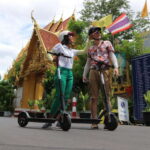
I especially love how the route mixes loud market energy with calmer residential streets, so you don’t just see landmarks—you see how people actually live. I also like the hands-on feel: narrow lanes, local worship spots, and quick photo moments that pop up because you’re moving under your own power. The big consideration is simple: you need to be comfortable biking, since some paths are tight and the Chinatown section can feel chaotic.
If you’re not a confident cyclist, this is the one factor that matters most. It’s not a hard workout, but it does require steady control and attention, especially when pedestrians and shop traffic crowd the narrow alleys.
In This Review
- Key things to know before you ride
- Starting Point: River City to Chinatown’s Edge
- Chinatown Backstreets: Markets, Shop-Houses, and Spirit House Details
- The practical payoff
- The main tradeoff
- A Guided Stop That Adds Context
- Thonburi: The Quiet Contrast of Thailand’s Third Capital
- What I like about the pacing here
- Monastery Visit: A Real Pause in the Middle of Cycling
- Break Time and the Flower-Market Stop
- A quick safety note for animal encounters
- The Chao Phraya Ferry: Skyline Views While Your Legs Rest
- Snacks, Drinks, and Why Food Stops Matter Here
- Safety and Skill Level: Narrow Lanes Are the Real Test
- What to wear and bring
- Price and Value: Why $40 Feels Fair for This Route
- Who This Tour Is Best For
- Who should skip it
- Should You Book This Bangkok Classical Bicycle Tour?
- FAQ
- FAQ
- How long is the Bangkok Classical Bicycle Tour?
- What’s included in the $40 price?
- Where do I meet the tour?
- Is the tour guide available in English?
- Do I need to know how to ride a bike?
- What about kids and infants?
- Are sleeveless shirts allowed?
- Does the tour include a ferry across the river?
- Can I cancel and get a full refund?
Key things to know before you ride
- Chinatown to Thonburi in ~3 hours: you cover a surprising amount of Bangkok without feeling trapped in buses and lines
- Ferry crossing on the Chao Phraya: short ride, big skyline payoff
- Snacks and drinks included: think local fruit and small tastings along the way
- Temple and monastery stops: you get cultural context, not just photos
- Small, guide-led navigation in tight streets: safety is managed by the guide team while you weave through crowds
Starting Point: River City to Chinatown’s Edge
You meet at 23 Soi Charoen Krung 24, right near River City Shopping Center. The instructions are clear: go to the office location that’s about 30 meters to the right of 7-Eleven, and look for the yellow sign.
This matters more than it sounds. River City is one of those practical Bangkok anchors that helps you avoid getting lost before you even start. And once you’re on the bike, the tour’s whole promise makes sense fast: your first minutes are spent where the action is, not in some quiet “tourist zone” warmed up for visitors.
You’ll be in English with a live guide, and you’ll have the bicycle hire included. Past groups have mentioned English-speaking leaders such as Mike and Emma, which lines up with the core idea here: you’re meant to understand what you’re seeing, not just pedal through it.
You can also read our reviews of more tours and experiences in Bangkok.
Chinatown Backstreets: Markets, Shop-Houses, and Spirit House Details
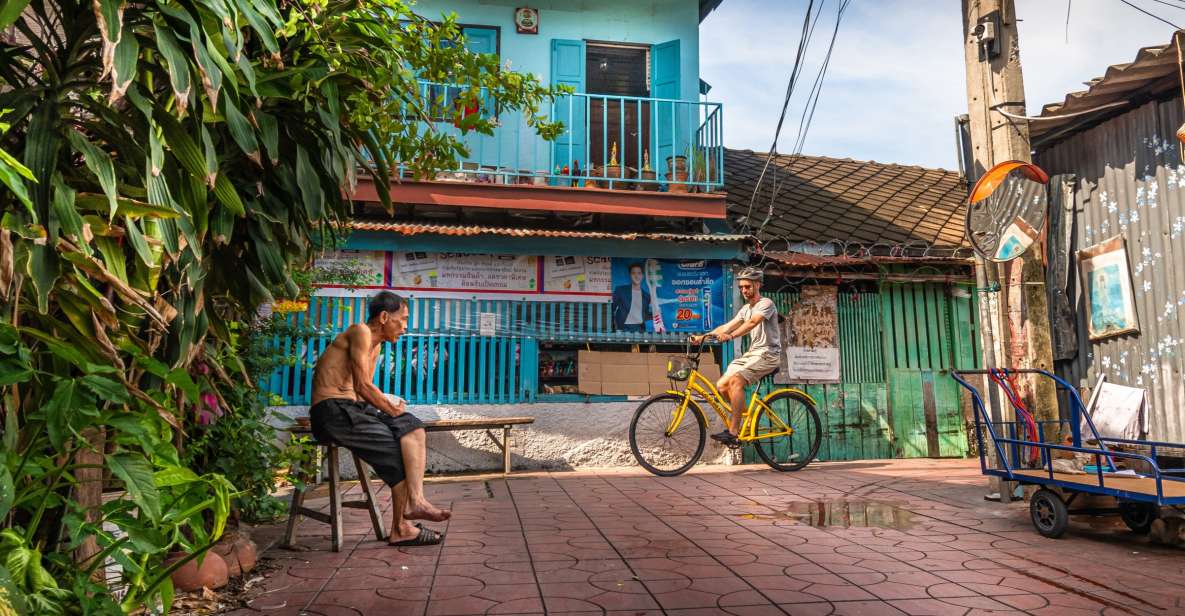
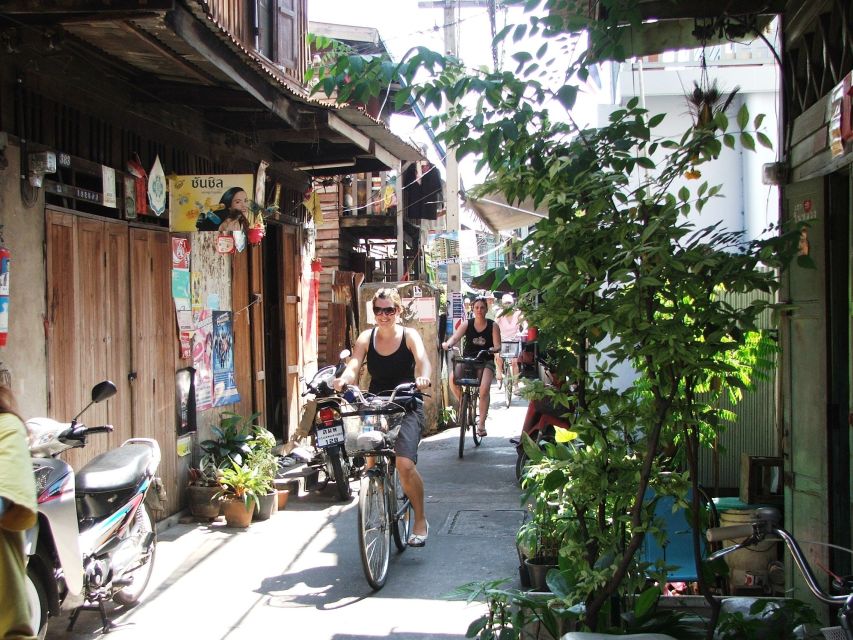
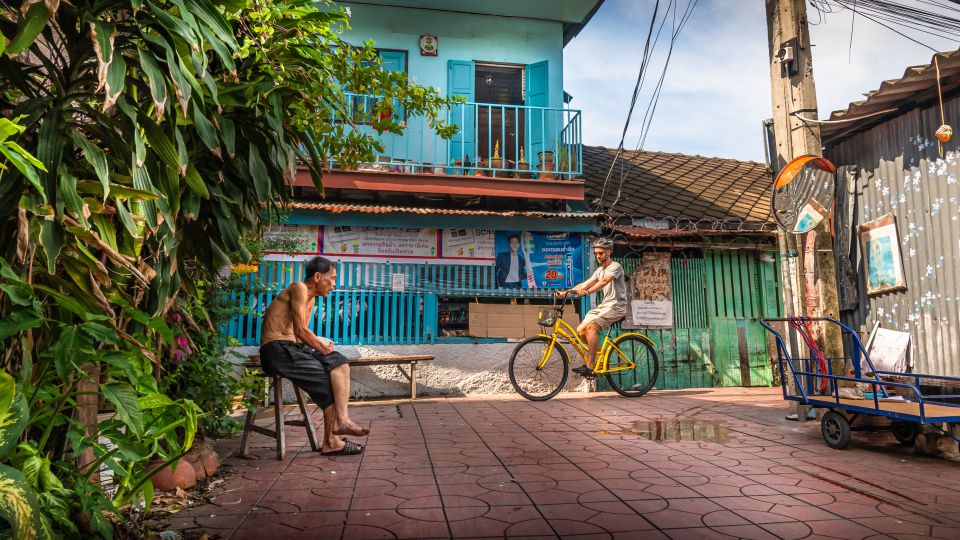
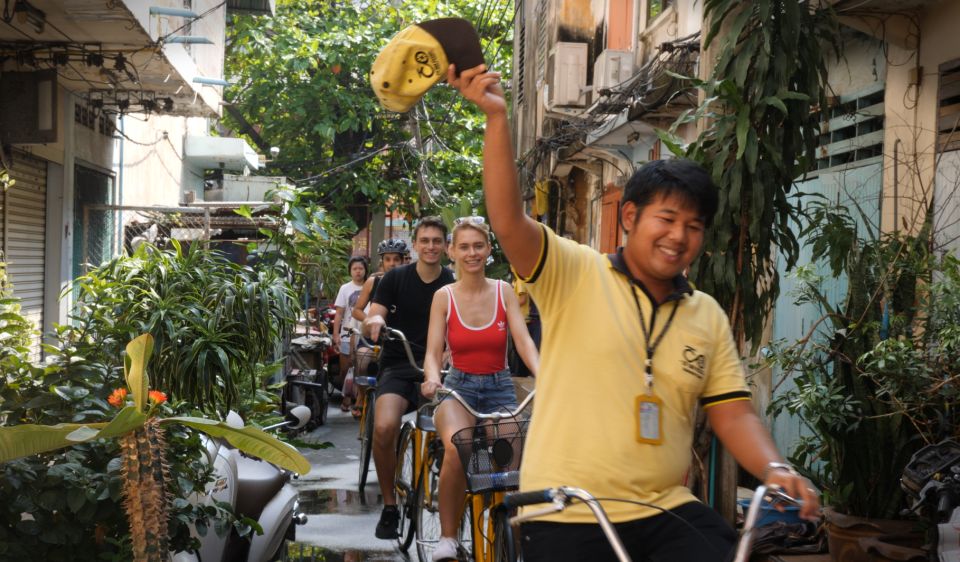
The tour begins in Chinatown, which is known for being the largest Chinatown outside of China. Your first stretch is about getting your senses up to speed. Expect narrow lanes, close-up shop activity, and that mix of smells and sounds that only shows up when you’re walking through alleys—or cycling through them.
This part is where you’ll see things that don’t translate well on Google Maps. You’ll pass shop-houses that sell everything from Buddhist amulets to surprising items like recycled truck engines. That kind of roadside practicality is the point. You’re not looking at a museum facade. You’re watching commerce and belief living side by side.
You’ll also spot local religious rhythms in everyday form: hidden temples, people worshiping, spirit house displays, and ritual paper burning. It sounds intense, but from the bike you experience it in quick, digestible moments—like turning your head and suddenly noticing the story behind a storefront.
The practical payoff
Cycling through Chinatown is the fastest way to experience it without getting stuck. On foot, you can get swallowed by crowds. By bike, you move like part of the neighborhood. You’re not standing still waiting for traffic or tour groups to clear.
The main tradeoff
This is the most crowded-feeling segment. You can expect tight paths with pedestrians and shop activity spilling into the lane. Even if you’re fit and coordinated, you’ll want to slow your brain down and ride calmly. The guides help manage the flow, but you still have to be comfortable reacting in real time.
A Guided Stop That Adds Context
After the initial Chinatown ride, there’s a shorter guided sightseeing moment (about 30 minutes). This is where the tour shifts from “what are we seeing?” to “why does it work like this?”
You’ll get more explanation around the local culture and the sites you’re passing. The tour isn’t trying to turn Chinatown into a lecture hall. It’s more like: here’s what you’re noticing, here’s what it means, and here’s what to look for next.
In practice, this stop also helps you reset. The bike keeps things moving, but your legs and attention still benefit from a brief change of pace—especially in dense areas.


Thonburi: The Quiet Contrast of Thailand’s Third Capital
Then you head to Thonburi, Thailand’s historic third capital. This is a big deal for value. So many Bangkok tours hit the big “must-sees” and then escape. This one builds contrast: chaotic Chinatown energy gives way to quieter local life.
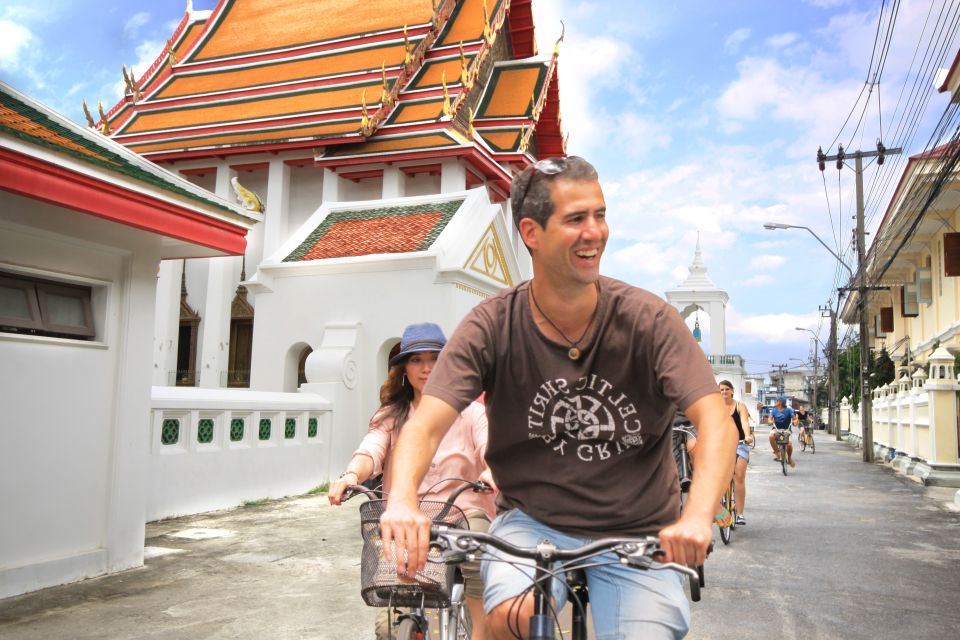
You’ll ride through Thonburi’s residential communities, where the streets feel less like a stage and more like day-to-day living. The vibe tends to shift from shops-first to neighborhoods-first. You’ll still be surrounded by Bangkok activity, but it’s the calmer kind—the kind where you notice routines, not just crowds.
This is also where the tour often feels more rewarding for people who have already visited major temples earlier in their trip. Instead of repeating famous sites, you’re learning the geography of another Bangkok.
What I like about the pacing here
The tour splits Thonburi riding into multiple segments, with a monastery visit and a break in the middle. That structure prevents the “three-hour blur” problem. You get movement, a cultural stop, a pause to recharge, and then more riding.
Monastery Visit: A Real Pause in the Middle of Cycling
During the Thonburi portion, you’ll visit a monastery for about 30 minutes. This isn’t just a quick stop for a photo. It’s a calm break that gives you a different lens on what you’ve been seeing all morning.
The monastery time matters because it changes the soundscape. Chinatown is loud, fast, and commercial. A monastery stop slows you down and makes your attention sharper. You’ll be able to look at details you might otherwise miss because you’re not scanning for bikes or traffic.
And if you’ve ever felt like Bangkok is too much at once, this is one of the ways the tour balances it. You get motion, then silence, then motion again.
Break Time and the Flower-Market Stop
There’s a break time of about 30 minutes in Thonburi. This is when the day turns into a practical refresh. You’ll have drinks and snacks included, and this is also where many rides feature a market stop tied to flowers.
From the food perspective, this is one of the most loved parts of the tour. People often mention fruit and local snack tastings they hadn’t tried before. That’s not just a nice extra. In Bangkok, food is how you learn a place without needing a textbook.
A quick safety note for animal encounters
One piece of advice from the real world: don’t get tricked into feeding animals just because it looks like a quick tourist moment. If you see fish being fed somewhere along the route, skip it. Wild animals can be harmed by the wrong food. Treat “don’t be part of the mess” as part of your trip style.
The Chao Phraya Ferry: Skyline Views While Your Legs Rest
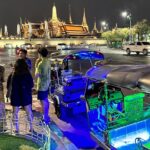
Next comes the Chao Phraya ferry crossing, a short hop of about 10 minutes. This is one of those “why this tour is worth it” moments.
You get a change of pace and a skyline view that feels instantly cinematic. The water gives you a breather, and the city behind you looks different when you’re not stuck in alley depth. It’s also a useful mental reset after cycling through tight streets.
You arrive back at the starting area near 23 Soi Charoen Krung 24 when you finish.
Snacks, Drinks, and Why Food Stops Matter Here
The tour includes drinks and snacks en route, and in many cases you’ll do a tasting break that people remember. Fruit is a common highlight, along with small local bites you may not find easily unless someone points them out.
Why food matters on this route: your bike takes you into places where menus and English signs aren’t guaranteed. A guided tasting turns that barrier into an advantage. You learn what to look for, what tastes good, and how Thai street snacks are meant to be eaten right away.
If you like the idea of Bangkok as more than temples, this is a strong reason to pick this tour. It’s a chance to connect culture, daily life, and flavor in a short time window.
Safety and Skill Level: Narrow Lanes Are the Real Test
This isn’t a stunt tour. It also isn’t a beginner push. The practical truth is: you must be able to ride a bike confidently. The tour isn’t suitable for people with mobility impairments, and if biking makes you nervous, this one can become stressful.
Reviews and feedback also highlight that Chinatown can be busy and narrow. Expect crowded alleys and lots of moving parts—pedestrians, shop traffic, bikes, and the general crush that comes with popular areas.
The good news: the guide team manages safety. People have praised how guides kept everyone together and handled navigation through tricky intersections. Some guides are even described as verbal leaders who keep the group calm while you thread through the chaos.
What to wear and bring
Bring comfortable shoes, sunglasses, and a camera. Also note a clear dress rule: sleeveless shirts are not allowed. In Bangkok heat, that sounds annoying, but it’s an easy fix—wear a light shirt with sleeves and you’re good.
Price and Value: Why $40 Feels Fair for This Route
At $40 per person for about three hours, this tour competes well in Bangkok’s mid-range market. Here’s what you’re actually paying for:
- Bike rental included, so you’re not hunting for a rental shop or guessing fit and safety
- Local guides in English, which matters because the real story is in what you’re seeing, not just the road
- Ferry crossing included, so you’re not negotiating transport logistics mid-day
- Drinks and snacks included, which reduces the extra daily costs and adds a memorable stop
If your goal is value, the big question isn’t whether $40 is cheap. It’s whether it replaces other transportation and “extra add-ons.” For this route, it often does. You cover Chinatown plus Thonburi, you cross the river, and you get multiple short cultural moments in a single guided package.
Who This Tour Is Best For
This is a strong choice if you want Bangkok that isn’t only big sights and mass tourism. You’ll enjoy it most if you like street-level culture, you’re curious about religion in daily life, and you want a route that makes you feel like you moved through the city rather than on top of it.
It’s also a smart “morning plan” for people who like starting early and getting off the tourist treadmill. Many people do it as a first big activity and then continue exploring on their own afterward.
Who should skip it
- If you can’t bike confidently, don’t gamble. This tour expects real riding.
- If mobility is an issue, it’s not designed for that.
- If you hate close crowds and tight lanes, the Chinatown segment may feel too intense.
Should You Book This Bangkok Classical Bicycle Tour?
I’d book it if you want a short Bangkok experience with real local texture: Chinatown shophouses, hidden worship spaces, Thonburi’s calmer side, a monastery pause, and that Chao Phraya ferry view. The price is fair because the package bundles guide time, bike hire, river transport, and snacks.
I wouldn’t book it if bike riding makes you uneasy or if tight crowded lanes would spike your stress. In that case, you’ll spend too much energy worried instead of seeing.
If you’re a capable cyclist and you want the city’s everyday side, this tour is one of the better ways to get it in just three hours.
FAQ
FAQ
How long is the Bangkok Classical Bicycle Tour?
It’s about 3 hours total.
What’s included in the $40 price?
The tour includes a bicycle, local guide(s), a ferry crossing, and drinks and snacks en route.
Where do I meet the tour?
Meet at the office location at 23 Soi Charoen Krung 24. It’s about 30 meters to the right of a 7-Eleven at River City Shopping Center. Look for the yellow sign.
Is the tour guide available in English?
Yes, it includes a live English tour guide.
Do I need to know how to ride a bike?
Yes. The tour is not suitable for people who can’t ride a bike.
What about kids and infants?
Infants age 0–5 must ride on the back of the bikes. Children age 6–11 have no charge if they cannot ride on their own and ride on the back of the bike.
Are sleeveless shirts allowed?
No. Sleeveless shirts are not allowed.
Does the tour include a ferry across the river?
Yes, it includes a Chao Phraya ferry crossing.
Can I cancel and get a full refund?
Yes. Free cancellation is available up to 24 hours in advance for a full refund.