REVIEW · CHIANG RAI
Chiang Rai: 7 Major Sites, Golden Triangle & Tea Plantation
Book on GetYourGuide →Operated by LocalCNXTours · Bookable on GetYourGuide
A full day in Chiang Rai packs big stories into small stops. This tour strings together iconic artistic temples and frontier-era history in a small group with an English guide. The only real catch: it’s a long day in a minibus, and the Black House isn’t for everyone’s taste.
I like the way the day is built around what you actually want to see: Wat Rong Khun, the Golden Triangle area, Chui Fong Tea Plantation, and the Opium Museum, without getting stuck trying to figure out logistics. One thing to consider is the pacing of the most famous site; if the White Temple is your main obsession, you may wish you had more time there.
In This Review
- Key highlights worth your attention
- What you’re really booking: Chiang Rai’s best hits, efficiently
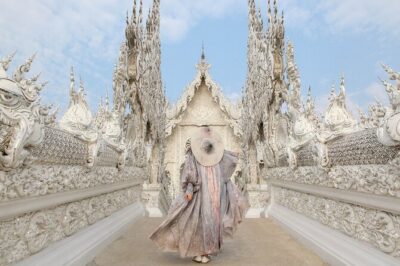
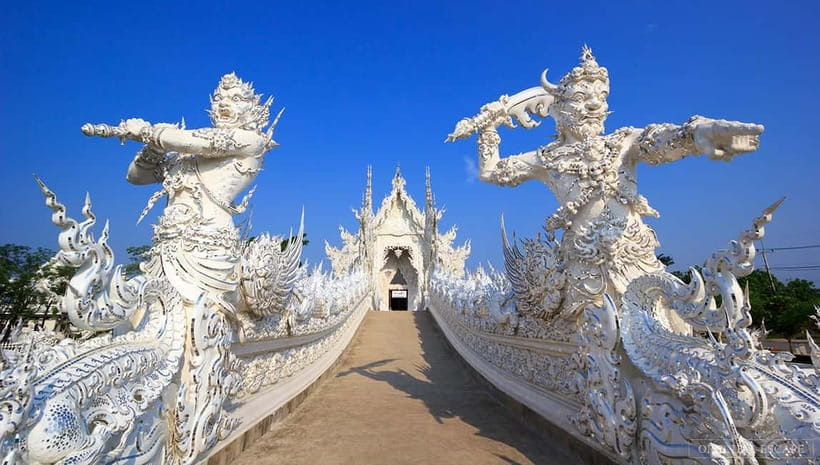
- White Temple (Wat Rong Khun): modern Thai art meets Buddhist symbolism
- Blue Temple (Wat Rong Suea Ten): color, craft, and Buddhist themes
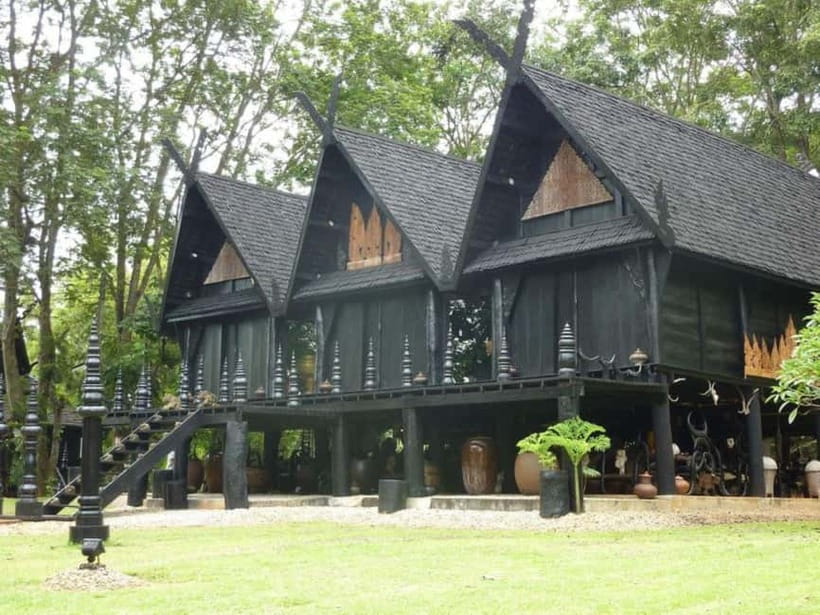
- Black House (Baan Dam): a museum stop that can feel strange—in a good way
- Golden Triangle and the Opium Museum: why this region matters
- Chui Fong Tea Plantation: a calmer pace with real sensory payoff
- Karen Hilltribe Village (optional): choose this if cultural stops interest you
- Price and tickets: how to decide between the two options
- How the day runs: pickup, small-group comfort, and lunch
- Who this tour fits best (and who should think twice)
- Should you book this Chiang Rai day trip?
- FAQ
- What time does pickup happen?
- How far from the city center is pickup included?
- What’s included in the price besides transportation?
- Is lunch vegetarian-friendly?
- What are the ticket options?
- How much is the White Temple ticket if it’s not included?
- Is the Karen Hilltribe Village stop mandatory?
- Is this tour wheelchair accessible and suitable for seniors?
Key highlights worth your attention
- Wat Rong Khun (White Temple) as a modern-art temple, not a simple old-world shrine
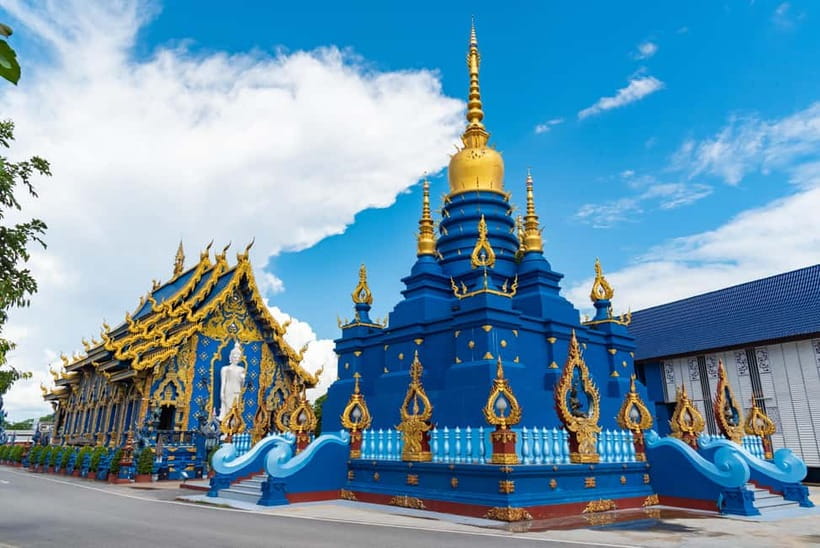
- Wat Rong Suea Ten (Blue Temple) for its striking design and Buddhist themes
- Baan Dam (Black House) as a museum-style experience with a very odd, memorable vibe
- Golden Triangle + Opium Museum for context on the region’s history and trade routes
- Chui Fong Tea Plantation as a scenic pause with a tea-country feel
- Karen Hilltribe Village option if you want an extra cultural stop (your call)
What you’re really booking: Chiang Rai’s best hits, efficiently
Chiang Rai doesn’t always get the spotlight like its bigger neighbor. This tour is designed to correct that fast. In one day, you’ll move through three of Chiang Rai’s art-forward temples, then shift gears to the Golden Triangle and Opium Museum, and finish with a nature stop at the tea plantation.
The value is in the mix. You’re not just checking off buildings. You’re seeing how modern Thai artists, Buddhist symbolism, and regional history all sit side-by-side in this northern corner of Thailand. And because the group is capped at 10, you usually get a more human rhythm than the mega-bus version of “see everything.”
Also, the small details matter. You get a minibus with air conditioning, drinking water, and a buffet Thai lunch. A private English-speaking guide keeps the day from turning into a blur of photos and ticket lines.
You can also read our reviews of more tours and experiences in Chiang Rai.
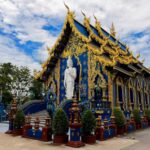

White Temple (Wat Rong Khun): modern Thai art meets Buddhist symbolism
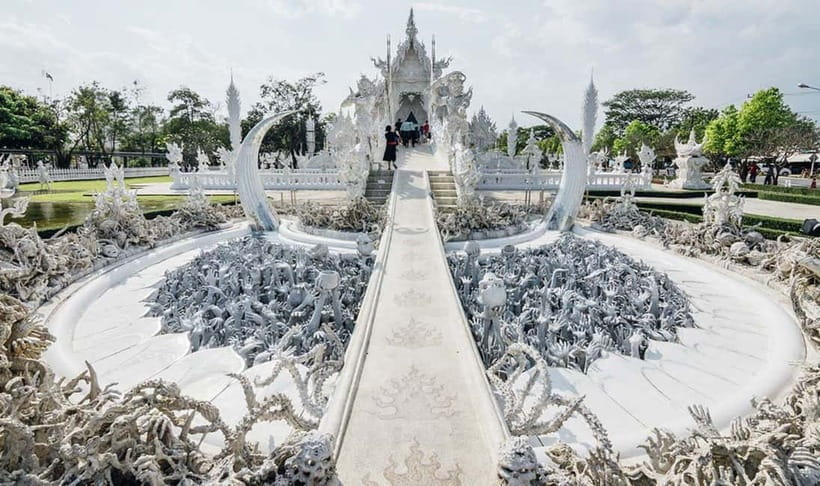
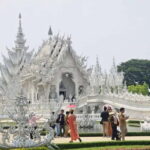
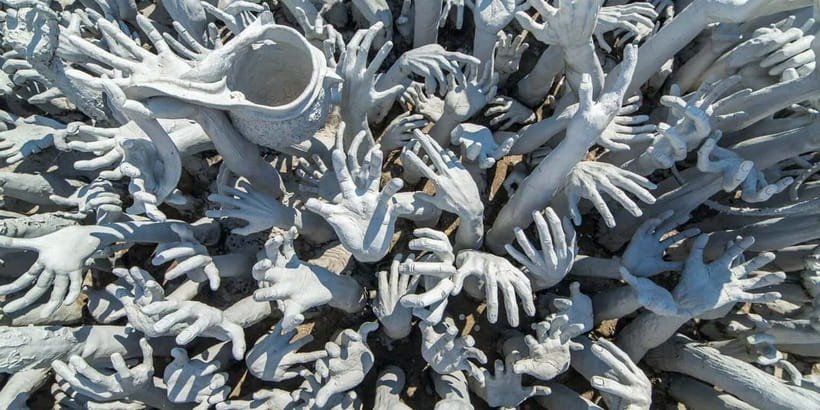
If you’ve heard the White Temple described as dazzling, that’s true—but the more interesting part is why it looks so unusual. Wat Rong Khun is modern in its design language, built as a work of art by a legendary Thai artist. The feel is part temple, part imagination exercise, with details that reward slower looking.
Here’s how to enjoy it:
- Take time to walk and scan the surfaces up close. This is where the story details live.
- Don’t rush the main viewpoints. Let your eyes adjust from the bright exterior to the symbolic elements inside.
The practical benefit is that your guide can frame what you’re seeing—so you don’t have to guess at meaning while the light and crowds move on. If the White Temple is the reason you’re coming to Chiang Rai, plan to spend your “best energy” there, even if it means giving less priority to taking every single extra photo.
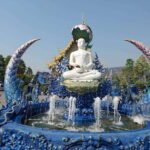
Blue Temple (Wat Rong Suea Ten): color, craft, and Buddhist themes
The Blue Temple is the opposite mood from the White Temple. Where Wat Rong Khun feels like white-hot imagination, Wat Rong Suea Ten leans into color and visual confidence.
This stop is worth it because it shows how Chiang Rai blends Buddhist heritage with a modern, artistic viewpoint. You’re not looking at a museum of the past. You’re looking at an active creative interpretation of faith and culture.
A helpful way to approach it:
- Look for the structure as well as the decoration. The craft supports the symbolism.
- If you’re the type who enjoys architectural details, this is a good place to slow down and watch how light changes the colors.
If you tend to find temple visits too similar, this tour’s pairing of White and Blue temples is a smart way to keep the day varied.
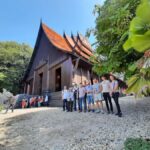
Black House (Baan Dam): a museum stop that can feel strange—in a good way
The Black House isn’t really a temple in the typical sense. It’s more of a museum-style collection—bizarre, artistic, and intentionally off-kilter.
This is the stop that splits people into two camps:
- If you love weird-but-thoughtful design and stories behind unusual art, you’ll probably grin through the whole thing.
- If you want traditional temple calm, this may feel like the day suddenly switched genres.
I like including it because it prevents Chiang Rai from feeling like just “pretty temples.” It shows another face of the region: creative, personal, and a bit unpredictable. Your guide can help connect the dots so it doesn’t feel like you’re just looking at random objects.
Golden Triangle and the Opium Museum: why this region matters
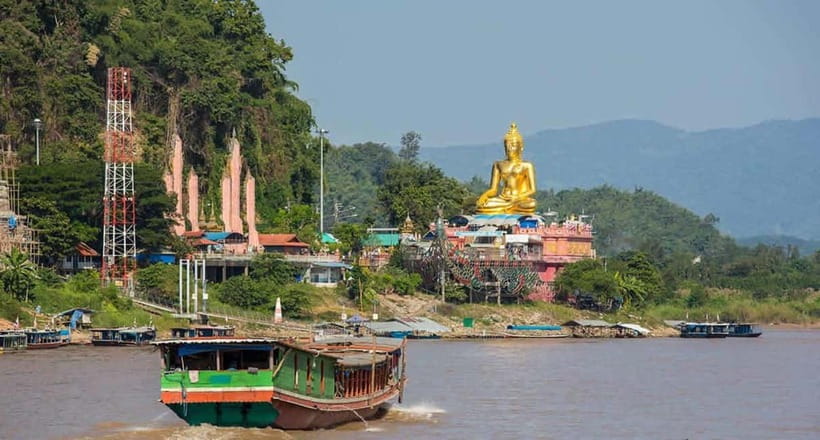
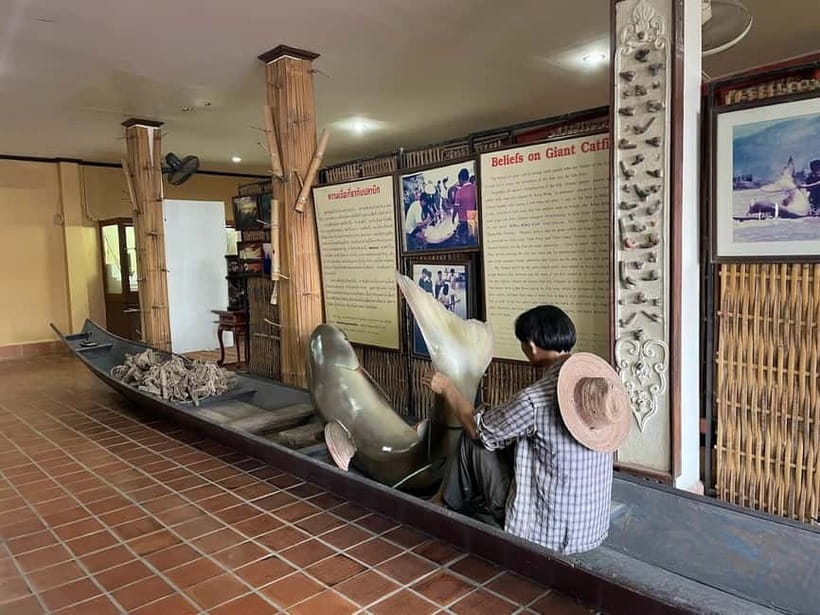
After the temples, the day pivots toward a darker chapter. The Golden Triangle area is historically tied to shifting borders and cross-regional trade, including the opium trade era. The Opium Museum helps you put that history into focus with a structured visit rather than vague guessing.
This is where a good guide makes a difference. You’ll get explanations that turn “a famous stop” into something you can actually understand. It’s also a time when the history becomes practical to talk about—how the region changed, why it was significant, and what people were dealing with.
One note for your comfort: this part of the day can involve outdoor viewing. Bring your hat and be ready for sun. You already have sunscreen on your pack list, but a hat makes a real difference here.

Chui Fong Tea Plantation: a calmer pace with real sensory payoff
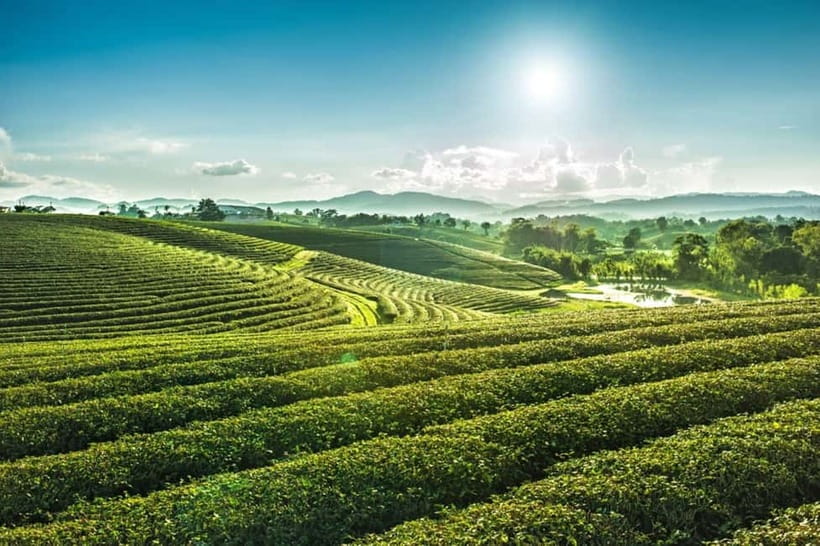
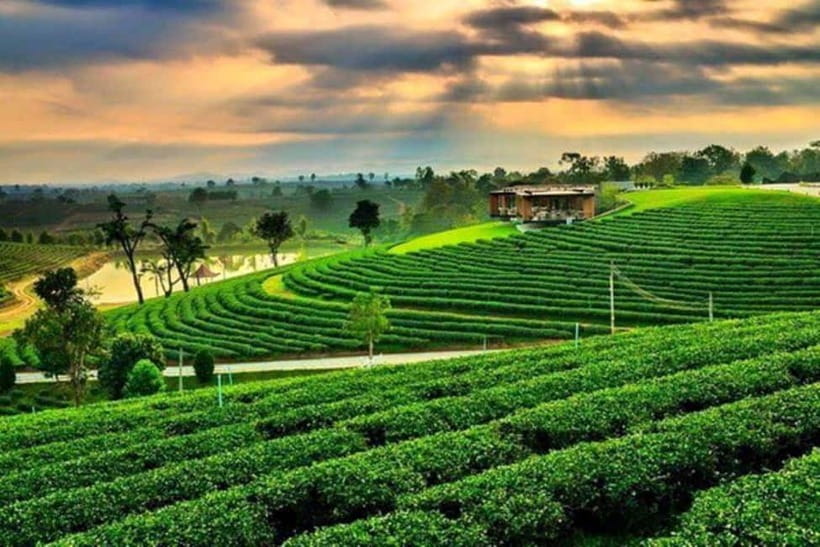
Tea plantation stops are often treated like quick photo breaks. This one feels more like a reset. You’ll get a chance to explore Chui Fong Tea Plantation, and it’s a nice contrast to temple-hopping and museum time.
What you’ll likely enjoy most:
- The scenery shift. Even if you’re not a tea expert, the setting changes your mood.
- The chance to connect with a local product culture, not just city landmarks.
If you’re the type who likes food and everyday life aspects of travel, this stop gives you something tangible. Also, tea country tends to be a welcome break when the rest of the day runs on walking and standing.
Karen Hilltribe Village (optional): choose this if cultural stops interest you
The Karen Hilltribe Village is listed as an option. That’s a big deal: it means you don’t have to force this stop if it’s not your style.
If you do choose it, go in with the right expectations. Think of it as a cultural visit, not a theme park. Your guide’s job is to help you understand what you’re seeing and keep it meaningful.
This is the kind of stop that works best if:
- You enjoy meeting people and learning how communities live
- You’re curious about local heritage and traditions
And it’s a good option, not a requirement—because not everyone wants extra stops after temples, Golden Triangle, and the museum.
Price and tickets: how to decide between the two options
You’ll usually see this tour offered in two ways: tickets included or tickets excluded. This is one of those decisions that changes the real cost, not just what you carry on day one.
If your option includes tickets, you’re covered for standard admissions per your ticket type (and your itinerary uses included tickets where applicable). If your option excludes tickets, you need to handle admissions yourself.
A concrete example: the White Temple ticket is 200 baht per person. So if you’re leaning toward the ticket-excluded option, plan for at least that fee. (And you should expect other sites may also require admissions depending on what your package covers.)
In plain terms, here’s the value test:
- Choose tickets included if you want less hassle and more predictable spending.
- Choose tickets excluded if you prefer flexibility and are comfortable managing entry fees on the fly.
Either way, the rest of what you’re paying for stays consistent: minibus transport, a private English guide, lunch, and water.
How the day runs: pickup, small-group comfort, and lunch
The tour is 1 day with a morning start. Pickup is scheduled for 8:00 to 8:30 am, with a return to Chiang Rai in the evening.
Pickup logistics are simple if you’re in the city center. There’s free pickup and drop-off within 6 kilometers of Chiang Rai’s center. If you’re farther out, you’ll get a meeting point—so it’s worth sharing your hotel name early. The route in and out can be easier when the pickup point is specific.
Transport is a key part of why this works as a day trip. You’ll ride in an air-conditioned minibus with a driver, and the tour keeps the group small (up to 10). That matters because you spend less time herding people and more time actually looking at places.
Lunch is a buffet Thai lunch, and vegetarian food is available if you request it ahead of time. One practical tip: tell your guide about dietary restrictions and allergies. They can often arrange your meal options so you’re not left with a limited plate while the rest of the group eats.
Who this tour fits best (and who should think twice)
This is a strong fit if you want:
- A one-day plan that covers major Chiang Rai highlights
- English guidance so you get stories and context, not just scenery
- A balance of temples, history, and a nature/food-type stop
It may be less ideal if:
- You use a wheelchair (it’s listed as not suitable for wheelchair users)
- You’re over 70 (also listed as not suitable)
And there’s one more personal-fit factor: the Black House can feel odd or intense depending on your taste. If you prefer classic, serene sights only, you might enjoy most of the day and feel less excited about that final museum-style portion.
Should you book this Chiang Rai day trip?
If you’re visiting Chiang Rai for a short time and you want the major sights without stress, I’d book it. The combination is hard to beat in one day: White Temple, Blue Temple, Black House, then the Golden Triangle + Opium Museum, finished with Chui Fong Tea Plantation. Add the Karen Hilltribe Village option only if it’s your kind of cultural visit.
The decision comes down to two things:
- Do you want the predictable convenience of tickets included, or the flexibility of managing admissions yourself?
- Are you okay with a full day that prioritizes coverage over slow wandering?
If your answers are yes, this is a smart, high-value way to experience Chiang Rai beyond the obvious.
FAQ
What time does pickup happen?
Pickup is scheduled for 8:00 to 8:30 am.
How far from the city center is pickup included?
Pickup and drop-off are included within 6 kilometers of Chiang Rai’s city center.
What’s included in the price besides transportation?
The tour includes an air-conditioned minibus ride, a private English-speaking guide, buffet Thai lunch, drinking water, travel accident insurance, and standard tickets if you choose the tickets-included option.
Is lunch vegetarian-friendly?
Yes. Vegetarian food is available if you inform the guide about dietary restrictions or allergies.
What are the ticket options?
You can choose an option with tickets included or tickets excluded. If tickets are excluded, you’ll need to pay admissions yourself.
How much is the White Temple ticket if it’s not included?
The White Temple ticket is 200 baht per person.
Is the Karen Hilltribe Village stop mandatory?
No. The Karen Hilltribe Village is listed as an option.
Is this tour wheelchair accessible and suitable for seniors?
No. It is listed as not suitable for wheelchair users and people over 70 years.