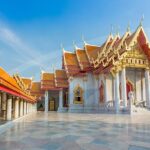
REVIEW · BANGKOK
Bangkok: Evening Tour with Wat Arun, Wat Pho & Tuk Tuk Ride
Book on GetYourGuide →Operated by TripGuru Thailand · Bookable on GetYourGuide
Bangkok at night hits different. This evening tour gives you Wat Pho’s reclining Buddha with a calmer temple pace, then Wat Arun across the river with its porcelain-and-seashell details and night lighting, before a tuk-tuk ride into Yaowarat’s street energy. One thing to plan for: the temple dress code is strict—shoulders, knees, and certain underarm/back coverage can be enforced.
I like that it’s built for a small group (up to 9), so your guide can keep things moving without feeling rushed. You’ll also get clear guidance in English or Spanish—some recent guides include Sun, Jack, Fern, Bonnie, Nancy, and Kit—and there’s a low-impact touch with glass-bottle water plus carbon offset credits.
In This Review
- Key things I’d prioritize on this tour
- Why an evening Wat Pho and Wat Arun route is smarter than daytime
- Starting at Tha Tian Pier: getting your bearings fast
- Wat Pho after hours: reclining Buddha, rules, and how to get better photos
- The ferry to Wat Arun: the river as your in-between moment
- Wat Arun at sunset and after dark: porcelain, seashell mosaics, and calm
- The tuk-tuk ride to Yaowarat: a short thrill, then street food time
- Chinatown (Yaowarat) on your feet: what to do with your free time
- Price and value: why $41 feels fair (and when it might not)
- Group size and guide style: what small-group really changes
- What to bring (and what to wear) so the tour doesn’t fight you
- Pacing: what “4 hours” feels like on the ground
- Who should book this Bangkok evening tour
- Should you book it?
Key things I’d prioritize on this tour
- Wat Pho timing for a smoother visit than peak daytime crowds
- Wat Arun at dusk and after dark, when the mosaics and lantern glow look their best
- Ferry crossing for real river views and an easy rhythm between temples
- One-way tuk-tuk to Yaowarat, a fun speed-change from walking and ferry time
- Chinatown free time that’s structured enough to learn, but open enough to eat and wander
- Small-group size (9 max) for better photo stops and calmer pacing
Why an evening Wat Pho and Wat Arun route is smarter than daytime
Bangkok temples are gorgeous, but daytime can feel like a hot-wet marathon. This evening format helps because the air cools down, the light changes, and the city gets quieter around the edges. You still get the big sights—just with less pushing and more time to look.
I also like the contrast your itinerary creates: a serene temple stop at Wat Pho, then a postcard-river stop at Wat Arun, and finally Chinatown street life where the energy ramps up again. That rhythm matters. It turns what could be a checklist into a story you can actually feel.
You can also read our reviews of more tours and experiences in Bangkok.
Starting at Tha Tian Pier: getting your bearings fast
You meet at Tha Tian Pier (ท่าเรือท่าเตียน) before 4:30 pm, and the guide will be holding a TripGuru sign. Plan to arrive 10 minutes early so you can get grouped up and start on time.
Tha Tian Pier is a real launch point. You’re already in the river-and-temple neighborhood, close enough to feel like you’re traveling with locals who know this area by routine. It’s also a handy way to avoid relying on hotel pickup. If you’re staying anywhere along transit routes, you’ll likely find this meeting point easy to reach.
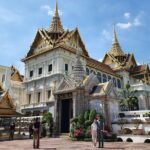
Before temples, you start with a leisurely stroll along Maha Rat Road. You’ll hear the background of Rattanakosin Island and even get a view of the Grand Palace from the outside. It’s a good warm-up because it gives you context before you hit the main religious landmarks.
Wat Pho after hours: reclining Buddha, rules, and how to get better photos
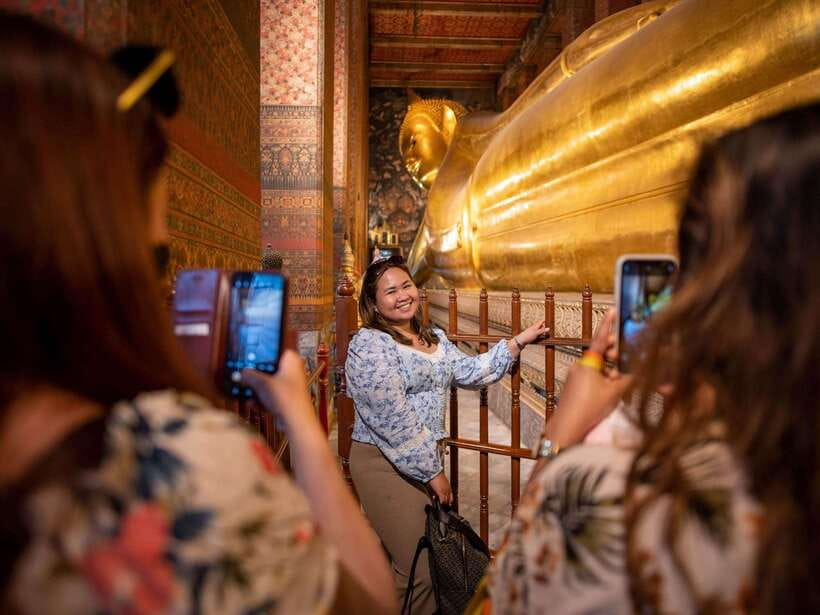
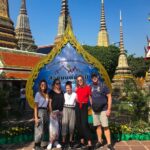
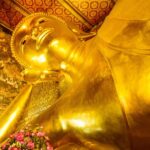
Wat Pho is one of Bangkok’s most famous temple complexes, and the reclining Buddha is the headliner for a reason. In the evening, the vibe shifts. The crowds thin out, and the mood becomes less hectic. That helps you actually spend time noticing details—hands, textures, and the way worship works here.
What I’d watch for at Wat Pho is temple etiquette, because it affects your experience more than you might expect:
- Wear clothing that follows the dress code (no bare shoulders, and coverage rules can be enforced).
- Keep an eye out for guidance from your guide about where people typically stand or how visitors should move around.
Also, bring your camera planning mindset. Several guides mentioned as highlights in feedback are the type who actively help with photo angles and timing. If you want good shots without spending your whole time hunting for positions, a tour like this is one of the easiest ways to do it.
Potential drawback: if your clothes don’t match the site rules, you may be asked to cover up right there. The tour specifically warns that the dress code can be enforced. Have a light layer ready—more on that later.
The ferry to Wat Arun: the river as your in-between moment
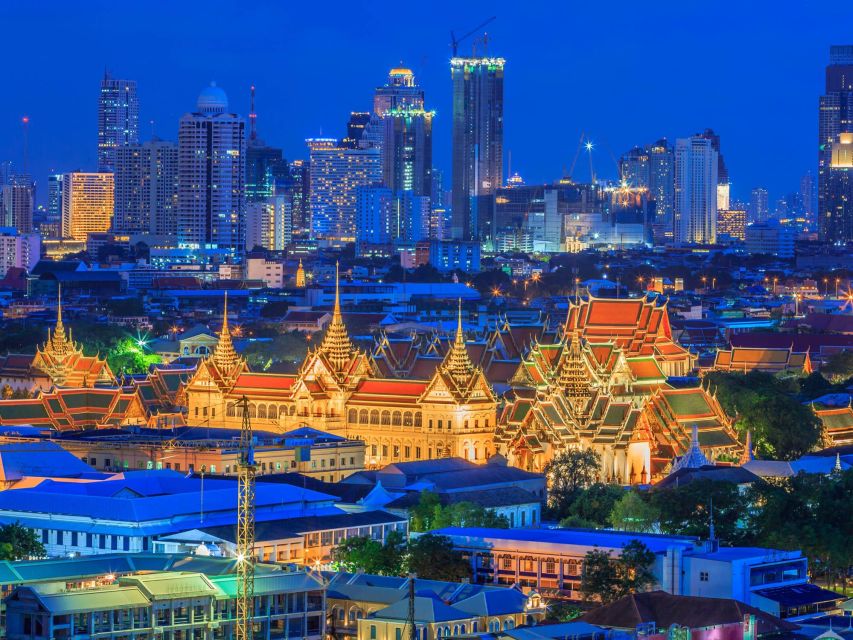
Between Wat Pho and Wat Arun, you take a ferry. That might sound like simple transport, but it changes the whole feel of the evening. The river gives you a break from walking and puts you on the right side of Bangkok’s “this is a city of waterways” reality.
On the ferry segment, you’re not just getting from A to B. You’re getting views that help Wat Arun make more sense. When you arrive at the riverside temple, it feels less like a standalone stop and more like the natural next chapter in the story.
Wat Arun at sunset and after dark: porcelain, seashell mosaics, and calm
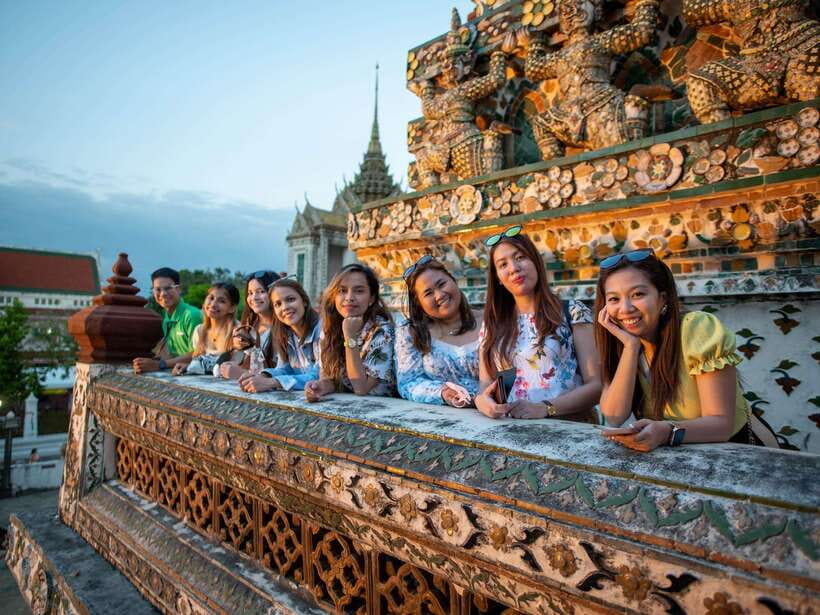
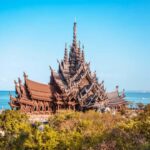
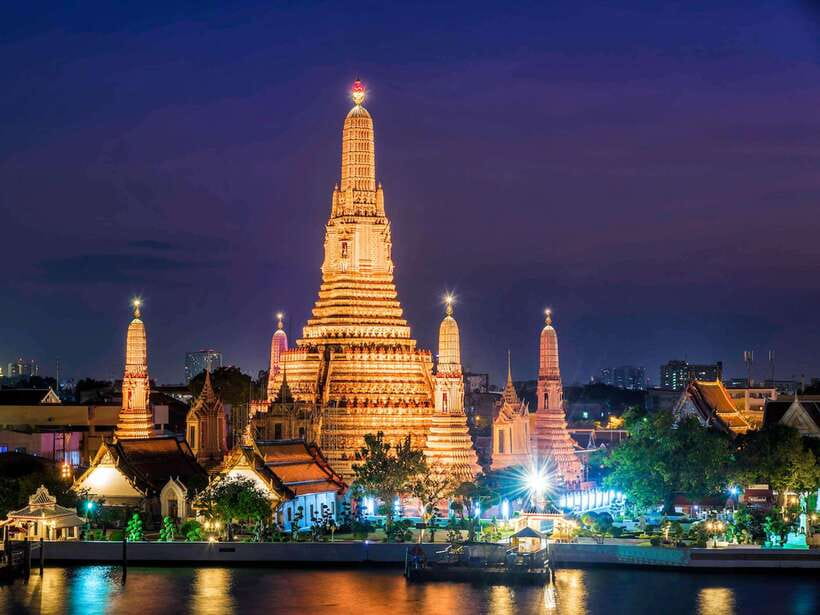
Wat Arun is the temple people recognize from pictures, but seeing it in real life hits different—especially at night. The temple’s surfaces are decorated with intricate porcelain and seashell mosaics, and your evening timing helps those details catch the light rather than disappear into harsh daylight.
Many guides focus on helping you understand what you’re looking at, not just pointing to it. That matters with Wat Arun because the temple’s beauty isn’t just the outline; it’s also the patterns and materials that build the look.
Another benefit of visiting in this time window: you often get the “before and after” effect—views shifting as light drops and the lighting comes on. It’s not a guarantee of a specific sunset moment, but the tour’s structure supports that kind of transformation.


The tuk-tuk ride to Yaowarat: a short thrill, then street food time
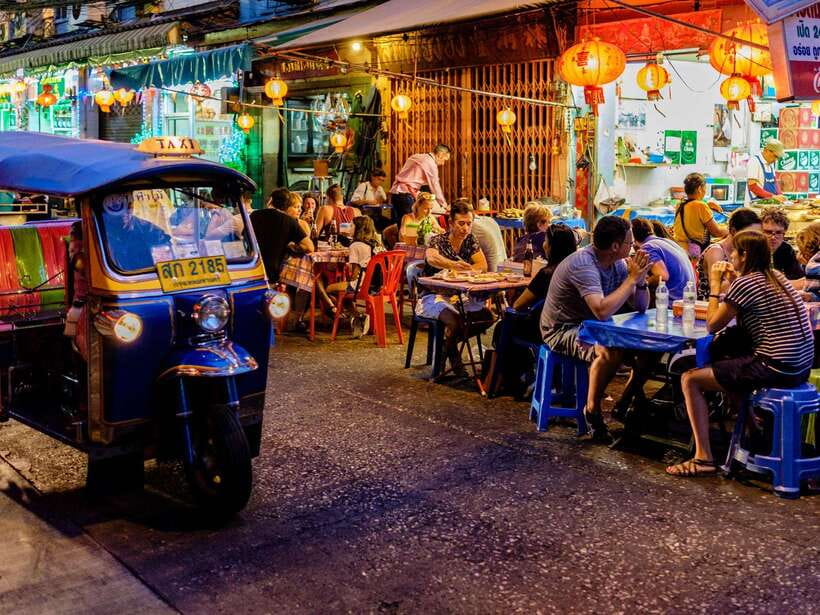
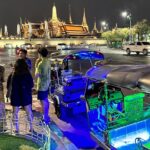
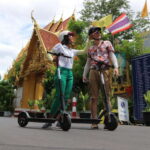
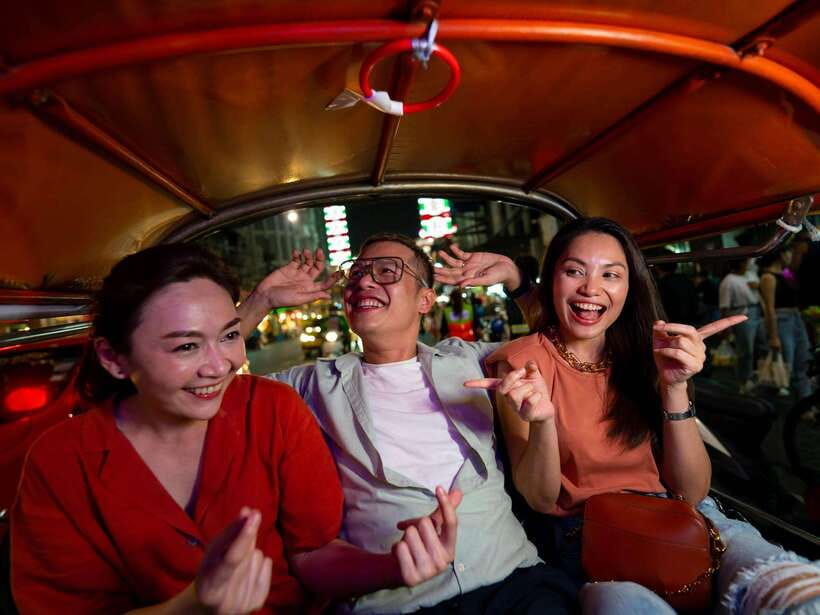
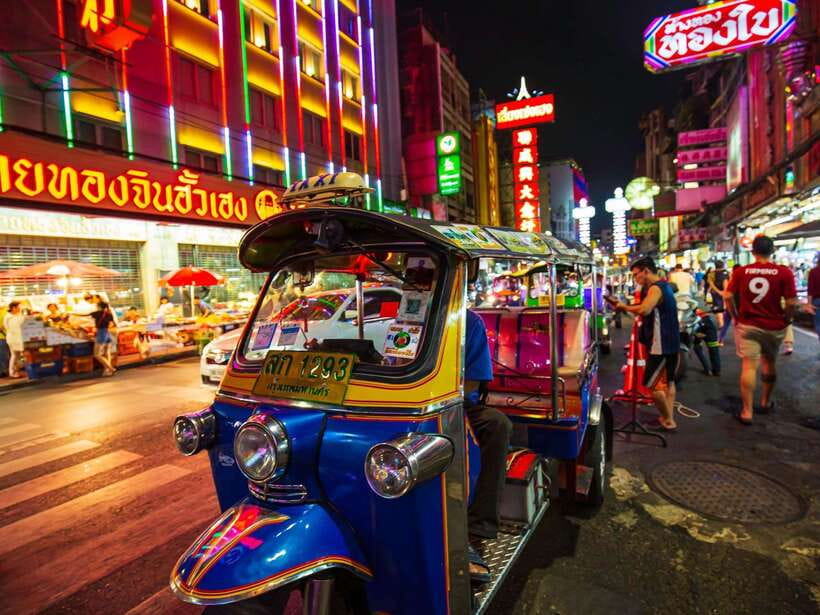
After Wat Arun, you head back via ferry and then take a one-way tuk-tuk ride from Wat Pho to Yaowarat. The ride is listed at about 30 minutes—long enough to feel like you changed gears, not long enough to burn your whole evening.
Here’s the practical way to think about the tuk-tuk portion:
- It’s a fun change of pace after temples and ferry time.
- It gets you into Chinatown faster than you’d manage on foot.
- It’s also a useful reset, because Yaowarat is so big and active that arriving with a plan helps.
One more thing: you’ll want to be comfortable sitting and holding onto your belongings. The tour encourages you to bring cash and water, which is a clue that you should be ready to spend some of your free time eating.
Chinatown (Yaowarat) on your feet: what to do with your free time
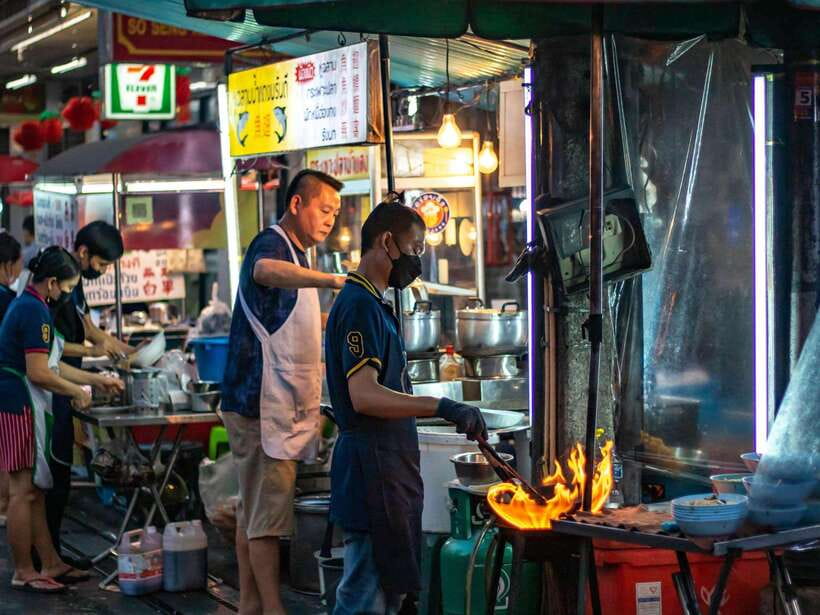
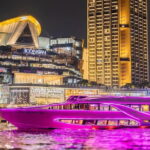
The tour finishes in Chinatown, with time for street food, free time, and walking along Yaowarat Road. This part is what turns the evening into a full Bangkok experience rather than a temple-only night.
What you can expect here:
- Street food stalls and local eateries are part of the scene.
- You’ll get a structured entry into the neighborhood, not a random drop-off.
- You can use your guide’s recommendations to decide what to eat first, instead of wandering in “everything looks good” confusion.
I like free time at the end of a tour because you can choose your own adventure. If you’re hungry, you can focus on food right away. If you want photos or people-watching, you can slow down and do that. Just keep an eye on your footing—Yaowarat streets can be uneven, and you’ll be wearing the kind of shoes that survive a temple day.
Price and value: why $41 feels fair (and when it might not)
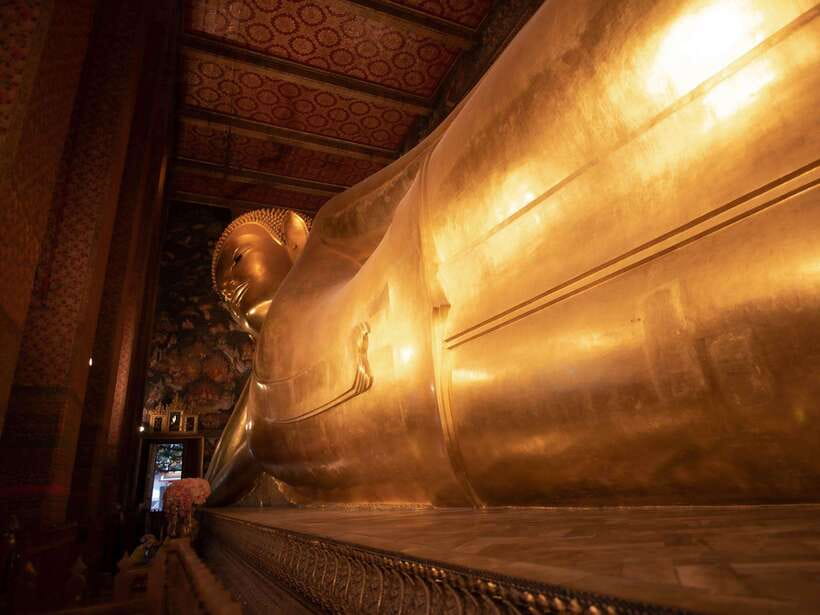
At $41 per person for about 4 hours, the value is mostly about what’s bundled. Your ticket includes:
- A tour guide
- Wat Pho entry ticket (THB 300)
- Wat Arun entry ticket (THB 200)
- Ferry tickets
- A one-way tuk-tuk ride
- Carbon emissions offset credits
Meals and drinks are not included, and there’s no hotel pickup/drop-off. So the price works best if you’re already able to get to Tha Tian Pier yourself and you’re comfortable buying food on your own in Chinatown.
The big value story here is the combination of admissions + transportation + guided timing. Two temples plus ferry plus tuk-tuk plus guide time is harder to replicate cheaply once you start piecing things together.
Group size and guide style: what small-group really changes
This is limited to 9 participants, which is a sweet spot. You don’t get that “herding cats” feeling that can happen on bigger tours, and your guide can slow down when someone needs clarification.
The guide quality seems to matter a lot in the feedback. People highlighted guides such as Sun (patient with kids, explained details), Jack (history tied to personal stories and great photo spots), Fern (traditions and worship steps), Bonnie (extra info and fun approach), and Kit (took care of the pace and helped with pictures). You may not get the same guide as everyone else, but the pattern is clear: the best outcome comes from a guide who actively manages timing and helps you understand what you’re seeing.
Also, languages offered are English and Spanish. If you’re in one of those groups, you’ll likely get smoother explanations and fewer “wait, what did they mean?” moments.
What to bring (and what to wear) so the tour doesn’t fight you
This tour has a simple rule: show up ready. They specifically recommend:
- Camera
- Insect repellent
- Cash
- Water
- Long pants
- Long-sleeved shirt
- Comfortable shoes
The dress code is the part that can surprise people. Some sites don’t allow clothing that reveals shoulders, underarms, back, or knees, and the tour says enforcement may be strict. Bring a sarong/scarf/sweater to cover up if needed, and don’t wait until you arrive at the gate to solve it.
If you want an easy packing plan: dress for temples first, then plan for Chinatown on top of that. Comfortable shoes are non-negotiable because you’ll walk at least through the Chinatown area with its crowds and street texture.
Pacing: what “4 hours” feels like on the ground
Four hours sounds short, and it is. That’s not a complaint—it’s the point. You’re not spending your whole evening commuting across town, and you’re not stuck in one place too long.
A practical way to judge the pace:
- Temples take time for etiquette, photos, and understanding what’s in front of you.
- Ferry segments keep it moving without exhausting you.
- Chinatown free time is open-ended, so you decide how long you linger.
The only drawback to consider is that the evening still involves walking and time on your feet. If you’re sensitive to that, plan your dinner expectations around snacks and quick meals rather than a long sit-down.
Who should book this Bangkok evening tour
This tour is a great fit if:
- You want Wat Pho and Wat Arun without the most intense daytime crush.
- You like guided context—history, temple meaning, and what to look for.
- You want Chinatown included, but not as a chaotic free-for-all.
- You enjoy photo stops and appreciate help with angles and timing.
- You prefer a small group size and a clear plan for your evening.
You might skip it if:
- You need hotel pickup and your schedule can’t handle meeting at Tha Tian Pier.
- You hate any dress-code requirements and don’t want to bring an extra layer.
- You’re only interested in one temple and would rather build a totally independent itinerary.
Should you book it?
If your goal is to see Bangkok’s temple highlights and still end the night with food and street life, I’d book this. The best reason is the mix: you get the calm beauty of Wat Pho and Wat Arun, then you land in Chinatown ready to eat and wander.
My advice for the decision is simple: if you can make it to Tha Tian Pier on time and you’ll dress with coverage, this tour is a high-satisfaction way to spend an evening. If either of those is a problem, you may be happier doing temples independently and saving Chinatown for a time when your schedule is totally flexible.