REVIEW · BANGKOK
Hands on Thai Cooking Class and Market Tour
Book on Viator →Operated by House of Taste Thai Cooking School · Bookable on Viator
Thai cooking starts with your hands, not theory. At House of Taste Thai Cooking School in Bangkok, you’ll cook classic dishes with a professional chef in an air-conditioned room, then eat what you make. I love the hands-on guidance that works for beginners, and I love that you can shop ingredients at Asok Market on the morning option.
One thing to consider: the half-day format changes the experience. If you want the market walk, you need the morning class; afternoon and evening sessions swap in a mango carving workshop instead.
In This Review
- Key highlights at a glance
- A 3.5-hour Thai cooking class with real technique (and room to ask questions)
- Where it starts: meeting point, pace, and the tuk-tuk factor
- Asok Market (morning only): learn what to buy before you cook
- The cooking school flow: air-conditioned prep and a clear menu path
- Curry paste from scratch: the skill that makes everything taste right
- The four dishes you’ll make and eat (plus dessert)
- Pad Thai and Thai curries: what you’ll practice besides recipes
- Afternoon and evening sessions: mango carving instead of the market
- Diets, substitutions, and how flexible this class really is
- Group size, comfort, and what your day will feel like
- Price and value: why $45.66 can make sense here
- Who should book this class (and who might not)
- Should you book House of Taste Thai Cooking School?
- FAQ
- What does the cooking class include?
- How long is the experience?
- Is the Asok Market visit included?
- What will I cook during the class?
- Do they offer vegetarian or halal options?
- Is alcohol included with the meal?
- How big is the group?
- What if the weather is bad?
- Can I change my booking or get a refund if I cancel?
Key highlights at a glance
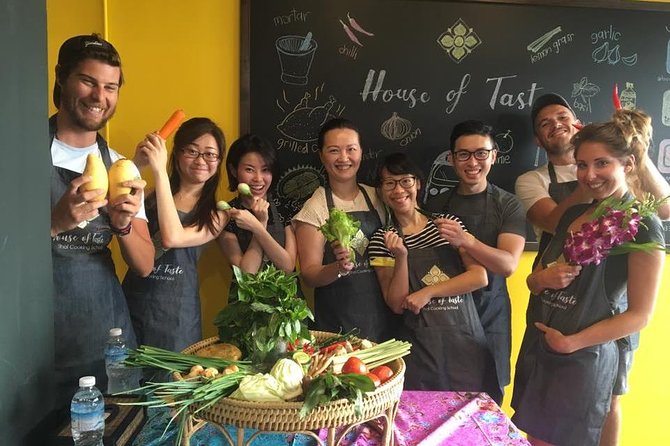
- Asok Market (morning only): pick ingredients with a guide before you cook
- Curry paste from scratch: learn the core Thai flavor base, not shortcuts
- Four-course style meal: you make and eat a set of favorites, including dessert
- Mango carving (afternoon/evening): a fun, hands-on cultural activity
- Air-conditioned cooking space: comfortable even when Bangkok is warm
- Small group size: capped at 18 travelers for better attention
A 3.5-hour Thai cooking class with real technique (and room to ask questions)
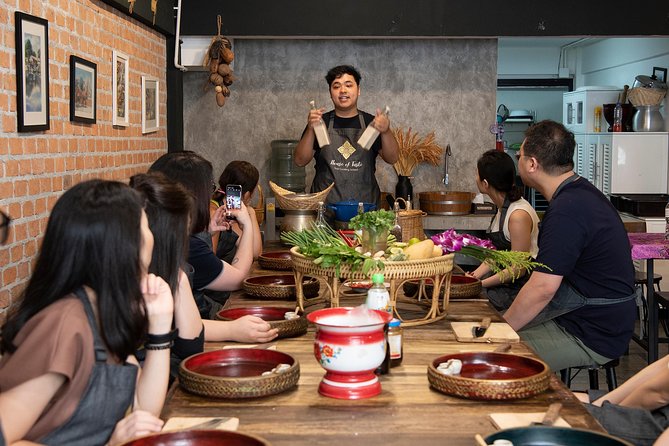
This is the kind of Bangkok activity that feels practical fast. You’re not watching someone else cook while you take notes. You’re chopping, mixing, tasting, and getting feedback while a professional chef keeps the class moving.
The value here is strong for one simple reason: you leave with both recipes and skills you can repeat. You’ll make Thai dishes that most people recognize (like curry and Pad Thai), but you’ll also learn what makes them taste Thai, including the ingredient logic behind things like sour, salty, sweet, and heat.
The setup is also thoughtful. The cooking is done in an air-conditioned class, and you’ll work in a way that gives you enough time to actually participate—step by step, with staff support. Reviews also point out that there’s a runner or helper to help set things up so you can focus on cooking rather than logistics.
You can also read our reviews of more tours and experiences in Bangkok.


Where it starts: meeting point, pace, and the tuk-tuk factor
The class meets at 147/4 Soi Sukhumvit 4 in Bangkok, and it ends back at the same meeting point. You’ll want comfortable shoes because there’s a small amount of walking involved—mostly linked to the market and moving between areas.
If you choose the morning departure, you’ll include a guided visit to Asok market. After shopping, transport between the market area and the cooking school is done with tuk-tuk (at least in the morning flow), which keeps the start of your day from feeling like a long commute.
Time-wise, plan for about 3 hours 30 minutes. That’s a good length for learning without burning your whole day. It also helps if you’re balancing shopping in Bangkok with food activities.
Asok Market (morning only): learn what to buy before you cook
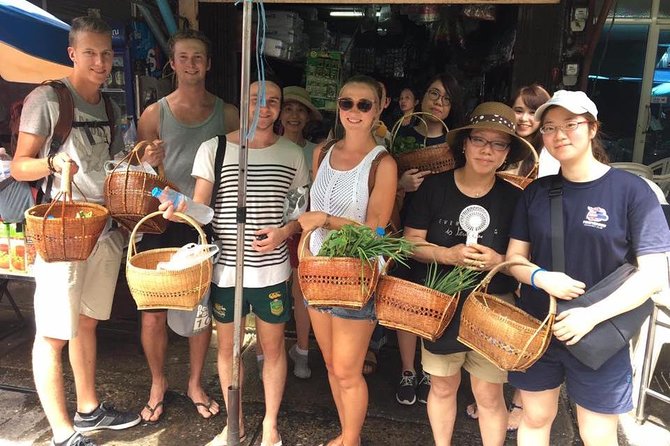
If you pick the morning class, your first stop is a guided tour of Asok Market. This part matters more than people think, because Thai cooking is ingredient-driven. When you understand what you’re looking for, the recipe stops being a list and starts being a plan.
During the market visit, you’re shopping for the ingredients you’ll use in class—vegetables, spices, and herbs that shape the final flavor. The chef-style guidance you get here also helps you understand substitutions later (especially if you’re cooking at home where spice brands and fresh herbs might be different).
A practical tip: don’t go in overly hungry but don’t treat it like a full meal either. You’ll be cooking and then eating right after. If you arrive with zero appetite, you may feel stuffed by dessert. If you arrive totally empty, you may spend the market visit thinking about the next course instead of noticing ingredients.
The cooking school flow: air-conditioned prep and a clear menu path
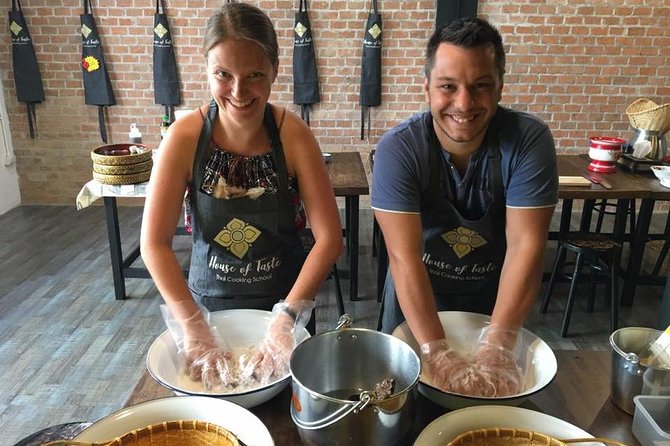
Once you’re at House of Taste Thai Cooking School, the rhythm becomes simple: introduce ingredients, explain techniques, then you cook. The classroom is air-conditioned, which is a real quality-of-life win in Bangkok.
The school uses a daily fixed menu, and the class focuses on turning those ingredients into your finished dishes. The dishes are familiar Thai staples, and that makes the learning feel useful rather than abstract.
You’ll also have time for questions. Instructors (including names like Jay, April, and May as they’ve been described) are consistently praised for step-by-step instruction plus ingredient explanations, not just recipe choreography. That’s exactly what you want in a cooking class.
Curry paste from scratch: the skill that makes everything taste right
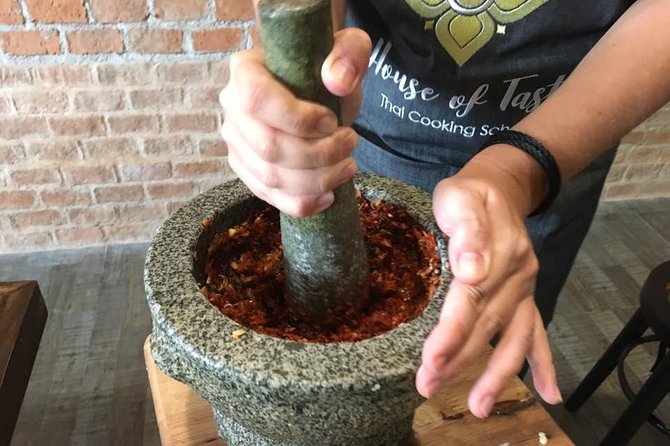
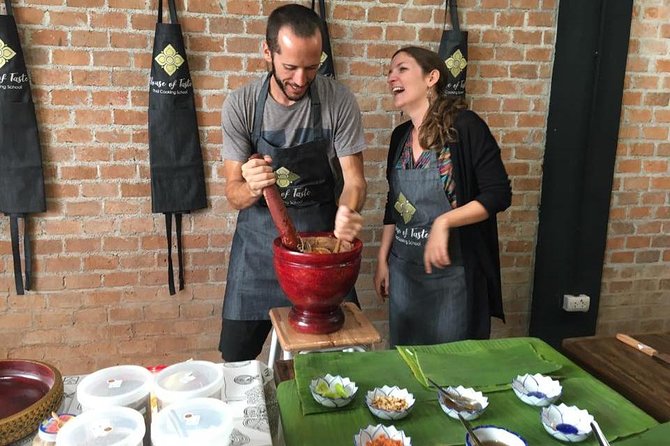
One of the most valuable parts of this experience is that you make curry paste from scratch. This is the core Thai move. If you get the paste right, the curry tastes deep and rounded instead of flat.
For you, that means the class isn’t only about assembling ingredients—it’s about learning how Thai flavors are built. You’ll see how herbs and spices work together, and how the paste becomes the base for multiple curry styles.
Even if you only cook at home occasionally, this is the lesson you’ll remember. You can reuse the method for other curries, adjust heat and seasoning with more confidence, and understand what you’re changing when you tweak a recipe.






The four dishes you’ll make and eat (plus dessert)
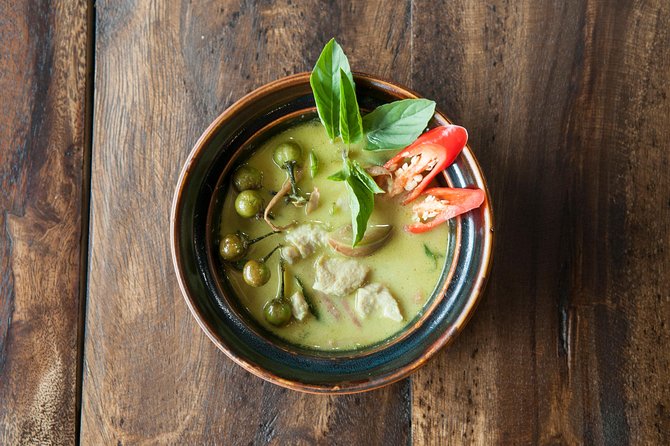
The experience is built around cooking and then enjoying your meal. Included in the class meal is a set of favorites, with mango sticky rice as the dessert.
Here’s what the school’s daily menu includes (so you know the flavor targets):
- Appetizers / soups: options like spicy lemongrass salad, spicy shrimp salad, green papaya salad, deep fried spring rolls, Tom Yum Goong, and Tom Kha Gai
- First main course: Pad Thai Goong (stir-fried rice noodles with shrimp)
- Second main course: one of the curries—Red Curry, Green Curry, Massaman Curry, or Panang Curry (with chicken)
- Dessert: Mango Sticky Rice
In the classroom, you’ll cook and plate multiple dishes, and the meal served afterward lines up with what you worked on. You should also expect that you’ll cook more than just one “main.” The class is structured as a hands-on, four-dish style experience, and the portions reflect that.
Food tip: if you’re planning to eat street food later the same day, consider saving your biggest cravings for another meal. You’ll end up with a lot of Thai food in one sitting—people tend to underestimate this until they’re staring at dessert.
Pad Thai and Thai curries: what you’ll practice besides recipes
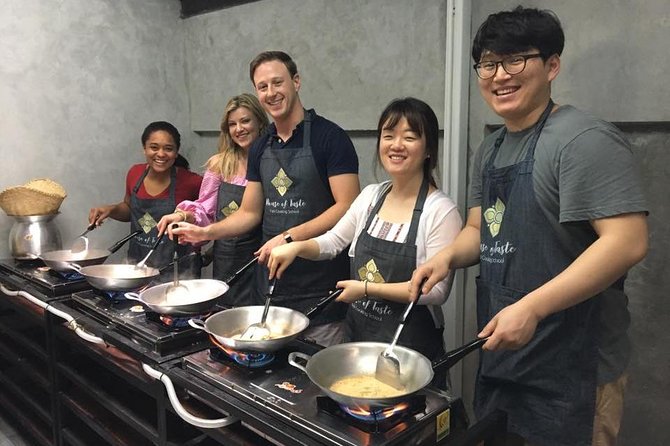
Pad Thai is more than noodles. In class, it’s a chance to practice the timing and balancing that keeps it from turning mushy or bland. Learning Pad Thai in a structured setting also gives you a benchmark for how it should taste when made with the right flavor mix.
Then you’ll move into curries—where the paste work pays off. The menu includes red, green, massaman, and panang curries. Even if you only cook one in your session, you’ll leave with a clearer understanding of why they taste different: different aromatic profiles, different balances of sweet, salty, and heat.
This is where a chef’s explanations matter. Many cooking classes teach you how to follow a recipe. This one leans into why the ingredients behave the way they do, which makes your home cooking better faster.
Afternoon and evening sessions: mango carving instead of the market
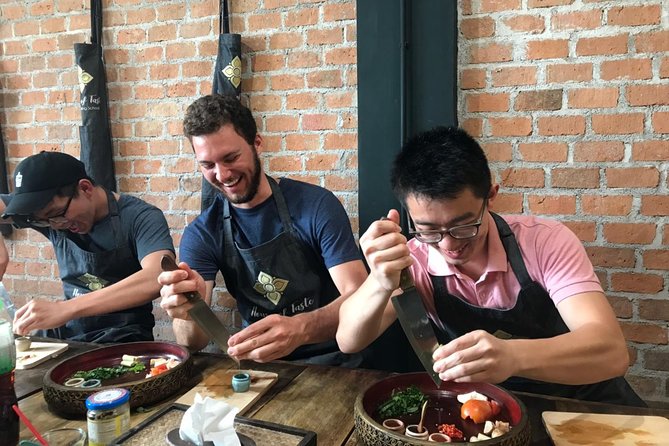
Not every departure includes the market. Afternoon and evening classes swap the Asok market visit for a mango carving workshop.
This part is great if you’re after a Thai craft that’s fun and photogenic without being overly technical. It also keeps the class from feeling like only cooking. You’ll get a different kind of cultural activity while staying in the same Thai-food theme.
The timing also shapes your day in Bangkok. If your mornings are packed with temples or shopping malls, the mango carving option can feel like a better fit. Just remember: no market walk on those departures.
Diets, substitutions, and how flexible this class really is
This class is built to handle different dietary needs. You can request substitute ingredients for vegetarian, halal, kosher, and allergies at the time of booking. Vegetarian options are also available.
What I like about this approach is that it treats dietary needs as part of planning, not an afterthought. You’ll be able to cook and eat a set of dishes that still follows the Thai flavor structure, rather than being sidelined.
If you have a serious allergy, make sure you mention it clearly when you book. The class notes that substitutions are possible, but you’ll do best by being specific.
Group size, comfort, and what your day will feel like
The class caps at a maximum of 18 people, which usually means you can get answers without waiting forever. With that size, it’s also easier for the chef to check in on technique while keeping the class pace.
The experience is mostly in air-conditioned space, with some moving around for the market (morning) or carving activity (afternoon/evening). You’ll need comfortable shoes, but you’re not doing a huge walking tour.
If you want a hands-on activity that’s still organized, this is a good match. It’s also a great rainy-day option because the bulk of the cooking is indoors.
Price and value: why $45.66 can make sense here
At $45.66 per person, this class can feel affordable once you look at what’s included. You get:
- a professional chef-led cooking experience
- the ingredient-focused market visit (for the morning option)
- cooking plus a full meal tied to the menu
- cold and hot drinking water
- a personal locker
- the standard recipe take-home
You’re also getting at least four dishes worth of work and eating, plus dessert. In Bangkok, that combination of instruction + food can easily cost more when you’re not bundled.
Is it a deal compared to cooking at home for free? Obviously no. But for the “learn Thai flavors in one session” goal, the price-to-outcome ratio is strong.
Who should book this class (and who might not)
This class is a smart pick if you want:
- a guided way to cook Thai food without stress
- a set of recipes you can repeat later
- real technique, especially around curry paste
- a meal that includes classic Thai dishes you can recognize
You might skip it if:
- you only want street-food style tastings and don’t care about cooking
- you’re extremely tight on time and need a quick snack
- you’re choosing a departure without checking which one matches your priorities (market vs mango carving)
Should you book House of Taste Thai Cooking School?
I think it’s an easy yes for most people coming to Bangkok for food. The structure is clear: buy ingredients (morning), learn curry paste, cook your dishes, and eat. You’re not just passing through; you’re practicing.
My decision rule is simple:
- If you want ingredient shopping and a market feel, choose the morning class.
- If you want something fun besides cooking and you like crafts, choose the afternoon or evening mango carving option.
Either way, you’ll leave with recipes, four Thai dishes, and the kind of confidence that makes cooking at home feel doable.
FAQ
What does the cooking class include?
You’ll get all taxes and fees, a meal tied to the menu, cold and hot drinking water, access to a personal locker, and a free standard recipe. Alcoholic drinks are not included.
How long is the experience?
It runs for about 3 hours 30 minutes.
Is the Asok Market visit included?
The market tour is available for the morning class only. Afternoon and evening departures include a mango carving workshop instead.
What will I cook during the class?
You’ll make typical Thai dishes and learn curry paste from scratch, then prepare and eat a set of favorite Thai dishes from the school’s daily menu, which includes classics like Pad Thai Goong, Thai curries (red/green/massaman/panang), and mango sticky rice.
Do they offer vegetarian or halal options?
Yes. You can request substitute ingredients for vegetarian, halal, kosher, and allergy needs when booking. Vegetarian is available if you advise at the time of booking.
Is alcohol included with the meal?
No, alcoholic drinks are available to purchase, but they are not included.
How big is the group?
The class has a maximum group size of 18 people.
What if the weather is bad?
The experience requires good weather. If it’s canceled due to poor weather, you’ll be offered a different date or a full refund.
Can I change my booking or get a refund if I cancel?
This experience is non-refundable and cannot be changed for any reason.
If you tell me which time of day you’re considering (morning vs afternoon vs evening) and whether you have any dietary needs, I can help you pick the best fit for your Bangkok day.