REVIEW · KHAO LAK
Full-Day Temple Tour Including Dragon Cave from Khao Lak
Book on GetYourGuide →Operated by Bigcountry Andaman · Bookable on GetYourGuide
Three temples, one very memorable day.
I love how this full-day circuit turns Phang Nga Province into something you can feel, not just see—Dragon Cave Temple under stone, then Bang Rieng Temple high above for wide views, and finally Suwan Khuha’s cave drama with a huge reclining Buddha. It’s relaxed by design, and the day is guided in English by people like Boom, Moo, Robert, and Bim, who explain what you’re looking at and give you real time to wander.
Two things I especially like: you get a clear mix of temple styles in just 9 hours, and lunch is genuinely local (often at Starbus Cafe), not an afterthought. One drawback to consider is that this isn’t wheelchair-friendly, and parts of the temple visit involve walking on uneven surfaces and cave steps—so wear solid footwear and be ready for some uneven footing.
In This Review
- Temple Circuit Quick Hits: what makes this day work
- Why Phang Nga Temples Feel Special on This 9-Hour Run
- Pickup and Transport: Khao Lak convenience without the Phuket shuffle
- Dragon Cave Temple: cool air, stone details, and monk moments
- Bang Rieng Temple: big pagoda energy and the view payoff
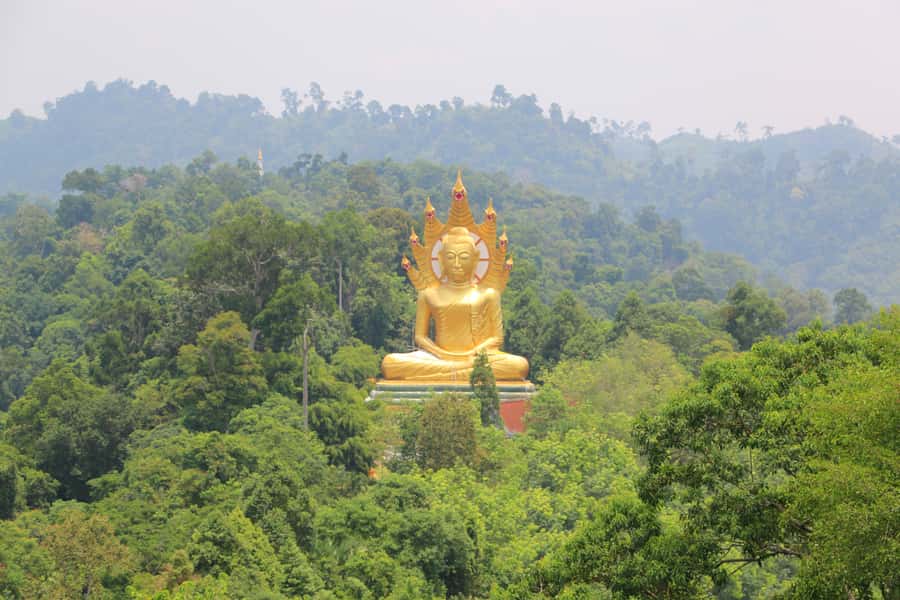
- Suwan Khuha Cave Temple: the 15-meter reclining Buddha moment
- Lunch at Starbus Cafe: the local meal factor you’ll remember
- How the Guide Makes (or Breaks) the Day
- Timing, pacing, and what to wear (so you stay comfortable)
- Price and Value: does $77 buy you enough?
- Who Should Book This Tour (and who should skip)
- Should You Book Bigcountry Andaman’s Temple Tour from Khao Lak?
- FAQ
- Is pickup available from Phuket?
- How long is the full-day temple tour?
- What’s included in the price?
- What should I bring and wear?
- Is this tour wheelchair accessible?
- Are pets allowed on the tour?
- What time should I be ready in the morning?
Temple Circuit Quick Hits: what makes this day work
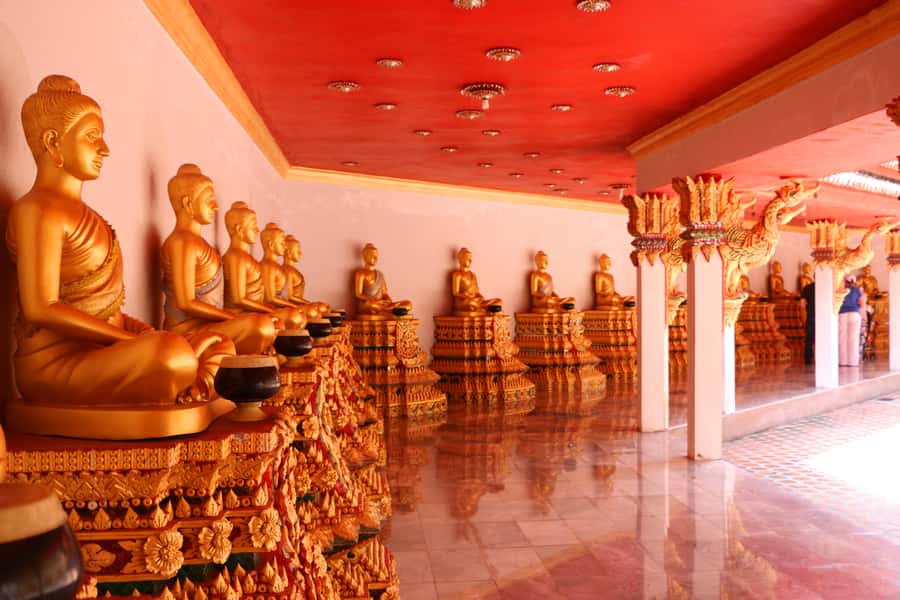
- Dragon Cave Temple exploration with impressive stalactites and stalagmites
- Bang Rieng Temple hillside payoff with major pagoda sights and big views
- Suwan Khuha Cave Temple highlights including a 15-meter-long reclining Buddha
- Thai lunch with real local feel (Starbus Cafe comes up again and again)
- Caring pacing and logistics: ice-cold water, air-con transport, and time to look around
Why Phang Nga Temples Feel Special on This 9-Hour Run
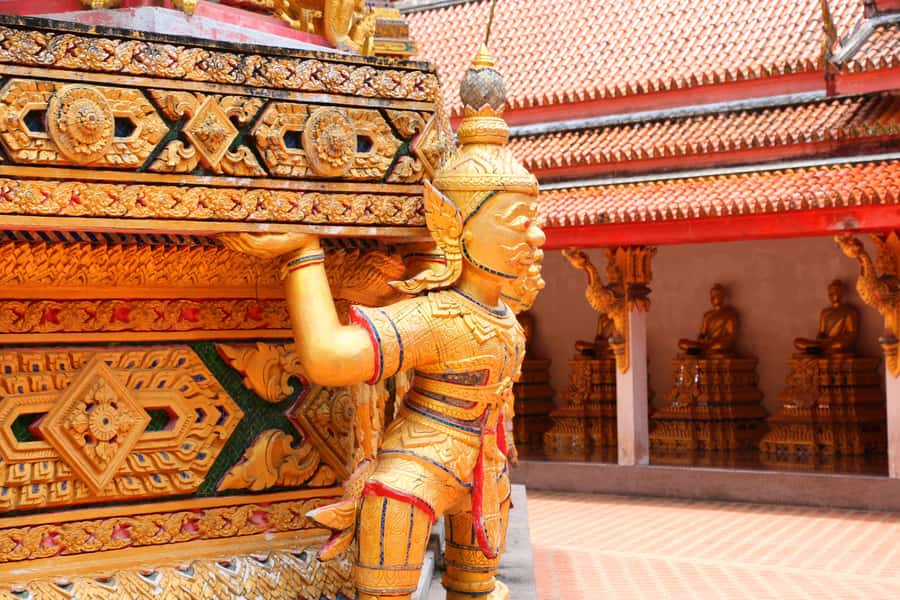
Phang Nga’s temples aren’t all the same, and that’s exactly why this tour works. You’re not just checking off three pretty buildings. You’re moving through very different settings: cave calm, mountain-air viewpoints, and a massive Buddha moment inside a giant cave. That variety helps you understand why Buddhist art and architecture can look completely different from place to place.
The other reason this feels like good value is the way the day is structured. At $77 per person for a full day, you’re paying for more than transport. You’re covering pickup and drop-off in the Khao Lak area, temple admission fees, a full insurance setup, an English-speaking guide, and lunch at a local restaurant. You also avoid the common “time-sink” problems of tours that spend most of the day driving or rushing photo stops. Here, you get the time at the sites to actually look.
You can also read our reviews of more tours and experiences in Khao Lak.

Pickup and Transport: Khao Lak convenience without the Phuket shuffle
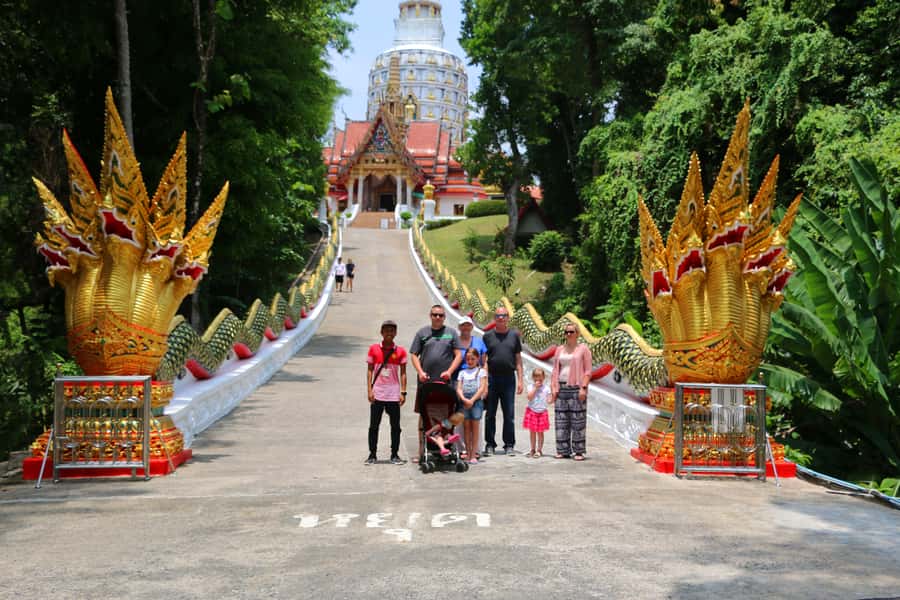
If you’re staying in the Khao Lak area, pickup is the easy part. Your window is between 07:30 and 09:00 AM, and the operator will confirm a more exact pickup time after booking. The pickup schedule shared for Khao Lak and nearby stops looks like this: Nam Khem–Bang Muang at 08:00, Pakarang–Bang Sak at 08:15, Khuek khak at 08:30, Bang Niang at 08:40, Khao Lak at 08:45, and Lam Kaen at 09:00.
Two practical notes matter here. First, you’ll want to be in the hotel lobby 15 minutes early, since that’s the easiest way to keep the day smooth. Second, pickup in Phuket is not available, so plan your day based on where you’re actually sleeping.
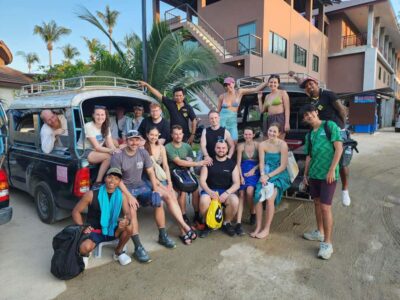
On the road, the setup seems consistently comfortable. Reviews point to air-conditioned vehicles and a driver who feels safe and steady on winding routes. I also like the small comfort touches people mention, like ice-cold water provided during the day. In hot Thailand, that’s not a gimmick—it’s the difference between enjoying a cave visit and rushing through it because you’re overheated.
Dragon Cave Temple: cool air, stone details, and monk moments
The day starts with Dragon Cave Temple, and the reason it’s such a strong first stop is simple: caves change the mood fast. Even before you notice any carvings, you feel the shift—cooler air, quieter acoustics, and that close, textured look of stone formations.
You’ll explore cave areas with standout stalagmite and stalactite features. If you like photography, this is where your camera earns its keep. The light comes in from openings, so you get contrast between bright outside sections and darker cave interiors. It’s also a spot where your guide’s explanations help a lot. People in the group often get what they came for faster because the guide connects Buddhist symbolism and temple design to what you’re seeing in front of you.
One extra detail from the experience reports: if you arrive at the right time, you may see monk chanting linked to morning offering routines. A few guests describe being invited to participate in flower offerings. I like that these moments feel respectful, not staged—just a real glimpse into how temple life functions beyond the tourist viewpoint.
Practical tip: caves and stone paths can mean slippery spots or uneven footing. Wear shoes you can trust. If you’re sensitive to walking on stones, consider packing socks so you’re not uncomfortable during any bare-foot moments that some visitors choose to do.
Bang Rieng Temple: big pagoda energy and the view payoff
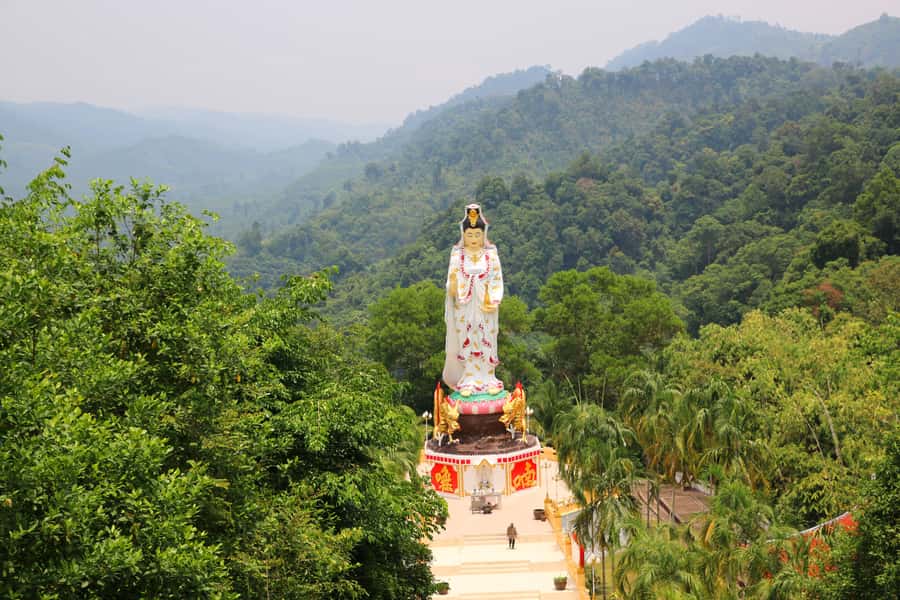
After the cave, you move up to Bang Rieng Temple, which is why the itinerary includes it. It acts like a reset. You go from enclosed stone coolness to open mountain air, and suddenly you can appreciate the region’s depth.
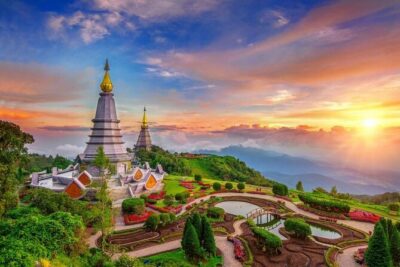
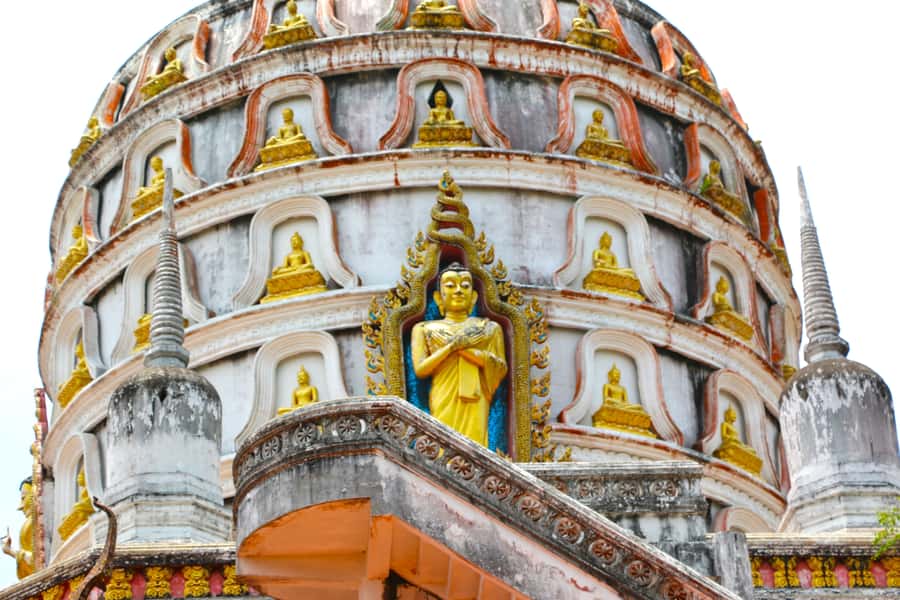
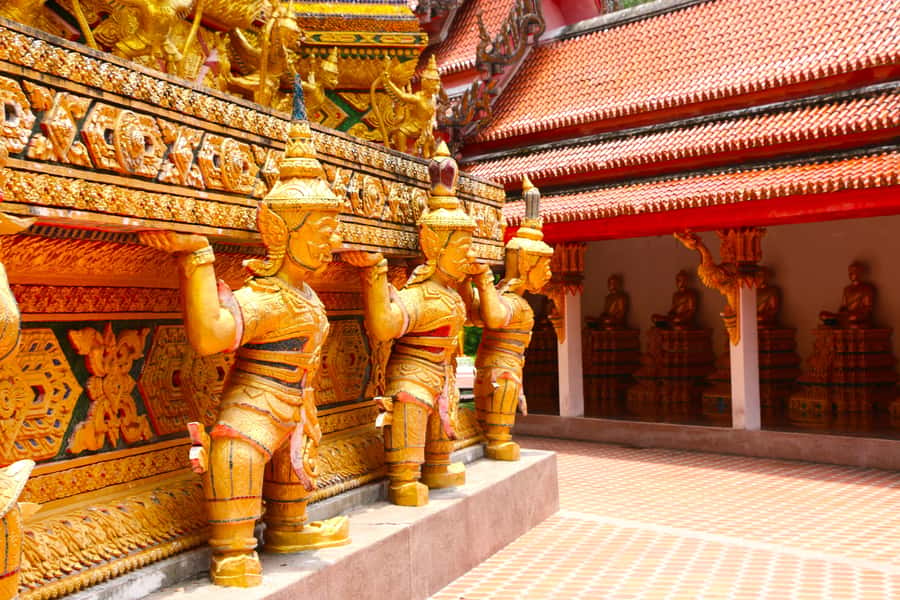
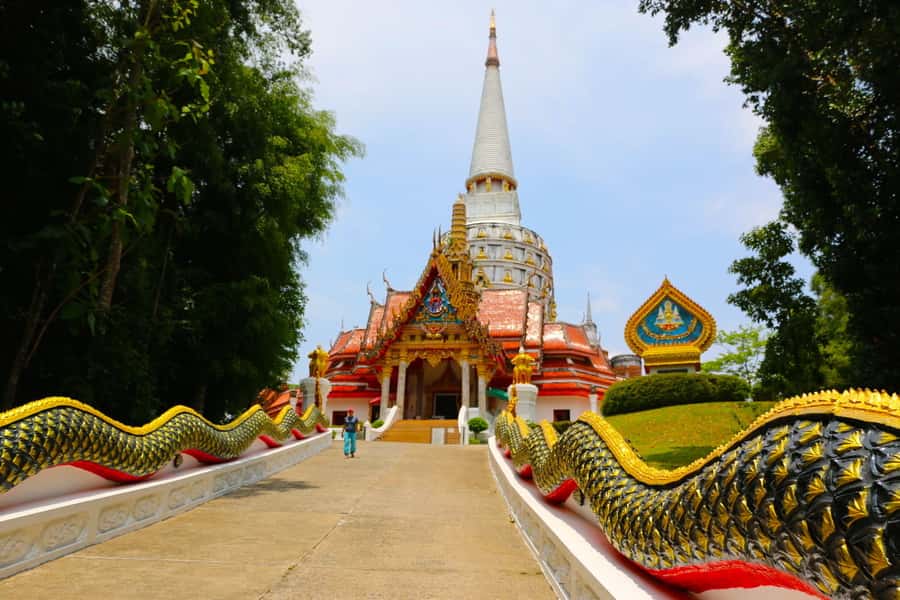
This hillside temple is known for a large pagoda and for housing a Buddha relic. What makes it feel worth your time isn’t just the structure—it’s the viewpoint. People describe breathtaking views over the surrounding areas, and that perspective helps you understand why temples here were built where they are: they’re meant to be seen from land and approached with intention.
Also, this is a good stop to slow down. Reviews repeatedly mention guides giving enough time for exploring rather than rushing you out for the next bus photo. If you like history and meaning, ask your guide how the relic and pagoda relate to the temple’s role. Guides like Boom and Robert are specifically praised for explaining symbolism and Buddhist fundamentals in a way that’s easy to follow.
Suwan Khuha Cave Temple: the 15-meter reclining Buddha moment
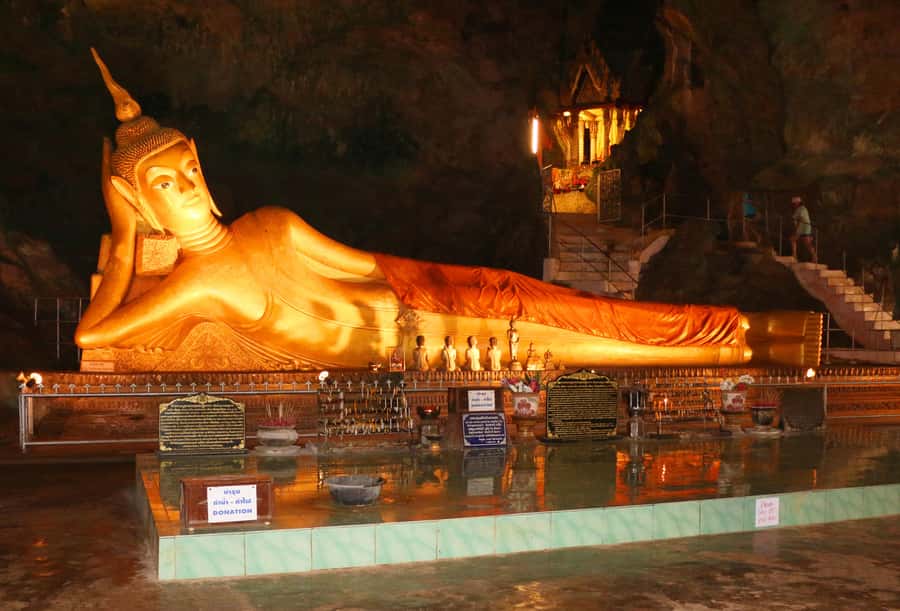
Then comes the “wow” stop for many people: Suwan Khuha Cave Temple, also called Wat Suwan Khuha. This is the one where the setting does half the work for you. A giant cave gives the Buddha statue instant drama, because the space frames it like a natural gallery.
The headline feature is the 15-meter-long reclining Buddha. When you’re standing back far enough to see scale, it hits harder than photos. The reclining pose is meant to communicate key ideas in Buddhist teachings, and a good guide helps you understand what you’re looking at instead of turning it into a quick snap-and-go.
Cave temples also bring in a very Thailand-specific “scene.” Some groups mention monkeys around the temple area, and a few experiences describe close monkey encounters as part of the day’s fun. I can’t promise what will happen on every visit, but I can say this: keep your attention on your guide’s instructions and don’t improvise. The safe choice is always to treat it like a wildlife-adjacent temple area.


Lunch at Starbus Cafe: the local meal factor you’ll remember
Most temple tours claim to include lunch. This one is different because the restaurant stop has a reputation for being genuinely good. Guests frequently mention Starbus Cafe, describing it as flavorful, abundant, and set in a remote-feeling village location that makes the lunch feel like part of the day, not a pit stop.
Look at the pattern: people describe Thai dishes that actually taste like Thailand, with generous portions. More than one review mentions there was so much food you couldn’t finish. That tells me the meal isn’t built around a rushed, standardized group lunch. It’s meant for real eating.
It also appears to be flexible with diets. One review specifically mentions vegan accommodations. If you have dietary needs, tell the operator when you book, and your guide can help manage the best option on the day.
Here’s another detail that adds personality: some reports mention coffee made from locally grown beans, and even buying single-source coffee beans roasted by the person at the restaurant. That’s a small souvenir moment that feels tied to the place, not a shop stop.
How the Guide Makes (or Breaks) the Day
Temple tours can become a string of “this is a temple, here’s a photo.” The reason this one scores so high is that the guides bring the sites to life with explanations and interaction.
Names that come up often include Boom, Moo, Robert, and Bim. Across those different guide styles, the common praises are consistent:
- clear explanations of Buddhist symbolism
- time for questions
- a friendly, engaging approach
- photo help and patience
- checking in on basics like water and restroom access
That last point matters more than people think. When you’re moving through caves and climbing viewpoints under sun, small support makes the day feel effortless. If your guide is attentive, you can focus on the temples instead of logistics.
Timing, pacing, and what to wear (so you stay comfortable)
This is a 9-hour tour, which means it’s long enough to feel like a full day, but not so long that you lose the energy for temple detail. The day is paced with breaks during driving time, and the guide typically keeps you on track without rushing your exploring.
Your packing list is straightforward:
- sunglasses
- sun hat
- camera
- sunscreen
Dress rules are also clear: no sleeveless shirts, and pets are not allowed. That dress code is common for temple settings, and it keeps the day respectful and smooth. I also suggest you bring a light layer. Caves can feel cool compared to the outside heat, and air-conditioned transport can be chilly for some people.
Price and Value: does $77 buy you enough?
At $77 per person for a 9-hour day, you’re paying for a bundle. Here’s what you’re really buying value-wise:
- Transport + pickup/drop-off in the Khao Lak zone
- an English-speaking guide who helps you understand the temples
- temple admission fees
- lunch at a local restaurant
- full insurance coverage
The value hinges on one thing: time on the ground. The best experiences here are the ones that don’t rush. If your day includes calm exploring at each temple, a good lunch, and a guide who connects the meaning to the visuals, then $77 feels fair. If you’re the type who hates walking and prefers quick stops, it might feel like too much effort in a single day—because caves and temple steps require real movement.
Who Should Book This Tour (and who should skip)
You’ll likely love this tour if you:
- want a cultural day focused on Buddhist temples rather than beaches
- enjoy variety: cave temple, mountain viewpoint, cave reclining Buddha
- like learning basics and asking questions in plain English
- appreciate a local lunch stop that isn’t just filler
I’d think twice if you:
- need wheelchair access (this tour is not suitable for wheelchair users)
- dislike walking on uneven stone or stairs in warm, humid conditions
- want a very “rest-and-relax” day with minimal movement
Should You Book Bigcountry Andaman’s Temple Tour from Khao Lak?
If your base is Khao Lak and you want one solid day that mixes scenery, architecture, and temple meaning, I’d book it. The biggest reasons are practical: the tour is structured for time at each stop, includes lunch that people genuinely praise, and the guide support sounds consistently strong. Names like Boom and Moo come up for a reason—guides here tend to explain what you’re seeing and keep the experience friendly without turning it into a lecture.
Before you go, pick comfortable shoes, bring sunscreen, and plan for walking in caves and temple areas. If those basics fit your style, this is a very good value temple day with real local flavor.
FAQ
Is pickup available from Phuket?
No. Pickup at the hotel in Phuket is not available. Pickup is available from Khao Lak between 07:30 and 09:00 AM (with specific times for different areas).
How long is the full-day temple tour?
The tour lasts 9 hours.
What’s included in the price?
Included are hotel pick-up and drop-off (from the Khao Lak area), lunch at a local restaurant, temple admission fees, full insurance, and an English-speaking guide.
What should I bring and wear?
Bring sunglasses, a sun hat, a camera, and sunscreen. Sleeveless shirts are not allowed.
Is this tour wheelchair accessible?
No. This tour is not suitable for wheelchair users.
Are pets allowed on the tour?
No. Pets are not allowed.
What time should I be ready in the morning?
You should be in the hotel lobby 15 minutes prior to your pickup time. The operator will provide an exact pickup time after booking, based on your area within the Khao Lak pickup schedule.