REVIEW · BANGKOK
From Bangkok: Historical Day Tour to River Kwai
Book on GetYourGuide →Operated by Bigcountry Experience Co.,Ltd. · Bookable on GetYourGuide
WWII memories ride all the way to Bangkok. You get a small-group morning that mixes a moving War Cemetery visit with a real train ride on the Death Railway. Along the way, you’ll also see the River Kwai bridge and learn how the Thailand-Burma Railway was forced into existence during World War II.
I like that the pacing gives you real moments, not just photo stops. The possible downside is the drive: you’re looking at about 3 hours each way, and Bangkok traffic can make the day run closer to 12 hours than the headline 10.
In This Review
- Key highlights I’d put first
- From River City Bangkok to Kanchanaburi: the early start that shapes everything
- Entering the War Cemetery: why this stop lands so hard
- Thailand-Burma Railway Centre: turning facts into a story you can track
- The River Kwai bridge stop: photos, train views, and the real setting
- Riding the Death Railway: what’s included, the seat issue, and best viewpoints
- Lunch near the disembarkation station: included, filling, and not too fancy
- Krasae cave bridge and the cave stop: a change of tone from sorrow to scenery
- Guides like Luke, Henry, William, Jokey, Woody, and Ong make the difference
- Group size and transport: why small-group pacing feels better than a rush
- Price check: why $51 can be good value if you use the included extras
- Who should book this day tour, and who should reconsider
- Should you book the Bangkok to River Kwai historical day tour?
- FAQ
- What is the duration of the tour?
- Where is the meeting point in Bangkok?
- Is pickup included?
- How long is the drive from Bangkok to Kanchanaburi?
- What’s included in the price?
- Is a train seat guaranteed?
- What key sites do you visit?
- What should I bring or wear?
- Will traffic affect timing?
Key highlights I’d put first
- War Cemetery with about 9,000 Allied graves kept in excellent condition
- Thailand-Burma Railway Centre turns the story into something you can actually follow
- Train ride on the original Death Railway track (basic fare included, seat not guaranteed)
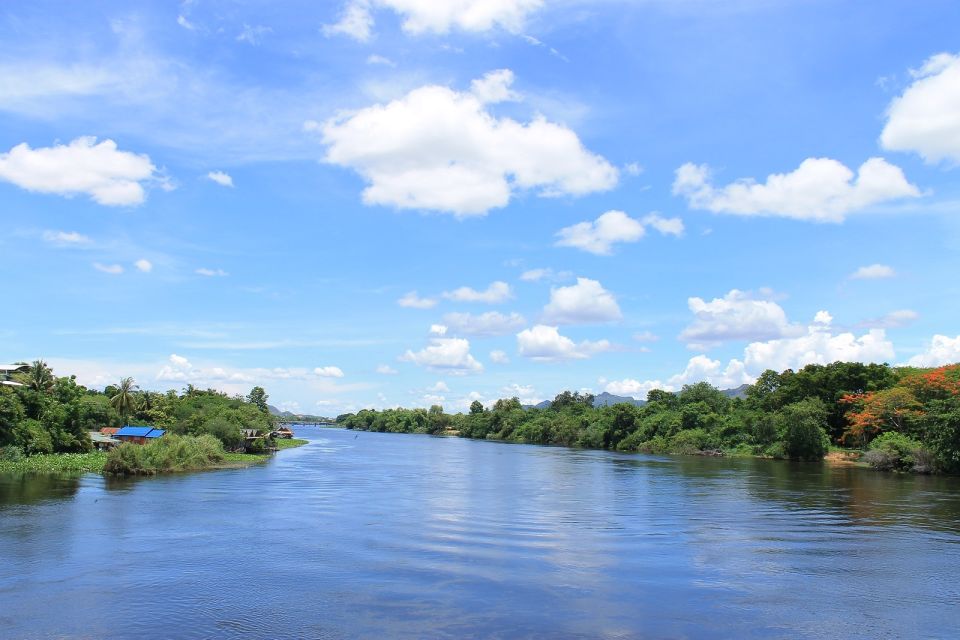
- River Kwai bridge time for photos and to watch the trains
- Small groups that often feel more like a guided day out than a bus tour
- Lunch included at the disembarkation area, with time to rest before the return
From River City Bangkok to Kanchanaburi: the early start that shapes everything
This tour is built around one big idea: get out of Bangkok early enough to make the day worth your time. The main meeting point is BMP Bigcountry at River City Bangkok (23 Charoen Krung Soi 24, Talad Noi, Sampantawong). If you opt for pickup, it’s typically around 6:00 AM from the Sukhumvit and Khaosan areas, with Silom pickup closer to 6:15 AM.
The drive takes about 3 hours one-way. That’s why the tour feels longer than it sounds, especially on return when traffic can slow things down. It’s not a “relax and chat” day. You’ll move, but you’ll also get enough time at each site to take it in.
You can also read our reviews of more tours and experiences in Bangkok.
Entering the War Cemetery: why this stop lands so hard
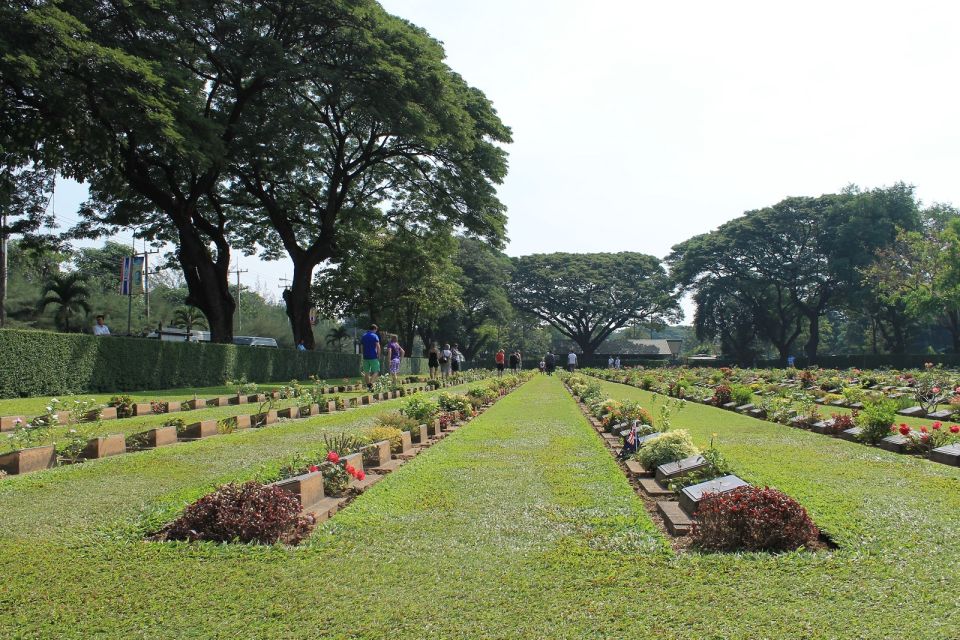
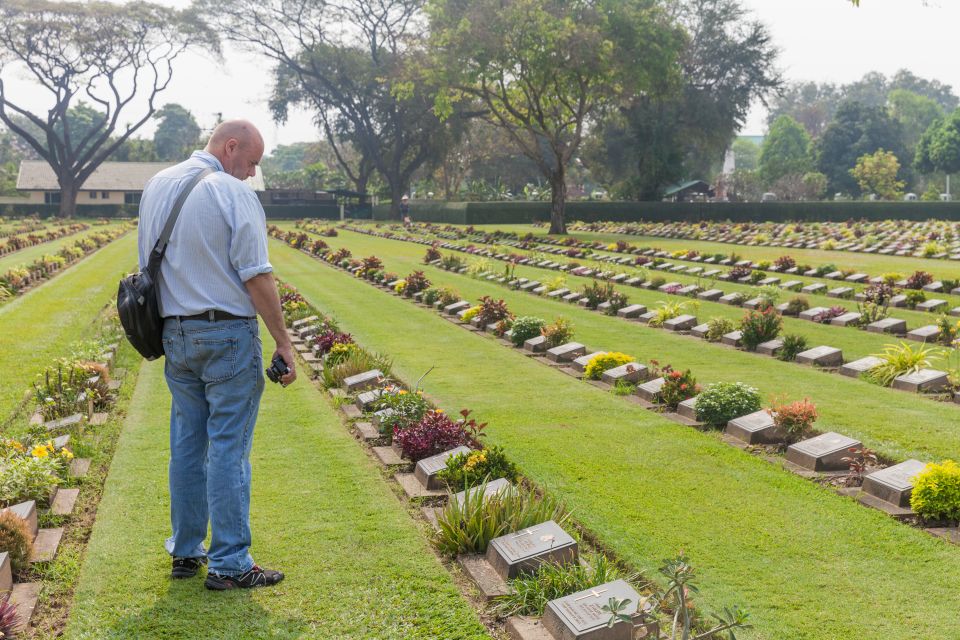
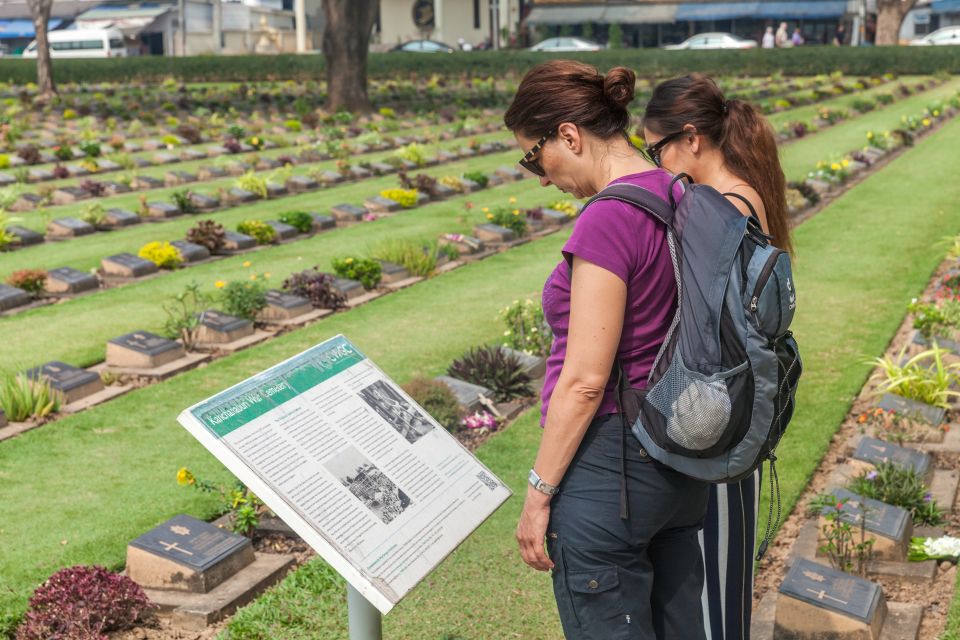
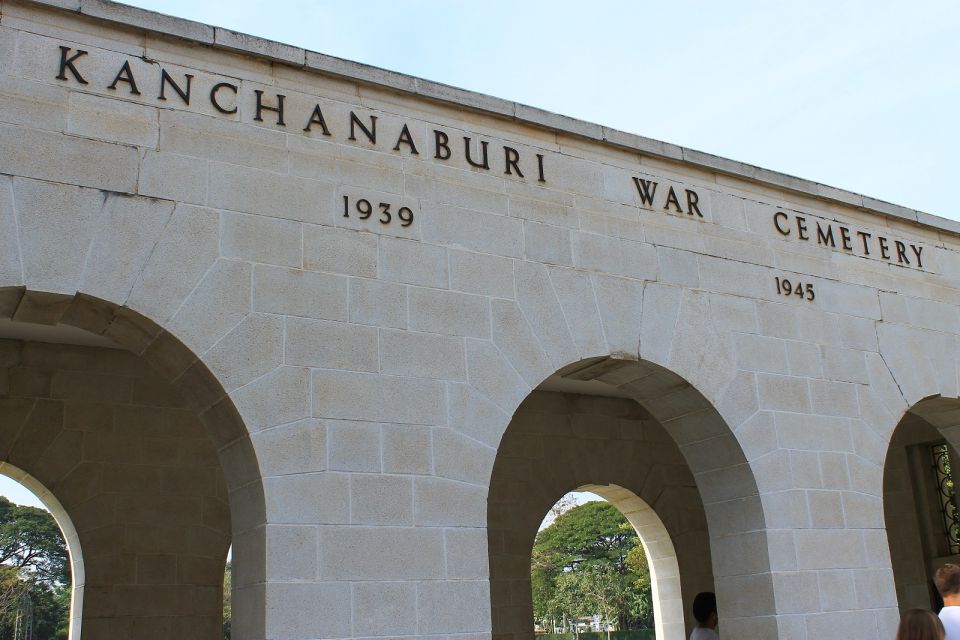
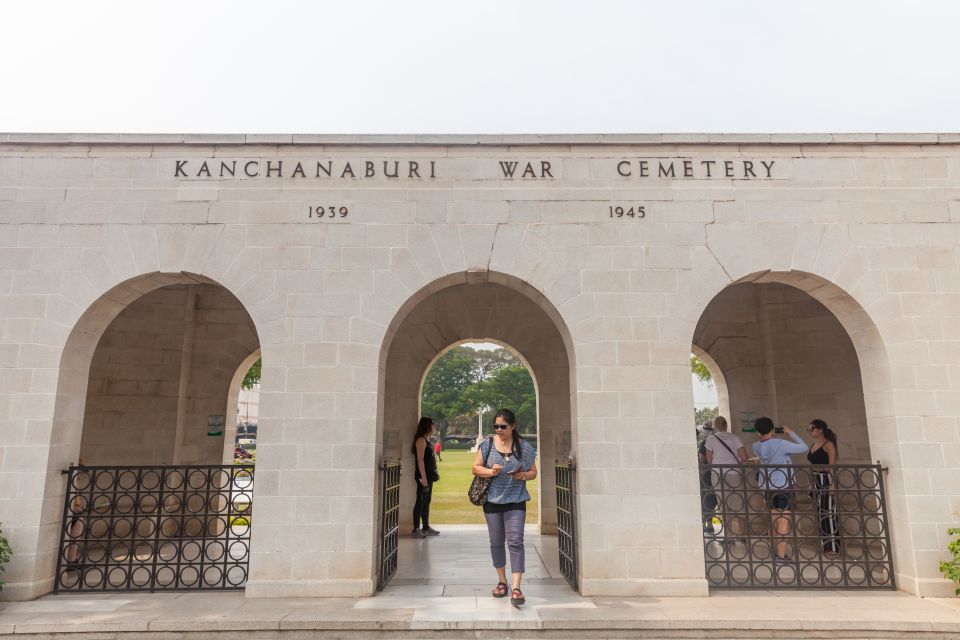
The first major emotional stop is the well-kept War Cemetery in Kanchanaburi. Here you’ll find the graves of an estimated 9,000 Allied soldiers who died while constructing the Death Railway. The cemetery is tidy and maintained, which makes it more powerful, not less. You’re not just reading names on a screen. You’re walking among them.
What I like most is the order of things. Starting here gives the rest of the day context. When you later see the bridge and ride the track, you’re not just viewing history as scenery—you’re seeing how the physical landmarks connect to real lives lost.
Thailand-Burma Railway Centre: turning facts into a story you can track
Next comes the Thailand-Burma Railway Centre, which is part museum, part research/information hub. This is where the tour shifts from memorial to explanation. You’ll see recreations with pictures and artifacts that help connect the dots: how the Burma Railway project was planned, how prisoners of war were used, and how the railway stretched toward the Burmese border.
A practical tip: set aside enough time here to read at your own pace. Even on a full day, the centre is one of those places where skipping pages costs you the meaning. If you’re the type who likes timelines, photos, and the “how did this happen” details, you’ll be in good shape.
The River Kwai bridge stop: photos, train views, and the real setting
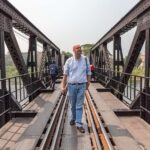
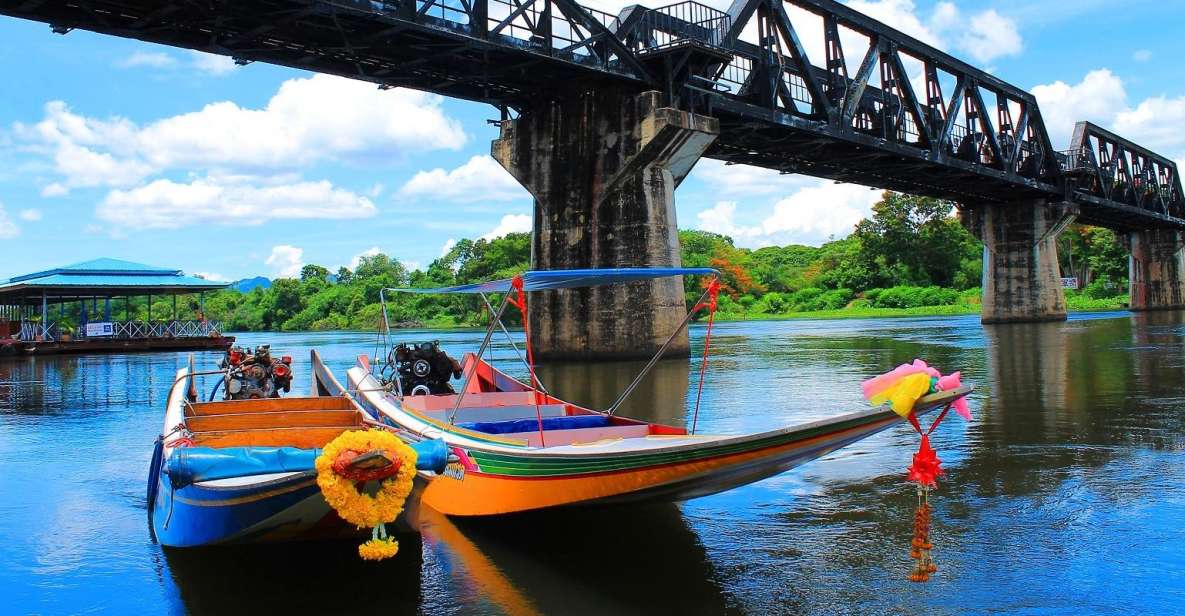
Then you’ll head to the famous bridge on the River Kwai. Expect a proper look and time for photos, plus the chance to watch trains in action. Standing there, you understand why this became a worldwide symbol: it’s both a feat of construction and a reminder of what that construction demanded from people who had no choice.
This isn’t a long, rushed roadside view. The tour gives you a window to explore the area, take photos, and soak up the fact that the bridge is still part of daily life. That blend—history sitting inside a working landscape—hits differently than a sealed-off monument.
Riding the Death Railway: what’s included, the seat issue, and best viewpoints
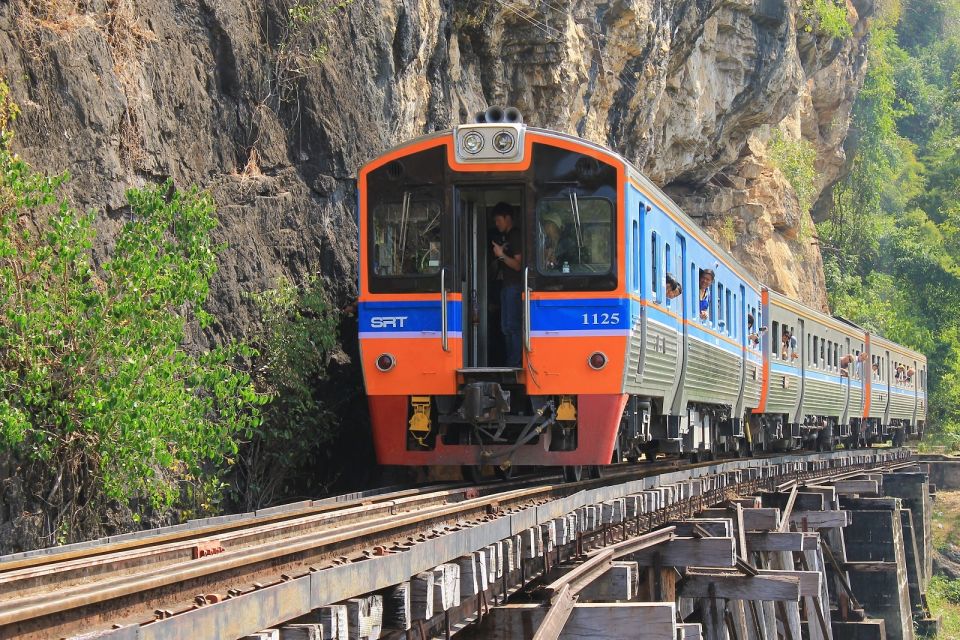
The big-ticket experience is the train ride along a stretch of the original Death Railway. A basic train fee is included, and it’s listed as THB 100, but here’s the key detail: the included fare does not guarantee an assigned seat. If you want certainty, you can pay an extra THB 200 for an assigned seat.
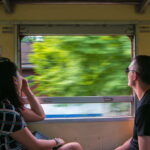
This matters more than it sounds. Train cars can be busy, and seat placement affects how comfortable you are for the full ride. One review mentioned getting seats on the left side for an excellent view as the ride crosses wooden structures. If you’re paying for the assigned seat option, ask about which side gives the best sightlines when you board.
What you’ll likely notice during the ride:
- You’re seeing countryside pass by while the day’s history stays in the background.
- The motion gives you a different perspective than walking around the museum or cemetery.
- The track section helps make the “Death Railway” nickname feel grounded in reality, not just a phrase from books.




Lunch near the disembarkation station: included, filling, and not too fancy
Lunch is included, served at the disembarkation station area after you’ve done the train segment. Most people treat lunch as a reset button in the middle of a long day—and it works that way here. The included meal isn’t described as a massive buffet spread, but it’s generally praised as tasty and satisfying.
If you have dietary needs, don’t rely on luck. Mention it ahead of time when you book, or ask your guide during the day. One guest noted options for a non-meat diet, which is a strong sign the restaurant can handle basic requests.
Krasae cave bridge and the cave stop: a change of tone from sorrow to scenery
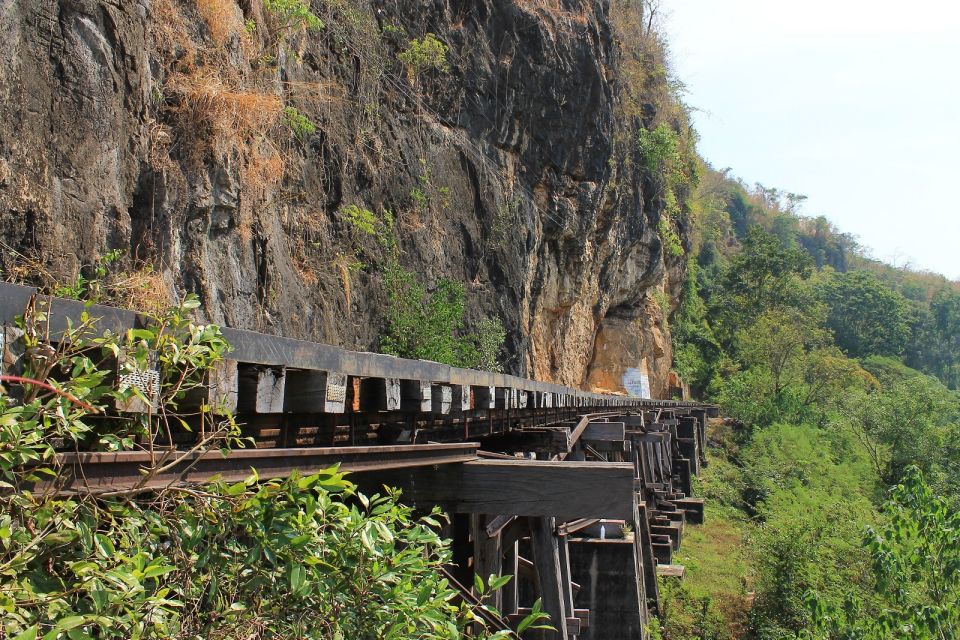
After lunch and further rail-related viewing, you’ll get time around the track area and a stop that includes the Krasae cave bridge and a cave visit. This part changes the feel of the day. You still have history in the background, but you’re now moving through a more natural, uneven space.
Bring sensible footwear. People mention uneven ground and a cave that can be muddy, especially in warm weather. If you’re not a fan of slippery footing, you don’t need to push deep into the cave. Stay at a comfortable walking distance, focus on the Buddha statue area, and keep your energy for photos near the bridge.
Guides like Luke, Henry, William, Jokey, Woody, and Ong make the difference
The tour experience is built around the guide, and the best days come down to how clearly someone can connect sites into one story. Several guides named in recent outings include Luke, Henry, William, Jokey, Woody, and Ong—and the consistent theme is clear explanation plus calm control of timing.
You’ll often notice small but helpful things:
- Regular check-ins so you don’t miss a key moment
- Enough time buffers at each stop to look around
- Clear guidance on what to focus on next
- Water and hot-weather care, since it can get intense in Thailand
If you enjoy asking questions, this kind of guide setup is a win. You’re not stuck with a script—you get answers that help you make sense of what you’re seeing.
Group size and transport: why small-group pacing feels better than a rush
This is described as a small-group tour, and the real value shows up in the day’s flow. When groups are smaller, you spend less time waiting around and more time actually at the site. One guest even ended up in an extremely small group, which made the day feel more personal.
Transport is by air-conditioned van, and the driving gets praised for being smooth and safety-focused. Still, plan your energy for a long day. The schedule is dense by design: cemetery, museum, bridge, train, lunch, and then additional rail-area viewing before the return.
Price check: why $51 can be good value if you use the included extras
At $51 per person, this tour can be very good value if you compare what you’re getting:
- Air-conditioned round-trip transport between Bangkok and Kanchanaburi
- English-speaking guide
- Entrance fees
- Lunch
- Basic train fee (THB 100)
The one cost to watch is the train seat. Since the included train fee doesn’t promise an assigned seat, the THB 200 option can be worth it if you care about comfort and uninterrupted sightseeing time.
Also remember the real cost of this day is time. If you’d otherwise spend a lot of money arranging transport and tickets on your own, the guide-led format often wins. You’re paying for a tight, coherent day that would be harder to assemble from scratch.
Who should book this day tour, and who should reconsider
I’d book this if you:
- Want World War II context without drowning in textbooks
- Like structured days with clear stops and a guide to connect the story
- Care about respectful memorial visits
- Don’t mind a long day that starts early
I’d think twice if you:
- Get easily worn down by early mornings and long drives
- Prefer slow, unhurried museum time
- Have limited comfort with uneven walking surfaces (the cave area can be tricky)
Should you book the Bangkok to River Kwai historical day tour?
If you’re going to Kanchanaburi from Bangkok anyway, this is the kind of day trip that gives you more than a single landmark. The combination of the War Cemetery, the Thailand-Burma Railway Centre, and the Death Railway train ride makes it feel like a complete story rather than separate sightseeing.
My practical call: book it if you can handle the 6 AM start and you’re willing to pay the optional THB 200 if you want a guaranteed seat. Pass if you’re hoping for an easygoing, short outing—this one is long on purpose, and the emotional stops are part of the point.
FAQ
What is the duration of the tour?
It’s listed as a 10-hour day tour, with starting times depending on availability.
Where is the meeting point in Bangkok?
The meeting point is BMP Bigcountry at River City Bangkok, 23 Charoen Krung Soi 24, Talad Noi, Sampantawong, Bangkok 10100.
Is pickup included?
Pickup is optional. It’s offered around 6:00 AM for some areas, with Silom pickup around 6:15 AM. If you don’t choose pickup, you meet at the River City location.
How long is the drive from Bangkok to Kanchanaburi?
The one-way commute is approximately 3 hours.
What’s included in the price?
Included items are lunch, entrance fees, an English-speaking guide, transportation by air-conditioned van, and a basic train fee on the Death Railway track (THB 100).
Is a train seat guaranteed?
No. The basic train fee included does not guarantee an assigned seat. You can pay THB 200 for an assigned seat.
What key sites do you visit?
You’ll visit the War Cemetery, the Thailand-Burma Railway Centre in Kanchanaburi, the River Kwai bridge area, and ride along a stretch of the Death Railway track. There is also a cave/bridge stop tied to the rail area.
What should I bring or wear?
Wear sensible shoes, since the cave area can involve uneven ground. It can be very hot, so bring water and consider a hat or fan.
Will traffic affect timing?
Yes. Pickup and drop-off schedules can shift due to heavy Bangkok traffic conditions.