REVIEW · BANGKOK
Choose 5 Dishes: Half-Day Cooking Class in Sukhumvit with Market Tour
Book on Viator →Operated by Culinary Training Co. Ltd. · Bookable on Viator
Five dishes, one Thai meal plan, and you’re set. This half-day class pairs a local market walk with a hands-on cooking session in air conditioning, so you learn ingredients and technique without baking in the heat.
What I especially like is that you choose exactly 5 dishes from a menu (more than 20 options), then you cook them step-by-step. The whole setup is designed to be easy to get to from the city too, with the meeting point at On Nut BTS and everything ending back there.
One thing to consider: this course is very organized and timed, and some prep may be done in advance to keep you moving. If you want a slow, deep, advanced training course where you start absolutely from zero with every component, you might feel it’s more structured than you expected.
In This Review
- Key things I’d bank on before you book
- On Nut BTS, then straight to a real market-food education
- Choosing your 5 dishes: the secret to making the class feel personal
- Quick strategy: pick dishes that match what you already love
- Vegetarian options exist
- Market tour stop: learning Thai ingredients like a shopper, not a spectator
- Back to the air-conditioned kitchen: where the real cooking happens
- The no-MSG point isn’t just a label
- Spice control is part of the teaching
- What you actually do during class
- From curry paste to mango sticky rice: the dish-by-dish payoff
- Curry section: learning the heart of Thai flavor
- Soup & salad: seasoning that hits fast
- Noodles and rice: sauces and timing
- Stir fry: heat, speed, and texture
- Dessert: mango sticky rice, the easy win
- How well it runs: organization, instruction style, and what you get for your money
- Food volume: come hungry (seriously)
- A small caution: some people want more advanced technique
- Who should book this Thai cooking class in Sukhumvit
- Kids and families
- Should you book it? Yes, if you want a repeatable Thai meal
- FAQ
- FAQ
- Where do I meet for the cooking class?
- How long is the class?
- Do I choose which dishes I cook?
- What dishes are included in the 5-dish menu?
- Are vegetarian options available?
- Is the class held in air conditioning?
- Is MSG used?
- What’s included in the price?
- Can children participate?
Key things I’d bank on before you book
- On Nut BTS meeting point means no long taxi scramble
- Pick 5 dishes from a menu of more than 20 options
- Air-conditioned cooking for prep, frying, and eating
- Market tour first, so flavors make sense before you cook
- Big output: you’ll make a full meal plus mango sticky rice
On Nut BTS, then straight to a real market-food education
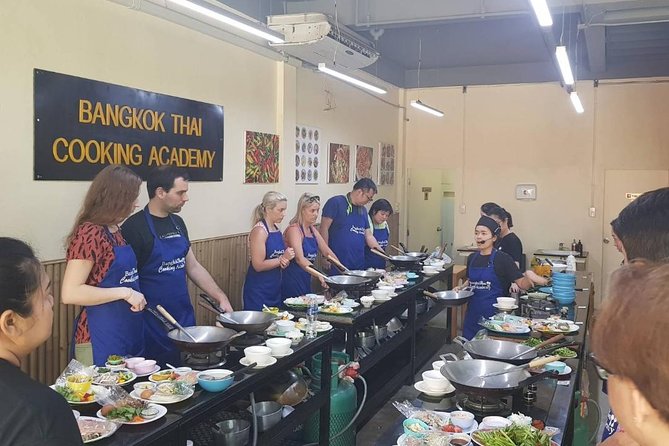
Bangkok has a way of making you hungry fast. The nice part here is that the experience starts with something practical: you meet at On Nut BTS Station, then head out on a short walk to see ingredients used in Thai home cooking. You’re not just looking at food like it’s a museum exhibit—you’re learning what’s what, including how Thai dishes build flavor through key ingredients.
One smart choice by the organizers: the kitchen side of the class is fully air-conditioned. That matters in Bangkok, because even the best food lesson turns annoying if everyone’s sweating while chopping. Here, the heat stays outside, and you can actually focus on textures, timing, and taste.
The class runs about 3 hours 30 minutes, and there’s a choice of morning or afternoon. That flexibility is handy if you’re juggling temples, malls, or late-night street food plans. Since you’re also given a meal as part of the experience (lunch for a morning class, dinner for an afternoon class), you’re not adding a separate restaurant stop afterward.
You can also read our reviews of more tours and experiences in Bangkok.



Choosing your 5 dishes: the secret to making the class feel personal
This is one of those rare cooking classes where you don’t just get assigned a curriculum. You pick five dishes to make from a set menu. The structure is built like a full Thai meal:
- Curry paste + chicken in curry (choose one): Green curry, Panang, Massaman, Khao Soy
- Soup & salad (choose one): Tom Yum Goong, Tom Kha Gai, Som Tam
- Appetizer, rice & noodles (choose one): Pad Thai, Pineapple Fried Rice, Pad See Ew
- Stir fry (choose one): Chicken with Cashews, Black Pepper Beef, Minced Chicken with Spicy Basil
- Dessert: Mango with Sticky Rice
That menu choice matters because it shapes what you actually learn. Curry cooking teaches balance—sweet, salty, creamy, spicy, and aromatic. Stir fries teach speed and heat control. Noodles teach sauce timing. Soup teaches seasoning and how Thai sourness works. By the time you’re done, you’ve covered multiple technique “families,” not just one cooking style.
Quick strategy: pick dishes that match what you already love
If you come to Bangkok already craving bold flavors, choose one curry + one noodle/stir-fry + one soup. For example:
- Green curry (for herbs and heat)
- Pad Thai or Pad See Ew (for noodle sauce mastery)
- Tom Yum Goong (for sour, spicy, fragrant balance)
If you’re trying to broaden your palate, choose something you don’t usually order—Khao Soy or Som Tam can feel like a whole new category of Thai cooking.
Vegetarian options exist
The class does offer vegetarian options, which is a big deal because Thai cuisine is often ingredient-flexible. The exact vegetarian selections aren’t listed in the provided details, so if dietary needs matter, message ahead or confirm on booking what vegetarian dishes are available in your session.
Market tour stop: learning Thai ingredients like a shopper, not a spectator

The market portion is short (this is a half-day), but it’s not random. You walk through a large fresh market and get a practical look at typical Thai ingredients. You see items you’d never guess are central until someone points them out.
Why this helps: Thai cooking often feels mysterious because flavors don’t come from one “secret spice.” They come from ingredient combinations—herbs, pastes, citrus, fermented notes, and chili heat. When you see those pieces in the market first, the later cooking steps make more sense. You’re not just following directions; you’re connecting flavors to sources.
Another plus: you’re not sent off alone. The class includes guides who explain what you’re looking at. Some past participants highlighted the guide walk-through around the market and the team’s friendly, step-by-step guidance.






Back to the air-conditioned kitchen: where the real cooking happens
After the market, you return to the kitchen, described as conveniently located near BTS and set up for cooking, frying, prepping, and eating all indoors. This is a core value of the experience: you spend your energy cooking, not battling weather.
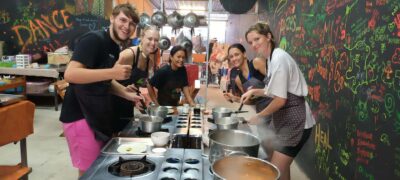
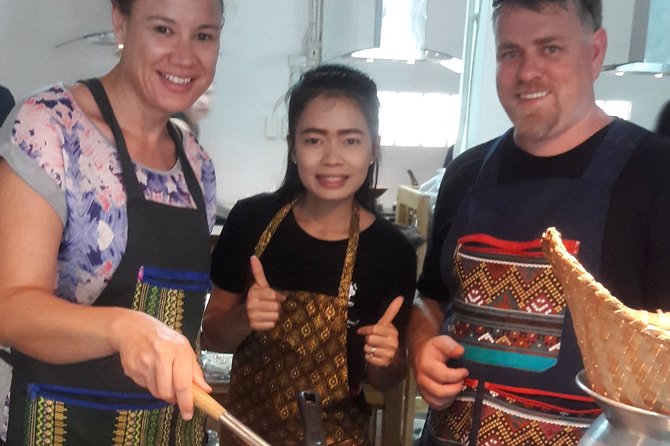
You’ll work in a small-group setting—up to 16 travelers—and that small size shows up in how instructions land. In review after review, people mention good organization and clear steps. Some also mention small groups feeling closer to an individual lesson, which matters when you’re trying to coordinate chopping, stirring, and sauce adjustments.
The no-MSG point isn’t just a label
The class says they do not cook with Monosodium Glutamate (MSG). If you’re sensitive to restaurant-style flavor enhancers, this is reassuring. It also means you’ll taste how Thai dishes create depth through aromatics, chili, citrus, herbs, and fermented ingredients.
Spice control is part of the teaching
You’re able to control spice level on every dish. That’s important in Thai cooking classes because chili heat can overpower learning if it’s left fully uncontrolled. You want to taste balance, not just burn.
What you actually do during class
A typical flow looks like this:
- You choose your five dishes
- You build the components tied to those dishes (especially curry paste + curry for the curry option)
- You cook with guidance in a station-style setup
- You eat what you made at the end of the lesson (plus dessert and fruit)
Even participants who’ve cooked in other countries said this one pushes you to cook a lot, not just watch.
From curry paste to mango sticky rice: the dish-by-dish payoff
This is the fun part. You end up with a full spread that feels like you ordered a Thai meal—but you cooked it.
Curry section: learning the heart of Thai flavor
For your curry option, you’ll prepare curry paste + chicken in curry (choose one: Green, Panang, Massaman, or Khao Soy). Curries are where Thai cooking gets its aromatic power. The lesson here is about how paste flavors bloom with heat, how coconut (if used in that curry) changes body, and how you season to make it taste “finished,” not flat.
Even if you don’t remember every ingredient name, you’ll likely remember the scent shift when the curry paste hits the pan. That’s one of the most memorable learning moments in Thai cooking.
Soup & salad: seasoning that hits fast
Next you pick one:
- Tom Yum Goong
- Tom Kha Gai
- Som Tam
Soups like Tom Yum are bright and fast—sour, spicy, aromatic, and designed to wake up your palate. Som Tam is more about balance and crunch (and chili/papaya flavor interaction). Tom Kha Gai leans creamy with that coconut-herb feel.
This is also where taste control becomes obvious. Thai sour and salty notes don’t behave like Western seasoning. Having someone guide you helps you avoid common mistakes like under-seasoning or adding too much chili without balancing the rest.
Noodles and rice: sauces and timing
For the rice/noodle choice, you pick one:
- Pad Thai
- Pineapple Fried Rice
- Pad See Ew
These are the dishes that help you see how Thai cooking manages sweetness and salty depth in a way that feels natural rather than dessert-like. Pineapple fried rice is especially useful if you want a flavor you can replicate at home without needing every Thai herb—because it’s approachable and forgiving.
Pad Thai and Pad See Ew teach you about sauce timing and how heat affects noodles. If you’ve ever tried to cook noodles and they came out gummy or bland, this is one of the best ways to learn how Thai kitchens prevent that.
Stir fry: heat, speed, and texture
You finish with one stir-fry option:
- Chicken with Cashews
- Black Pepper Beef
- Minced Chicken with Spicy Basil
Stir-fries are the “tempo” lessons. You learn that Thai cooking often expects you to work quickly and keep ingredients moving. It’s also where texture matters: cashews keep crunch, basil stays fragrant, and pepper-based flavors can hit cleanly without needing heavy sauce.
Dessert: mango sticky rice, the easy win
Dessert is Mango with Sticky Rice—simple, popular, and a good final note after savory dishes. It’s also a reminder that Thai meals often end with something sweet but not overly heavy.
Many people say the portions are big—so don’t plan on light snacking beforehand.
How well it runs: organization, instruction style, and what you get for your money
For $42.39 per person, you’re paying for much more than “watching a chef.” You get:
- a market tour
- an air-conditioned kitchen class
- guidance from a chef-instructor and team
- cooking and then eating your creations
- complimentary dessert and fruit
- internet access to recipes and videos
That recipe access matters because it helps you replicate what you learned. One small point: some people wanted physical recipes. If you prefer a printed card, plan to save screenshots or notes during class.
People also repeatedly describe the staff as friendly and efficient, with clear instructions and good English. Some participants specifically mentioned chef names like Chef R and Chef Liki, and how the team guided them through the market and cooking steps.
Food volume: come hungry (seriously)
Most people end up cooking so much that eating it all can be tough. Reviews mention big portions and in at least a few cases, the option for takeaway. That’s ideal in Bangkok, where you might still want to wander afterward without carrying homegrown cooking regret in your stomach.
A small caution: some people want more advanced technique
Here’s the one place I’ll steer you carefully. One set of feedback said the class felt a bit more scripted, with ingredients measured and prepped ahead of time to save on time. Another person wished for more discussion of the food chemistry and techniques rather than focusing on step-by-step execution.
So if you’re an experienced home cook who wants deep, theory-heavy instruction—ratios, chemistry, and substitutions—you might find it less intense than a premium advanced workshop. For most people, that’s actually a benefit. You’ll leave with a meal you can repeat, not with a pile of half-remembered theory.
Who should book this Thai cooking class in Sukhumvit
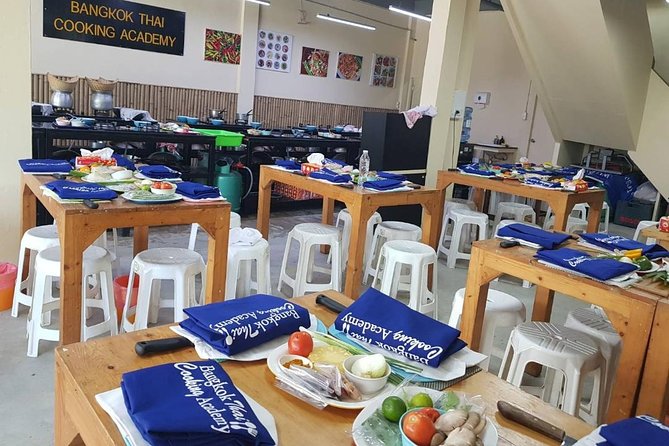
This class is a great fit if you:
- want a hands-on Bangkok food lesson
- like the idea of picking your own five dishes
- want to avoid heat with an air-conditioned kitchen setup
- value learning ingredients via a market tour, then cooking right away
- are traveling solo, as a couple, or with family and want clear structure
It may be less ideal if you:
- want an advanced “master level” cooking bootcamp with minimal pre-prep
- need a printed recipe booklet and don’t want to rely on online video access
Kids and families
It’s family-friendly in spirit, but there are rules. Children must be accompanied by an adult, and children under 9 cannot cook unless assisted by a parent. If you’re bringing kids, plan to be actively involved in the cooking parts.
Should you book it? Yes, if you want a repeatable Thai meal
I recommend booking this cooking class if you want the practical takeaway: you’ll come away knowing how to make a full Thai meal with five dish options and a market context that makes ingredients feel understandable. The location near On Nut BTS is also a real plus—Bangkok is easier when you can avoid taxi wrangling.
I’d skip it only if you’re chasing a highly technical, theory-heavy class and you’re disappointed by structured timing or some pre-measured/prepped ingredients.
If you want Thai cooking that’s fun, organized, and easy to repeat at home, this is the kind of experience that does that.
FAQ
FAQ
Where do I meet for the cooking class?
You start at On Nut BTS Station (Khwaeng Phra Khanong, Khet Khlong Toei, Bangkok).
How long is the class?
It runs about 3 hours 30 minutes.
Do I choose which dishes I cook?
Yes. You pick 5 dishes from a menu of more than 20 options.
What dishes are included in the 5-dish menu?
You choose from categories including curry options (like green curry, panang, massaman, khao soy), soups/salads (like tom yum goong, tom kha gai, som tam), and items like pad thai, pineapple fried rice, pad see ew, plus a stir-fry choice and mango with sticky rice for dessert.
Are vegetarian options available?
Yes, vegetarian options are available.
Is the class held in air conditioning?
Yes. The cooking and eating happen in an air-conditioned kitchen.
Is MSG used?
No. The class states they do not cook with Monosodium Glutamate.
What’s included in the price?
Included are the half-day cooking lesson, the market tour, recipe access (internet with recipes and videos), ice water, and a meal (lunch for morning departure or dinner for afternoon departure), plus dessert and fruit.
Can children participate?
Children must be accompanied by an adult. Children under 9 cannot cook unless assisted by a parent.