REVIEW · BANGKOK
Bangkok Night Michelin Foodie Tour in Chinatown with 15+ tastings
Book on Viator →Operated by MagicalTrip Inc. · Bookable on Viator
Chinatown feeds you fast. This Bangkok Night Michelin Foodie Tour turns Yaowarat street snacks into a 15+ tasting evening, paced for a small group and built around flavors you can only get in this corner of town. You’ll sample dumplings, dim sum, pad Thai, fishball noodles, and finish with dessert choices like mango sticky rice or crispy fried doughnuts.
I love that it’s not just eating, it’s also learning what you’re tasting while you walk. The one thing to think about first: vegetarian options are limited, and it’s not recommended for vegans or vegetarians who avoid seafood.
In This Review
- Key points to know before you go
- Why Bangkok’s Yaowarat at night is such a good idea
- Price and value: getting a lot of “covered” food for $56.38
- Meet at Wat Mangkon, then walk your way to Hua Lamphong
- The 8-stop Chinatown route: what you eat and why it matters
- Stop 1: Michelin-awarded dumplings at a less-obvious spot
- Stop 2: Dim sum with options like Xiao long bao and custard bun
- Stop 3: Pad Thai at the heart of Chinatown (with a toast moment)
- Stop 4: Night market stroll for Thai-Chinese fusion and photos
- Stop 5: A small snack stop that keeps the momentum going
- Stop 6: Fishball noodles, described as Michelin-acclaimed
- Stop 7: Dessert choice between crispy doughnuts and mango sticky rice
- Stop 8: An old bar street walk to close the night
- What makes the guide-and-organization piece so important
- Comfort and chaos reality check: crowds, noise, and how full you’ll be
- Diet, allergies, and seafood: the honest limits you should plan for
- Alcohol note for Buddhist alcohol-free days
- Who this Bangkok Chinatown night tour is best for
- Should you book this tour?
- FAQ
- How long is the Bangkok Night Michelin Foodie Tour in Chinatown?
- What’s the group size for this experience?
- Where do we meet, and where does the tour end?
- Is the meeting point near public transportation?
- Are vegetarian or vegan options available?
- Can the tour accommodate allergies?
- Do I need to pay for the guide’s food and drinks?
- Are alcohol drinks included?
- What if I’m late and miss the group?
Key points to know before you go
- Michelin-linked comfort food: dumplings, fishball noodles, and dessert are tied to recognized standards, not just random stalls.
- 15+ tastings, not 15 stops: you’ll eat a lot at multiple venues across the night.
- Small group pacing: max 7 keeps the tour feeling personal even when Yaowarat is loud and crowded.
- Dessert is a mission: crispy doughnuts and mango sticky rice get special time at the end.
- Two walking mood-changers: the night market stretch and an old bar street walk finish the experience on atmosphere.
Why Bangkok’s Yaowarat at night is such a good idea
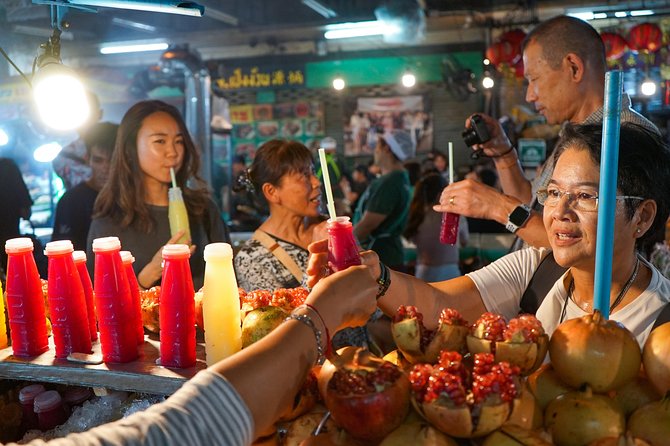
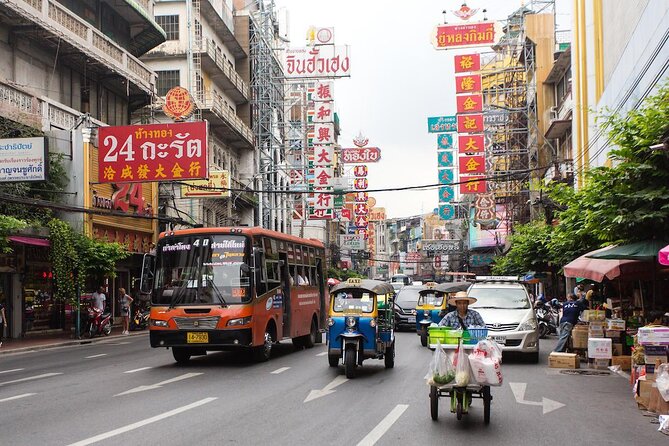
Bangkok’s Chinatown after dark is a feast for the senses. You’re surrounded by vendors, grills, steam, clinking bowls, and the kind of foot traffic that makes normal dinner plans feel cute. This tour works because it gives you structure: you’re not wandering hungry and guessing what’s best.
What you’re buying is a guided tasting route through both street stalls and small restaurants. That matters in Chinatown, where the best seats and the best bowls often go quickly. With the guide leading, you hit the right places in the right order.
You can also read our reviews of more tours and experiences in Bangkok.
Price and value: getting a lot of “covered” food for $56.38
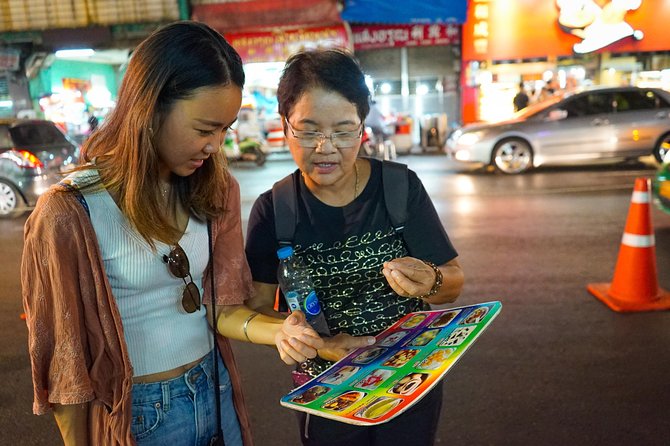
At $56.38 per person for about 3 hours, the value is the sheer amount of food you get to try. This isn’t a polite sampler with tiny bites. It’s a long sequence of tastings designed to fill you up.
Also, several stops include admissions/tickets for what you’re eating. That means fewer moments of paying small amounts here and there, and fewer decisions when you’re already stuffed with smells.
One more value angle: you’re eating dishes you’d likely struggle to pick confidently as a first-timer. The itinerary is built around classics (dumplings, dim sum, pad Thai) plus comfort hits (fishball noodles) and the sweet finish that people talk about. It’s a smart mix.
Meet at Wat Mangkon, then walk your way to Hua Lamphong
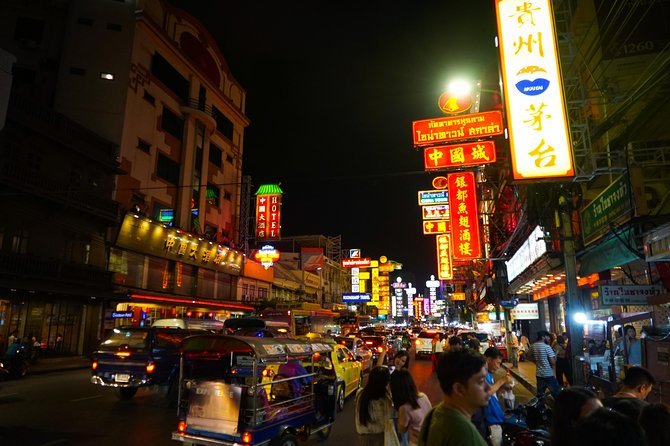
You start at MezzoX Drip Cafe, at Wat Mangkon, near MRT Blue Line Wat Mangkon Station (Exit 3). You’ll meet your guide there and begin your Chinatown crawl.
The tour ends at Hua Lamphong station. In practice, that gives you a full evening route across the Chinatown area rather than circling the same blocks.
Two practical notes that will save you stress:
- Show up on time. If you’re late and miss the group, you won’t be able to join and there’s no refund or reschedule.
- Plan for walking. This isn’t ideal if you have mobility issues; the tour provider recommends a private tour if walking is a problem for you.
The 8-stop Chinatown route: what you eat and why it matters
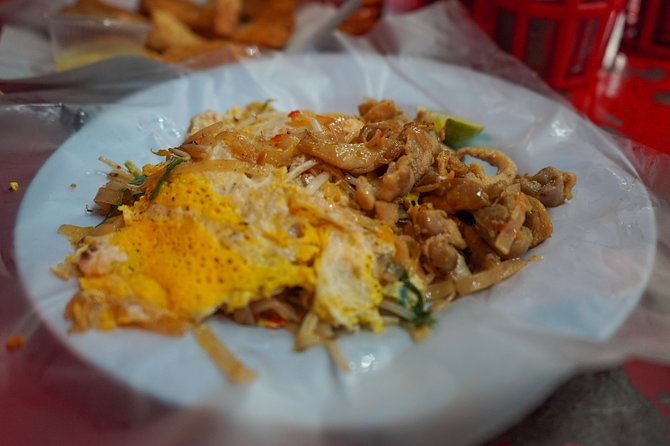
Here’s what your night looks like in real, food-first terms.
Stop 1: Michelin-awarded dumplings at a less-obvious spot
You kick off with dumplings from a spot described as Michelin-awarded. This is a strong opening move because dumplings are a quick way to understand the Chinatown flavor style right away: savory fillings, fragrant dipping sauces, and that satisfying steamed or pan-fried bite.
This first stop is also a temperature check for the evening. If you like what you taste here, you’ll likely enjoy almost everything that comes after.

Stop 2: Dim sum with options like Xiao long bao and custard bun
Next comes dim sum. You’ll get to choose from items such as BBQ pork, Xiao long bao, and custard bun.
Dim sum stops are great on a tour because they let you taste multiple textures without ordering like a pro. The dumpling-to-dim-sum progression also keeps things from getting repetitive.
Stop 3: Pad Thai at the heart of Chinatown (with a toast moment)
Then you’re handed pad Thai at the center of the action, with a little toast-in-your-hands vibe. It’s a classic move on purpose. Pad Thai is one of the easiest “I get it now” dishes for first-time visitors, and Chinatown versions often taste more intense and sauce-forward than the versions you’ll see elsewhere.
The upside: it’s comforting and crowd-pleasing. The possible downside: if you’re sensitive to seafood ingredients, pad Thai can be a concern since this tour is not designed as a no-seafood experience.
Stop 4: Night market stroll for Thai-Chinese fusion and photos
After eating, you walk. This part is less about one specific bite and more about absorbing the place: the lively night market energy where Thai and Chinese influences show up everywhere.
It’s also where you’ll naturally slow down enough to take photos and look at what others are eating. You’ll start noticing patterns like which stalls always have lines and which desserts people keep ordering again and again.
Stop 5: A small snack stop that keeps the momentum going
You’ll hit a smaller snack stop next. It’s short, but it keeps the pace of the evening smooth—no long dry stretches where you’re just walking and smelling food.
This kind of stop matters because Chinatown can be overwhelming if you’re hungry. The tour design prevents that.
Stop 6: Fishball noodles, described as Michelin-acclaimed
Now you reach one of the comfort dishes the night is built around: fishball noodles. This stop is positioned as Michelin-acclaimed, and it’s the kind of dish that feels like a reward after a crowded walk.
Fishball noodles are also a great “sit back and reset” meal. They’re warm, filling, and soothing in a way that fried snacks and dumplings sometimes aren’t.
Stop 7: Dessert choice between crispy doughnuts and mango sticky rice
Dessert is not an afterthought. You choose between Michelin-awarded fried crispy doughnuts and mango sticky rice.
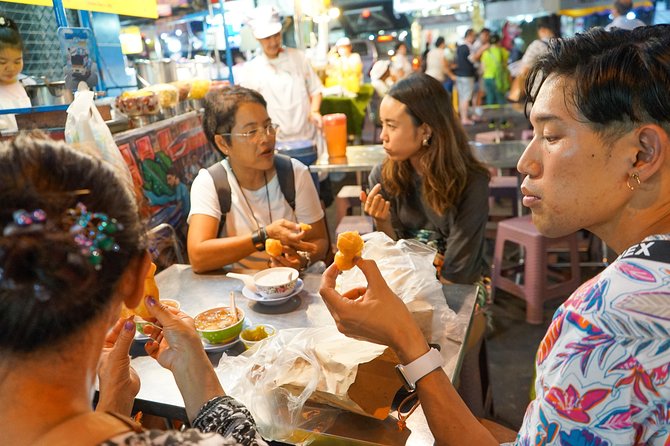
A detail from real-world experience people highlight: the doughnuts can come with pandan-flavored sauce, which turns a simple fried bite into a real flavor moment. If you’re a mango person, mango sticky rice is the obvious crowd favorite at this point.
Either way, you’ll probably feel full—but in that way where you still want one more spoonful.
Stop 8: An old bar street walk to close the night
You wrap things up with a walk down an atmospheric old bar street. This is where the tour ends on mood instead of just more food.
It’s also a good chance to cool off, get your bearings, and enjoy the neighborhood after dinner crowds start to settle.
What makes the guide-and-organization piece so important
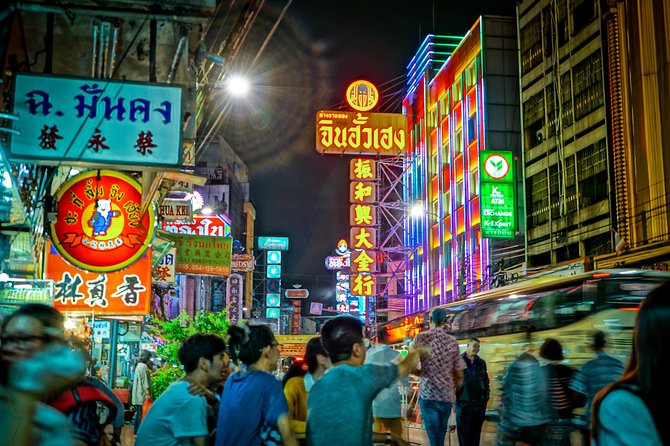
The best part of this tour is how smoothly it runs in a place that can feel chaotic. Guides like Kwan, Shin/Chin, Chris, and others are repeatedly praised for making sure the group stays together and moving you through crowds without wasting time.
A big practical win: food often arrives quickly once you get to each spot. That means less standing around, less awkward ordering attempts, and more eating while things are hot.
You also get explanations along the way, not just a list of dishes. People describe the guide sharing history about food and local businesses, which helps you connect what you’re tasting to the culture around it.
Small note: the street noise can make it tough to hear your guide at times. It’s Chinatown. Expect that.
Comfort and chaos reality check: crowds, noise, and how full you’ll be
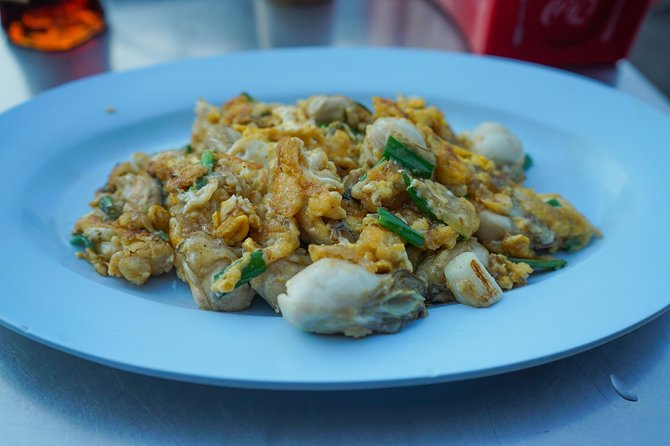
Bring water. Bring tissues. Do it even if you think you’re tough. You’re going to eat a lot, and Chinatown’s street-food intensity hits fast.
Also, you should plan for sensory overload if you’re sensitive to busy environments. Even when the guide is doing everything right, you’re still walking through dense alleys with heavy smells and constant commotion.
One more consideration: the tour may run a bit long depending on crowds and timing at each stop. So if you’ve got a hard next plan right after the tour ends, give yourself breathing room.
Diet, allergies, and seafood: the honest limits you should plan for
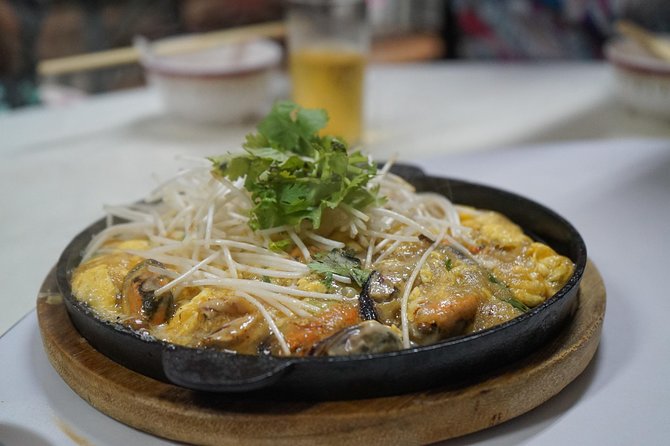
This tour is not built as a strict dietary accommodation experience. Vegetarian options exist, but selection is limited. It’s also not recommended for vegans, and it’s not recommended for vegetarians who avoid seafood.
If you have allergy concerns, the tour can’t guarantee allergy-free food. Food is prepared in kitchens that don’t belong to the tour operator, and substitutions may not always be possible at certain stops. The guide will try to compensate later, but you should not count on an allergy-safe menu.
My advice: if you’re vegetarian or avoiding seafood, check your comfort level carefully before booking. If allergies are a major concern, I’d treat this as a risk rather than a “maybe it works out” situation.
Alcohol note for Buddhist alcohol-free days
Thailand has alcohol-free days on May 11, July 10–11, and October 7. On those dates, sale and service of alcoholic beverages are not permitted. So even if you’re expecting a beer or a drink, you may not be able to get one.
Who this Bangkok Chinatown night tour is best for
You’ll love this tour if:
- you want a guided introduction to Bangkok Chinatown and Yaowarat
- you’re excited by street food plus small restaurant stops
- you want a high-food, low-guessing evening
- you like desserts as a real finale
You should probably skip or choose a different format if:
- you need strict vegan or no-seafood options
- you have allergy requirements you can’t relax about
- you have mobility limitations that make steady walking hard
- you dislike crowded, noisy streets where it can be hard to hear instructions
Should you book this tour?
Book it if your ideal Bangkok night is eating your way through Chinatown with a guide who gets you seated, keeps the pace moving, and brings you to dumplings, dim sum, pad Thai, fishball noodles, and a dessert finish you’ll actually remember.
Think twice if you’re vegetarian (especially seafood-avoidant), vegan, or allergy-sensitive. The food is plentiful and fun, but the tour isn’t a controlled-diet menu.
If you do book, come hungry, wear comfy shoes, and plan to enjoy Chinatown as it is: loud, crowded, and delicious.
FAQ
How long is the Bangkok Night Michelin Foodie Tour in Chinatown?
The tour runs about 3 hours.
What’s the group size for this experience?
The experience has a maximum of 7 travelers.
Where do we meet, and where does the tour end?
You meet at MezzoX Drip Cafe near Wat Mangkon Station (MRT Blue Line, Exit 3). The tour ends at Hua Lamphong station.
Is the meeting point near public transportation?
Yes. The starting point is near the MRT Blue Line Wat Mangkon Station.
Are vegetarian or vegan options available?
Vegetarian options are limited. The tour is not recommended for vegans or for vegetarians who avoid seafood.
Can the tour accommodate allergies?
The tour provider cannot guarantee allergy-free food, since meals are prepared in kitchens not operated by the tour provider. Substitutions may not always be possible.
Do I need to pay for the guide’s food and drinks?
No. You do not need to pay for the guide’s food and drinks.
Are alcohol drinks included?
The tour does not guarantee alcohol. Also note that on alcohol-free Buddhist days (May 11, July 10–11, October 7), alcohol sales and service are not permitted.
What if I’m late and miss the group?
If you are late and miss the group, you won’t be able to join and you won’t be eligible for a refund or rescheduling.