REVIEW · BANGKOK
Bangkok: City Highlights Temple and Market Walking Tour
Book on GetYourGuide →Operated by Bigcountry Experience Co.,Ltd. · Bookable on GetYourGuide
Bangkok’s temples make more sense with a guide. You’ll walk from the most sacred courtyard in Thailand to the royal ceremonial spaces of the Grand Palace, using local transport and seeing key sights in the right order. It’s the kind of tour that helps you look past the postcard views and understand what you’re actually standing in.
I especially liked two things. First, the route is built around the big-name temples—Wat Phra Kaew (Emerald Buddha), the Grand Palace, plus Wat Pho and/or Wat Arun depending on your choices—so you don’t waste time figuring out logistics. Second, the guides can be great at pacing and clarity, and I saw that energy in names like Mina, Air, Tan, and Johnny from past groups.
One thing to consider: temple time means heat, rules, and shoe drama. You’ll need to dress properly (no bare shoulders or knees) and plan for time spent waiting your turn at entrances and for the guide to keep everyone together.
In This Review
- Key moments that make this tour worth your time
- Meet at River City Bangkok and get your bearings fast
- Wat Phra Kaew: what you’re seeing inside the most sacred grounds
- The Grand Palace: royal power, ceremony, and photo-smart walking
- Wat Pho options: Reclining Buddha, education walls, and Thai massage origin
- Wat Arun (Temple of Dawn): porcelain, colored glass, and the 70-meter tower
- Tha Thien market and the amulet scene: Bangkok beyond temples
- Transport, timing, and how the group stays together
- Price and value: why $42 can be a good deal
- Who should book this temple and market walking tour
- Quick practical rules so you don’t get stuck
- FAQ
- How long is the tour?
- Where do I meet the guide?
- What temples are included?
- Do I need to pay for temple tickets separately?
- What languages are available for the guide?
- Is the group small?
- Are there dress code rules?
- Do I remove my shoes?
- Is photography allowed?
- Should I book this tour?
Key moments that make this tour worth your time
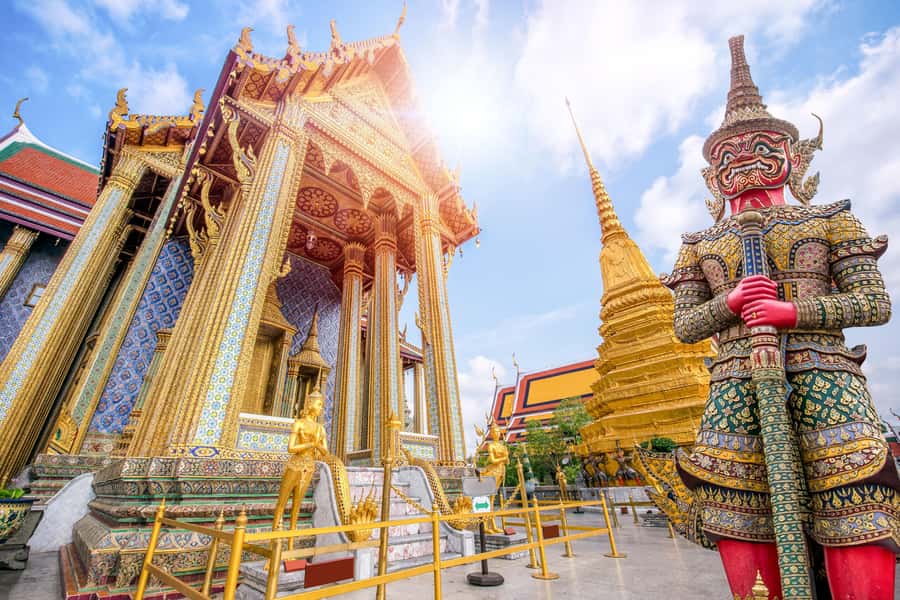
- Wat Phra Kaew, Emerald Buddha Temple: the most sacred Buddhist temple setting you’ll see in Bangkok.
- Grand Palace access with a guided walk: you’ll learn what the complex was for beyond the photos.
- Wat Pho options that add real meaning: the Reclining Buddha, plus the temple’s teaching and Thai massage origins.
- Wat Arun’s 70-meter tower look: tiny colored glass and porcelain details you’ll notice more with guidance.
- Small group size (up to 10): easier questions, easier pacing, better attention at busy gates.
Meet at River City Bangkok and get your bearings fast
The day starts at River City Bangkok, at the Bigcountry Experience office. Aim to be there by 9:00 AM, when the light is better and the temple crowds aren’t fully in swing yet. You’ll meet your licensed local guide and get the key reminders: what to wear, when to remove shoes, and how the photo rules work.
From there, you head out by local transport toward the Emerald Buddha Temple area. You’ll also pass through the amulet market area on Rattanakosin Island. This is one of those Bangkok scenes that feels casual and intense at the same time—locals browse, sellers explain, and you get a sense of how the city’s spiritual life is woven into everyday commerce.
This tour works because it sets context early. Bangkok’s temple buildings can look similar until someone explains the purpose of each space, the symbolism, and why rules matter here.
You can also read our reviews of more tours and experiences in Bangkok.
Wat Phra Kaew: what you’re seeing inside the most sacred grounds
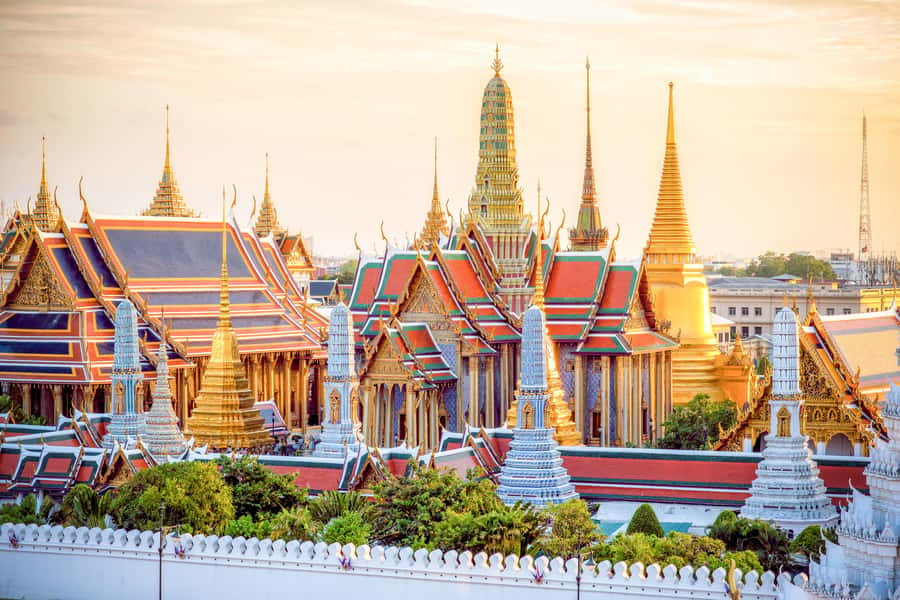
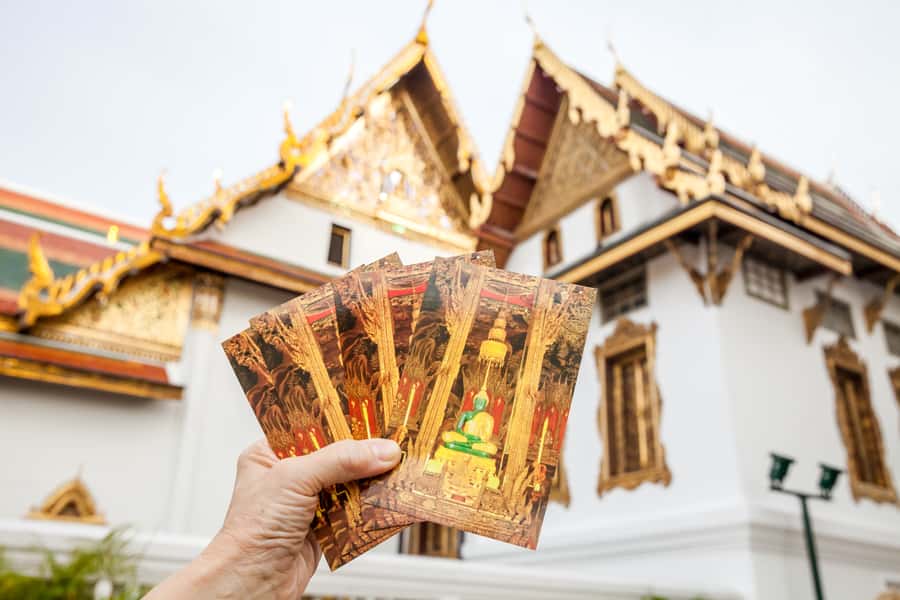
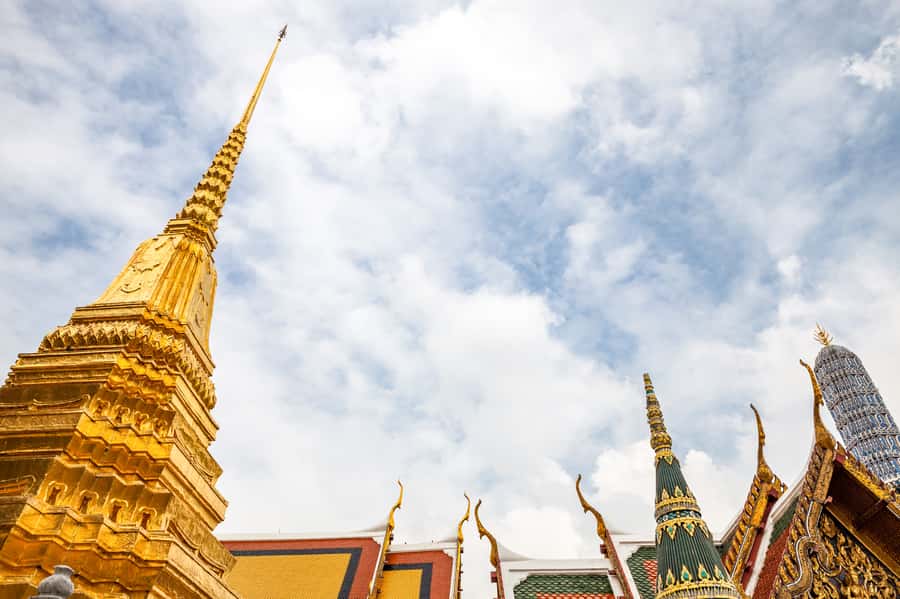
Your first major stop is Wat Phra Kaew, also known as the Temple of the Emerald Buddha. This is the officially sacred temple complex you hear about in every Bangkok story, and it’s regarded as Thailand’s most sacred Buddhist temple setting.
Here’s what makes this stop feel different when you have a guide. You’re not just looking at bright ornamentation; you’re reading a whole visual system. The guide points out the colorful buildings, golden spires, and the glittering mosaic style that covers so much of the temple landscape. When you know where to focus, the place turns from scenery into a message.
Practical tip: you can take photos in the Royal Palace grounds and the compounds of the Emerald Buddha Temple, but not inside the buildings. That means you should plan to photograph from where you’re allowed—think courtyards, entrances, and exterior angles—rather than counting on indoor shots.
Also, expect a steady flow of visitors and the need to follow the guide’s timing. A good guide keeps you moving without rushing the moments where you’ll want a closer look at the design details.
The Grand Palace: royal power, ceremony, and photo-smart walking
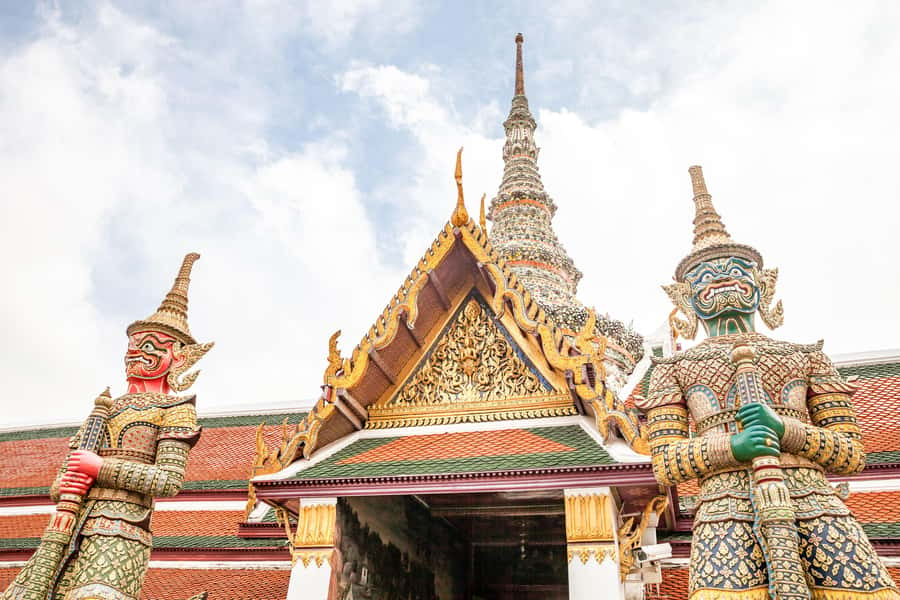
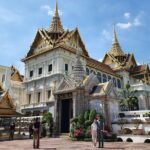
Next comes the Grand Palace, which was the official residence of the Kings of Thailand. Today, parts of the complex are still used for official events, royal ceremonies, and state functions. That’s why it feels more formal than some other temple visits in Bangkok—it has a sense of ongoing importance.
You’ll spend about 1.5 hours here with a guided walk that makes the complex easier to understand. The palace isn’t one building; it’s a planned world of gates, courtyards, and ceremonial spaces. A guide helps you connect what you’re looking at—statues, patterns, layout—with the roles these places played.
Two things you’ll likely appreciate:
- You get time for the key viewpoints without losing the thread.
- You learn which areas are better for photos and where to slow down to actually absorb the craft.
One consideration: the rules and crowds are real. The Grand Palace is a working ceremonial site in addition to being a major tourist attraction, so expect lines, careful movement, and moments where the guide needs everyone to pause and follow instructions.
Wat Pho options: Reclining Buddha, education walls, and Thai massage origin
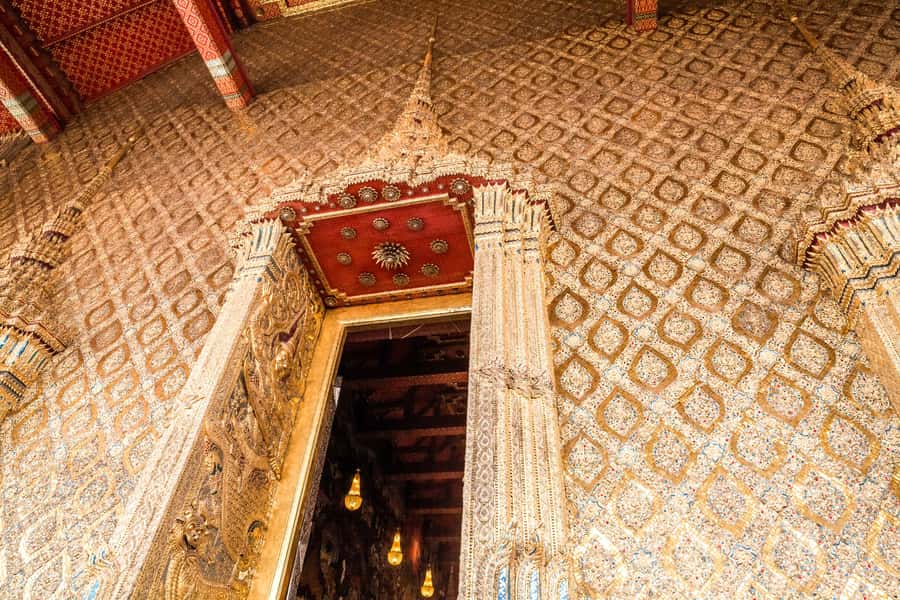
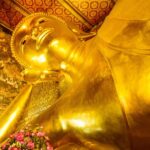
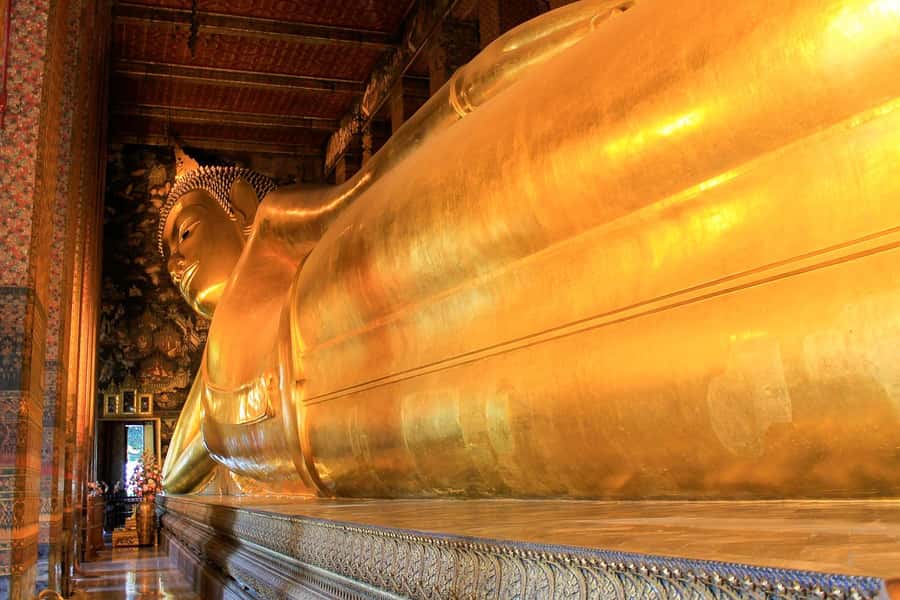
Wat Pho is the stop that turns many people’s temple day from pretty to meaningful. If you choose the Wat Pho option, you’ll visit the Temple of the Reclining Buddha and learn why Wat Pho is considered the oldest and largest temple complex in Bangkok.
The first wow moment is the Reclining Buddha itself—big, iconic, and instantly recognizable. But the guide typically helps you look beyond the pose. You’ll also get the background on King Rama I, who rebuilt the temple complex on an earlier temple site and made it his main temple, including the enshrinement of some of his ashes.
What I think sets Wat Pho apart is the education angle. The temple is known for being an early center for medical public education, with marble illustrations and inscriptions designed to teach. That educational role is recognized internationally: Wat Pho is listed in UNESCO’s Memory of the World Programme.
And yes, the tour connects this to something you can still experience today: Wat Pho is also regarded as the birthplace of traditional Thai massage, which is still taught and practiced there.
Practical note: you’ll still need proper clothing and you’ll remove your shoes before entering temple buildings. If your knees are covered and you’re wearing shoes that are easy to slip on/off, you’ll feel a lot less stressed.
Wat Arun (Temple of Dawn): porcelain, colored glass, and the 70-meter tower
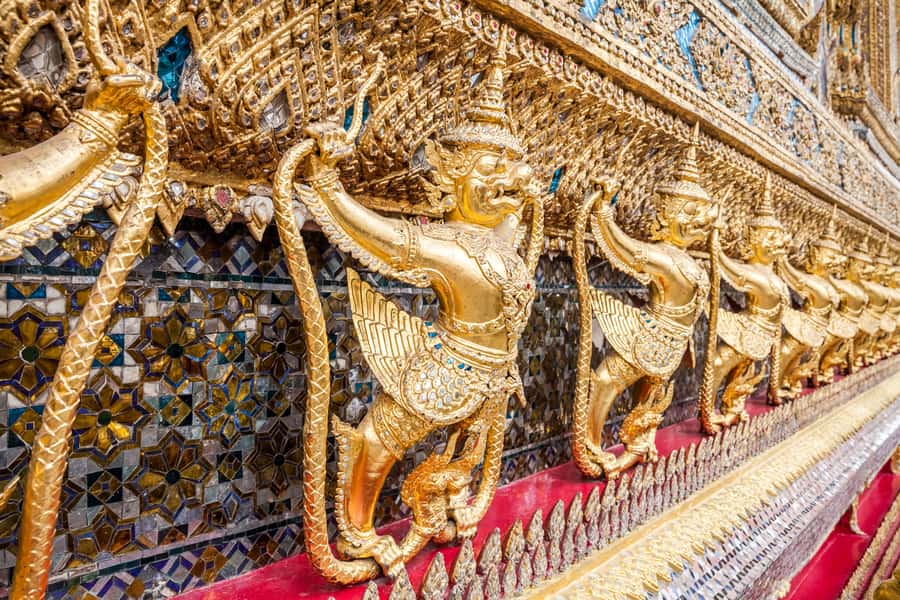
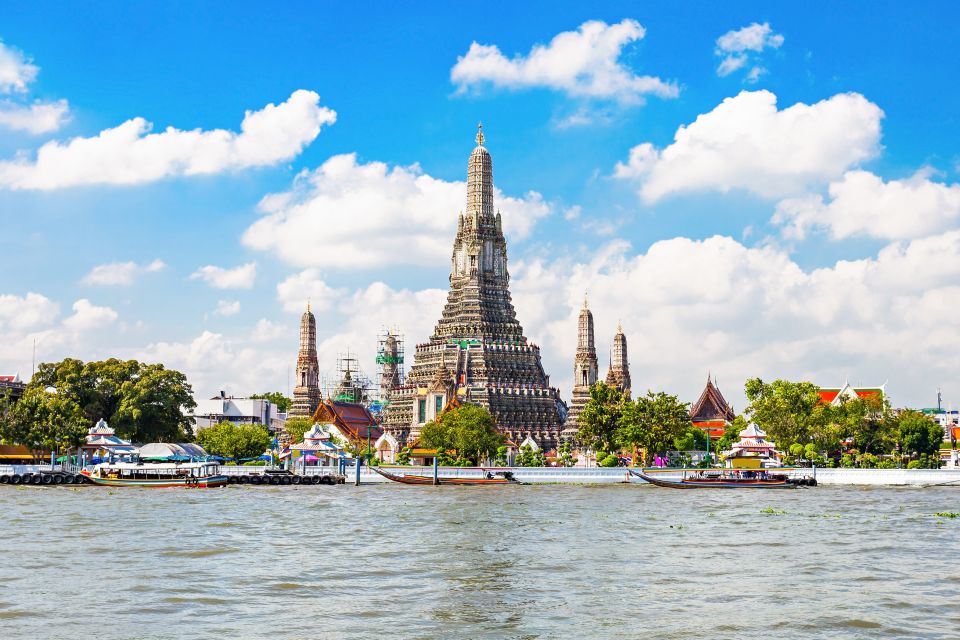
The tour wraps the temple highlights with Wat Arun, also known as the Temple of Dawn. This is where Bangkok gives you a skyline moment. The main attraction is its giant tower, around 70 meters, rising right by the Chao Phraya River.
Wat Arun is known for decoration made from tiny pieces of colored glass and Chinese porcelain. When you’re there, it’s one of those buildings where you can either rush past it as a silhouette—or stop and start noticing the material details. A guide helps you aim your eyes: what to look for, how the ornament changes across surfaces, and why the whole structure reads differently than other temple towers.
You’ll also learn about the temple’s features like the bell tower and the giant statues around the grounds. Even if you’ve seen photos, standing next to it feels different. The scale is real, and the texture work is the point.
If you love architecture, you’ll likely spend a little extra time here—especially if the timing lands you with good light and clear views across the river.



Tha Thien market and the amulet scene: Bangkok beyond temples
A big reason I like this tour’s flow is that it doesn’t lock you into temples all day. You pass by Tha Thien Market, a cultural food market area known for dried, salted seafood and wholesale products. It’s not presented as a shopping spree, but it adds texture to your day.
You also see the amulet market area on the way, which gives you a feel for Rattanakosin Island’s spiritual commerce. Whether or not you buy anything, it helps you understand Bangkok’s daily rhythm: belief and neighborhood life sit right next to each other.
This is where the small group format helps. With up to 10 people, you can ask quick questions about what you’re seeing—what’s common there, what’s touristy, and what locals actually use.
Transport, timing, and how the group stays together
Expect several short transit segments by public transport, each about 30 minutes depending on the day’s routing. That time matters because it prevents temple fatigue. You won’t just sit on a bus; you’ll move through real parts of the city between stops.
The tour can run 2 to 4 hours, and your selected temple options drive the length. If you’re doing just the core sights, it’s closer to the shorter end. Add Wat Pho and Wat Arun and you’re in the full temple circuit.
One more practical detail: your guide typically manages the “human stuff” as well as the landmarks. In past groups, guides have been attentive about water and toilet breaks, and they’ve even helped people adjust when weather shows up. So if you’re the type who hates feeling stranded in the heat, that care is a real part of the value.
Price and value: why $42 can be a good deal
At $42 per person, this tour is priced to feel fair for what’s included. You get a professional licensed guide, plus admission fees to the Grand Palace and Wat Phra Kaew (Emerald Buddha Temple). If you choose them, admissions to Wat Pho and Wat Arun are included too. Drinking water is also provided.
So you’re paying for three things at once:
- a tight, guided route through the top sights
- entry fees handled for you
- someone who helps you understand the spaces instead of just pointing
The only real “extra cost” risk is your own spending at markets or on snacks afterward, since the tour itself doesn’t claim to cover personal purchases.
If you’re doing Bangkok in a short window and you don’t want to spend your precious time mapping temple logistics, this price can make your day smoother.
Who should book this temple and market walking tour
This tour is best for you if:
- you want to see the big Bangkok temples without spending hours planning
- you care about meaning and context, not just photos
- you prefer a small group (up to 10) where your guide can keep an eye on the pace
It’s also a strong pick for first-timers who want a guided introduction to how temple rules and etiquette work in Thailand.
If you’re a hardcore DIY planner who enjoys studying temple sites solo and doesn’t mind figuring out ticket lines and entry procedures, you might find it less essential. But even then, the guide’s ability to explain what you’re looking at can be the difference between a random march and a satisfying day.
Quick practical rules so you don’t get stuck
Before you go, be ready for these specifics:
- No sleeveless shirts. Shoulders and knees need to be covered.
- Shoes must be removed before entering temple buildings.
- Photography is allowed in permitted areas (Royal Palace grounds and Emerald Buddha Temple compounds), but not inside buildings.
- Restrooms are available.
These aren’t optional preferences here; they’re part of the temple experience. If you show up prepared, your time inside feels calm instead of rushed.
FAQ
How long is the tour?
The tour runs 2 to 4 hours, depending on the options you choose for additional temple stops.
Where do I meet the guide?
Meet your guide at the Bigcountry Experience office at River City Bangkok.
What temples are included?
The tour includes admissions to the Grand Palace and the Emerald Buddha Temple. Wat Pho and Wat Arun are included if you select those options.
Do I need to pay for temple tickets separately?
No. Admission fees to the included temples are part of the tour cost, including the Grand Palace and Emerald Buddha Temple, plus Wat Pho/Wet Arun if those options are selected.
What languages are available for the guide?
The tour offers live guiding in English and German.
Is the group small?
Yes. It’s limited to 10 participants.
Are there dress code rules?
Yes. You’ll need proper attire for the national shrine settings: no bare shoulders or knees, and no strapless-heel shoes. Also, no sleeveless shirts are allowed.
Do I remove my shoes?
Yes. Shoes must be removed before entering temple buildings.
Is photography allowed?
Photography is permitted in the Royal Palace Grounds and in the compounds of the Emerald Buddha Temple, but not inside the buildings.
Should I book this tour?
I think you should book this tour if you want a smooth way to hit Bangkok’s top temple highlights with admissions included and a guide who can explain what you’re looking at. The small-group size and practical pacing (especially around heat and temple rules) make it feel worth the $42, particularly if you’re short on time.
Book it especially if you want the full impact: the Emerald Buddha temple, the Grand Palace ceremonial spaces, and then adding Wat Pho and/or Wat Arun for the moments that make Bangkok feel unmistakably Bangkok.