REVIEW · BANGKOK
Tingly Thai Cooking School Afternoon Class
Book on Viator →Operated by Tingly Thai Cooking School · Bookable on Viator
Spicy food lesson or just dinner? This class turns Thai cooking into a skill you can repeat, not a one-time show. I like how you make dishes from scratch, including fresh curry paste, and I also like the small-group feel (max 10) that lets the chef actually correct your technique. You also eat what you cook, so the “no hunger pangs” promise feels real.
One watch-out: the afternoon schedule is fixed (around 3.5 hours), and the experience depends on good weather, so plan flexibility if Bangkok’s skies do their thing.
In This Review
- Key highlights you’ll feel immediately
- Tingly Thai Cooking School Afternoon Class: the best kind of Bangkok afternoon
- Getting the timing right: 1:00 pm start, afternoon finish, and the market question
- Why curry paste from scratch is the real meal (not just a garnish)
- Four courses: soups, curries, and the sauces behind the favorites
- Learning techniques you won’t get from a recipe book
- What you bring home: recipes, plus the tools of the trade
- The vibe: small group energy, practical instruction, and a fun Bangkok reset
- Where to meet in Bangkok: Silom area, near public transport
- Value check: why $40.47 can make sense for Bangkok
- Who this class fits best (and who might not love it)
- Should you book Tingly Thai’s afternoon class?
- FAQ
- How long is the Tingly Thai Cooking School afternoon class?
- What time does the afternoon class start?
- Is the market tour included in the afternoon class?
- How many people are in the class?
- Where is the meeting point?
- Will I eat during the class?
- What can I expect to cook?
- What happens if I cancel or if weather affects the experience?
Key highlights you’ll feel immediately
- Curry paste from scratch so your sauces taste like Thailand, not like shortcuts
- Four-course cooking with plenty of food you can take photos of before you eat it
- Small group size (max 10) which means more hands-on guidance
- Recipes and tools to take home, so you’re not left guessing later
- Enthusiastic instructors like Soung, Chan, Chun, Nam, and Chon (seen in the school’s teaching styles)
Tingly Thai Cooking School Afternoon Class: the best kind of Bangkok afternoon
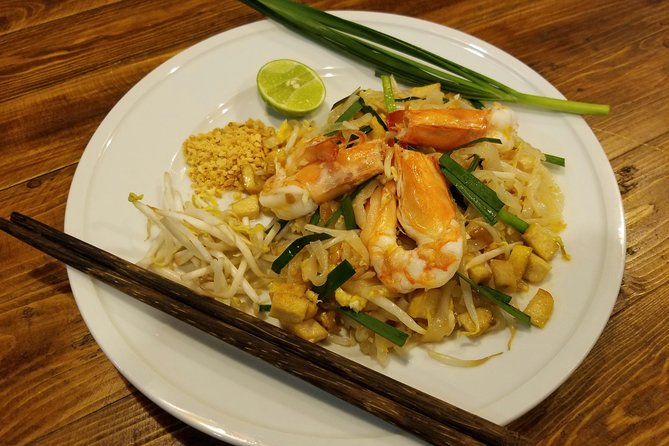
Bangkok can be a lot. Noise. Heat. Temples. Malls. Then you find something calm and focused: a cooking class where the room smells like garlic, chiles, lime, and toasted spices. At Tingly Thai Cooking School, you’re not just tasting Thai food. You’re learning how Thai cooks build flavor, step by step.
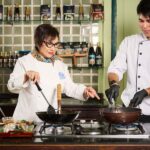
The core appeal is simple. You get a hands-on lesson that goes beyond a basic recipe. You learn technique, you learn why ingredients matter, and you learn how to handle things like fresh curry paste in a way that makes it taste right later too. And yes, you eat what you make at the end. That part matters, because Thai cooking classes can sometimes feel like “demo, then a small sample.” This one aims to feed you.
I also appreciate the energy instructors bring. Names that show up in the teaching experience include Soung, Chan/Chun, Nam, and Chon. Different personalities, same goal: make Thai cooking feel doable, not scary.
You can also read our reviews of more tours and experiences in Bangkok.


Getting the timing right: 1:00 pm start, afternoon finish, and the market question
For the afternoon session, the class is scheduled to run from 13:00 to 17:00 (that’s roughly 1:00 pm to 5:00 pm). The experience length is listed at about 3 hours 30 minutes, so expect a solid chunk of active cooking, not a slow stroll through spice jars.
One confusing detail you should pay attention to before you book: the afternoon timing notes that it’s excluding the market tour. That doesn’t mean the school never uses markets as part of its teaching approach. It just means your specific afternoon class slot may not include that extra market walk.
Here’s how to think about it:
- If you care about seeing where ingredients come from, look for whether your option includes (or excludes) the market portion.
- If you just want to cook, the afternoon class itself is still packed with hands-on work, and you’ll still learn about Thai ingredients through what you prep in the kitchen.
Why curry paste from scratch is the real meal (not just a garnish)
If you only remember one thing from Thai cooking, it should be this: curry isn’t just a jar of paste plus coconut milk. The flavor base starts with aromatics and grinding. That’s exactly what this class targets.
You’ll make fresh curry paste from scratch. That means you get practice with the texture and balance that store-bought paste can’t fully replicate. You also learn how to prepare it in a way that supports cooking later—because paste changes as it sits. The school emphasizes tips for both preparing and storing Thai dishes, not only throwing ingredients in a pot.
What I like about this for your future cooking at home:
- You learn what the paste is supposed to smell and taste like before it meets heat.
- You start understanding which aromatics drive the flavor (and which ones need time to mellow).
- You stop treating curry as a “one-and-done recipe” and start treating it like a technique.
Also, curry paste lessons tend to be the most memorable part of cooking classes. You’ll feel it immediately the moment your paste hits the pan.
Four courses: soups, curries, and the sauces behind the favorites
Most cooking classes promise “a lot of food,” but this one leans into it. In the class you prepare four dishes, and the style is meant to cover a range of Thai flavors: tangy soups, creamy curries, and dishes that rely on balancing sweet, sour, salty, and heat.
From the cooking experience descriptions and what people highlighted afterward, you’ll commonly see dishes like:
- Tom Yum (often mentioned as something you learn to make at home)
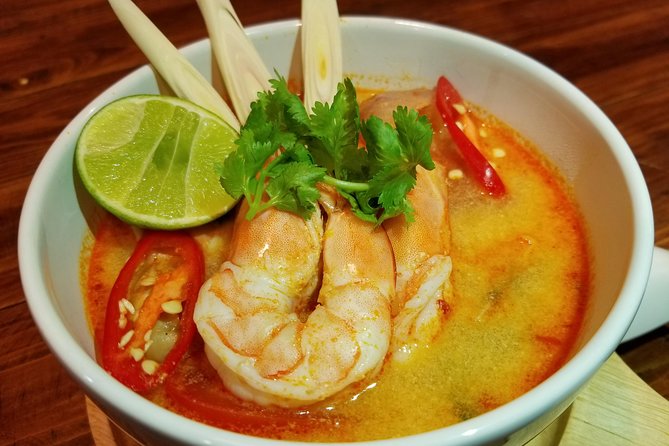
- Tom Kha shrimp soup
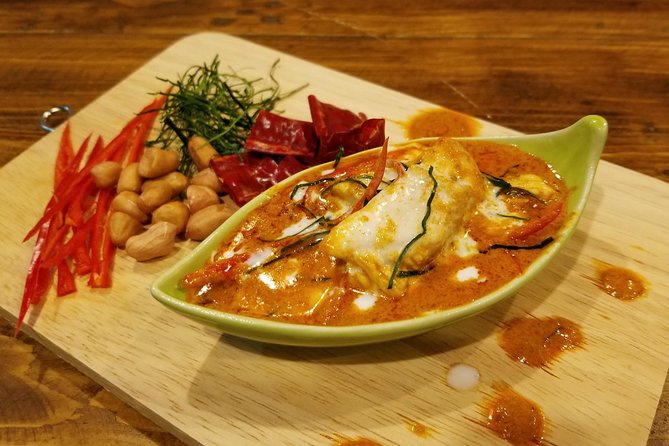
- Penang curry
- Mango sticky rice (a classic finale)
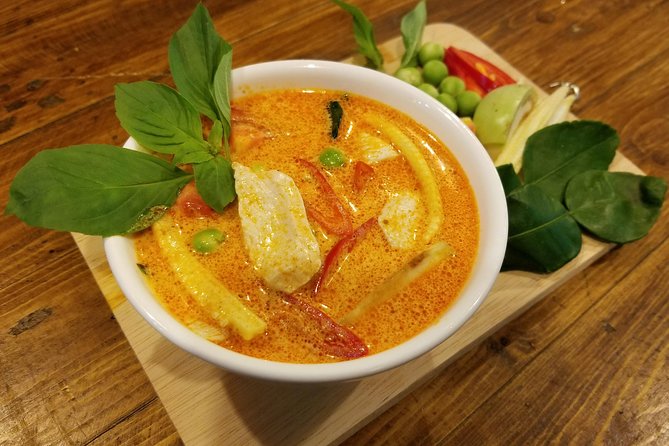
- Pad Thai and green curry (also mentioned among the dishes people learned)
Even if your exact four-course lineup varies slightly by class, the “shape” of the lesson is consistent: you build flavor bases, you cook with technique, and you finish with something you actually want to keep eating.
Here’s what to expect in the work itself:
- You prep ingredients at the level of detail Thai recipes care about, like cutting, blending, and timing aromatics.
- You cook, taste, and adjust as you go.
- You learn tricks that don’t fit neatly into a printed recipe card, like how to manage texture and how to keep dishes tasting right after cooking.
The upside for you is confidence. You’re not just collecting recipes. You’re learning why the dish tastes the way it does.
Learning techniques you won’t get from a recipe book
A lot of cooking lessons stop at the “what.” This one pushes into the “how.” That’s where the class feels worth the time.
People mention that instructors explain ingredients clearly and also add their own tested tricks. Examples from the teaching style you’ll likely experience:
- Smell-based ingredient cues, so you understand aroma, not just measurement
- Technique tips on how to handle Thai components properly
- Guidance for storing Thai dishes so flavors hold up better
That last part matters more than you’d think. Thai dishes can be amazing fresh, but they can also lose punch if you store them wrong or reheat them without care. The school explicitly teaches proper storage methods, so you’re not only learning dinner. You’re learning weekday success too.
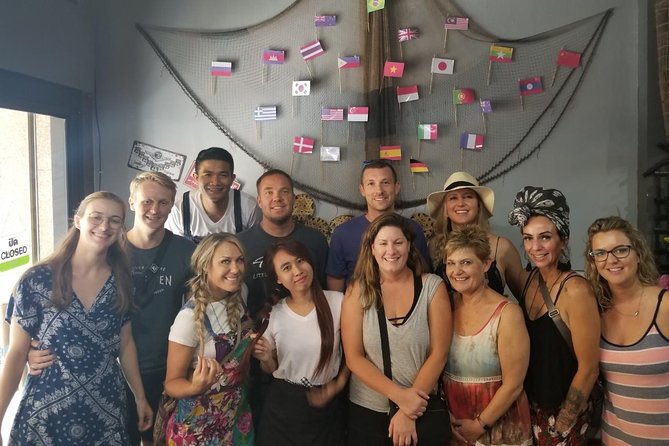
Also, the class is set up for interaction. People frequently describe the instructor as energetic and funny, with explanations that make the process feel easier than it looks. When the teaching is that clear, you’re more likely to replicate the dishes later without turning your kitchen into a stress test.






What you bring home: recipes, plus the tools of the trade
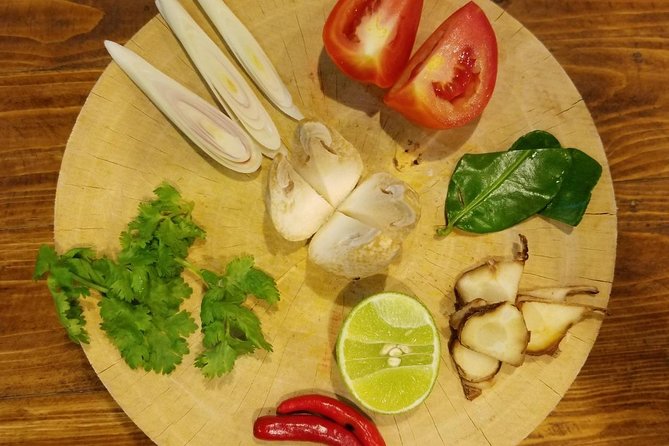
You don’t just leave with food. You leave with a plan.
The school provides a recipe book (and people note it’s comprehensive), and you also get traditional items like chopsticks at the end. Some classes include opportunities to buy traditional tools used in Thai cooking, which can be handy if you want to grind paste or handle ingredients the way you did in class.
This matters for value. A cooking class that gives you only a printed sheet can be hard to use later. A class that gives you a proper recipe resource plus practical tips is how you actually cook the dishes again.
If you’re the type who likes to cook but hates searching the internet for half a dozen versions of the same recipe, you’ll probably love having the school’s approach in one place.
The vibe: small group energy, practical instruction, and a fun Bangkok reset
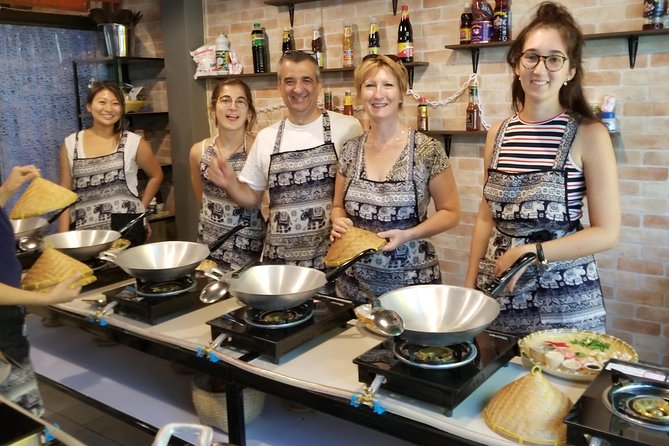
This is the kind of activity that works for solo travelers and for groups, because cooking is naturally social—but it’s still structured.
The group size cap is 10 travelers, and that creates a better learning environment. You’re not standing in the back hoping someone notices you messed up the paste texture. You get guidance at the station you’re working at.
It also helps that people repeatedly highlight instructor personality. Teaching names you may encounter include Soung, Chan, Chun, Nam, and Chon. Regardless of which instructor leads your session, the pattern is consistent: the vibe is energetic, but the lesson stays educational.
And yes, go hungry. Multiple people say to arrive with an empty stomach, and that you’ll leave full. It’s not a snack. It’s a meal built from your own work.
Where to meet in Bangkok: Silom area, near public transport
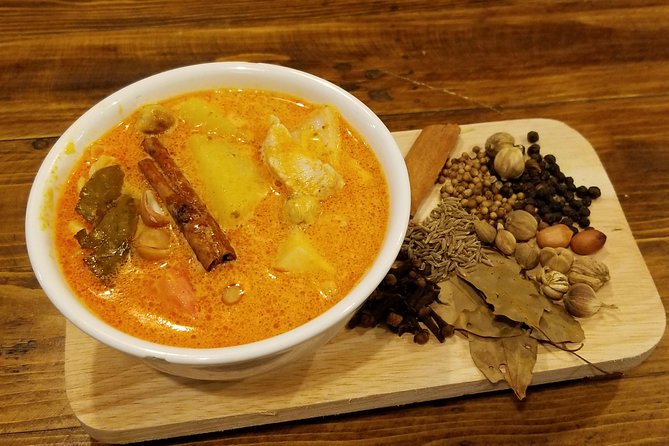
Your meeting point is listed at:
17/1 Soi Silom 22, Suriyawongse (สุริยวงศ์), Bang Rak (Khet Bang Rak), Bangkok 10500, Thailand.
It’s described as near public transportation, which is a big deal in Bangkok. You don’t want your cooking class to start with a 30-minute navigation problem in a city that can be sweaty even when you’re not in a hurry.
The good news: the experience ends back at the meeting point, so you’re not stuck figuring out a return route after you’re busy eating and rolling out early.
Value check: why $40.47 can make sense for Bangkok
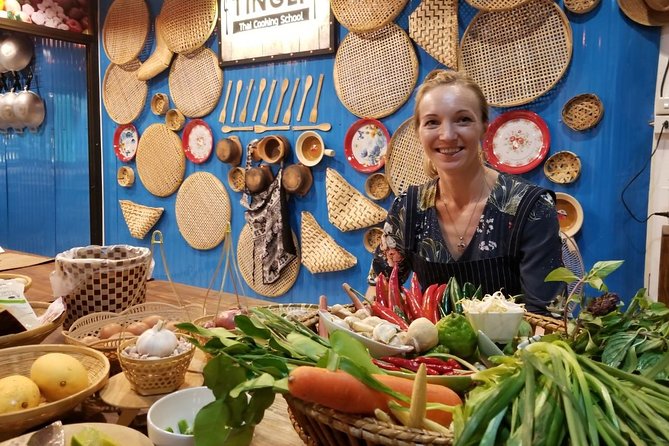
At $40.47 per person, this class is priced like an activity, not like a fancy private chef. So the real question is: what do you get for the money?
Here’s what’s included in the experience design:
- A 3.5-hour hands-on cooking session
- Fresh curry paste from scratch
- A meal made from what you cook, so you get fed
- Instruction focused on techniques (including storage tips)
- A recipe book and chopsticks at the end
- A small group limit (max 10), which improves the quality of teaching
If you compare that to the cost of buying Thai food for a full meal plus paying separately for a “learning experience,” it starts to look reasonable. The best value comes when you’re actually going to cook after you get home. If you love food and you want repeatable results, this class pays you back.
If you just want a quick bite and don’t care about technique, you might feel it’s too much effort for the price. But if you want to learn how to do Thai flavors reliably, it’s a smart use of an afternoon.
Who this class fits best (and who might not love it)
Book this if:
- You want to learn real technique, especially curry paste and Thai flavor building
- You like hands-on activities more than “watching someone cook”
- You want a full meal out of the experience
- You want recipes you can use later, not just a memory
Consider skipping or choosing a different option if:
- You’re not comfortable with a structured, multi-hour cooking format
- You hate the idea that outdoor conditions can affect scheduling, since the experience requires good weather
- You’re only interested in very specific dishes. The class runs as a four-course set, and while classic Thai favorites are included across sessions, your exact menu isn’t spelled out in the info you provided.
Should you book Tingly Thai’s afternoon class?
I think you should book it if you want a genuinely useful Bangkok experience: you cook a real meal, you learn how Thai flavors are built, and you leave with a recipe book plus tips you can apply at home. The consistent 5/5 feedback and the repeated advice to come hungry point to the same thing: you get more than a demonstration.
Book it sooner if you can, because the class is capped at 10 people, and those small groups fill up. And if you’re the type who likes to travel with purpose, this is one of those afternoons that turns into dinner back home.
FAQ
How long is the Tingly Thai Cooking School afternoon class?
The duration is listed at about 3 hours 30 minutes (approx.).
What time does the afternoon class start?
The start time is listed as 1:00 pm for this afternoon session.
Is the market tour included in the afternoon class?
The afternoon class timing notes it excludes the market tour.
How many people are in the class?
The experience has a maximum of 10 travelers.
Where is the meeting point?
Meet at 17/1 Soi Silom 22, สุริยวงศ์ (Suriyawongse), Khet Bang Rak, Krung Thep Maha Nakhon 10500, Thailand.
Will I eat during the class?
Yes. The class includes eating the dishes you’ve created at the end.
What can I expect to cook?
You’ll make dishes from scratch and learn techniques such as preparing fresh curry paste. People also mention learning dishes like Tom Yum, Tom Kha shrimp soup, Penang curry, mango sticky rice, Pad Thai, and green curry.
What happens if I cancel or if weather affects the experience?
You can cancel up to 24 hours in advance for a full refund. If the experience is canceled due to poor weather, you’ll be offered a different date or a full refund. Confirmation is received at booking, and cut-off times are based on local time.