REVIEW · BANGKOK
Bangkok: Mango Cooking School Thai Cooking Class
Book on GetYourGuide →Operated by Mango Cooking School · Bookable on GetYourGuide
Thai cooking starts with a market stroll. I like the market-first ingredient hunt and the super air-conditioned, spotless kitchen setup; my only real caution is that there’s no hotel pickup, so you’ll need to reach BTS On Nut and walk in.
The 3-hour format is built for real food learning, not just watching. You’ll cook multiple Thai staples—then eat what you make—ending with mango sticky rice and extra dessert tastings. If you’re bringing kids, the class is kid-friendly, but the rules are strict about supervision and observation.
What I love most is how the class balances basics with real flavor work. Expect classic dishes like pad thai, tom yum goong, green papaya salad (som tum), garlic-chili morning glory, and the coconut-milk work behind mango sticky rice. You’ll also get QR recipe videos and a small gift, which makes it easier to repeat the results back home.
In This Review
- Quick Key Points (Before You Go)
- Entering the Mango Kitchen Near BTS On Nut
- Market Walk Before Cooking: The Herbs and Spices Part
- Inside the Facility: Clean Stations, Air Conditioning, and Air Purifiers
- The Hands-On Menu: From Coconut Milk to Mango Sticky Rice
- How Cooking Lessons Actually Work: Guidance, Spice Control, and Pace
- English-Friendly Instructors and Family Rules That Affect Real Life
- Price and Value: Why $27 Can Feel Like a Bargain
- Practical Tips for Your Day at On Nut
- Should You Book This Thai Cooking Class?
- FAQ
- How long is the Bangkok Mango Cooking School Thai cooking class?
- Where do I meet the class?
- Is the market tour included, and does it run at different times?
- What dishes will I cook?
- What’s included in the price?
- Is hotel pickup and drop-off included?
- Are children allowed, and what are the age rules?
Quick Key Points (Before You Go)
- On Nut location that’s easy to reach: near BTS On Nut, about a 5–10 minute walk from the station.
- Market tour at both morning and afternoon sessions: you can match it to your day in Bangkok.
- Clean facility with air flow everywhere: air conditioning on every floor, plus air purifiers.
- Hands-on cooking with a set menu: up to six dishes, plus Thai dessert (often mango sticky rice).
- Family-friendly tools: kid-size cooking gear is provided, with clear rules for ages and supervision.
Entering the Mango Kitchen Near BTS On Nut
This class is one of those Bangkok activities that doesn’t eat your whole day. You’re looking at a solid 3 hours, which is perfect when you want Thai food learning without juggling multiple transfers. The meeting point is across from BIG-C (On Nut) Market, and it’s an easy walk once you’re at BTS Skytrain On Nut.
Getting there yourself is the main logistics trade-off. There’s no hotel pickup or drop-off, so plan on using BTS and walking. The good news: the school’s adjacent to BTS On Nut, and people consistently describe the area and facility as clean and comfortable.
If you’re doing this as a first-time food activity, the location helps. You can pair it with nearby meals afterward, and you won’t feel like you’re racing across the city. If you hate walking in cities, wear shoes you trust—Thai floors and kitchen stations are not the place for flimsy sandals.
You can also read our reviews of more tours and experiences in Bangkok.



Market Walk Before Cooking: The Herbs and Spices Part
The market stop is where the class gives you more than recipes. You head through a local market with your instructor, picking up ingredients and learning why Thai cooking tastes the way it does. In particular, you’ll get time to see herbs, seasonings, and spices before you touch a stove.
There’s a practical reason this matters: Thai dishes often live or die by balance—sweet, sour, salty, and spicy in the right proportions. Seeing the ingredients in the market makes it easier to understand what you’re doing later at the counter, especially for things like green papaya salad and tom yum.
Another nice detail is timing flexibility. The Thai local market tour is available for morning and afternoon classes, so you can choose based on your energy level and other plans.
One more thing: the market walk usually includes ingredient choices that you’ll use right away in the kitchen. That makes the market feel like part of your meal, not a side quest.
Inside the Facility: Clean Stations, Air Conditioning, and Air Purifiers
Bangkok kitchens can be hot and cramped. Mango Cooking School avoids that problem with a purpose-built facility.
Here’s what you’ll notice quickly:
- Air conditioning on every floor, so moving between areas stays comfortable.
- Air purifiers, which matters if you’re sensitive to city air.
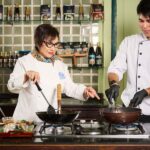
- Clean kitchen stations and appliances, with a setup designed for learning.
- Kid-friendly cooking tools, so younger participants can actively help.
This kind of setup isn’t just about comfort. It helps you focus on technique. When your hands aren’t sweating through everything, you’re more likely to learn the steps the instructor is teaching—chopping, mixing, and controlling heat.
If you’re traveling with kids, the school’s gear is a real advantage. Kids get tools suited to them, instead of just watching adults do everything. That makes the class feel fair: everyone can participate.
The Hands-On Menu: From Coconut Milk to Mango Sticky Rice
You’ll cook a set of classic Thai dishes, and the class is designed so you don’t end up starving while everyone else cooks. The highlight list says you can cook six dishes, and the menu includes both savory and sweet.
Menu items you should expect to see (menu can change):
- Coconut Milk: making coconut cream and milk for mango sticky rice.
- Som Tum (green papaya salad): fresh, tangy, and a little spicy depending on your spice level.
- Pad Thai: stir-fried noodles with the sweet-salty flavor profile Thai food is known for.
- Tom Yum Goong: tangy, spicy shrimp soup.
- Stir-fried Morning Glory: crispy garlic-chili morning glory.
- Mango Sticky Rice: classic dessert with sweet mango, glutinous rice, and coconut sauce.
- Plus an additional Thai dessert selected by the chef.
A couple of useful “how it feels” details: instructors guide you step by step, and you’ll be doing real work like chopping and cooking. You’ll also be tasting what you cook, so you can correct flavors on the fly.
For dessert lovers, the coconut-milk component is a key learning moment. Instead of treating mango sticky rice as just a finished plate, you learn how coconut cream and milk contribute to the final texture and flavor.
If you’re not a shrimp fan, note that tom yum goong is on the menu. The class is described as accommodating on spice levels, and it’s worth speaking up about taste preferences when you arrive so the instructor can steer you.
How Cooking Lessons Actually Work: Guidance, Spice Control, and Pace
This isn’t a class where you stand back. You’re hands-on throughout, with an instructor and staff watching your process. English instruction makes it easier to ask questions mid-cook, which matters when you’re learning Thai flavor balancing for the first time.
A strong point in the feedback is how well the instructors adjust the experience. Some teachers named in the program include Serene, MC, and PUI. People highlight that the hosts explain steps clearly, keep everyone engaged, and guide participants through the full cooking flow.
There’s also a pace detail that helps a lot: you typically eat in a way that doesn’t pile everything at the end. After each cooking stage, you can move into the eating process while the kitchen prepares the next dish. That keeps the energy up and helps you avoid long waiting.
Spice level matters in Thai food. One review specifically mentioned spice level accommodation, and you should assume you can control heat. If you’re sensitive to chili, tell the instructor early, especially for dishes like som tum and morning glory.






English-Friendly Instructors and Family Rules That Affect Real Life
The class runs in English, which is the big practical win for many visitors. And the teaching style is described as upbeat and interactive, not stiff.
Family setup is where you’ll want to read carefully before you book. Children under 5 aren’t suitable. Kids age 5–11 must be accompanied by one guardian, and that guardian also needs to make a reservation. There are also specific rules about adults observing or assisting:
- Individuals who have not registered can’t observe or wait during the class.
- Parents aren’t allowed to observe or assist during the program.
If you’re traveling with a family, these rules actually make the experience better for kids. Everyone stays focused on cooking and learning. For parents, it helps to mentally switch from watching to planning your day around the class, then meeting up afterward once it’s finished.
Price and Value: Why $27 Can Feel Like a Bargain
At $27 per person for a 3-hour class, you’re paying for more than a meal. You’re also paying for market learning, ingredient prep, cooking instruction, and take-home recipe access.
What you’re getting included:
- A five-course meal
- Cooking equipment and ingredients
- QR recipes (video)
- A special gift
Even though the menu list can reach six cooked dishes plus extra dessert, the value shows up in the “you do it” structure. You’re not just tasting Thai food; you’re learning how to build key flavors: coconut richness, sour-spicy soup tang, noodle stir-fry technique, and the sweet-sour balance behind papaya salad.
The QR recipe videos are also a smart add. If you’ve ever cooked from memory later, you know how hard it is to recreate steps. With QR recipes, you’ll have a shortcut back to the method you practiced.
Practical Tips for Your Day at On Nut
Small prep steps make a big difference with cooking classes.
Bring:
- Comfortable shoes (you’ll walk and stand at the stations)
- A camera
Don’t bring:
- Pets
- Smoking
Arriving:
- Take a 5–10 minute walk from BTS Skytrain On Nut.
- Aim for the area across from BIG-C (On Nut) Market.
Also plan timing around a market-to-kitchen flow. You’ll likely be shifting between spaces, then cooking, then eating. If your schedule is tight, build in extra minutes so you don’t feel rushed.
Finally, if you have dietary preferences or spice sensitivity, raise it with the instructor early. The class is described as able to accommodate spice levels, but you’ll get the best results if you say what you need at the start.
Should You Book This Thai Cooking Class?
Book it if you want a Thai food experience you can actually repeat. The combination of a market walk, hands-on cooking, and QR recipe videos turns this into more than entertainment.
I’d also strongly consider it if:
- You’re new to Thai cooking and want the “why” behind flavors.
- You like eating what you cook.
- You’re traveling as a family and want kid-friendly participation (with the listed age and supervision rules in mind).
- You’re trying to avoid long, hot, uncomfortable setups, thanks to the air-conditioned facility.
Skip it or think twice if:
- You don’t like walking from BTS and dealing with self-arrival. No pickup means you’re responsible for getting there on time.
- You or your child can’t follow the class observation and supervision rules.
If you’re the type who returns from Bangkok wanting to recreate flavors at home, Mango Cooking School near On Nut is a practical, value-heavy way to do it.
FAQ
How long is the Bangkok Mango Cooking School Thai cooking class?
The class runs for 3 hours.
Where do I meet the class?
Meet for the experience with a 5–10 minute walk from BTS Skytrain On Nut Station. The meeting point is across from BIG-C (On Nut) Market.
Is the market tour included, and does it run at different times?
Yes. The Thai local market tour is available for both morning and afternoon classes.
What dishes will I cook?
You can expect classic Thai dishes from a set menu such as coconut milk for mango sticky rice, som tum, pad thai, tom yum goong, stir-fried morning glory, and mango sticky rice. The menu can change depending on availability.
What’s included in the price?
Inclusions include a five-course meal, cooking equipment, ingredients, QR recipes (video), and a special gift.
Is hotel pickup and drop-off included?
No. Hotel pickup and drop-off are not included.
Are children allowed, and what are the age rules?
Children under 5 are not suitable. Children aged 5–11 must be accompanied by one guardian, who also needs to make a reservation. Children cannot attend alone, and parents are not allowed to observe or assist during the program.