REVIEW · BANGKOK
Bangkok: Guided Tour in a Typical Thai Tuk-Tuk
Book on GetYourGuide →Operated by CanalTour x ExploreSiam · Bookable on GetYourGuide
Two hours in a tuk-tuk hits the highlights. I like the pure, old-school tuk-tuk ride energy and the way the guide ties Bangkok landmarks to everyday Thai life. You’ll get a fast orientation with multiple stops for photos and a hands-on folding lotus flower moment. One catch: this tour is mostly outside views, so if you want to tour inside the big monuments, you’ll need a separate visit.
In practice, I found the pace works. Short photo stops keep things moving, and the rides add variety when Bangkok traffic gets tiresome. Guides I’ve seen mentioned by name include Anna, Ana, Johan, Ken, and Enjoy, and the common thread is how friendly and talkative they are during the drive.
You’ll start at MRT Sanam Chai near Museum Siam, and a tip from recent participants matters: there are two exits at Museum Siam, and you’ll want the front exit to meet the guide. The tour wraps at Chinatown, which is handy if you want food right after you get off the last tuk-tuk.
In This Review
- Key things I’d circle before you go
- Bangkok by tuk-tuk: what the ride really feels like
- Museum Siam to MRT Sanam Chai: meeting up without stress
- Grand Palace area and the Giant Swing: why the first photo stops matter
- Wat Ratchanatdaram and Wat Pho: making sense of exterior-only temple views
- Pak Khlong Talat and Yaowarat Road: Flower Market to Chinatown contrast
- The lotus flower activity: a small cultural moment that’s surprisingly fun
- Price and value: is $28 worth it for a 2-hour hit?
- Who this tuk-tuk tour suits best
- Practical tips to enjoy the route more
- Should you book this Bangkok tuk-tuk tour?
- FAQ
- How long is the Bangkok tuk-tuk tour?
- What does the tour cost?
- Where do I meet the guide?
- What language is the tour guide?
- Do you go inside the major sights like the Grand Palace and Wat Pho?
- What’s included in the price?
- Where does the tour end?
- Can I cancel or reserve without paying immediately?
Key things I’d circle before you go
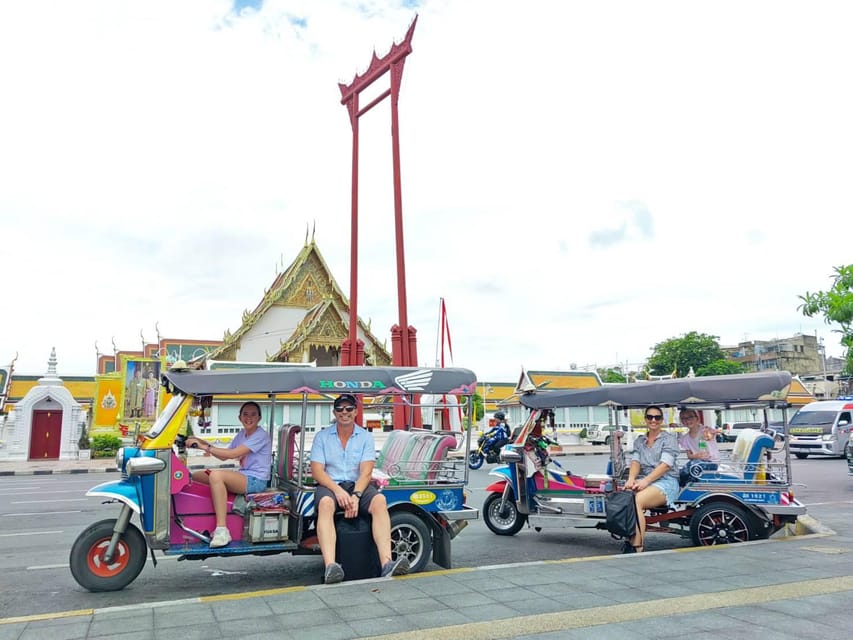
- Licensed English guide who tells stories as you ride (not just dates and names)
- Multiple landmark photo stops in just 2 hours, including areas around the Grand Palace
- Exterior-only viewing of major temples like Wat Pho, plus views from the river side
- Pak Khlong Talat Flower Market and Chinatown streets give you real street-level Bangkok
- Folding a lotus flower adds a small Thai craft moment to the city rush
- Small-group feel in the tuk-tuk setup, with many people noting two per tuk-tuk
Bangkok by tuk-tuk: what the ride really feels like
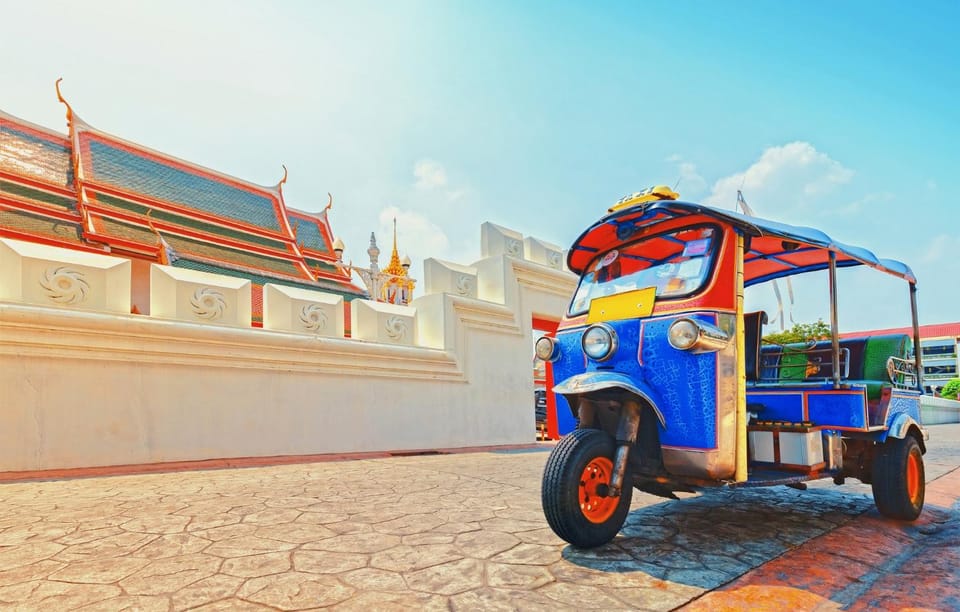
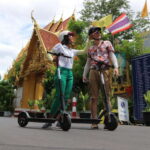
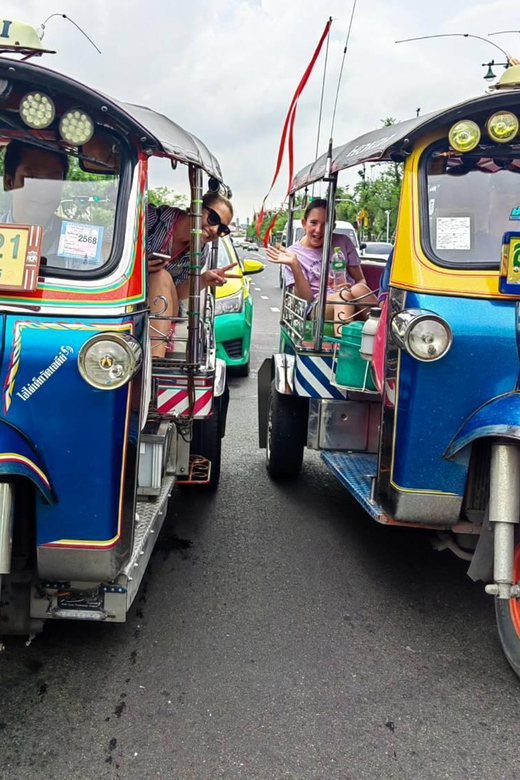
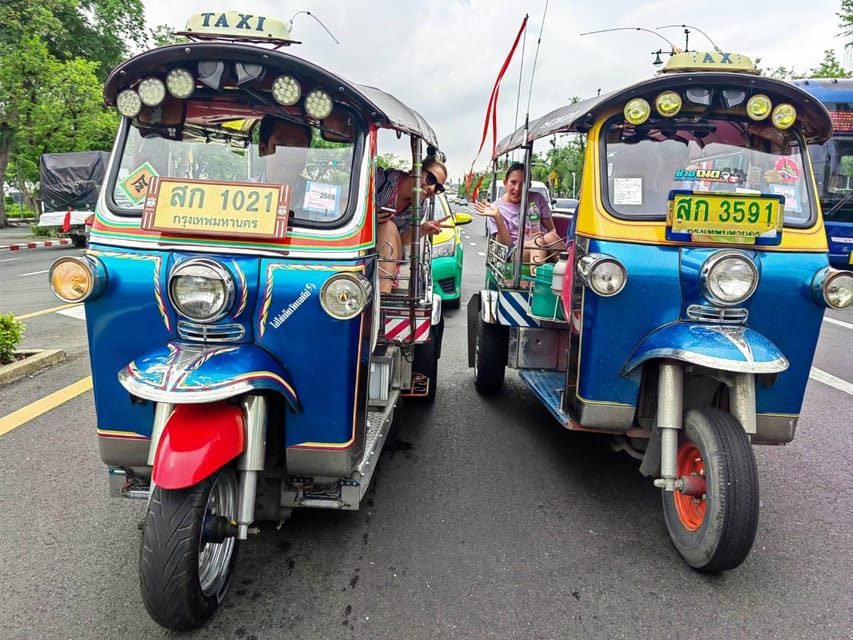
This is the kind of tour that turns Bangkok from something you’ve read about into something you feel—sound, speed, street corners, and sudden views of gold roofs. The tuk-tuk experience isn’t subtle. It’s noisy. It’s bumpy. And that’s exactly why it works as an intro.
You’ll also spend less time stuck waiting around than you would on a DIY route. The guide keeps the flow moving, and because the stops are short, you’re not trapped for hours in places that may or may not match your interests. The ride between sights is part of the show here.
Do keep expectations realistic. You’re not doing a slow “see-every-detail” temple day. This is a sampler. If you enjoy quick photo moments, street scenes, and learning what’s what, you’ll love it.
You can also read our reviews of more tours and experiences in Bangkok.

Museum Siam to MRT Sanam Chai: meeting up without stress
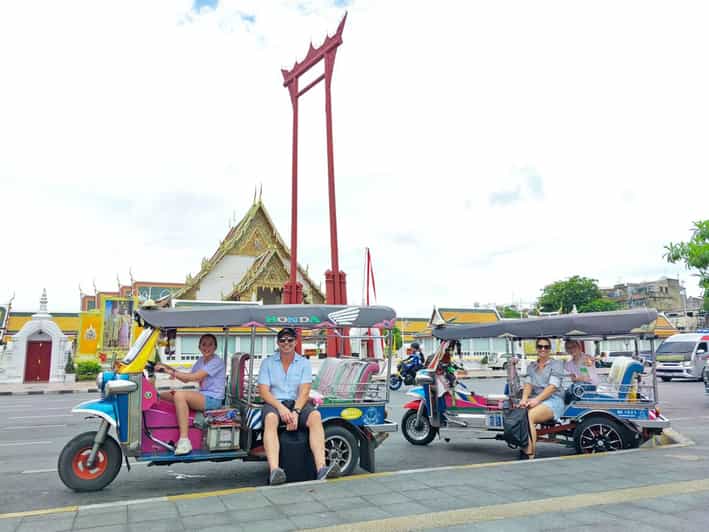
Getting to the start matters in Bangkok, and this one is fairly straightforward. The meeting point is at MRT Station Sanam Chai, at EXIT Museum Siam (outside), with your guide waiting there.
Here’s the practical tip worth taking seriously: Museum Siam has two exits. One review mentioned that the right exit is the front one. If you arrive early and you’re unsure, walk a quick loop outside and confirm you’re at the correct end before you assume the guide will find you.
Starting near the MRT is a big value point. You skip the “half your morning lost to traffic” feeling and use a transit option that’s built for moving people.
Grand Palace area and the Giant Swing: why the first photo stops matter
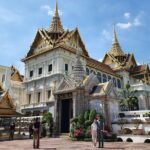
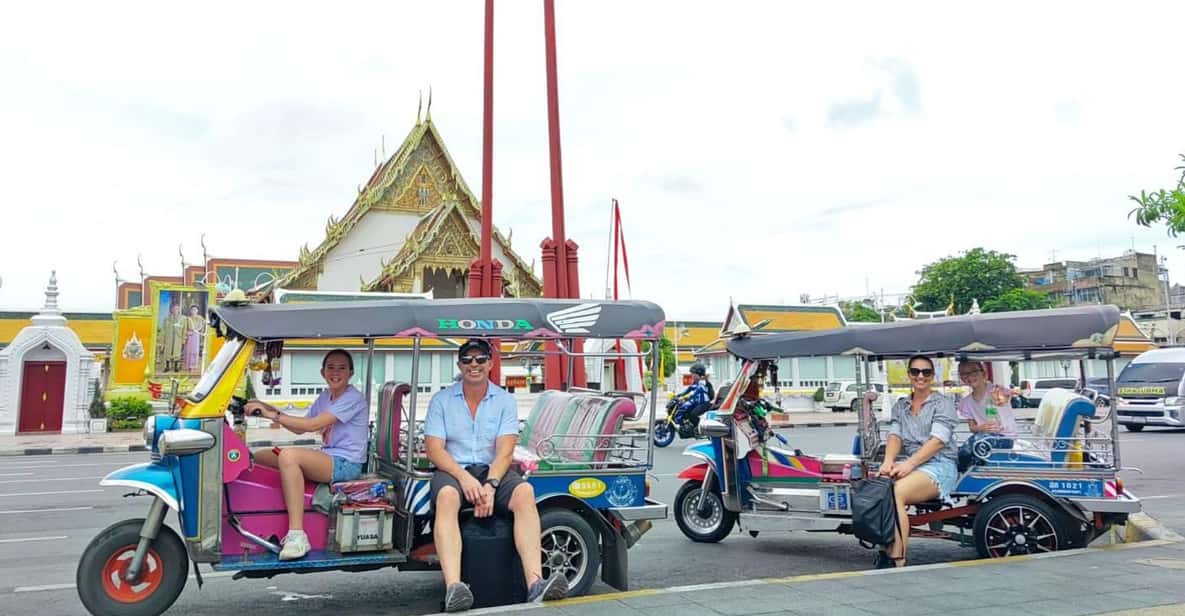
The day begins at Museum Siam, then you’re quickly in the tuk-tuk—just a short spin before the tour starts stacking up sights. The first major stop is the Grand Palace area for a photo stop. You’re not going inside. You’re there to take in the setting, see the scale, and learn what you’re looking at as you photograph.
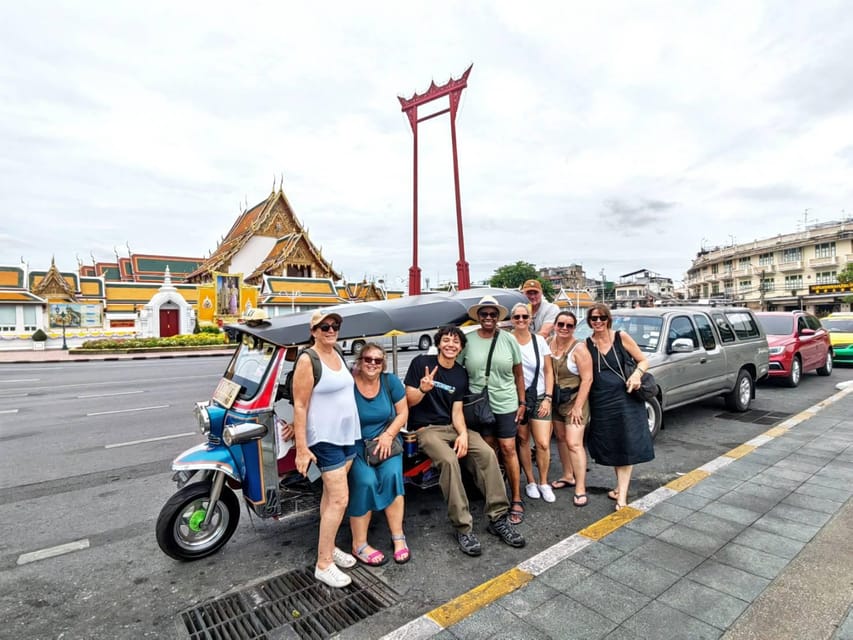
Right after that, you’ll pause at Wat Suthat and the Giant Swing for another brief photo stop. This is one of those Bangkok moments where a single landmark gives you context for a whole neighborhood. The Giant Swing is striking even without entering. With a guide calling out what you’re seeing, the architecture suddenly makes sense instead of just looking pretty.
Timing here is key: you get about 10 minutes at each of these stops. That means you should keep your “must-photograph” list short. Think: one wide shot, one detail shot (roofline, gate, ornament), and then move on. If you try to do everything in 10 minutes, you’ll end up rushing instead of enjoying.
Wat Ratchanatdaram and Wat Pho: making sense of exterior-only temple views
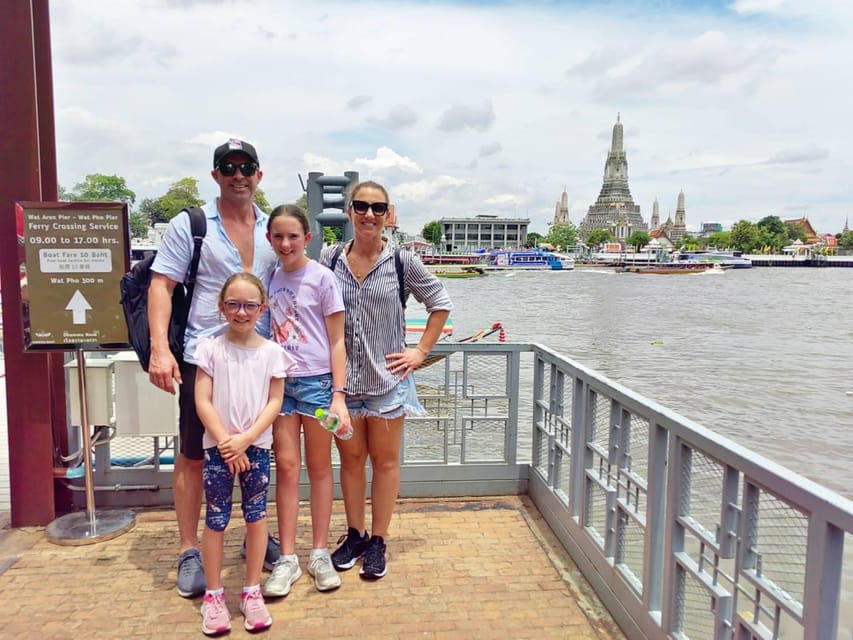
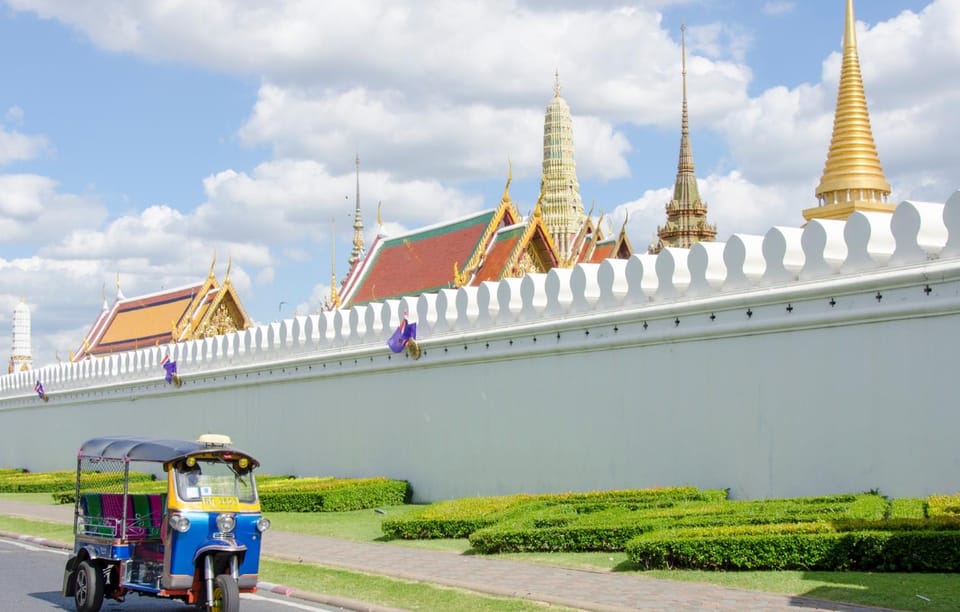
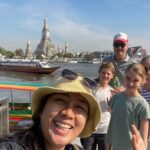
A big detail to know up front: you do not go inside the Grand Palace, Loha Prasat, Wat Arun, or Wat Pho. You’ll only see them from the outside, and Wat Arun is described as being viewed from the other side of the river.
So what’s the point of stopping at these places at all? Two things:
- Orientation. When you later return on your own (or on a temple-focused tour), you’ll already recognize the layout, landmarks, and the direction everything sits in.
- Context from the road. The guide’s stories help connect the dots between what you see outside and how locals understand these sites.
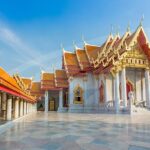
You’ll also stop at Wat Ratchanatdaram for photos, and then later at Wat Pho for a photo stop. Each stop is roughly 10 minutes, which keeps the tour lively. You don’t get overwhelmed. You don’t miss the rest of Bangkok by getting stuck trying to “finish” one temple.
If you’re the type who loves interiors—actual worship spaces, detailed statues up close, long wandering—this route will feel too short. But if you’re here for a compact introduction and you want to pick the next place to explore deeply, this works.
Pak Khlong Talat and Yaowarat Road: Flower Market to Chinatown contrast
The best part of Bangkok is often the shift from grand monuments to real street life. This tour includes both.
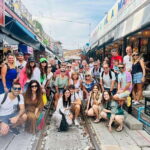
You’ll pass through the Pak Khlong Talat (Flower Market) area and Yaowarat Road (Chinatown). Even if you’re mostly in “photo stop” mode, those neighborhoods hit differently than the palace-temple zone. Flower markets bring color and scent. Chinatown brings density, food smells, and that lively street energy.
You’ll finish with a photo stop at Chinatown, and the tour ends there. This matters because it turns your last stop into your next plan. If you want street snacks, sit-down noodles, or a quick dessert walk, you’re already dropped where the action is.
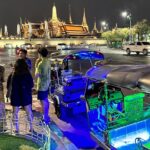
One specific timing tip from a previous participant: doing the 4pm tour was recommended because the ride ended around 6pm in Chinatown, right when street food is getting going. If you like your Bangkok at golden hour and night lights, that’s a smart approach.




The lotus flower activity: a small cultural moment that’s surprisingly fun
Not every city tour includes a hands-on Thai activity, and this one does. You’ll get a folding lotus flower activity included in the price.
It’s short and simple, but it changes the feel of the tour. Instead of only standing around for photos, you do something with your hands. Plus, it’s a good break from the heat and the noise of the road.
And it’s the kind of memory that sticks. A tuk-tuk ride is fun, sure. But a craft you make yourself? That’s a different kind of souvenir, one that doesn’t take up suitcase space.
Price and value: is $28 worth it for a 2-hour hit?
At $28 per person for 2 hours, you’re paying for three things:
- A licensed English-speaking guide
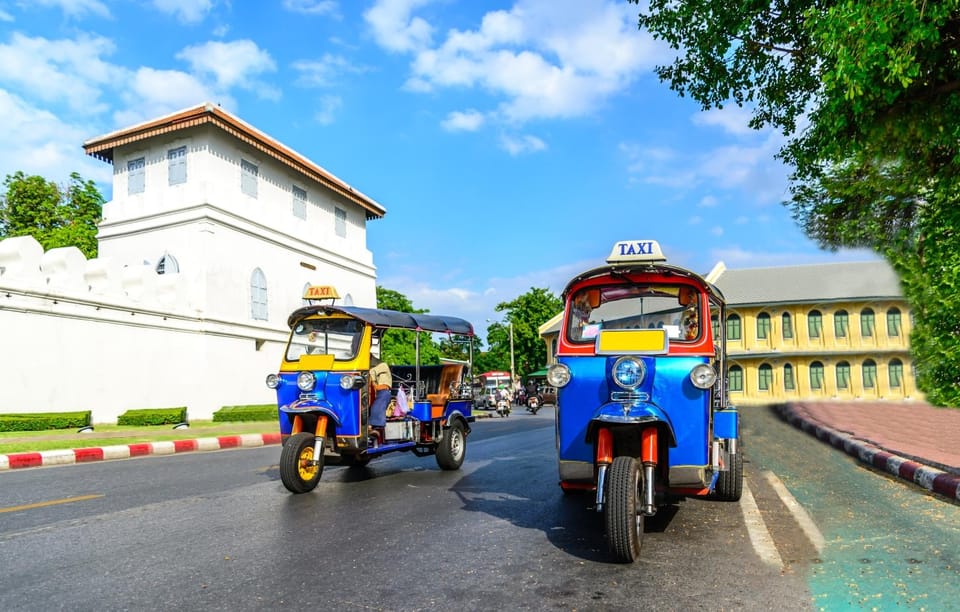
- A typical Thai tuk-tuk ride
- Included extras like a bottle of water and the lotus folding activity
Could you do parts of this cheaper on your own? Probably—if you’re comfortable navigating, negotiating, and building your own route. But Bangkok’s traffic and heat can turn a DIY plan into a time-sink fast. This tour buys you time back. You also get the guide’s explanations as you go, which is hard to replicate cheaply if you don’t speak the language.
The main reason the tour stays good value is the structure: short, efficient stops instead of half-days wandering without a plan. The main reason you might feel it’s not worth it is if you’re expecting full temple visits. Since the big sights are outside-only, you’ll want to use this as an orientation tour, not the final word on Bangkok’s most famous temples.
Who this tuk-tuk tour suits best
This is a strong fit if you:
- Have a short stay and want a quick Bangkok highlights sweep
- Like the idea of seeing landmarks without committing to long entrances
- Want a guide who can point out what you’re looking at while you’re moving
- Enjoy street life enough to want Chinatown at the end of the tour
It’s not the best fit if you:
- Want to spend lots of time inside major temples
- Prefer quiet, slow sightseeing over an action-packed ride
- Hate vehicles with lots of sound and motion (tuk-tuks are part of the experience)
Also note the group setup. Several people mentioned two people per tuk-tuk, which likely keeps the ride comfortable and the guide communication easy. That’s a nice sweet spot between private and group tours.
Practical tips to enjoy the route more
A few small things can make a noticeable difference:
- Wear breathable clothes and plan for Bangkok humidity. You’re outside at multiple photo points.
- Bring sunscreen and keep a hat handy. You’ll be taking photos in open areas.
- Keep your camera ready during transitions. Some views are quick, especially when you’re seeing landmarks from outside angles.
- If you want more temple depth, treat this tour as your “what should I return to?” list.
Should you book this Bangkok tuk-tuk tour?
If your goal is orientation, street-to-monument contrast, and fun transportation, I’d say yes. The guide-led stories, the compact timing, the included lotus folding, and the easy drop-off into Chinatown make it a smart first-day or first-half-day move.
Skip it if you’re specifically chasing interior temple experiences or you want a slow, in-depth visit to the Grand Palace and Wat Pho. This is the outside-view sampler. And that’s not a flaw if you plan your next step accordingly.
If you book it, choose a time that matches your energy—late afternoon can pay off with night lights in Chinatown. Just arrive at the front exit of Museum Siam so you start the tour on the right foot.
FAQ
How long is the Bangkok tuk-tuk tour?
The tour lasts 2 hours.
What does the tour cost?
It costs $28 per person.
Where do I meet the guide?
Meet at MRT Station Sanam Chai, EXIT Museum Siam (outside).
What language is the tour guide?
The tour guide speaks English.
Do you go inside the major sights like the Grand Palace and Wat Pho?
No. You only see them from the outside (including the Grand Palace, Loha Prasat, Wat Arun, and Wat Pho).
What’s included in the price?
Included are a licensed English-speaking tour guide, a typical Thai tuk-tuk ride, a bottle of water, and a folding lotus flower activity.
Where does the tour end?
The tour ends in Chinatown.
Can I cancel or reserve without paying immediately?
Free cancellation is available up to 24 hours in advance for a full refund. There is also a reserve now & pay later option.