REVIEW · BANGKOK
Bangkok: Favourite Thai Flavors Cooking Class by Smart Cook
Book on GetYourGuide →Operated by Smart Cook Bangkok · Bookable on GetYourGuide
Thai cooking becomes hands-on fast. Bangkok’s Favourite Thai Flavors class turns shopping, chopping, and tasting into a real Thai meal you can repeat later. I especially like the small group size and how the family-home ingredient time makes Thai cooking feel practical, not mysterious. One heads-up: the meeting spot is in a residential area and can be tricky to find the first time.
This is also one of the best-value ways to learn Thai flavors in a short window, because you cook a full trio of dishes (not just watch and snack). I like the step-by-step teaching style from instructors such as Snow White and how they explain the why behind the flavors. The one drawback I’d plan around is simple: allow extra time to get oriented when you arrive.
In This Review
- Key Things I’d Put on Your Radar
- Why Bangkok’s Favourite Thai Flavors Feels Local, Not Staged
- Meeting at a Teak Wood House: Your First Easy Win
- The 150-Minute Flow That Gets You Eating Without Rushing
- Ingredient Shopping Lessons: How Thai Chefs Think About Flavor
- Pad Thai: The Recipe You’ll Want to Repeat
- Chicken in Coconut Milk: Comfort Food With a Flavor Map
- Sweet Sticky Rice With Mango: The Finish That Makes It Feel Complete
- Learning From Snow White, Poppy, and Mac in Real Time
- What’s Included (and Why It Matters for Your Budget)
- Food, Takeaway, and That Family-Home Feeling
- Price and Value: Is $32 a Good Deal in Bangkok?
- Who This Cooking Class Fits Best
- Smart Cook Bangkok Practical Tips Before You Go
- Should You Book This Cooking Class in Bangkok?
- FAQ
- How long is the Bangkok Favourite Thai Flavors cooking class?
- What dishes will I learn to cook?
- Is this a hands-on cooking class?
- How big is the group?
- What language is the instructor?
- Are ingredients included in the price?
- Do I get a recipe book to use at home?
- What drinks are included?
- Where do I meet the instructor?
- What should I bring?
Key Things I’d Put on Your Radar
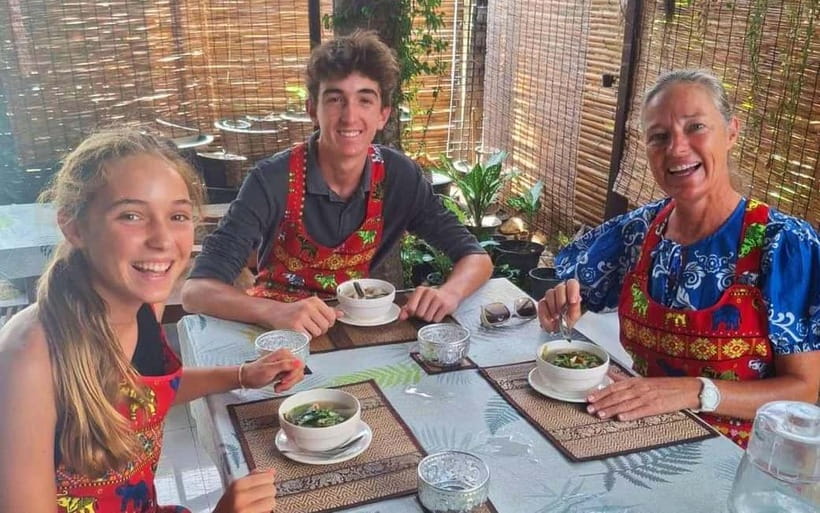
- A two-story teak wood Thai home as the meeting point, which feels authentic from minute one
- Ingredient guidance at a Thai family home, including how to choose spices and pantry basics
- Hands-on cooking in a small group of up to 8, so you’re not stuck waiting your turn
- Three iconic dishes: Pad Thai, chicken in coconut milk, and mango sticky rice
- Clear, friendly instruction in English, with instructors like Snow White, Poppy, and Mac mentioned often
- A PDF recipe book you can actually use back home, not just a souvenir paper pamphlet
Why Bangkok’s Favourite Thai Flavors Feels Local, Not Staged
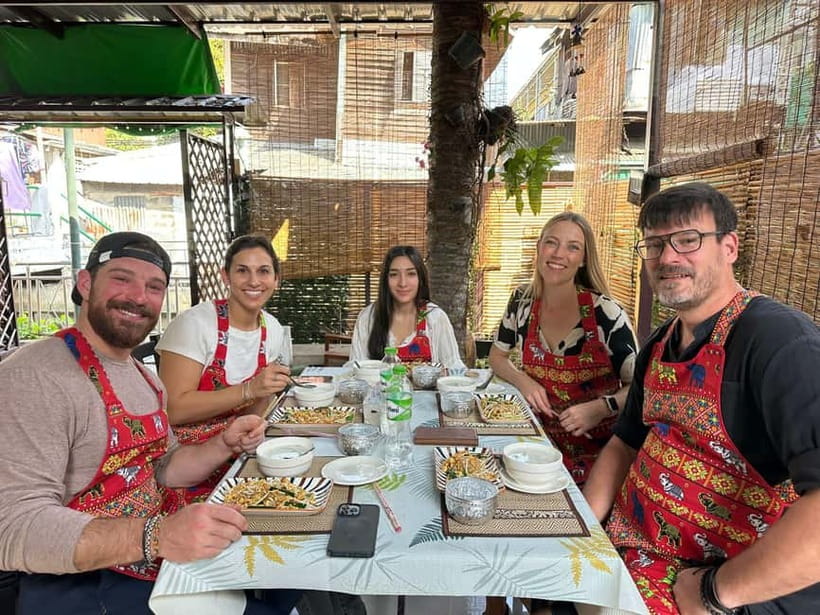
Thai cooking classes in tourist centers can feel like a performance. This one feels closer to what you’d do at home: you learn ingredients first, then you cook for real. The class is taught by a Thai cooking instructor at Smart Cook Thai Cooking School, and it’s designed around getting you comfortable with Thai flavor building.
What makes it interesting for me is the balance of fun and structure. You get hands-on prep and cooking, plus explanations on ingredients and method, so you’re not just copying steps. The small group format (limited to 8 participants) helps a lot, because you can ask questions and get corrections while you’re still cooking.
You can also read our reviews of more tours and experiences in Bangkok.



Meeting at a Teak Wood House: Your First Easy Win
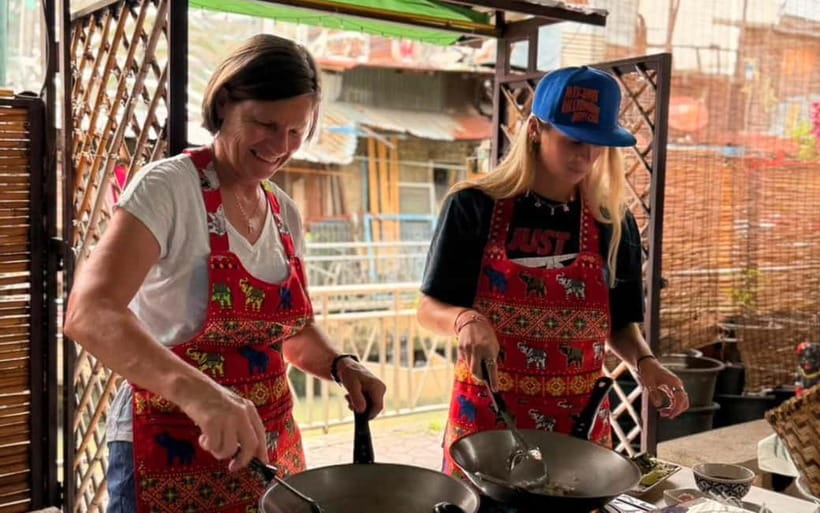
The meeting point is at their house: an old two-story teak wood Thai home. That matters because it signals what you’re walking into—someone’s actual home-kitchen setup, not a warehouse demo space.
The practical takeaway: plan to arrive a bit early. More than once, people note the location can take a moment to find, and the quicker you get there, the smoother the whole afternoon feels. Bring comfortable clothes and a camera, since you’ll be doing hands-on work and taking photos of the dishes you make.
The 150-Minute Flow That Gets You Eating Without Rushing
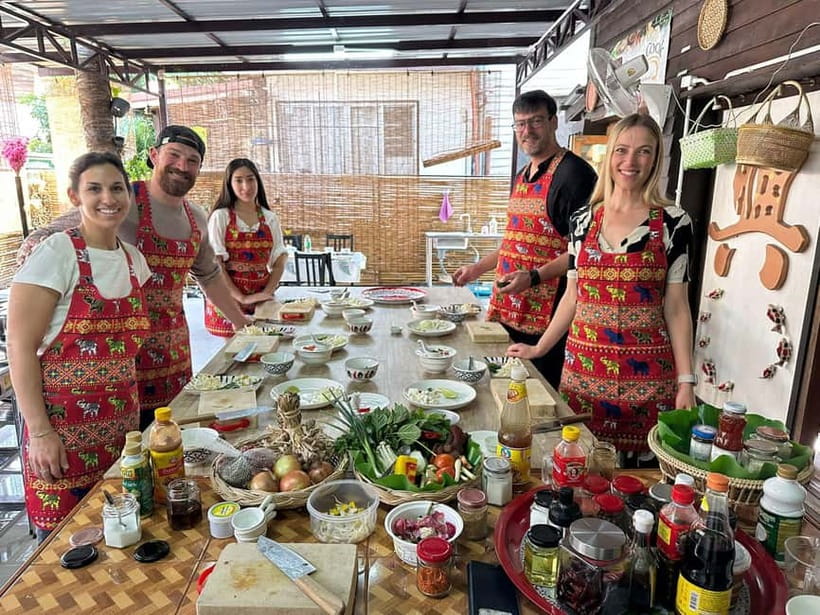
The class runs for 150 minutes, and it moves at a pace that’s long enough to learn, but short enough to fit into a busy Bangkok day. You also get a choice of three class times, so you can match it to your heat level and energy.
Here’s how the rhythm usually lands: you start with ingredient context, then you cook. You’ll make three dishes across the session—so you’re not stuck with one recipe that takes forever. The setup also includes tea, coffee, and drinking water, which keeps things comfortable on a hot, humid day.
If you’re the type who worries about learning too slowly, don’t. The class is structured so you can follow along even if you’re new to cooking, and the teaching style is described as clear and patient.
Ingredient Shopping Lessons: How Thai Chefs Think About Flavor
One of the best parts is the visit to a Thai family home where you learn about Thai ingredients and how to choose them. This is the kind of lesson that saves you later, because the biggest gap at home isn’t the recipe—it’s the ingredient.
You’ll get practical guidance on Thai pantry staples and the kinds of spices and herbs that make dishes taste like Thai food instead of “something that’s kind of Thai.” People highlight that the chef shows what to look for and how to substitute when needed, which is exactly what you want if you’re cooking outside Thailand.
The value here is huge: once you understand what ingredients do for flavor, you can adjust for what you can find back home and still land close to the original taste.
Pad Thai: The Recipe You’ll Want to Repeat
Pad Thai is the gateway dish for most people, but the class treats it like a real skill. You’ll learn how to build the sauce balance and how to manage timing so the noodles and toppings come out right.
What I like about doing Pad Thai in a hands-on class is that you get immediate feedback. If your sauce is too concentrated, or your mixing step needs a tweak, you can adjust on the spot rather than finding out later at home. The class focuses on method, not just ingredients, so you’re not trapped by exact measurements.
This dish also tends to be very shareable. Once you know the logic, you can scale it up for friends, and it becomes a “confidence meal” you’ll actually cook again.






Chicken in Coconut Milk: Comfort Food With a Flavor Map
Chicken in coconut milk is the dish that often surprises first-timers because it tastes both comforting and layered. You’ll learn how Thai cooking uses coconut milk as more than a creamy base—it’s part of a flavor system that supports herbs, aromatics, and seasoning.
In this class format, you’re not just dumping ingredients into a pot. You’re guided through steps in a way that helps you understand why the sequence matters. The end result is a dish that feels like proper Thai home cooking, not a simplified international version.
For many people, this is also where they feel progress fastest. It’s approachable, but the flavor comes alive when technique is right. That’s why I think it’s one of the best dishes to choose if you want Thai cooking skills, not just a one-time meal.
Sweet Sticky Rice With Mango: The Finish That Makes It Feel Complete
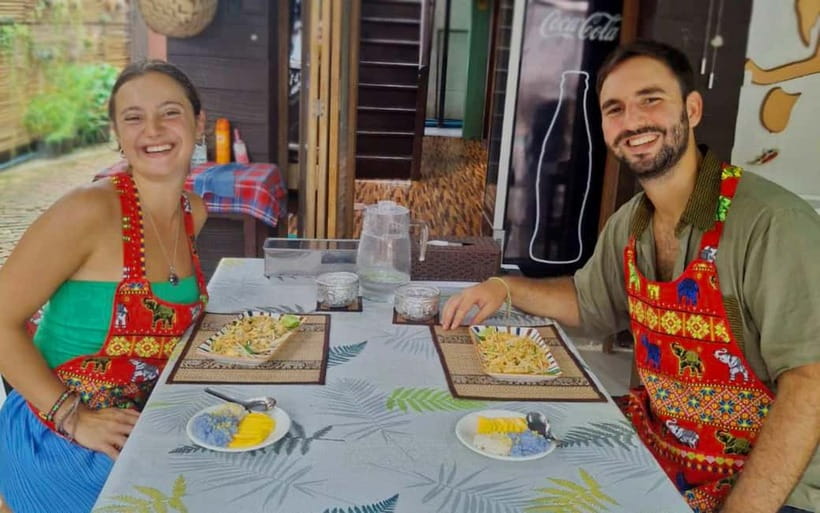
Sweet sticky rice with mango is the dessert that makes this class feel like a full Thai meal, not a single-dish workshop. The class teaches you how to make it, and you’ll learn the method behind the textures you want: sticky, tender, and sweet without turning heavy.
Mango sticky rice also shows you how Thai sweetness is built. It’s not just sugar; it’s balance, aroma, and the way the sauce coats the rice. That’s useful knowledge for other Thai desserts too, even if you never make anything else.
One more practical note: mango season can vary, and some classes adjust for what’s available. The key is that you learn the process and the flavor logic rather than chasing one perfect fruit in one perfect week.
Learning From Snow White, Poppy, and Mac in Real Time
Instructors are a big deal, and the consistent theme here is clarity plus personality. Chefs like Snow White and Poppy come up often, and the teaching style is described as friendly, patient, and even funny in a way that keeps the room relaxed.
You’ll also see an emphasis on explanation: not just what to do, but what you’re trying to achieve with each step. That helps if you’re cooking with someone else later, because you can tell them what to look for and why.
A small group also lets the chef adapt. People describe classes where the chef adjusts to the group’s needs and tastes, and even when someone isn’t confident in the kitchen, the steps are broken down into manageable parts.
What’s Included (and Why It Matters for Your Budget)
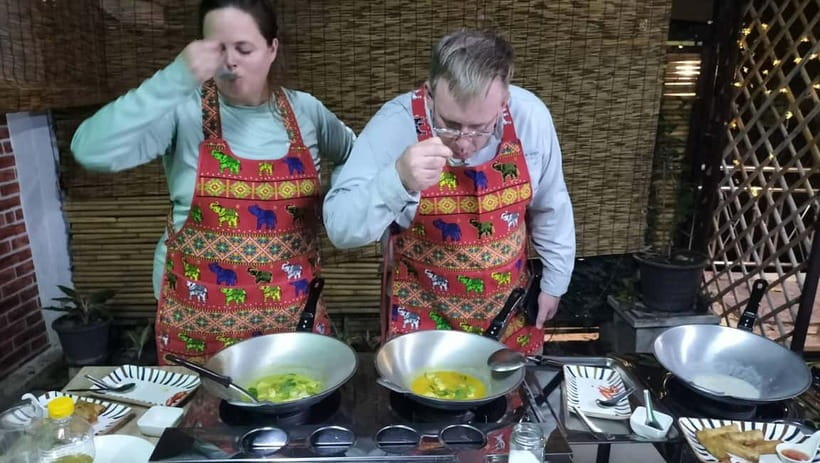
The price is $32 per person for 150 minutes, which is solid value for Bangkok when you consider what’s included. You get hands-on cooking, all ingredients, tea/coffee/water, and an online recipe book in PDF form.
That recipe PDF is more important than it sounds. A cooking class is only worth the money if you can recreate the flavors later. The PDF format also makes it easy to keep on your phone while cooking at home.
Also, you’re not stuck buying extra drinks just to keep going. Beer isn’t included, and alcohol isn’t allowed, but you’ll have non-alcohol options like tea and coffee.
Food, Takeaway, and That Family-Home Feeling
You’ll eat the dishes you cook, which is how you know you got it right. The class is designed so you leave full, with three recipes completed by your own hands. It’s one of the best ways to convert travel memories into skills.
There’s also the promise of a gourmet souvenir from Thailand. The exact form isn’t spelled out here, so treat it as a nice extra rather than a guaranteed boxed meal. Still, the intent is clear: you’re not leaving empty-handed in a purely symbolic way.
Price and Value: Is $32 a Good Deal in Bangkok?
For $32, you’re paying for real instruction plus real ingredients plus real cooking time—150 minutes. That adds up fast in a city where food tours can cost more and still only get you one bite here and there.
The bigger value is the ingredient education. Many classes skip the “how to choose” part, then your home cooking disappoints. Here, the family-home ingredient lesson helps you understand what to buy and what it should do for the dish.
Also, the small group (up to 8 people) is a quieter kind of value. You’re more likely to get attention and clearer guidance than in larger workshops.
Who This Cooking Class Fits Best
This class is a strong match if you:
- want to learn Thai flavors through hands-on cooking
- prefer a small group setting
- like step-by-step instruction even if you’re not a confident cook
- want recipes you can use back home, via the PDF
It also seems family-friendly in practice. In at least one case, a chef allowed toddlers to participate where they could, which suggests the kitchen atmosphere is flexible. That said, it’s still a cooking class with sharp tools and hot food, so you’ll want to judge your child’s attention span and your own comfort.
One limitation to keep in mind: it’s not suitable for wheelchair users, since the meeting setup and kitchen environment aren’t described as accessible.
Smart Cook Bangkok Practical Tips Before You Go
- Wear comfortable clothes and plan for a warm kitchen environment.
- Bring your camera if you like photos of food you actually made.
- Give yourself extra time to find the house on your first attempt.
- If you have dietary restrictions, plan to ask before you start, because the class includes specific ingredients for each dish. (No special menu details are listed here.)
If your schedule is tight, remember there are three convenient class times. And you can book with flexible payment options as offered by the provider, plus free cancellation within the stated window.
Should You Book This Cooking Class in Bangkok?
I’d book this class if you want a Bangkok afternoon that’s practical, tasty, and skill-building. You’ll learn three dishes—Pad Thai, chicken in coconut milk, and sweet sticky rice with mango—and you’ll get enough ingredient guidance to cook with confidence later, not just eat well that day.
If you hate small-group activities or you rely on easy-to-find, high-visibility meeting spots, then you might want to compare with something else. But for most people, the combination of ingredient lessons, hands-on cooking, and a clear English-speaking instructor makes it one of the more straightforward ways to get real Thai flavor into your travel story.
FAQ
How long is the Bangkok Favourite Thai Flavors cooking class?
The class lasts 150 minutes.
What dishes will I learn to cook?
You’ll cook Pad Thai, chicken in coconut milk, and sweet sticky rice with mango.
Is this a hands-on cooking class?
Yes. It’s hands-on, and you’ll prepare and cook the dishes yourself with guidance from the instructor.
How big is the group?
The class is a small group with a maximum of 8 participants.
What language is the instructor?
The instructor teaches in English.
Are ingredients included in the price?
Yes, all ingredients for cooking are included.
Do I get a recipe book to use at home?
You receive an online recipe book in PDF version.
What drinks are included?
Tea, coffee, and drinking water are included. Beer or other beverages are not included.
Where do I meet the instructor?
You meet at the house, described as a two-story old Thai style teak wood home.
What should I bring?
Bring a camera and wear comfortable clothes.