REVIEW · HUA HIN
Hua Hin: Kui Buri National Park Wild Elephant Watching
Book on GetYourGuide →Operated by Ken Diamond Tour and Travel Branch001 · Bookable on GetYourGuide
Kui Buri elephant spotting feels like a lottery. The draw is wild elephants in a protected park, plus a 4-wheel-drive safari that keeps your eyes busy from the first stop. It is not about posing with animals. It is about watching life happen at a slow, respectful distance.
I also like that the trip is run with a professional English-speaking guide, and you ride with a local ranger on the ground. The afternoon timing lines up well for wildlife viewing, and the included dinner makes the whole outing feel complete instead of rushed.
One big consideration: there is no 100% guarantee of elephants (or how many you will see). You may spot them far away, or only briefly, because this is wildlife in a national park—not a zoo.
In This Review
- Kui Buri in a Nutshell: What Makes This Safari Special
- Why Kui Buri Is Different From a Typical Elephant Tour
- Getting There From Hua Hin or Cha Am Without Losing the Day
- 3:30 to 6:00 in the Park: The Wildlife-Spotting Window
- How the Viewing Works: Rangers, Guides, and Binoculars
- Elephants, Gaurs, and the Rare Possibility of Leopards
- Wild elephants (the main event)
- Gaurs (another major draw)
- Leopards (occasional)
- What the Birds Add (Even If Elephants Are Quiet)
- When Weather Hits: How to Stay Comfortable
- The Dinner Plan: A Proper Finish After the Safari
- Price and Value: Is $93 a Fair Deal?
- Who This Tour Suits (and Who Should Skip It)
- Practical Planning Tips Before You Book
- Should You Book the Hua Hin Kui Buri Wild Elephant Safari?
- FAQ
- What time does the Kui Buri safari run?
- Where is pickup available?
- Is this experience in a zoo?
- How likely am I to see elephants?
- What’s included in the price?
- Who might not be suitable for the tour?
Kui Buri in a Nutshell: What Makes This Safari Special
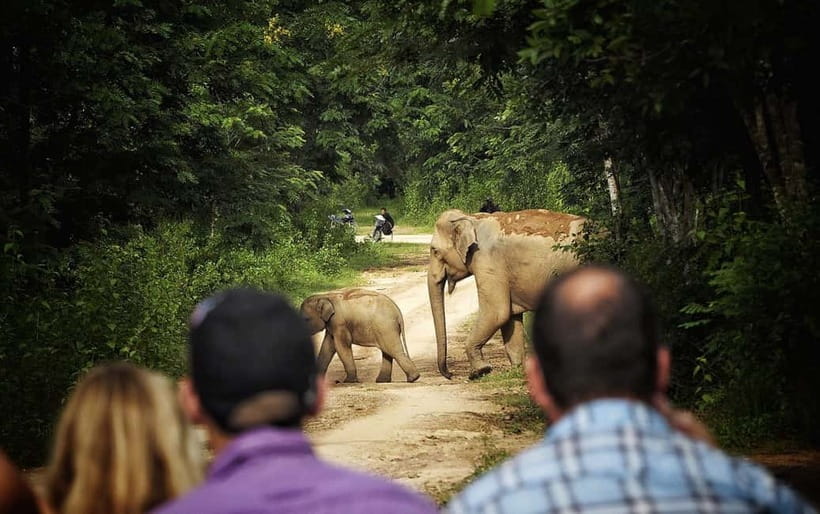
- Wild elephants in their own habitat: Kui Buri is known for protecting more than 320 wild elephants, and you’re watching them freely in the park.
- Good odds, still real nature: the chance of seeing elephants is listed around 95%, but distance and timing can affect what you notice.
- Ranger-led viewing with small groups: once you enter the park, you transfer to 4-wheel-drive vehicles designed for small groups.
- Bird spotting is built in: the dry-moist forest setting supports lots of bird life, including species named in the tour details.
- More than elephants on your radar: gaurs are a key target, with leopards mentioned as occasional sightings.
- Thai dinner included: you finish with dinner at a local Thai restaurant and head back to Hua Hin or Cha Am afterward.
Why Kui Buri Is Different From a Typical Elephant Tour
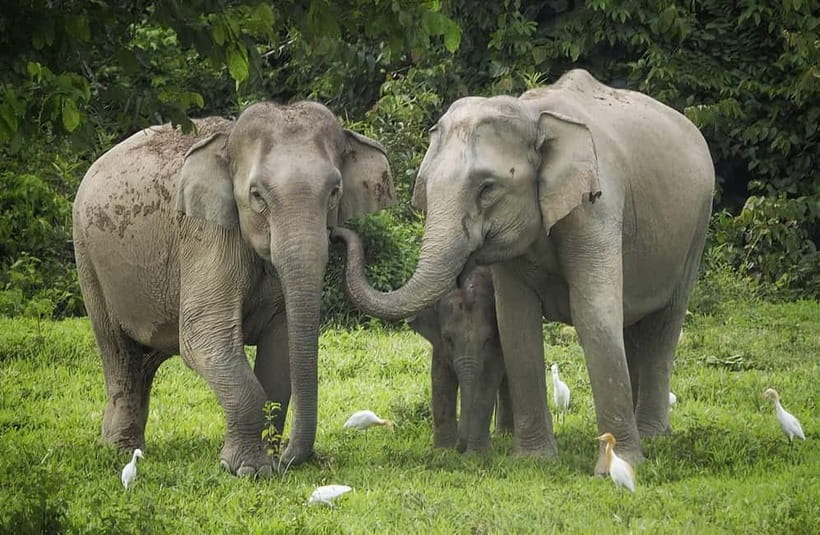
If you’ve done any wildlife trips in Thailand, you know how often the pitch is about a guaranteed encounter. This one plays it straight: elephants here are wild, roaming in a national park. You’re not entering an enclosure. You’re joining a coordinated viewing effort in an area where more than 320 protected wild elephants live.
That difference matters for two reasons.
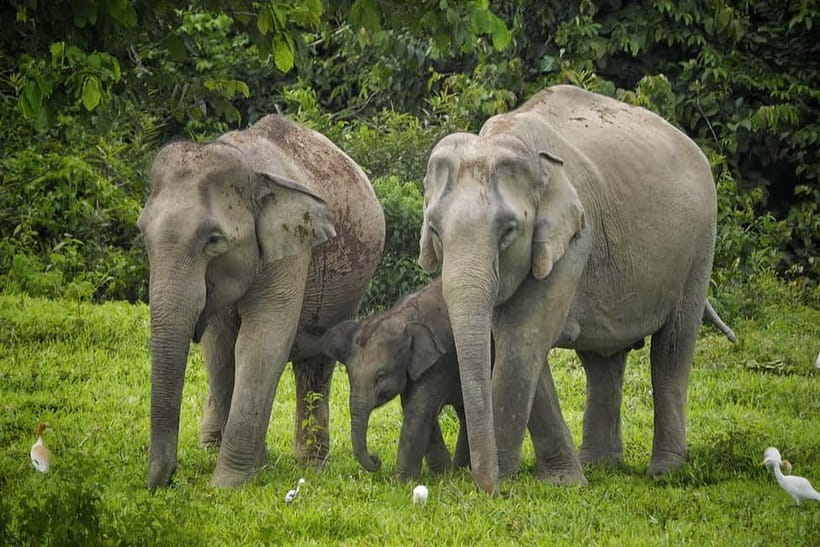
First, it changes your expectations. When you see elephants, you’re seeing animal behavior, not a performance. Even if you only catch a few moments—like a family moving between trees or a distant herd pausing to feed—you’re still getting something genuine.
Second, it changes the ethics. The trip is designed specifically around viewing elephants in the wild, not animal handling. It is also worth noting that some people who want closer interaction are directed toward a different option at a wildlife rescue center foundation. This safari is not that kind of encounter, and that’s part of the appeal.
You can also read our reviews of more tours and experiences in Hua Hin.
Getting There From Hua Hin or Cha Am Without Losing the Day
This is a late-afternoon outing, starting with pickup from your hotel in Hua Hin or Cha Am. That pickup matters because it saves you the hassle of figuring out transportation on your own, especially once you’re heading into a national park.
Once you arrive, the flow is simple: you transfer to the park’s 4-wheel-drive vehicles with a local ranger and join your guide. The vehicles inside the park are set up for small groups, so you’re not stuck shoulder-to-shoulder fighting for a view.
The timing is also practical. You’re not committing to an all-day jungle schedule. You’re out in the afternoon window, then back for a regular night.
3:30 to 6:00 in the Park: The Wildlife-Spotting Window
From about 3:30 pm to 6:00 pm, the main safari viewing happens. That window is long enough for your guide to move you between viewing spots and wait for the animals to come into view.
Here’s what I think you should take seriously: wildlife watching is usually about patience, not control. Even with a ranger on your side, you’re still dependent on where the elephants are moving and what the animals decide to do.
If you do get lucky, you’ll get more than one moment. The guide’s job is to spot activity early and position you so you can observe calmly, then reposition when something else appears.
This is where Kui Buri earns its reputation. The park’s ecosystem is described as a dry-moist forest, and the tour explicitly calls out birds like Crested Fireback, Indian Roller, and Asian Openbill. So even if elephant viewing takes a little time, you still have something to watch—small movement, calls, and color in the canopy.
How the Viewing Works: Rangers, Guides, and Binoculars
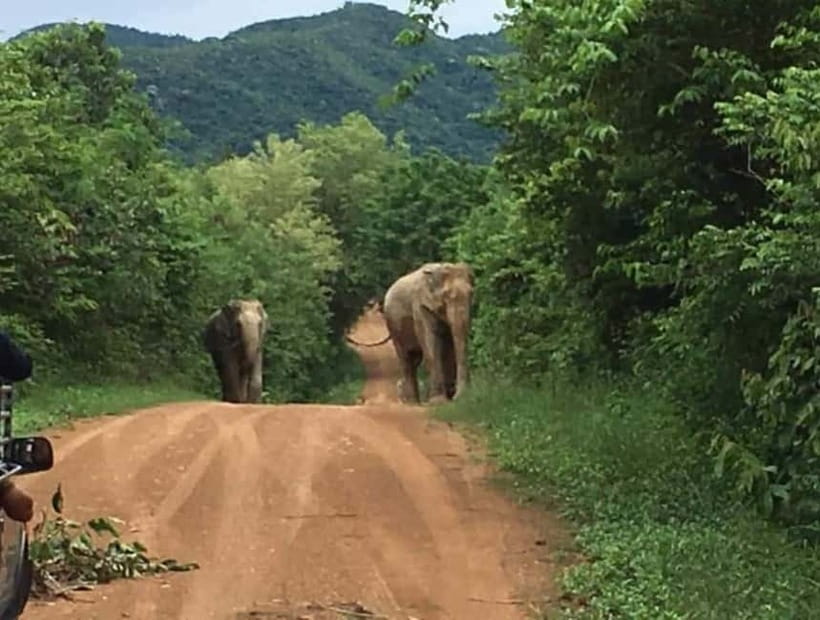
Inside the park you won’t just follow a trail and hope. You’ll be traveling in 4-wheel-drive vehicles that are used for getting to likely viewing points.
A few details help you picture how this plays out:
- You travel with a local ranger alongside your guide.
- Each jungle car holds only a small group of people.
- You are provided share binoculars to help you see animals at distance.
That last part is key. In a wildlife park, animals don’t always walk right up to the vehicle. Binoculars turn a blurry moving dot into something you can actually identify and enjoy—especially with elephants and gaurs, which can be hard to pick out without help.
Your guide’s expertise also makes a difference. English-speaking guides are part of the deal, and you’ll get the kind of explanation that helps you understand what you’re looking at instead of just staring. Guides such as Amp and Meow have been specifically mentioned for friendliness, energy, and good English.
Elephants, Gaurs, and the Rare Possibility of Leopards
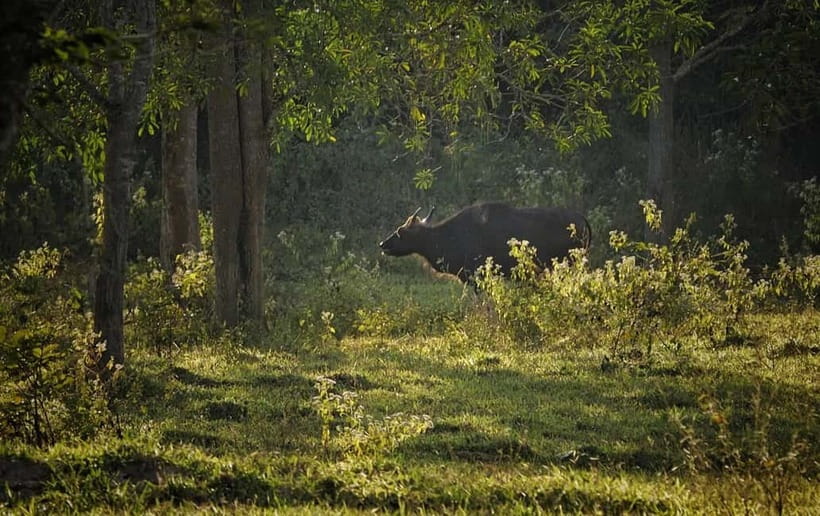
Let’s talk targets, because the tour data lays them out clearly.


Wild elephants (the main event)
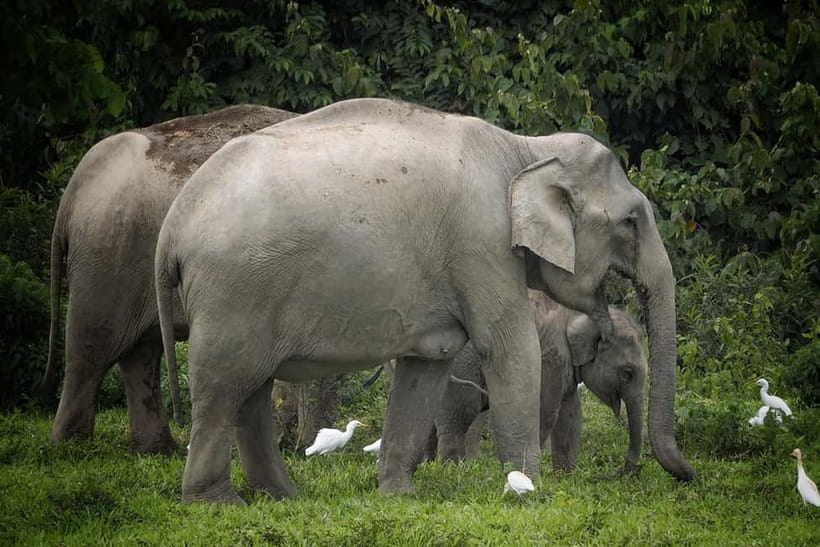
Kui Buri is framed as the place in Thailand where more than 320 protected wild elephants live. The trip notes a 95% chance of seeing elephants. That is strong odds for wildlife in the open, but it still means the outcome isn’t scripted.
You might see elephants:
- from a distance,
- from a few hundred meters away,
- in the middle of forest movement where they’re partly hidden.
And sometimes you’ll see multiple groups instead of just one herd. That’s the best-case scenario, and it’s exactly the kind of day that tends to stick in your memory.
Gaurs (another major draw)
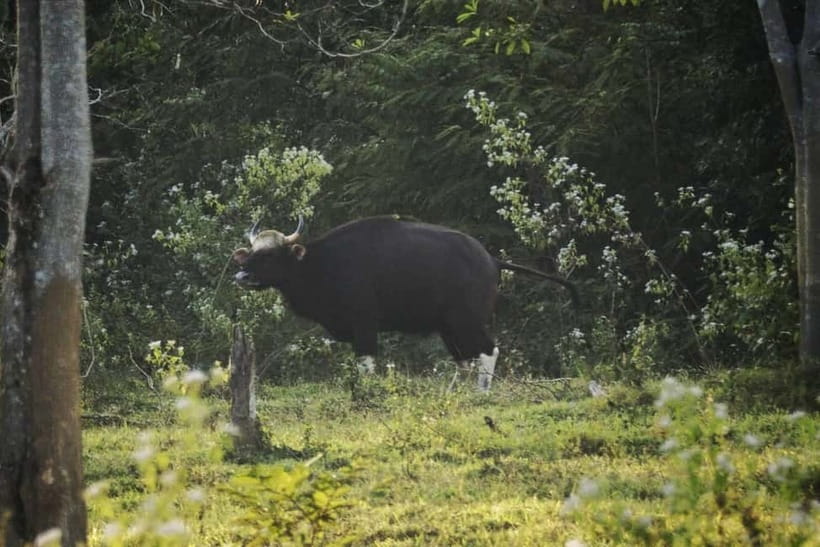
Gaurs are highlighted as something to keep an eye out for. On a safari like this, gaurs can be easier to miss than elephants, which is why the ranger and guide matter. If you catch them, it adds real variety: a different body shape, different scale, and different behavior to observe.
Leopards (occasional)
Leopards are mentioned as possible sightings on occasion. This is a classic wildlife reality: you know the species might be present, but you cannot plan your day around it. If you don’t see one, you’re still seeing a legitimate tropical wilderness experience.
What the Birds Add (Even If Elephants Are Quiet)
One of the smartest things about this safari is that elephant watching is not the only job.
The tour names bird species you might spot, and the forest setting supports more than just big mammals. This gives you something to do while you wait. It also makes the experience feel more like a real ecosystem and less like a checklist.
The birds named include:
- Crested Fireback
- Indian Roller
- Asian Openbill
Even if you don’t identify every species, you’ll notice more: calls, movement at the edges of the path, and flashes of color. It’s a small shift, but it changes how enjoyable the hours feel.
When Weather Hits: How to Stay Comfortable
If you’re traveling in Thailand, you know rain can show up fast. The trip does not promise perfect weather, and you should plan for wet ground and sudden changes in visibility.
A practical mindset helps:
- Expect the safari to continue unless conditions make it unsafe.
- Wear gear that can handle damp air and splashes.
- Keep your focus on spotting movement, because animals often shift behavior when conditions change.
On a light rain day, some groups have reported that umbrellas were available. Still, don’t count on ideal comfort—pack a calm, flexible attitude instead.
The Dinner Plan: A Proper Finish After the Safari
At around 6:30 pm, you visit a local Thai restaurant for dinner, then return to your hotel in Hua Hin or Cha Am around 8:00 to 8:30 pm.
This matters more than you might think. Wildlife safaris can make you hungry, and waiting until late night can ruin the mood. The included dinner means you’re not scrambling to find food right after the park.
You should also expect that the restaurant is set up for this group schedule, so the timing feels natural: watch wildlife, swap stories, eat, and head home while it’s still a reasonable hour.
Price and Value: Is $93 a Fair Deal?
At $93 per person, this safari is not a budget gimmick. It’s priced like a real wildlife outing with several cost drivers:
- park entrance fee and admission fees,
- 4-wheel-drive vehicles inside the national park,
- dinner,
- travel insurance,
- an English-speaking professional tour guide,
- drinking water,
- binoculars.
When you add those up, the price makes sense for a guided, transport-included afternoon with wildlife access and a built-in meal. The biggest “value” question isn’t whether you’ll see elephants. It’s whether the day feels respectful, well organized, and worth your time.
The format—small group vehicles, ranger involvement, and the birding context—helps justify the cost. And the ethics are a major factor. If you care about watching elephants in the wild rather than in a staged setting, Kui Buri is one of your stronger choices.
This specific outing also has a solid rating: 4.4 from 139 reviews. That doesn’t replace your own judgment, but it does suggest the experience is generally meeting expectations.
Who This Tour Suits (and Who Should Skip It)
This safari is best for you if you want:
- wild animal viewing in a protected national park,
- an organized guide/ranger approach (not random searching),
- the option to see more than elephants through bird spotting and gaurs,
- a mid-length afternoon plan that ends before late evening.
It may not be the right fit if:
- you have back problems (the ride and vehicle movement can be an issue),
- you are pregnant (not suitable per the tour notes).
Also, the trip rules are strict enough to matter: no smoking, and no alcohol or drugs. If that is important to your travel style, it’s worth knowing up front.
Practical Planning Tips Before You Book
To get the most out of Kui Buri, think like a wildlife watcher.
- Go in expecting distance. Elephant spotting here is about spotting, not approaching.
- Give yourself flexibility. Even with 95% odds, wildlife timing controls the day.
- Bring your patience. Waiting for animals is part of the deal.
- If you want guaranteed closer contact, this is not that. The tour specifically points you to a wildlife rescue center option for a different kind of experience.
One more useful note: this experience requires a minimum number of travelers. If that minimum isn’t met, you should be offered a different date/experience or a full refund.
Should You Book the Hua Hin Kui Buri Wild Elephant Safari?
I’d book it if your priority is ethical wild elephant watching plus a real national-park feel in a guided format. The best reason is simple: Kui Buri is one of the few places where you’re not being promised a staged encounter. You’re being taken into a protected habitat where elephants and other animals live freely.
I’d hesitate if you need a guaranteed, up-close elephant photo. The tour openly admits the chance is high but not certain, and sightings can be far.
If you’re flexible, curious, and okay with the reality of wild animal timing, this is a strong value way to spend an afternoon outside Hua Hin—then end the day with a proper Thai dinner and be home by around 8:30 pm.
FAQ
What time does the Kui Buri safari run?
Pickup happens in the late afternoon, with wildlife viewing scheduled from about 3:30 pm to 6:00 pm. Dinner starts around 6:30 pm, and you return to Hua Hin or Cha Am around 8:00 to 8:30 pm.
Where is pickup available?
Pickup is offered from your hotel in Hua Hin or Cha Am.
Is this experience in a zoo?
No. Kui Buri National Park is a wildlife national park, and the elephants are freely living there. It is not described as an animal garden or zoo.
How likely am I to see elephants?
The tour notes a 95% chance of seeing elephants in the wild. Seeing them is not guaranteed 100%, and animals may appear from a distance.
What’s included in the price?
Included are the national park entrance fee, 4-wheel-drive vehicle in the park, dinner, travel insurance, a professional English-speaking tour guide, drinking water, and share binoculars.
Who might not be suitable for the tour?
The tour states it is not suitable for pregnant women and people with back problems. Smoking, alcohol, and drugs are also not allowed.