REVIEW · PHUKET
Half day Thai cooking Class + Market tour+Garden tour
Book on Viator →Operated by The Guide Thailand Co., Ltd · Bookable on Viator
Thai cooking gets real when you shop first.
I love the combo of market buying and a hands-on class led by Woody and his helpers, because it turns food facts into muscle memory. The other big win is the garden stop, where you see tropical ingredients before you touch the knife. One thing to consider: if you mainly want a quick meal with zero cooking, this class is more work than a restaurant visit.
This is set up as a smooth half day in Kata, with either a morning or afternoon start (and the menu can change day to day). You’ll visit local markets with your teacher, then head to Woody Kitchen for cooking, tasting, and learning what makes Thai flavor work.
You’re also getting convenient pickup and drop-off in several Phuket beach areas, plus practical take-home material like recipes and video. For $67.83, it’s a solid value if you want to actually recreate dishes later, not just watch from the sidelines.
In This Review
- Key highlights worth marking in your calendar
- Market-first flavor: why this Phuket class starts where Thai cooking begins
- Mae Somchit Kata Fresh Market: learning produce like a local shopper
- Woody Kitchen and the tropical garden: where your menu’s ingredients come from
- The 4-hour cooking lesson: chopping, cooking, and tasting what you make
- What you may cook and why it matters
- Vegetarian and allergy reality check
- The learning you can actually use at home
- Banzaan Fresh Market: a quick look at another side of Phuket
- Pickup, timing, and group size: making a half day feel smooth
- Price and value: what $67.83 buys in Phuket cooking
- What you take home: recipes, video, and real spice know-how
- Who this Phuket Thai cooking class is for (and who should skip it)
- Quick considerations before you go
- Should you book Woody Kitchen’s Thai cooking class in Phuket?
- FAQ
- How long is the cooking class and market time?
- How much does it cost?
- Where does the activity take place in Phuket?
- Is pickup and drop-off included?
- Can you choose a morning or afternoon class?
- What’s included in the price?
- Are there extra charges for non cooking people?
- What’s the cancellation policy?
Key highlights worth marking in your calendar
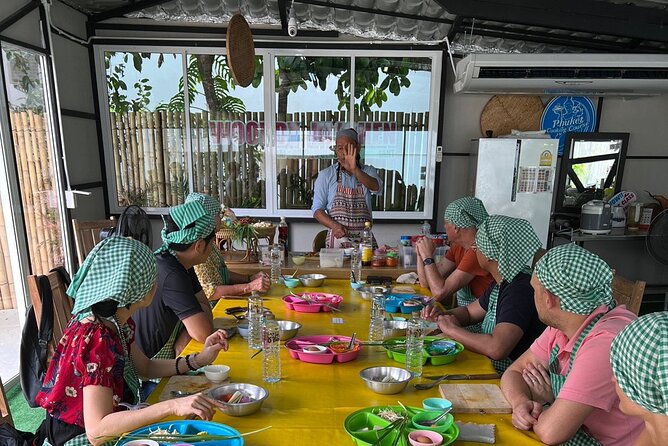
- Mae Somchit Kata Fresh Market shopping with your teacher to pick the real ingredients
- Woody Kitchen garden tour to see where tropical produce comes from
- 4-hour cooking session with instruction, chopping, cooking, and then eating your food
- Small group feel with a maximum group size of 20, plus hands-on help from staff
- Morning or afternoon options so you can match the class to your Phuket plan
- Take-home recipes and video so you can cook again back home
Market-first flavor: why this Phuket class starts where Thai cooking begins
One of my favorite ways to learn Thai food is to shop for it first. That is exactly how this day is built. Instead of getting a “cooking show,” you get the ingredient logic: what to buy, what it does in a dish, and what you can realistically replace at home.
The host is Woody, and the vibe is friendly and organized. You work alongside helpers, not around them. That matters, because Thai cooking is all about small steps and timing, especially with herbs, pastes, and balancing salty, sour, sweet, and heat.
The day is about 4 hours 30 minutes total. That short length is a big plus in Phuket, where weather and crowds can change your mood fast. If you want a half day that feels like real local life, this hits the target.
You can also read our reviews of more tours and experiences in Phuket.



Mae Somchit Kata Fresh Market: learning produce like a local shopper
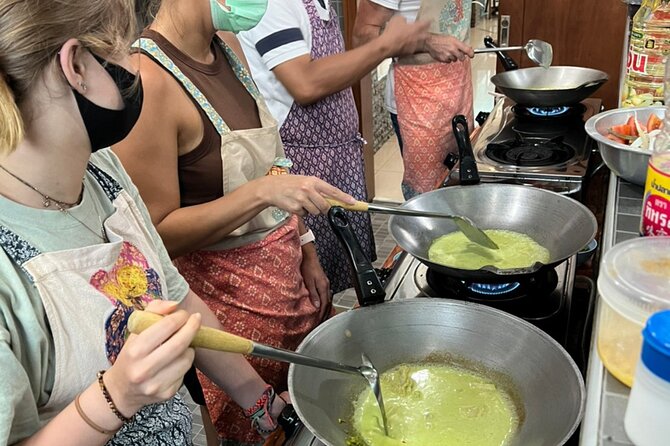
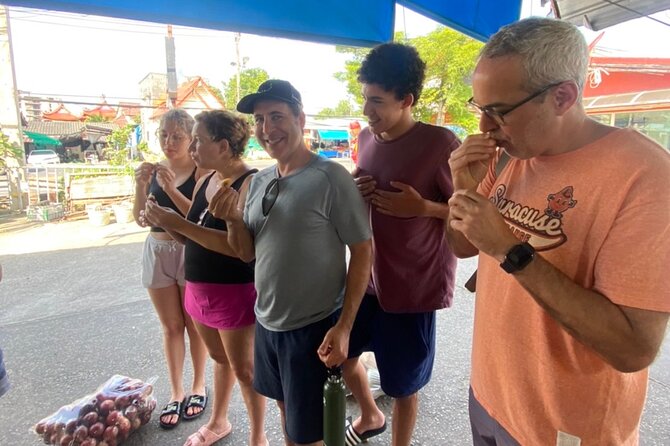
Your first stop is Mae Somchit Kata Fresh Market. This is a short one (about 15 minutes), but it’s not “walk past a few stalls and leave.” You’ll be with your teacher to see ingredients up close and pick what you’ll use later.
This is where the big Thai cooking lesson starts: Thai recipes depend on specific aromatics and textures. In most Western kitchens, you can find many sauces and noodles, but you may not have the same herbs, fruit, or chili varieties. Getting shown what to look for helps you shop smarter later, whether you cook at home or just want to order better in restaurants.
What I like here is the focus on fresh ingredients, not shortcuts. And since Mae Somchit’s admission is free, you’re not nickel-and-dimed just to get a taste of local buying.
Timing note: It’s brief, so go with curiosity. Ask questions as you’re shopping. You’ll get more out of this stop if you treat it like a mini ingredient class.
Woody Kitchen and the tropical garden: where your menu’s ingredients come from
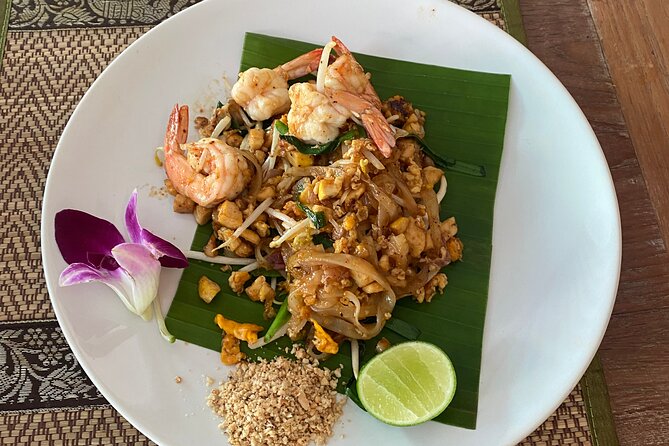
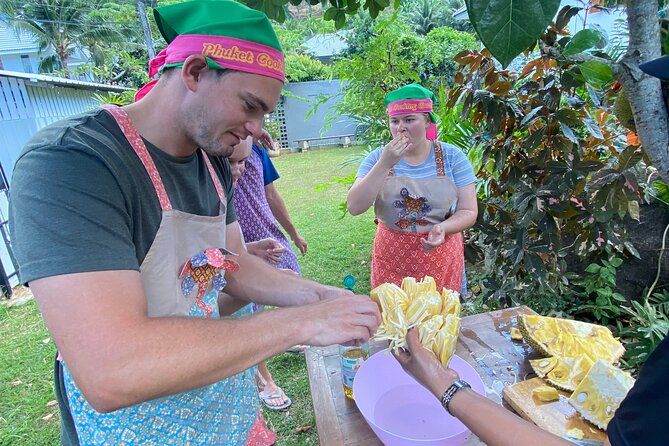
After the market, you head to WOODY KITCHEN by Phuket Cooking Course. Your program includes a visit to Woody’s home setup and a garden tour.
This isn’t just for photos. Seeing tropical fruit and vegetables growing right there gives you context for flavor. You understand why certain ingredients taste like they do, and why Thai cooks treat freshness as a key ingredient rather than a luxury.
Many people also comment on how clean and well run the kitchen setup is. That matters if you’re worried about a class being chaotic or hard to follow. Here, you’re guided, and the helpers support you so you can actually cook, not just chop a few things and wait.
You’ll also get a feel for the teaching style. Woody is talkative in a good way, with clear explanations and a sense of humor. English is reported as strong enough to follow steps without guesswork, which makes the whole day feel less stressful.
The 4-hour cooking lesson: chopping, cooking, and tasting what you make
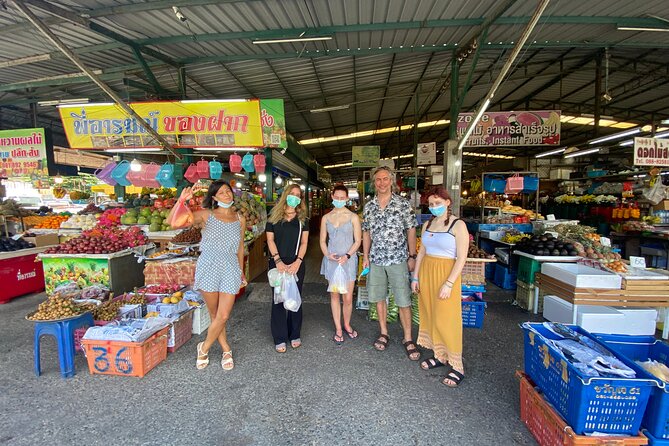
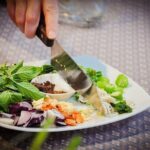
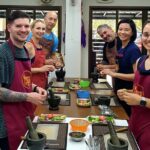
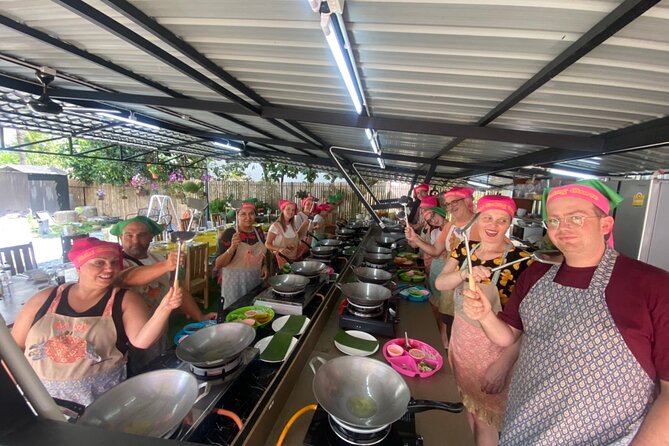
The core of the experience is the 4-hour hands-on Thai cooking class. You’ll cook multiple dishes, and you’ll eat what you make as part of the experience.
A key detail: your specific menu can vary. The class offers different dishes depending on the day, so don’t assume you’ll cook the exact same set every time. What seems consistent is the structure: ingredient prep, cooking steps with guidance, then sitting down to enjoy the meal.
From the way the session is described, you’re not hovering. You’re doing the work: chopping, mixing, cooking in your wok, and getting help when you hit a tricky step. That is why most people walk away feeling like they could repeat at home.
What you may cook and why it matters
You’ll get materials included such as a 3-dishes course handout, plus recipe book & video. Even if you cook more than three dishes during your session, the takeaway material is designed to help you reproduce the dishes later.
A few examples that come up in what people said include dishes like Pad Thai, Thai soup (Tom Ka-style), chicken with green curry, and desserts like mango sticky rice. The menu can change, but these examples show what kind of Thai “everyday favorites” you’re likely to learn.
Also, there’s a strong chance you’ll get to tailor choices. Some participants noted they could request dishes to match preferences. If you care about a specific dish, bring that up early.





Vegetarian and allergy reality check
Thai cooking can be adjusted, and several comments highlight vegetarian-friendly options where meat is optional. There are also mentions of accommodation for shellfish allergies. The safest approach is simple: message or tell your instructor ahead of time, and confirm what you need during the market portion.
The learning you can actually use at home
What people seem to love most is the explanation of why ingredients go together. You learn the purpose behind the spice and sauce combinations, not just the recipe steps. That’s what makes re-creating the dishes later feel possible, even if your pantry isn’t identical to Phuket.
And yes, you’ll taste your creations while the class is still fresh in your mind. It turns theory into a flavor memory.
Banzaan Fresh Market: a quick look at another side of Phuket
There’s also a shorter stop at Banzaan Fresh Market in the Patong area. This one is around 10 minutes, and its admission is noted as not included.
Think of this stop as a bonus “gear check.” You’ll see another cluster of Thai produce and food life. It’s short, so don’t expect deep explanations here. Use it as a chance to spot what’s in season and notice how vendors present ingredients and herbs.
If you’re trying to get the most authentic shopping feel overall, the Kata market is the richer, guided portion. The Banzaan stop adds variety without taking over your day.
Pickup, timing, and group size: making a half day feel smooth
Your start time can be morning or afternoon, and the total time is about 4 hours 30 minutes. This is ideal if you’re balancing beach time with something more meaningful.
You’re also offered pickup and drop-off in Phuket areas like Patong, Kata, Karon, and Chalong. One detail to watch: for a solo booking with pickup in Patong, there can be an extra fee of THB500. Kata and Karon pickup are listed as free.
If you’re staying farther out, additional transport costs can apply for places like Phuket Town and certain other areas. If you’re planning a trip, just check your pickup zone when you book so there are no surprises.
The group size is capped at 20 travelers, and some people have had small group or even near-private experiences. Even when the group is bigger, the class is described as organized with staff assistance so everyone can cook.
One practical note: you’ll start and end at the meeting point location for the activity, which is listed as WOODY KITCHEN BY Phuket Cooking Course, 1 Soi Plukjae, Tambon Karon, Phuket 83100. If pickup is included for your area, you won’t need to find your way there on your own.
Price and value: what $67.83 buys in Phuket cooking
At $67.83 per person, this is not a “budget buffet” activity. But it’s also not priced like a premium, fancy restaurant meal.
Here’s why it can feel like good value:
- You get market time with your teacher and the ingredients for the dishes.
- The class includes jasmine steam rice.
- You get 3-dishes course handout, plus a recipe book and video you can use later.
- Accident insurance is included, which is a real comfort for an activity involving knives, hot pans, and kitchen work.
The biggest value factor is the learning-to-eating ratio. You’re not just consuming Thai food. You’re learning how to build it. If you love cooking, or you want a skill you’ll use after you leave Phuket, you’ll likely feel this price was fair.
If you’re only interested in the food and prefer not to cook, the value drops. There’s also a THB900 extra charge for non cooking people, which tells you the class is designed for active participants.
What you take home: recipes, video, and real spice know-how
One of the reasons I think cooking classes are worth it is that they help you translate a travel memory into something you can do later. This one includes take-home materials like a recipe book & video, plus a course handout.
From what people described, the teaching focuses on ingredients that might be harder to find outside Thailand. That means the recipes aren’t just “do this, add that.” You learn what makes a dish authentic, and where substitutes might or might not work.
Some participants also mentioned extras like fruit tasting and a personalised certificate. Those may not be guaranteed every day, but they fit with the overall “local life” style of the experience.
The bottom line: you should leave with both the instructions and the confidence to try.
Who this Phuket Thai cooking class is for (and who should skip it)
This experience is a great fit if you:
- want a hands-on way to learn Thai flavors
- like markets and want to see what locals buy
- plan to cook again at home (even if you’re not a chef)
- have at least a little patience for fresh prep and step-by-step cooking
- prefer smaller-group energy, up to 20 people
It also fits families in the practical sense that there’s a minimum age of 8, and adults pay the same as children.
You might skip it if you:
- only want to eat and would rather avoid cooking steps
- are traveling on a super tight schedule where a half day feels like too much
- have dietary needs that you can’t communicate ahead of time (best practice is to tell them early)
If you’re allergic, speak up clearly. Thai cooking can be adjusted, but the key is communication before you start chopping.
Quick considerations before you go
Bring a simple mindset: show up ready to learn. You’ll be in and out of markets, walking a bit, then cooking actively for hours.
Also, plan for hot, active conditions. Phuket in general is warm, and cooking plus sun can be a lot. Drink water, take it slow, and don’t try to do a second “big activity” immediately afterward.
If your plan includes transport from areas outside Patong/Kata/Karon/Chalong, confirm pickup pricing based on your exact location. Some zones list higher round-trip costs.
Finally, remember that Banzaan’s admission is listed as not included, while Mae Somchit’s is free. If you want to be extra prepared, you can keep a little cash on hand for any small fees.
Should you book Woody Kitchen’s Thai cooking class in Phuket?
If you want an experience that feels like Thai cooking has a beginning, middle, and end, then yes, book it. The best reason is the flow: market shopping → garden context → hands-on cooking → eating your own food → take-home recipes. That is how you actually learn.
Choose this class especially if you care about flavor details and you want something you can recreate later. It’s also a strong pick if you like having a guide who can explain what you’re buying and cooking, not just hand you a recipe card.
Skip it only if you hate cooking tasks or you’re traveling with someone who won’t participate, since there’s an extra charge for non cooking people.
FAQ
How long is the cooking class and market time?
The total experience time is about 4 hours 30 minutes.
How much does it cost?
The price is $67.83 per person.
Where does the activity take place in Phuket?
It’s based around Kata, with stops at Mae Somchit Kata Fresh Market, WOODY KITCHEN by Phuket Cooking Course, and a short stop at Banzaan Fresh Market in the Patong area.
Is pickup and drop-off included?
Pickup and drop-off are offered for Patong, Kata, Karon, and Chalong areas. For 1 person booking, there is an extra THB500 pickup charge for Patong area. Kata and Karon pickup are listed as free.
Can you choose a morning or afternoon class?
Yes. The class is available in both morning and afternoon, and the dishes taught can differ by day.
What’s included in the price?
Included items are ingredients, local market tour, instructors, a 3-dishes course handout, accident insurance, jasmine steam rice, plus a recipe book and video.
Are there extra charges for non cooking people?
Yes. Non cooking person extra charge is THB900.
What’s the cancellation policy?
Free cancellation is available up to 24 hours before the experience starts for a full refund. If you cancel less than 24 hours before, the amount paid is not refunded.