REVIEW · PHUKET
Half-Day Phuket Easy Thai Cooking
Book on Viator →Operated by Phuket Easy Thai Cooking · Bookable on Viator
Thai cooking gets real fast.
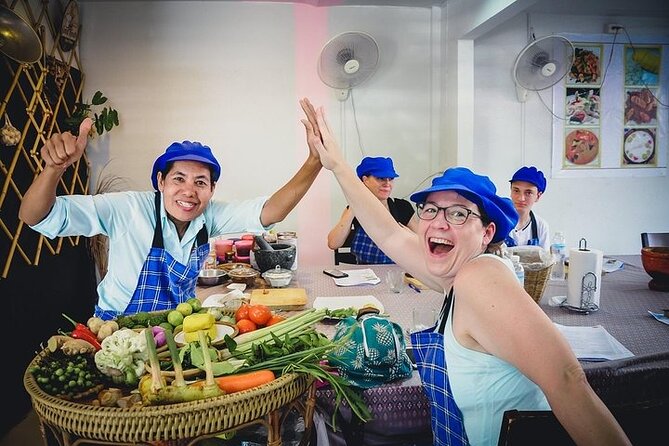
I love that this is truly hands-on, not a watch-and-wait show, and you get to make familiar Thai comfort-food dishes like Pad Thai and Massaman curry. I also like the small group setup and the included market stop, which makes the flavors make sense instead of feeling random. One thing to keep in mind: based on feedback, the kitchen setup can feel a bit basic and the cooking space may be less comfortable than you’d expect.
You also get the kind of structure that helps you repeat it later. The class runs about 3–4 hours, with hotel pickup and drop-off so you’re not scrambling across Phuket, and you’ll get enough guidance to cook confidently at home. A potential drawback is the pace: it moves quickly, so if you want a super slow, leisurely cooking day, you might feel a little rushed.
If you’re short on time but want a real taste of Phuket life beyond beaches, this fits well. Think market-to-kitchen flow, a simple menu, and a meal you actually helped create. And because it’s limited to around 10 people, you should get more direct attention than you would in bigger classes.
In This Review
- Key things I’d zero in on
- Half-day Phuket Cooking: How the Time Slot Actually Works
- Pickup, Group Size, and the Small-Class Advantage
- The Market Stop: Learning Thai Flavor Before You Cook
- In the Kitchen: Curry Paste, Wok Work, and Classic Dishes
- What dishes you can expect
- Homemade curry paste: the real payoff
- Wok speed and kitchen reality
- Lunch or Dinner: Eating What You Cook (With Room for Leftovers)
- Price and Value: Is $69 Reasonable for What You Get?
- Who Should Book This Thai Cooking Class in Phuket?
- Quick FAQ for Planning Your Day
- FAQ
- How long is the Half-Day Phuket Easy Thai Cooking class?
- Is hotel pickup and drop-off included?
- Can I choose a morning or afternoon class?
- How many people are in the group?
- What dishes will I cook?
- Do I have to cook, or can I watch?
- How much is the tour?
- Are children allowed?
- Is there a minimum number of people needed for the booking?
- What is the cancellation policy?
- Should You Book It? My Straight Take
Key things I’d zero in on
- Hotel pickup and drop-off makes the half-day feel effortless
- Local market ingredient shopping so you learn what matters (and why)
- Homemade curry paste practice instead of relying on store-bought shortcuts
- Classic menu options like Pad Thai, papaya salad, and Massaman curry
- Small-group format (up to 10; maximum 8 travelers in many cases) for better coaching
Half-day Phuket Cooking: How the Time Slot Actually Works
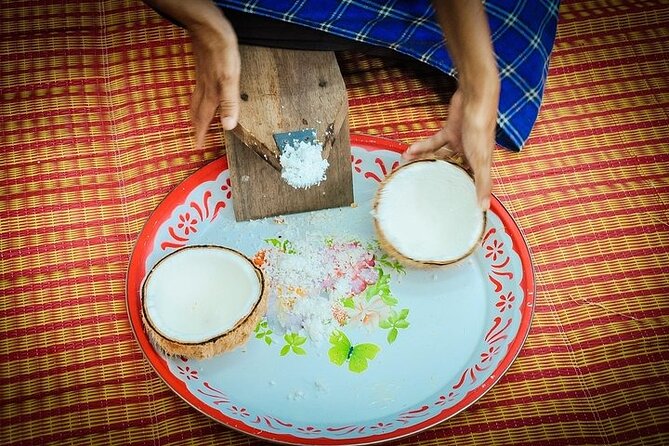
This is built for a half day, roughly 4 hours, which means you get momentum without losing a whole day to traffic and errands. You choose a morning or afternoon class, and the schedule is designed to go market first, then cooking, then eating what you cooked.
That timing matters. Phuket traffic can eat hours, especially if you’re staying farther from town, so the hotel pickup is not a tiny perk—it’s the whole reason this works as a half-day experience. It also means you start cooking while you’re still fresh, not late in the day when energy tends to drop.
The biggest thing I’d watch for is expectations. This is “easy Thai cooking,” which usually means straightforward steps and practical guidance, not luxury pacing or a slow classroom vibe. If you like learning by doing, you’ll enjoy the speed. If you prefer things unhurried, plan to treat this like an active workshop.
You can also read our reviews of more tours and experiences in Phuket.



Pickup, Group Size, and the Small-Class Advantage
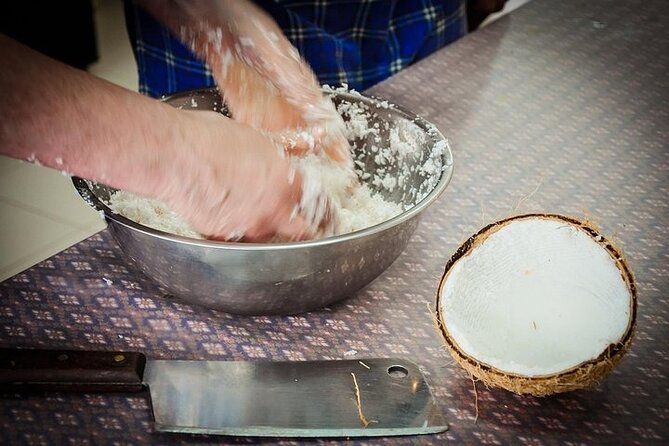
A big part of the value here is that you’re not signing up for a random activity with uncertain logistics. Pickup is offered, and the class includes hotel pickup and drop-off, plus a mobile ticket.
Then there’s the group size. The class is capped at 10 participants, and there’s also mention of a maximum of 8 travelers for a booking/activity. In plain terms: you’re less likely to get stuck waiting while someone else handles the ingredients, and more likely to get corrections when you’re learning something new.
You’ll also feel the difference in how you get taught. In a small group, the instructor can watch your chopping, your mixing, and how you handle spice and balance. That makes it easier to go from I made something edible to I understand why it tastes the way it does.
The Market Stop: Learning Thai Flavor Before You Cook
The market visit is one of the most practical parts of the day. You’ll collect fresh ingredients at a local market, and that step turns “Thai cooking” into real decisions: what smells right, what looks fresh, and what ingredients do the work.
Why this matters for you: Thai cuisine leans hard on balance—sweet, sour, salty, spicy—and a lot of that comes from ingredient quality. When you see and handle things like fresh aromatics, herbs, and produce used in dishes, you start to notice how small changes affect the final taste.
This market time also gives you a kind of Thai food education you can carry home. Instead of memorizing recipes like a checklist, you learn what to look for. That makes the “make it again at home” promise feel more realistic, especially if you’re shopping in a different country where brands and flavors vary.
One practical tip: bring a watchful attitude and ask questions if your instructor offers them. Even if you only understand part of what you’re seeing, the market context helps your cooking decisions later.
In the Kitchen: Curry Paste, Wok Work, and Classic Dishes
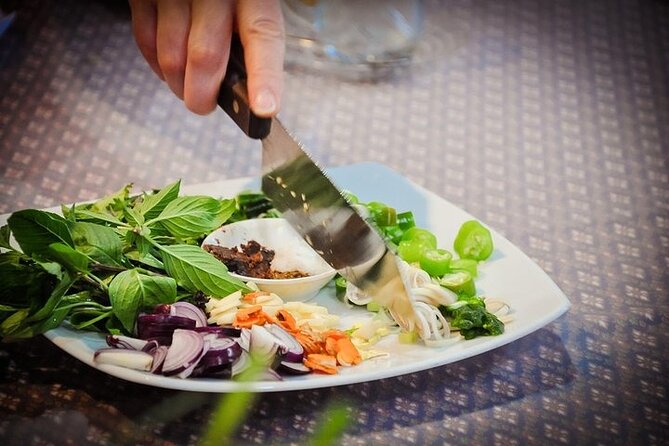
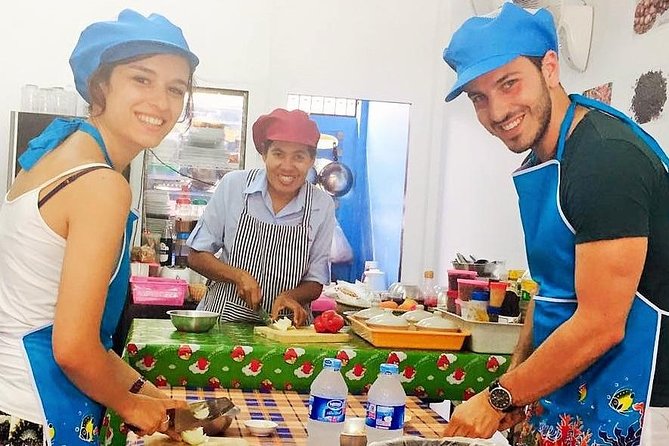
The core of the class is hands-on cooking for about 3–4 hours in a kitchen environment meant for teaching. You’ll learn to prepare a menu of Thai dishes for lunch or dinner during the session, and it’s all built around classics.
What dishes you can expect
The course describes popular dishes such as:
- Pad Thai
- Papaya salad
- Massaman curry
- Homemade curry paste as a key skill
- Plus options like chicken satay, Panang curry with chicken, and mango sticky rice (depending on the menu that day)
The exact lineup can vary by class, but the structure is usually the same: you learn key components, then you assemble dishes in a way you can repeat later.





Homemade curry paste: the real payoff
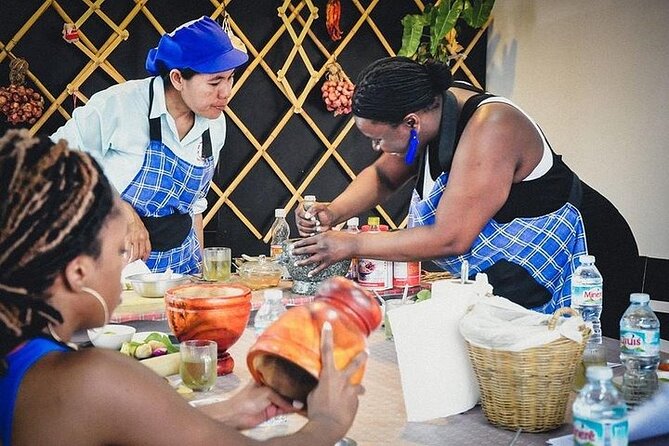
If you want one skill that pays off long after you leave Phuket, it’s curry paste. Thai curry paste isn’t just flavor—it’s a base that determines depth. Learning to make it (rather than using a jar) is often the reason people say the class is worth it.
You’ll also get guidance on how to balance intensity. Curry and spicy dishes can be adjusted to your preference, which is especially helpful if you’re cooking at home with different spice strength than what you find in Thailand.
Wok speed and kitchen reality
Most of the cooking experience happens while time is moving. That’s normal for Thai cooking, and it’s part of why the class feels lively. You may hear instruction delivered fast, and you’ll likely switch tasks quickly—chopping, mixing, and cooking.
If you’re a complete beginner, you’ll still be okay. The course is built for easy learning. But keep your mindset practical: focus on doing each step correctly, then adjust seasoning at the end rather than trying to nail every flavor instantly.
Lunch or Dinner: Eating What You Cook (With Room for Leftovers)
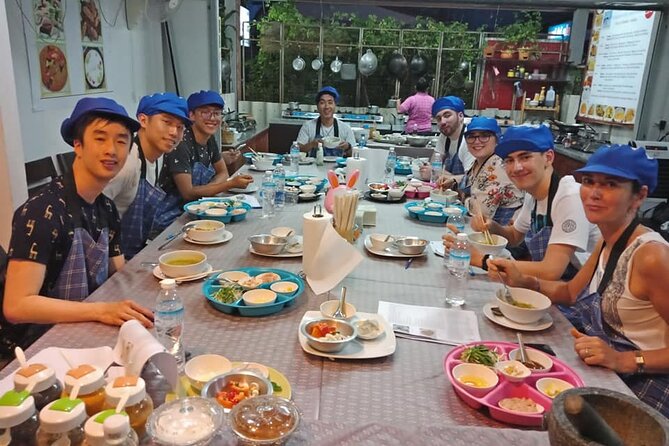
At the end of the cooking time, you eat the meal you prepared—usually lunch or dinner depending on your class selection. That matters because it closes the learning loop. You taste what you made while the steps are still fresh in your memory, and you can connect flavor to process.
Portions are typically satisfying for a half-day. And in feedback, people also talk about taking food back, which is a nice safety net if you want leftovers or you’re feeding more than just yourself.
Even if you’re not a “foodie” who wants to nerd out over ingredients, this part helps you evaluate the results. If something is too salty or not bright enough, you learn what to change next time.
Price and Value: Is $69 Reasonable for What You Get?
For $69, you’re paying for more than a cooking demo. You’re paying for:
- Hotel pickup and drop-off
- A small-group, hands-on cooking class for about half a day
- Market ingredient shopping
- Instruction that’s designed so you can recreate dishes later
- A meal (lunch or dinner) after cooking
- A class format that includes curry paste basics and classic Thai dishes
Value is about what would cost you more if you tried to DIY it. If you had to pay for transport, guided market time, ingredients, and structured instruction all separately, the total usually adds up fast. Here, the package is doing the heavy lifting.
You should also consider the “easy” goal. If you want recipes with step-by-step practicality, this class leans into that. If you’re already an advanced cook, you might still enjoy learning the curry paste approach and the ingredient logic—but you may finish the class wanting more complex technique. For most people, though, it’s a great balance of approachable and authentic.
Who Should Book This Thai Cooking Class in Phuket?
This experience fits best if you want real Thai cooking without committing to a full-day tour. It’s also a good pick if you like learning by doing and you want flavors you can recreate at home.
You’ll likely enjoy it if:
- You want to cook classic Thai dishes rather than something too fancy
- You care about ingredients and want guidance on what to select at a market
- You’d rather have a small group and personalized coaching
- You’re in Phuket for a short stay and want a meaningful cultural activity
You might think twice if:
- You strongly dislike kitchens that are more functional than polished
- You prefer slow, laid-back experiences with zero rushing
- You’re extremely sensitive to chilly spaces, since some people note temperature comfort issues in certain rooms
Quick FAQ for Planning Your Day
FAQ
How long is the Half-Day Phuket Easy Thai Cooking class?
It runs for about 4 hours (approximately), including the market visit, cooking time, and the meal.
Is hotel pickup and drop-off included?
Yes. Hotel pickup and drop-off are included.
Can I choose a morning or afternoon class?
Yes. You can select either a morning or afternoon class.
How many people are in the group?
The class is limited to a maximum of 10 people per booking, and it can have a maximum of 8 travelers for the activity.
What dishes will I cook?
You can prepare classic dishes such as Pad Thai, papaya salad, and Massaman curry. The class may also include items like homemade curry paste, chicken satay, Panang curry with chicken, and mango sticky rice.
Do I have to cook, or can I watch?
You can have non-cooking participants, but there is an extra charge of THB 1,100 for non-cooking participants.
How much is the tour?
The price is listed as $69.
Are children allowed?
Children under 7 years old are free, as long as they are accompanied by an adult.
Is there a minimum number of people needed for the booking?
Yes. The booking requires a minimum of 2 people.
What is the cancellation policy?
Free cancellation is available. You can cancel up to 24 hours in advance for a full refund.
Should You Book It? My Straight Take
If you want a half-day activity that’s hands-on, ingredient-focused, and actually helps you cook at home, this is a strong choice. The combination of hotel pickup, a local market stop, and small-group coaching makes it feel efficient and personal for the price.
Book it especially if you’re the type of person who wants to learn the logic behind Thai flavor, not just follow a script. If you’re okay with a functional kitchen setup and a brisk pace, you’ll likely come away with both great food and a confidence boost you can use back in your own kitchen.