REVIEW · THANI THAILAND
Sukhothai: Historical Park & Countryside Cycling Tour
Book on GetYourGuide →Operated by Sukhothai Bicycle Tour · Bookable on GetYourGuide
Pedal beyond temples and into real Sukhothai life. This full-day ride pairs quiet village roads with a guided visit inside Sukhothai Historical Park, so you see both the everyday rhythm and the UNESCO-scale sights.
I especially like how the tour balances culture with comfort: you get a real Thai lunch plus snacks and cold drinks along the way, and the bikes come ready to ride (24 gears, front suspension, and a helmet). You’re not just transported between landmarks; you’re out on the road long enough to feel the place.
One consideration: the day runs long in warm weather, and the tour isn’t suitable for pregnancy, back problems, or mobility impairments. If you know heat and cycling stress you out, plan for breaks, shade stops, and sunscreen from the start.
In This Review
- Key highlights you should care about
- Why Biking Sukhothai Feels Like the Real Place
- Pickup, Bikes, and the Day’s Comfort Setup
- Ban Khuai to Village Roads: Start Quiet, Then Start Talking
- Rice Paddies and the Kao Laung Mountain Views on Dirt Roads
- Klong Mae Lampan Canals and a Wood Furniture Workshop Stop
- Eastern Gate and the UNESCO Ruins: How the Architecture Gets Meaning
- The Lunch Rhythm: Local Thai Food With Real Stop-and-Eat Value
- Cycling Fitness: How Hard Is It, Really?
- Price and Value: What $53 Buys You Beyond the Ticket
- Should You Book This Sukhothai Bike Tour or Skip It?
- FAQ
- How long is the Sukhothai Historical Park & Countryside Cycling Tour?
- What’s included in the price besides the bike tour?
- Where does hotel pickup happen?
- What time does the tour start?
- Is the tour guided in English?
- How big is the group?
- What should I bring for the ride?
- Is the tour suitable for everyone?
- What is the cancellation policy?
- Do I need to pay for Sukhothai Historical Park entry?
Key highlights you should care about
- Small group size (up to 12) keeps the ride calm and easier to manage.
- English-speaking guides like Miaow/Meow, Kip, or Chip turn ruins into stories you can actually use.
- Most of the day is cycling, not waiting around, with regular snack and water stops.
- UNESCO Historical Park entry is included, so you’re not juggling extra ticket lines.
- Lunch at a local Thai restaurant is part of the experience, not an afterthought.
- Traffic-and-safety support is built into the way the day is run, with extra care when crossing roads.
Why Biking Sukhothai Feels Like the Real Place
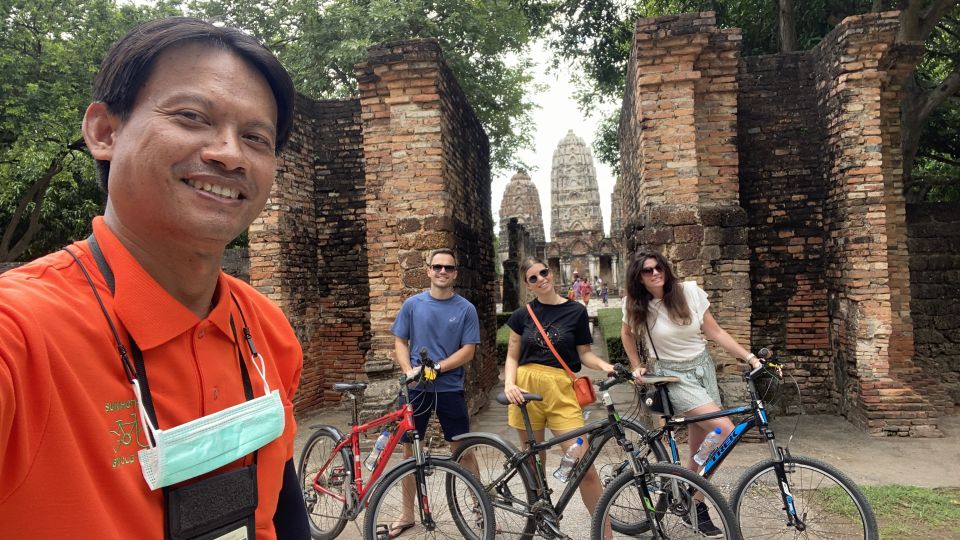
Sukhothai is famous for its ruins, but the bigger magic happens when you leave the main sights and ride through the countryside. This tour is built for that. The route starts outside the city and gradually shifts into the historical zone, so your brain gets a helpful storyline: daily life first, then the ancient meaning of what you’re seeing.
I like that it’s not a “rush through the park” day. The ride is paced for people who want to look closely, ask questions, and enjoy the scenery without feeling punished for stopping often. And because you’re on a bike, you can take in irrigation canals, village edges, and long views in a way that feels natural, not forced.
Pickup, Bikes, and the Day’s Comfort Setup
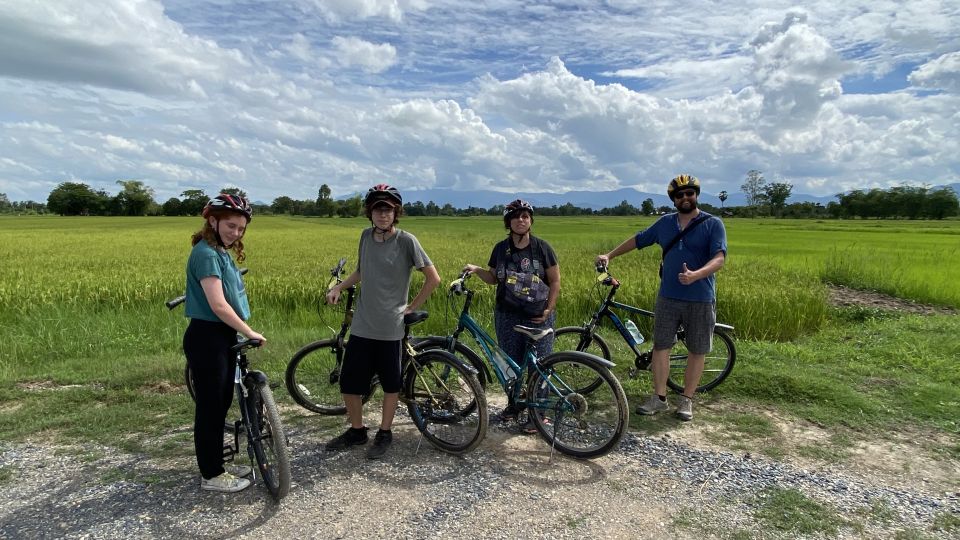
Pickup usually begins around 8:15 AM, and transfers are included for hotels within 15 km of Sukhothai city center. You’ll want to be ready in the lobby about 10 minutes early, because the day runs on schedule and you don’t want to start cold.
The bike setup is practical: a mountain bike with 24 gears, front suspension, and a helmet. That suspension matters more than you might think because part of the route is dirt road and rural tracks. The geared bike also helps if you hit any slight changes in the terrain, even if the overall ride is described as comfortable for many people.
The tour also includes water and snacks throughout the day. That simple rhythm makes the long hours feel doable, especially since the weather can get very hot. It’s the kind of design detail that keeps your energy for the temple visits, not just the cycling.
Ban Khuai to Village Roads: Start Quiet, Then Start Talking
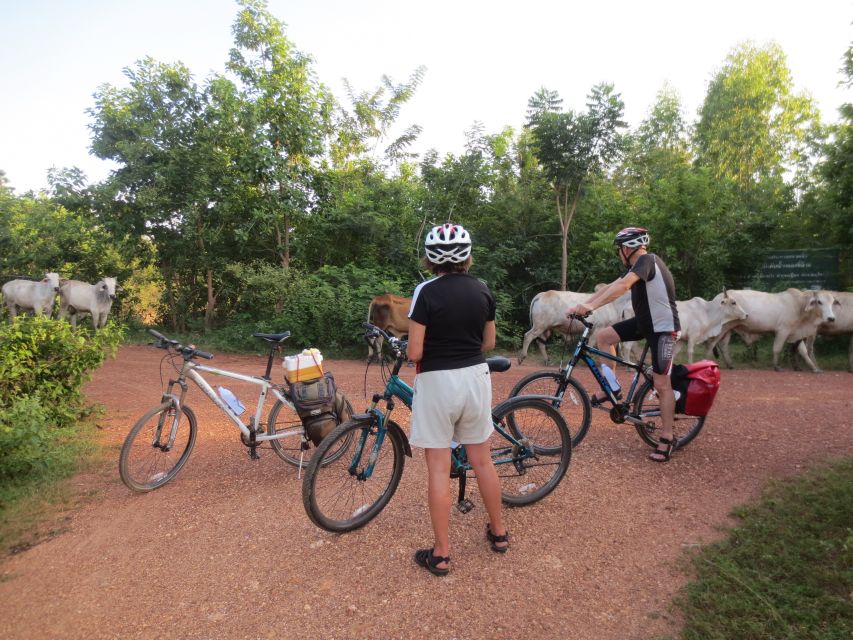
The cycling part begins in Ban Khuai, a small village on the outskirts. Right away, you’re not stuck with traffic or a busy tourist scene. Instead, you pedal through calmer village streets where you can actually notice how people live day to day.
This is where the guide makes the biggest difference. Guides you might meet—Miaow/Meow, Kip, or Chip—tend to use short explanations and real examples, so you’re not just riding past houses. You may also get chances to interact with local people, depending on what’s happening on the day. In some cases, there’s even mention of participating in planting next season’s crops, which would turn a photo stop into something more personal and memorable.
Practical note: village cycling is usually slow by design. That’s good. But keep your expectations realistic: you’ll need comfortable shoes and clothing you don’t mind getting dusty. Even on easy rides, rural roads can be uneven.
Rice Paddies and the Kao Laung Mountain Views on Dirt Roads
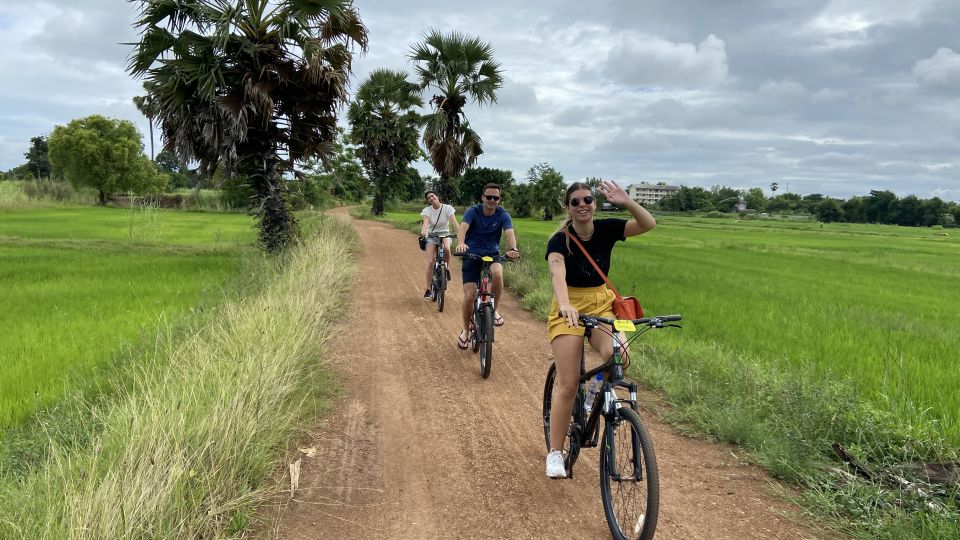
After the village start, the route moves onto dirt roads through stretches of rice paddies with views toward Kao Laung Mountain. This is one of the tour’s main visual payoffs: the scenery opens up, and the countryside feels bigger than you’d guess from the city.
I like this section because it changes the texture of the day. Morning village roads feel close and human-scale; the rice paddies feel wide and quiet. And since the tour includes frequent breaks with water and snacks, you don’t just “endure” the countryside—you get time to look.
If you’re a nervous cyclist, this is also where bike support becomes important. You’ll still ride, but the experience is structured so you’re not constantly worried about the route. Just remember: dirt roads can mean dust, uneven ground, and sun glare, so hat and sunscreen aren’t optional.
Klong Mae Lampan Canals and a Wood Furniture Workshop Stop
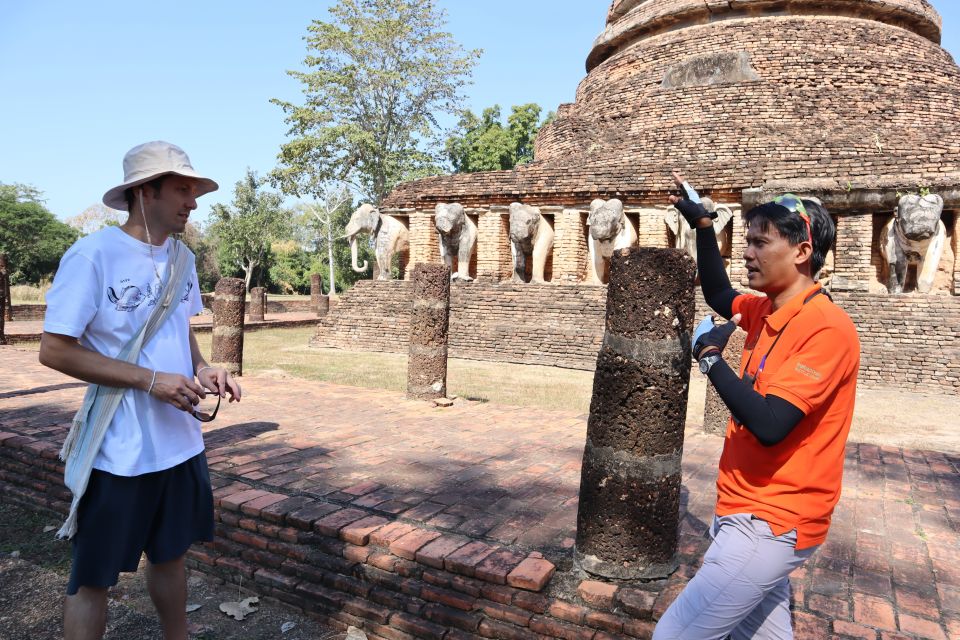
As you continue, the tour follows small irrigation canals (Klong Mae Lampan) that pass through rural villages. Canals are a great theme for this kind of day because they link the landscape to livelihoods. You can connect what you saw in rice fields to how water moves and how farming actually works.
Then there’s the wood furniture factory stop. This adds an important counterpoint to the temples later in the day: it shows local craft and labor, not just ancient architecture. If you care about how communities support themselves, this stop is a smart “why this place developed the way it did” moment.
In general, I’d treat the canal and factory portions as the tour’s breather breaks—stops where your legs recover, your questions get answered, and your brain shifts from scenery to systems.
Eastern Gate and the UNESCO Ruins: How the Architecture Gets Meaning
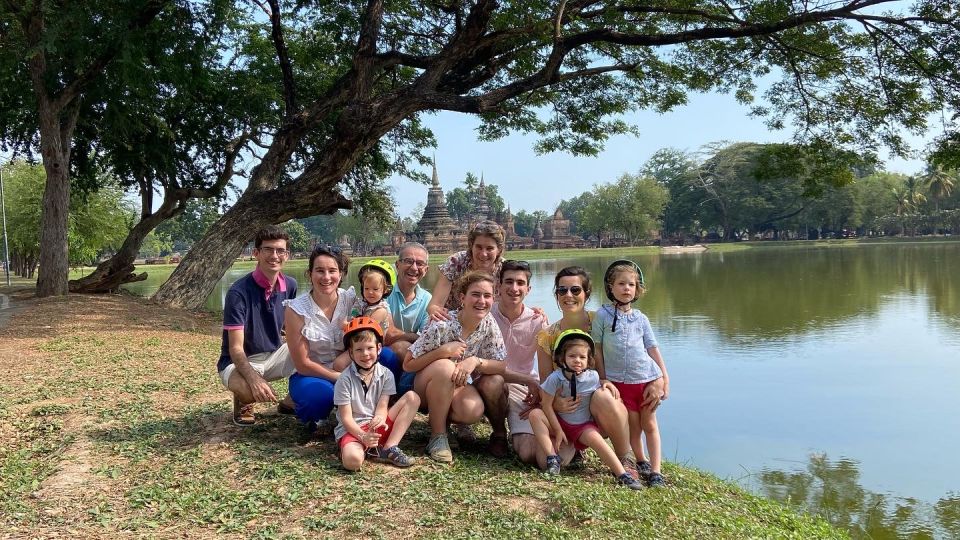
Once you reach Sukhothai Historical Park, the day turns into guided history. The first big architectural moment is the Eastern Gate, where you’ll see Buddhist and Hindu design elements and workmanship linked to what people describe as Thailand’s Golden Era.
This is where an English guide earns their keep. You’re not just touring temples as “pretty buildings.” You get context: why these structures look the way they do, how craftsmanship reflects belief and political power, and how Buddhism’s story connects to the wider region. Guides like Jib and Gob may also help manage the group, especially around safety and logistics inside busier areas.
One of the best parts of the park experience is that you’ll have time to explore and take photos with guidance in your head. That matters because ruins can blur together fast if you don’t have a framework. With a guide explaining what to notice, you start seeing patterns instead of random shapes.
A small caution: the park is a World Heritage site, which usually means you’ll share space with other visitors and walk in heat. Wear breathable clothes and keep pace with the group when moving between sites.
The Lunch Rhythm: Local Thai Food With Real Stop-and-Eat Value
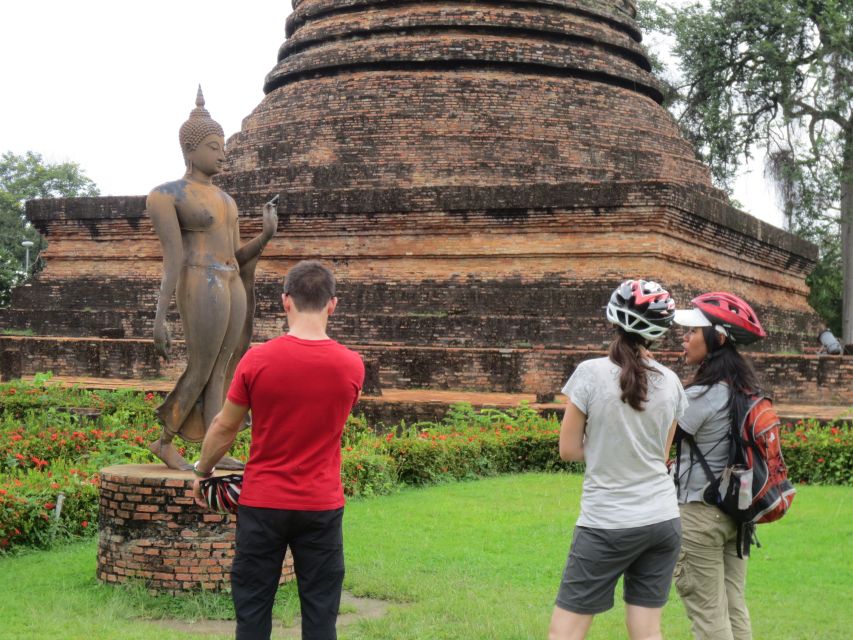
Lunch is included at a local Thai restaurant, and it’s timed after the morning’s cycling and park introductions. People often talk about the food quality, and the tour is set up so you actually get a proper break, not just a quick bite while standing.
From a practical standpoint, I like that lunch is part of the schedule, meaning you don’t have to gamble with where to eat at noon. You also get snacks and drinks earlier in the day, so you’re not arriving hungry and stressed.
Even if you’re picky, Thai restaurants in Sukhothai tend to have comfortable, crowd-friendly options. If you have dietary needs, the safest move is to tell your guide or provider ahead of time, since you’re eating as part of an included plan.
Cycling Fitness: How Hard Is It, Really?
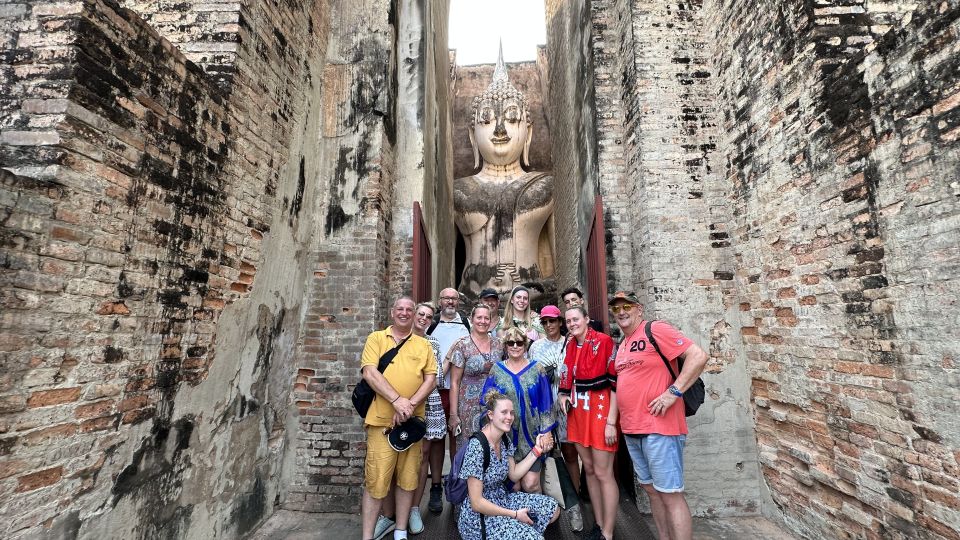
The ride is often described as manageable for a range of ages and experience levels. The big reasons: the pace includes frequent stops, the route is mostly flat and practical, and the group size helps keep things controlled.
That said, it’s still a full-day experience. You’re cycling for hours with warm weather, dust exposure, and occasional rough patches on dirt roads. So “easy” doesn’t mean “effortless.” Bring the basics: comfortable shoes, sunglasses, sunscreen, and a hat.
Also, this tour has clear boundaries. It’s not suitable for pregnant women, people with back problems, or those with mobility impairments. If you fall into those categories, it’s kinder to choose a different Sukhothai experience that matches your body and comfort needs.
Price and Value: What $53 Buys You Beyond the Ticket
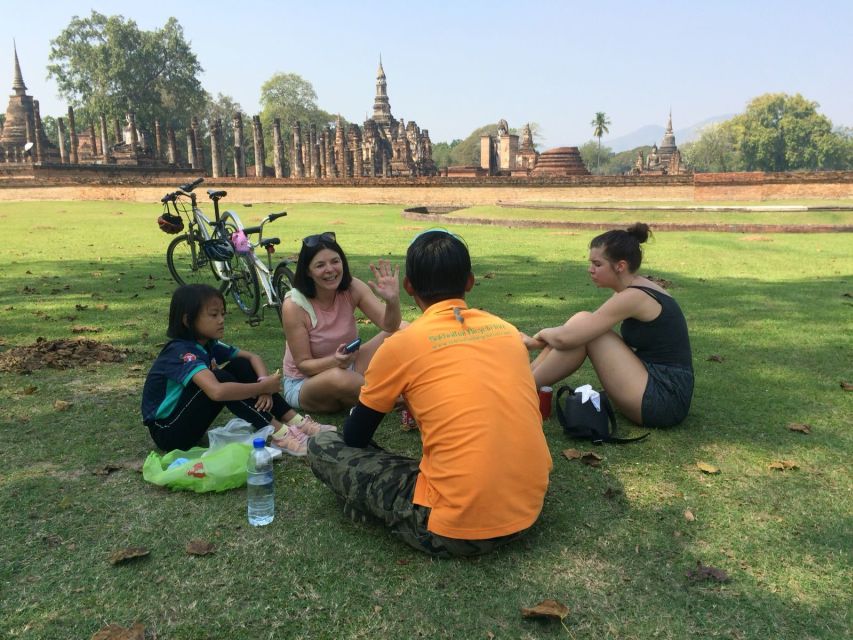
At about $53 per person for a 7-hour guided experience, the value is in the mix. You get:
- Bike + helmet + gear (24 gears, front suspension)
- Hotel pickup and drop-off within 15 km
- Entrance fees to Sukhothai Historical Park
- Lunch, snacks, soft drink, and drinking water
- An experienced English-speaking guide and local accident insurance
If you tried to piece this together yourself, the costs add up fast: park entry, a licensed guide, transportation, and a planned route. Here, you’re paying for organization, language help, and a full day that connects countryside cycling with the UNESCO core.
The other “hidden” value is time. A guided, paced loop is a big advantage in a place like Sukhothai, where the ruins cover a wide area and the story behind them isn’t obvious on a first visit.
Should You Book This Sukhothai Bike Tour or Skip It?
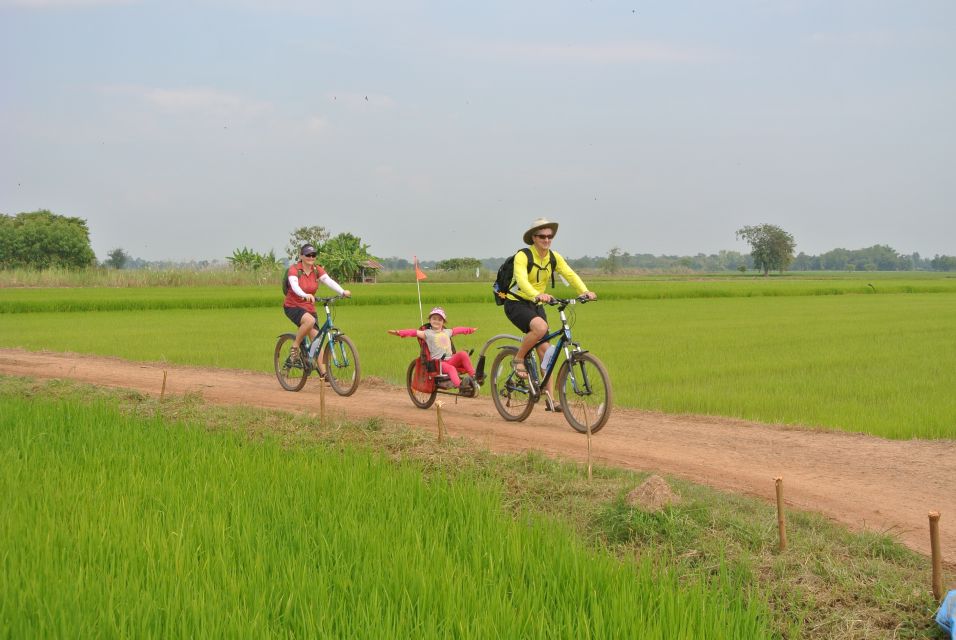
Book this tour if you want more than temple photos. This is a good fit if you like hands-on travel: riding through rice paddies, pausing for village stories, visiting craft and canal stops, then understanding the park’s architecture with an English guide.
I’d also book it if you value comfort support: helmeted bikes in good condition, regular water and snacks, and a small group format that avoids chaos. Guides such as Miaow/Meow, Kip, Chip, and the supporting staff like Jib or Gob (depending on your date) tend to focus on explaining what you’re looking at and keeping the ride running smoothly.
Skip it if cycling itself isn’t your thing, if you need mobility accommodations, or if heat makes you miserable. The tour is outdoors for most of the day, and it’s not meant to be gentle sightseeing with long sit-down breaks.
If you fit the basic “able to cycle for a full morning and afternoon” profile, this is one of the more balanced ways to experience Sukhothai—because it connects the countryside to the UNESCO stones in a way you’ll remember.
FAQ
How long is the Sukhothai Historical Park & Countryside Cycling Tour?
It lasts 7 hours.
What’s included in the price besides the bike tour?
You get an English-speaking cycling guide, a mountain bike with 24 gears, front suspension, and a helmet, local accident insurance, lunch, snacks, soft drinks, drinking water, hotel pickup and drop-off within 15 km, and entrance fees to Sukhothai Historical Park.
Where does hotel pickup happen?
Pickup and drop-off are included within a 15-kilometer radius of Sukhothai city center.
What time does the tour start?
Hotel pickup is around 8:15 AM, with the tour beginning after you meet the guide and start cycling.
Is the tour guided in English?
Yes, the tour includes an English-speaking live guide.
How big is the group?
The group is limited to 12 participants.
What should I bring for the ride?
Bring comfortable shoes, sunglasses, a sun hat, and sunscreen, plus comfortable clothes (cycling shoes are preferred).
Is the tour suitable for everyone?
It is not suitable for pregnant women, people with back problems, or people with mobility impairments.
What is the cancellation policy?
You can cancel up to 24 hours in advance for a full refund.
Do I need to pay for Sukhothai Historical Park entry?
No. Entrance fees to Sukhothai Historical Park are included.