REVIEW · DOI INTHANON NATIONAL PARK
Chiang Mai: Doi Inthanon National Park with Ticket & Lunch
Book on GetYourGuide →Operated by Touring Center · Bookable on GetYourGuide
You’ll chase cooler air and big views. This day trip to Doi Inthanon National Park strings together Thailand’s highest peak, the royal twin pagodas, a hill tribe market, and a waterfall finish, all in one packed but well-paced route.
I especially like the small group size (up to 9 people) and the English guidance, with names like Nong, Bee, Pae, Po, Kik, and Tor repeatedly praised for clear explanations and good humor.
The one real drawback to plan for: the top views depend on weather. When it’s foggy or raining, the summit and pagodas can feel muted, and the rainforest walk gets wet fast.
In This Review
- Key highlights worth caring about
- Doi Inthanon in one day: why it works
- Getting out of Chiang Mai: the drive and the rhythm
- Thailand’s highest peak stop: what you’ll actually do up top
- Ang Ka Nature Trail: a short rainforest walk that changes your mood
- Twin pagodas for King Bhumibol and Queen Sirikit
- Hmong hill tribe market: fresh food and handmade finds
- Lunch at Inthanon Royal Project Restaurant: why this matters
- Mae Klang Luang Karen village: coffee that’s part of daily life
- Vachiratharn Waterfall: the final wow moment
- Small-group van comfort: how the day stays manageable
- Price and value: does $80 make sense?
- Who should book this Doi Inthanon day trip
- Should you book this tour?
Key highlights worth caring about
- Highest point of Thailand with a short stop that’s more than a photo sign
- Twin pagodas for King Bhumibol and Queen Sirikit plus gardens worth slowing down for
- Ang Ka Nature Trail rainforest walking time without committing to a long hike
- Thai Hmong Community Market for fresh produce and handmade goods
- Mae Klang Luang Karen village coffee that’s actually part of village life
- Vachiratharn Waterfall as the dramatic end of the day
Doi Inthanon in one day: why it works
I like tours that don’t just tick boxes. This one is built like a natural story: altitude first, then forest, then royal memorials, then village food and coffee, and finally water dropping off a mountainside.
You get a lot of variety without spending your whole time commuting on local buses. With a 9-seater air-conditioned van and a small group, you’re not constantly waiting around for people or translating everything yourself.
And the timing matters. It starts in the morning, gets you high up before the day warms, then returns to Chiang Mai by evening. That makes it a good choice if you want northern Thailand flavor without turning your holiday into a logistics project.
You can also read our reviews of more tours and experiences in Doi Inthanon National Park.
Getting out of Chiang Mai: the drive and the rhythm
The drive from Chiang Mai is about 2 hours to reach Doi Inthanon. That’s long enough to feel like a real trip, but short enough that you still get a full day of stops.
On the road, you’ll be moving through different climates. Even if the city is hot, you can expect cooler mountain air once you climb. Reviews often mention fog and mist in the mountains too, so I’d bring your mindset with two settings: clear views and cloudy views.
The route is structured so you’re not stuck in one place too long. Most stops are short—think around 20 to 45 minutes—so you can see more without feeling exhausted by constant walking.
Thailand’s highest peak stop: what you’ll actually do up top
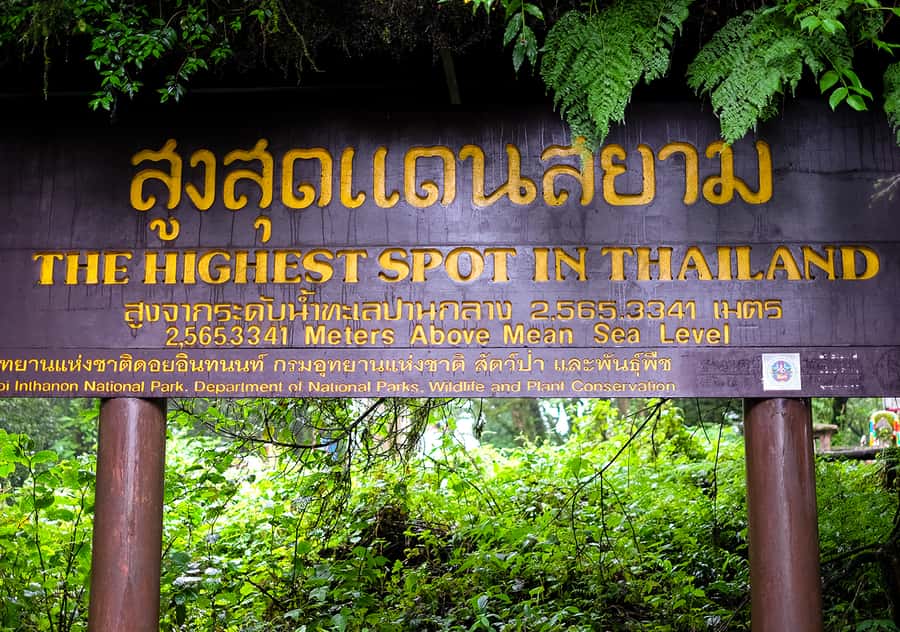
You’ll reach the highest peak of Thailand, “the Roof of Thailand,” and this is where the day gets instantly interesting. The visit includes a summit moment plus a short stay at a shrine connected to the earlier King of Chiang Mai.
Here’s the practical truth: if the sky is clear, you’ll likely get that wow feeling from the height. But if it’s foggy, you may not get wide open vistas—one past experience described the summit stop as more about the marker than dramatic scenery when visibility is poor.
Either way, the value is that this is a real national-park high point, not just a roadside viewpoint. You’re also already in the right place for the rest of the stops, because the day’s sequence is designed around being up high first.
Tip I give you: if the weather looks questionable when you arrive, don’t panic. The tour still has enough strong stops—pagodas, rainforest, waterfall—that the day won’t collapse.
Ang Ka Nature Trail: a short rainforest walk that changes your mood
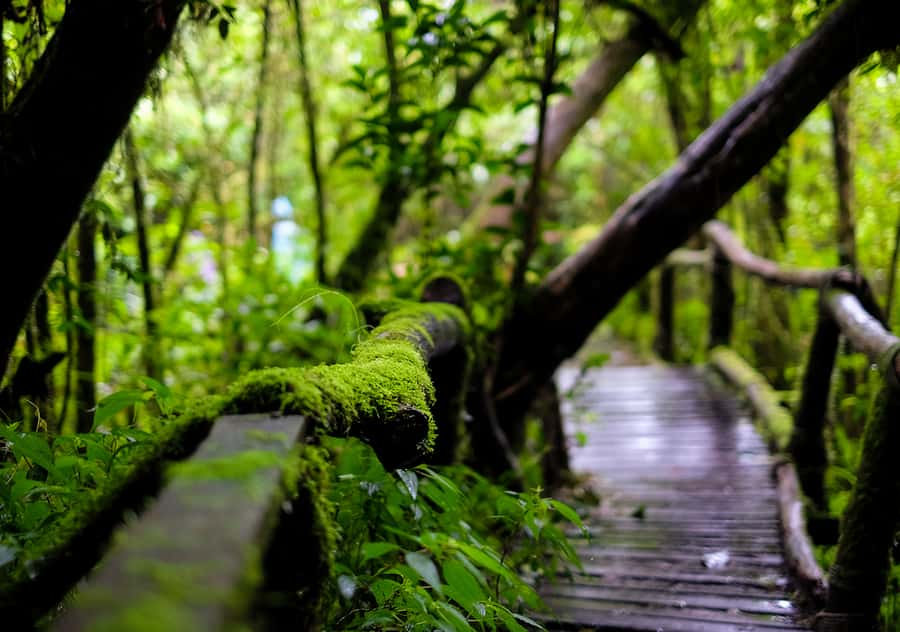
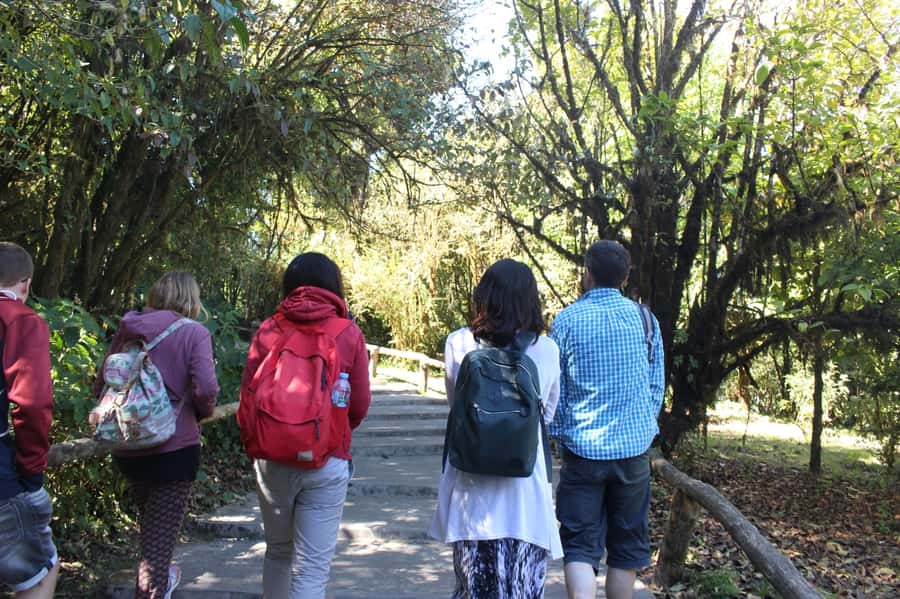
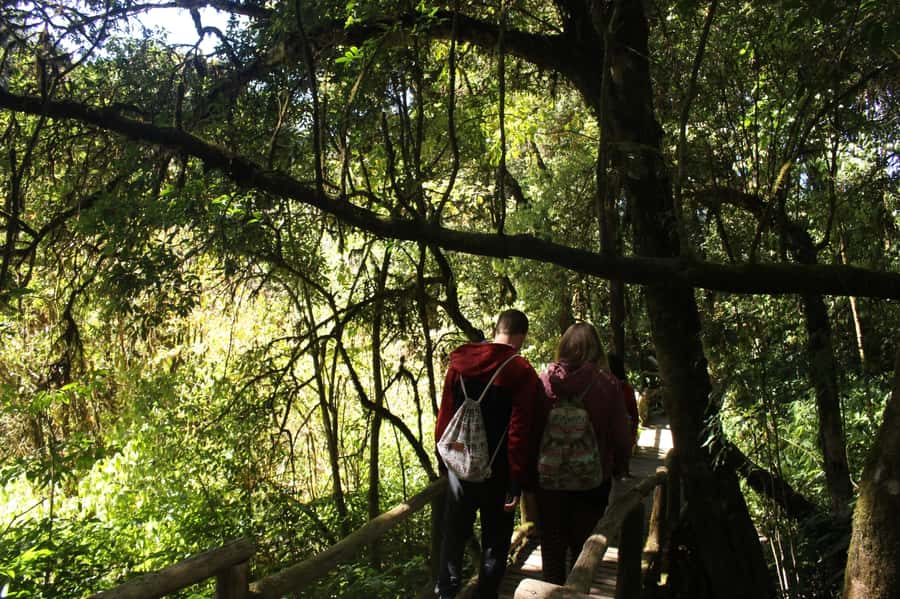
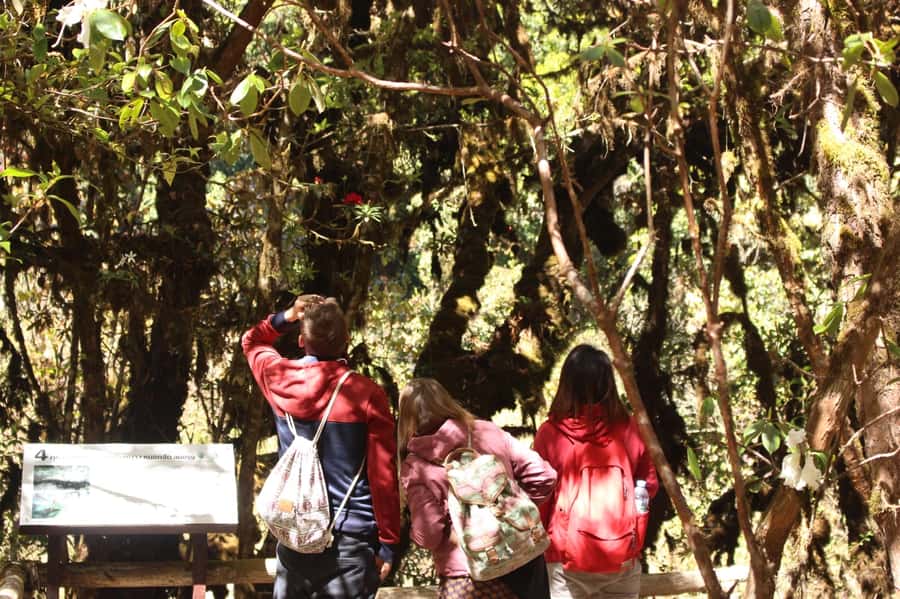
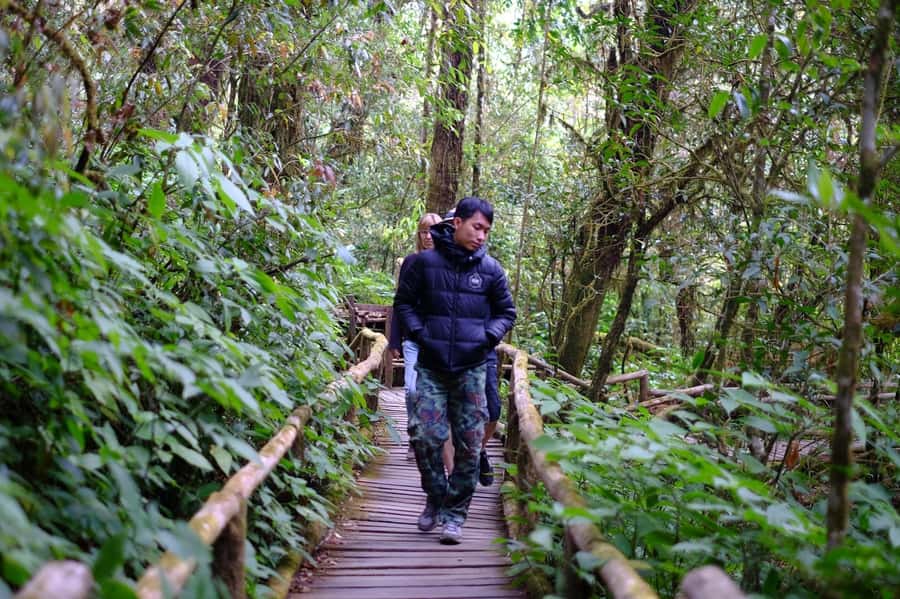
After the peak, you’ll take a short walk on the Ang Ka Nature Trail—about 30 minutes. This is a gentle way to experience the park as forest, not just monuments.
Rainforest here means things feel different. You can expect higher humidity, thicker greenery, and the kind of atmosphere that makes you slow down even on a short trail. If it’s misty or raining, you’ll feel it quickly, so bring that jacket you’ll be glad you packed.
One useful note: this walk is short, so you won’t get the “I must hike for hours” commitment. But it’s long enough to feel like you left the paved world and entered the park’s interior.
For most people, this is the best balance on the day: nature time that fits into an 8-hour schedule.
Twin pagodas for King Bhumibol and Queen Sirikit
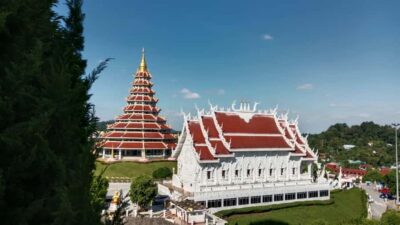
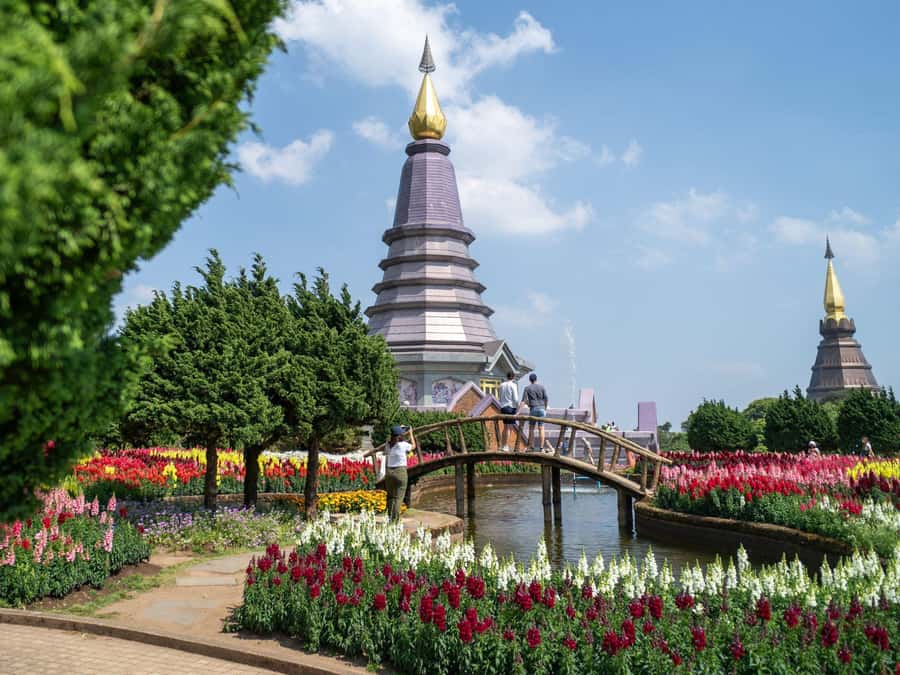
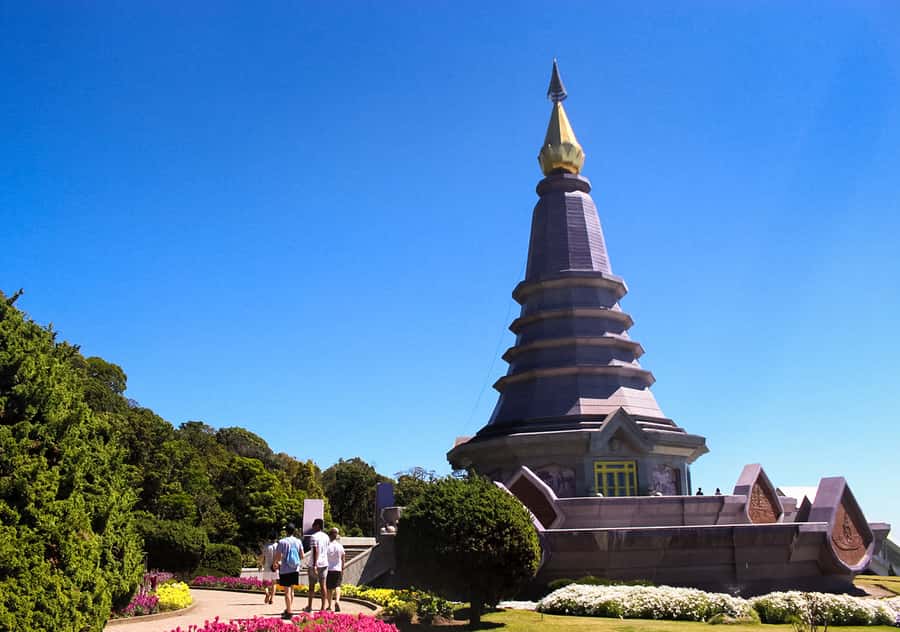
Next come the Pra Mahatat Noppamethanedon and Pra Mahatat Nopphonphusiri, the twin stupas commemorating King Bhumibol and Queen Sirikit. These aren’t just pretty structures. They’re memorials built with a strong sense of place—surrounded by colorful gardens and placed so you can appreciate views when the weather cooperates.
On a clear day, the pagodas can feel like the day’s “big reveal.” On a cloudier day, they can become more about architecture, gardens, and symbolism than sweeping scenery. One clear lesson from past trips: fog can make it hard to see the vistas, so don’t plan your happiness around perfect visibility.
Still, the pagodas are worth it. They’re a good change of pace from the rainforest trail and they give your camera a different kind of subject—ornamental details, symmetry, and that quiet garden feel.
Also, because you’re going with an English-speaking guide, this stop makes more sense. A well-timed explanation turns the pagodas from sights into context.
Hmong hill tribe market: fresh food and handmade finds
After the forest and royal memorials, you’ll head to the Thai Hmong Community Market. You’ll spend about 20 minutes wandering, focused on seeing what’s sold and how people live and trade at this elevation.
What I like about this stop is the variety in a small amount of time:
- You can look for newly picked vegetables and fruits
- You’ll also spot handmade products
It’s not a long shopping spree. It’s more of a cultural stop where you can browse, ask questions, and notice how food and craft show up together.
A small caution: don’t expect a massive market scene like the ones you might find in the city. This one is specifically tied to the village and community rhythm at the mountain region.
If you want to buy something, keep purchases modest. A lot of the fun is in the wandering, not in building a souvenir cart.
Lunch at Inthanon Royal Project Restaurant: why this matters
Lunch is included: a set menu at Inthanon Royal Project Restaurant (Chom Thong Chiang Mai, ร้านอาหารสวัสดิการโครงการหลวงอินทนนท์). This is one of the smartest inclusions on the tour.
Why? Because it removes one of the biggest day-trip headaches in Thailand: figuring out where to eat, what’s fresh, and whether you’ll get something you’ll actually enjoy while you’re moving through a remote area.
Past guests consistently described the lunch as tasty and well-timed. Since it’s part of a Royal Project setting, it also fits the theme of sustainable work and local livelihoods in the region.
You’ll have about an hour for lunch, which is enough time to eat slowly and recover a bit before the later village and waterfall stops.
Mae Klang Luang Karen village: coffee that’s part of daily life
After lunch, you’ll visit Mae Klang Luang Karen Village. This is the human part of the day, where the focus shifts from scenery to how people live.
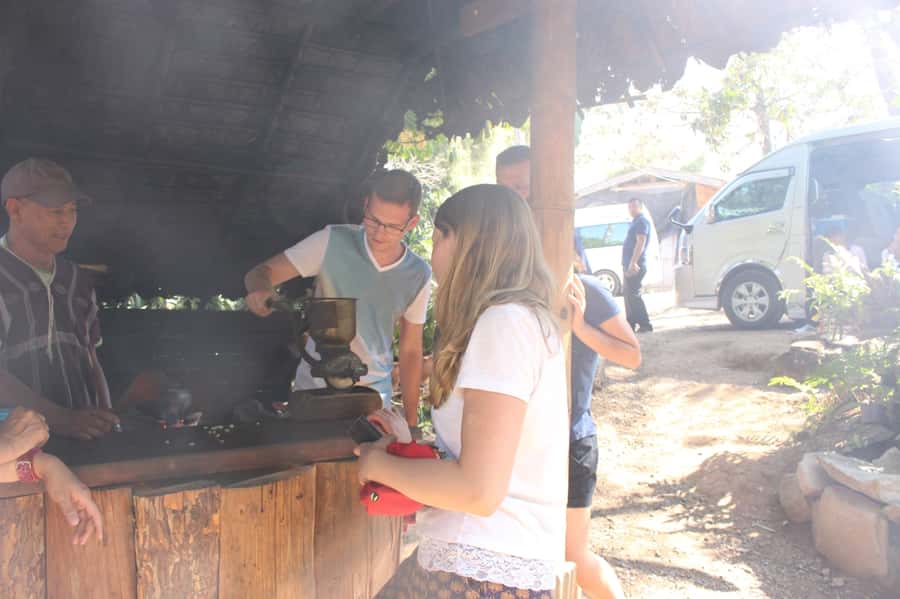
You’ll take a guided visit and have a short walk—about 40 minutes. The highlight for many people is the coffee experience: you get to taste freshly brewed coffee and learn how the village’s coffee is processed and shared.
What I like here is that the coffee isn’t treated like a gimmick. It’s presented as a village activity, and that makes it more meaningful than a quick sample at a roadside stall.
Some of the most enthusiastic feedback I saw centered on this Karen coffee stop as a memorable moment. If you’re a coffee person, this alone can make the day worth it.
A practical note: village visits mean uneven ground sometimes. Wear comfortable shoes and keep your pace relaxed.
Vachiratharn Waterfall: the final wow moment
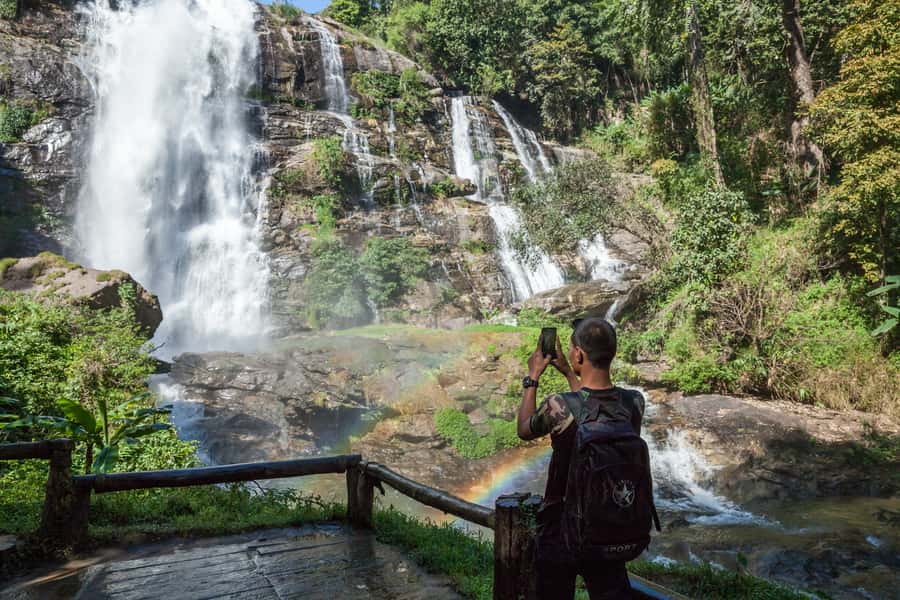
The day ends with Vachiratharn Waterfall. This is where the “mountain water” payoff happens, and most people remember it as the most dramatic scene of the route.
You’ll spend about 30 minutes there. That’s enough time to see the falls, take photos, and enjoy the sound and mist without rushing. If the weather turns, waterfalls can still be powerful—but you may get less visibility or comfort depending on rain and wind.
This is a good place to check your jacket and sunglasses again. Even in cooler weather, mist can feel cold, and wet footing can surprise you if you’re distracted by photos.
If you want the best conditions for photos, keep an eye on the timing. The final stop usually gets people excited, but it’s still worth being present and not treating it like a quick drive-by.
Small-group van comfort: how the day stays manageable
The tour runs as a small group with up to 9 participants, using a 9-seater air-conditioned van. That setup is a big part of why the day works: everyone gets attention, and you can hear the guide’s English without the chaos of a large bus.
You’ll also get drinking water and a refreshing towel. For mountain days, those little comforts do more than you’d think, especially when you’re outside in changing weather.
One more practical detail: the tour isn’t suitable for everyone. It’s not recommended for pregnant women, people with back problems, mobility impairments, heart problems, or wheelchair users. The issue isn’t the walking length alone—it’s the uneven ground and the overall rhythm of getting on and off vehicles and moving at multiple stops.
Also, pets aren’t allowed.
If you’re traveling with any mobility constraints, you should choose a different kind of day trip that stays more accessible.
Price and value: does $80 make sense?
At around $80 per person for an 8-hour tour, the value comes from what’s included, not just the van and guide.
In your price you’re getting:
- Hotel pick-up and drop-off within the service area (within about 5 km of the city center)
- Entrance ticket to Doi Inthanon National Park and the twin pagodas
- Transportation by air-conditioned van
- English-speaking guide
- Set menu lunch
- Water and a refreshing towel
- Travel accident insurance
This matters because the two biggest variable costs on a mountain day are park tickets and food. When those are baked in, you can compare apples to apples with other offers.
Some people also noticed that other cheaper options don’t include lunch and entry fees. If that’s your usual travel style, this is a straightforward way to avoid surprise add-ons once you’re already away from the city.
There can be extra pick-up charges if you’re outside the city center. If your hotel is 6–15 km out, it’s ฿500 each way; 16–20 km is ฿1,000 each way; 21–30 km is ฿1,500 each way. You’ll want to factor that into the true per-person cost if you’re staying farther out.
Who should book this Doi Inthanon day trip
This is a great fit if you want a one-day hit of northern Thailand that covers nature, culture, and food. I’d book it if you:
- Want the highest peak and royal pagodas in the same day
- Like short guided walks rather than all-day hiking
- Care about lunch and entry fees being handled
- Enjoy hill tribe and village context, especially the Karen coffee stop
It’s less ideal if you’re very sensitive to weather. Fog and rain can reduce the summit and pagoda views. The rainforest trail also tends to get wet, so you’ll want proper outerwear.
And if your mobility is limited, you should skip this one. The tour isn’t built for wheelchair access, and there are restrictions for back problems and other health concerns.
Should you book this tour?
I’d tell you yes—if you’re okay with a weather-dependent viewpoint and you’re comfortable with a long day in a van plus several short stops on foot.
This is one of those trips where the “included” pieces add up: park tickets, lunch at a Royal Project restaurant, and a Karen village coffee experience that people remember. With a small group and consistently praised English-speaking guides (names like Bee, Pae, and Po show up again and again), the day feels organized rather than rushed.
If you want flexibility, you can cancel up to 24 hours in advance for a full refund, which makes it easier to choose confidently based on the forecast.